
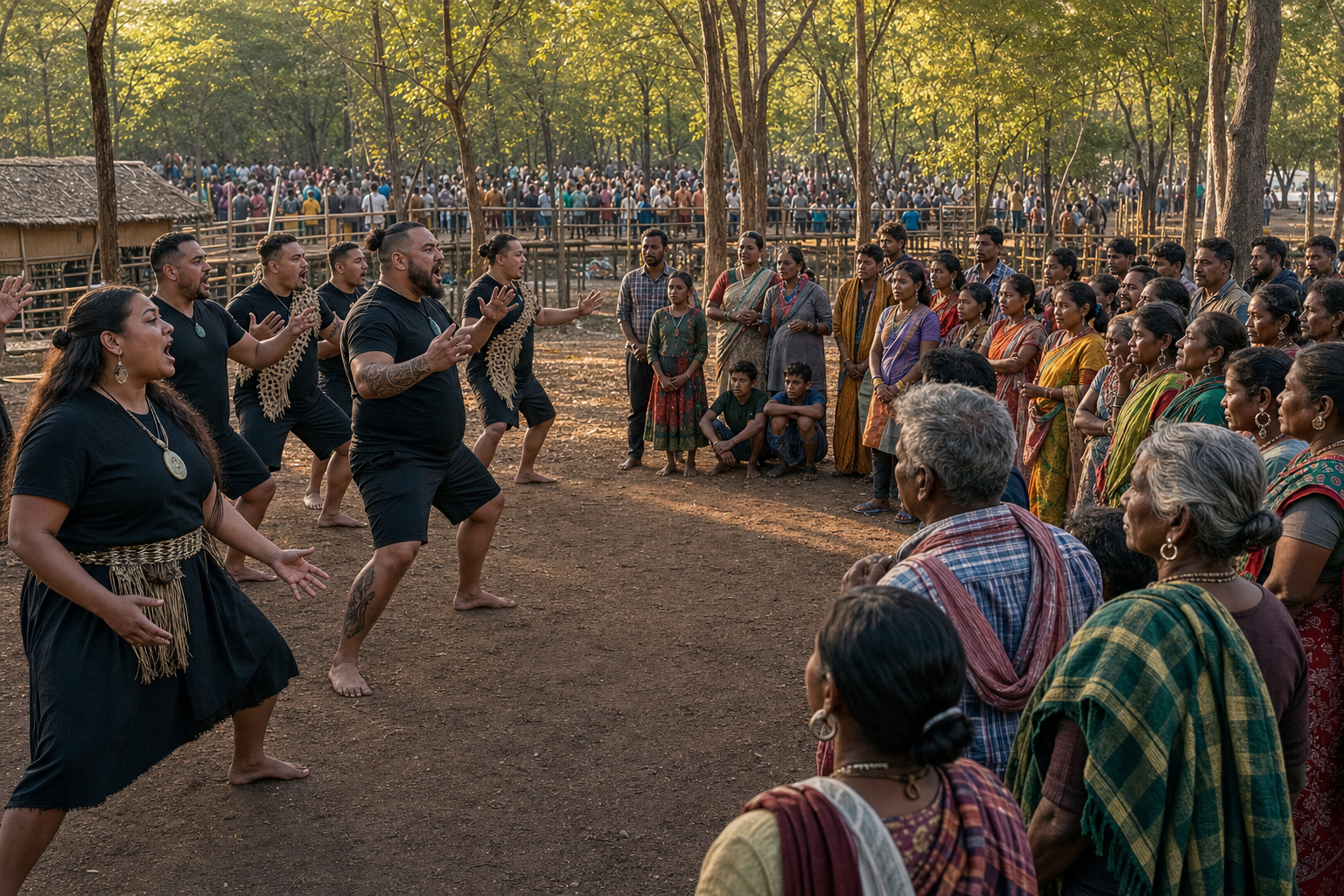
If you saw the Maori haka from Medaram Jathara, the important question is not whether the performance looked moving. It is what kind of solidarity that encounter asks of you once the images have passed from your screen.
The answer begins with a simple distinction: ceremony can open a relationship, but attention alone cannot sustain one. Respect becomes solidarity when you preserve the identities involved, let communities speak in their own voices, and help cultural knowledge reach another generation without turning it into spectacle.
Read the encounter from inside Medaram, not as a viral performance
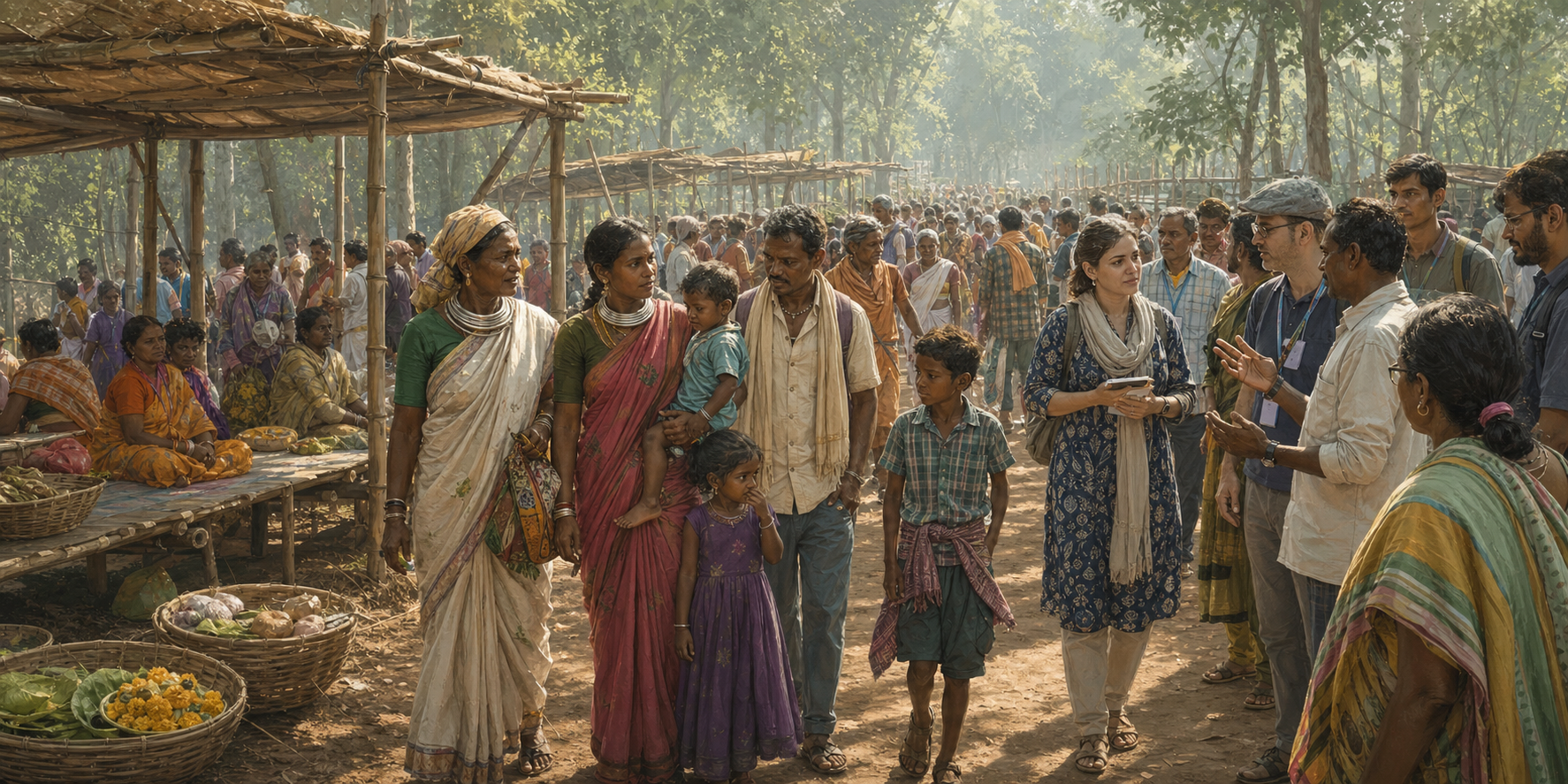
At Telangana’s Medaram Jathara, also known as Sammakka Saralamma Jathara, representatives of New Zealand’s Maori community performed the haka in honour of the revered tribal deities Sammakka and Saralamma. The guests entered a living sacred gathering and answered that welcome through a ceremonial form carried by their own people.
That sequence matters. The haka was not an interchangeable entertainment item placed beside an Indian festival. It was an offering of respect made from within a Maori inheritance. Medaram was not merely its stage; it supplied the sacred relationship to which the visitors were responding.
The scale of Medaram can obscure this point. Although it is widely regarded as one of the world’s largest tribal festivals and draws millions, a large gathering does not turn its ceremonies into public property. If you attend, report on, teach about, or share material from the Jathara, keep three distinctions clear:
- Welcome is not ownership. Being invited to witness a tradition does not give an outsider authority to redefine or reproduce it.
- Affinity is not identity. Maori and Indian Adivasi communities can recognise values in one another without being described as versions of the same culture.
- Visibility is not preservation. A widely circulated video may generate attention while leaving the transmission of language, ritual knowledge, and community memory untouched.
A confident Dharmic reading has no need to erase these distinctions. Medaram’s strength lies precisely in its capacity to welcome a foreign indigenous expression while remaining rooted in devotion to Sammakka and Saralamma.
The haka carried solidarity without claiming sameness
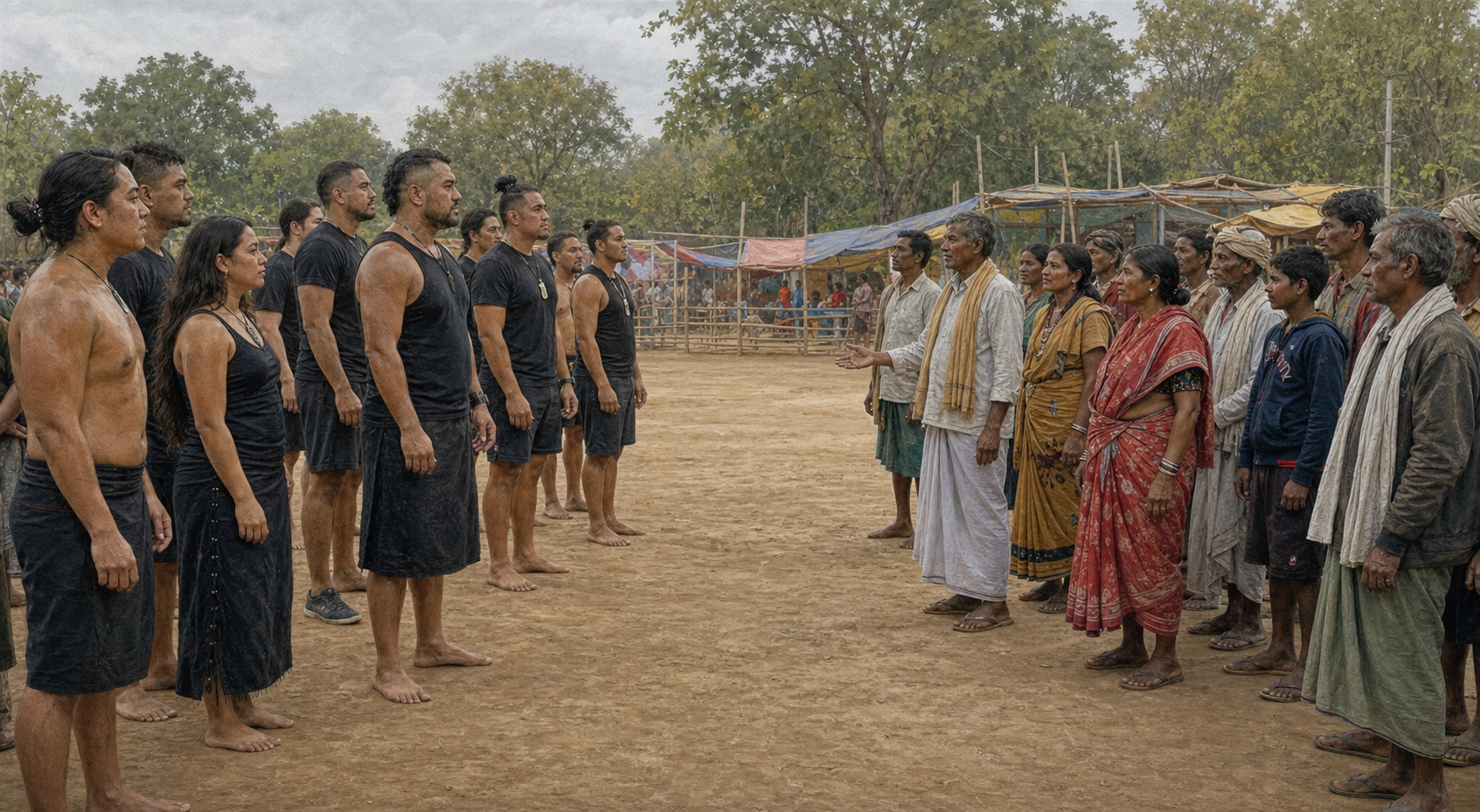
The haka offered at Medaram carried associations of courage, kinship, and ancestral remembrance. Those meanings could speak to a gathering shaped by resilience, sacred loyalty, and collective identity. The connection did not require either tradition to surrender its own history or theology.
This is where discussions of indigenous unity often go wrong. Saying that two communities share reverence for inherited ways is useful. Saying that all indigenous traditions teach the same thing is not. The first claim creates room for a relationship; the second replaces living peoples with a vague category.
Pluralism is not a cultural blender. It allows people to meet without demanding uniformity. In Dharmic terms, respect for many paths becomes credible when each path remains recognisable. You can honour the affinity between the communities at Medaram while still asking who is speaking, which ceremony is being offered, whom it honours, and what responsibilities accompany it.
That gives you a practical rule for describing the event. Name the Maori guests, name the haka, name Medaram Jathara, and name Sammakka and Saralamma. Then describe the moment as an exchange of honour rather than a fusion of traditions. Specific language protects both the relationship and the difference that made the relationship meaningful.
Key takeaways: five tests for genuine indigenous solidarity
- Recognition: Are the peoples, places, ceremonies, and sacred figures identified correctly, or has everything been reduced to generic tribal culture?
- Reciprocity: Does each community have an opportunity to offer, receive, explain, and question, or is one treated mainly as material for the other’s programme?
- Agency: Do community custodians decide how their traditions are presented, recorded, translated, and reused?
- Continuity: Does the encounter produce something younger members can learn from, such as an approved recording, teaching session, exchange, or community-held archive?
- Follow-through: Is there a relationship after the ceremony, with a named next step and responsible participants, or only a memorable image?
You do not need access to private negotiations to apply these tests. Look at the public language, the captions, who is permitted to explain the ceremony, where the documentation goes, and whether later activity involves the communities themselves. These details reveal whether solidarity is being practised or merely advertised.
Turn a ceremonial encounter into durable cultural work
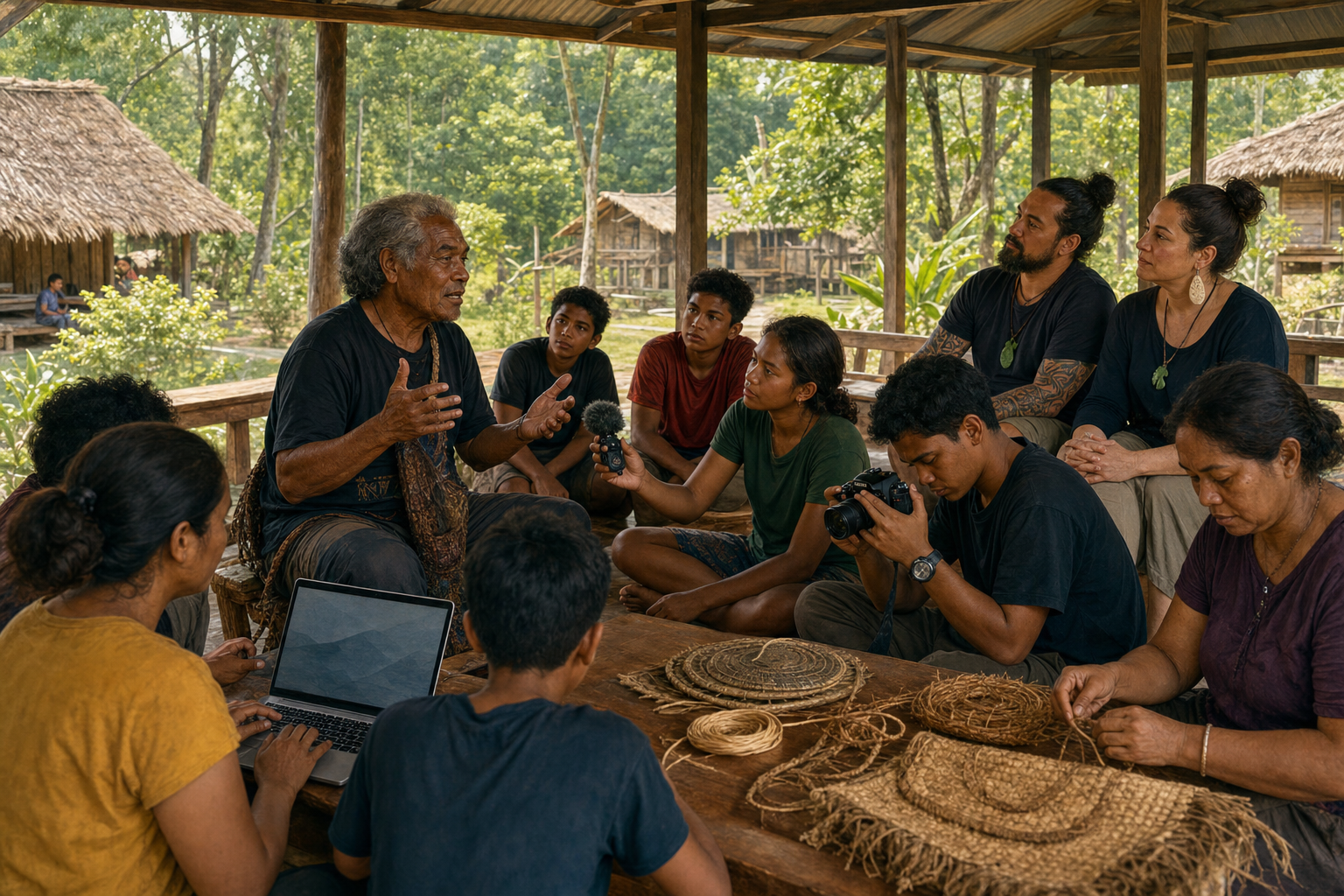
Medaram points towards practical possibilities beyond a single appearance: educational exchanges, careful study of ritual practices, and joint work to safeguard intangible cultural heritage. Each possibility becomes valuable only when the people who carry the traditions remain participants rather than subjects.
If you organise a cultural exchange
Prepare a jointly approved context sheet before distributing photographs or video. It should give the names each community uses for itself, the name and purpose of the ceremony, the sacred figures or occasion being honoured, and any restrictions on reuse. This prevents hurried captions from becoming the lasting public record.
Settle documentation permissions before the event. Ask who may record, where the files will be stored, whether excerpts may be edited or remixed, and which communities receive complete copies. Consent to perform before an audience should not be treated as unlimited consent for every later use.
Finally, agree on one reciprocal next step while the relationship is active. That could be a teaching conversation between cultural custodians, a youth session, an exchange of community-approved recordings, or a discussion about a future visit. Give the step an owner and a date. Goodwill without responsibility usually ends when the event calendar moves on.
If you teach, research, or report on the encounter
Begin with the communities’ own names and explanations. Do not use a dramatic clip as a free-standing illustration of indigenous spirituality. Give students or readers enough context to understand who welcomed whom, what was offered, and whom the offering honoured.
When research produces recordings, transcripts, translations, or photographs, plan how those materials will return to the participating communities. A copy placed only in an institutional archive may preserve data without strengthening cultural transmission. Community-accessible copies and agreed descriptions make the record more useful to the people represented in it.
Invite younger community members into the work as learners, interpreters, documenters, or co-creators rather than treating them only as an audience. Medaram can function as a living classroom, but continuity occurs when the next generation receives responsibility as well as inspiration.
If you are a devotee or online viewer
Your most useful action may be small. When you share the footage, preserve the proper names and explain its purpose. Link to a contextual account rather than circulating an isolated performance. Do not imitate a ceremonial form merely because its movements are publicly visible; visibility does not remove the need for invitation, knowledge, and respect.
Notice whose voice is missing. If a caption praises unity but tells you nothing about the Maori participants, Medaram, or Sammakka and Saralamma, add the missing context or choose a better account. Responsible sharing is one of the simplest ways to stop cultural dignity from being stripped away as material travels.
Judge the solidarity by what remains after the gathering
People-to-people cultural diplomacy does not have to begin with institutions or formal agreements. It can begin when communities meet as custodians of inherited traditions and recognise dignity in one another. But the public ceremony is the opening, not the finished work.
Look for what remains: correctly named communities, records they can use, younger people brought into the relationship, reciprocal invitations, and decisions still made with the people whose heritage is involved. These are stronger signs of solidarity than applause, view counts, or ceremonial language about unity.
The next time the Medaram haka appears in your feed, pause before passing it on. Add the correct names, preserve the sacred purpose, and ask what relationship continues beyond the frame. That small discipline is where spectatorship begins to become solidarity.
References
