
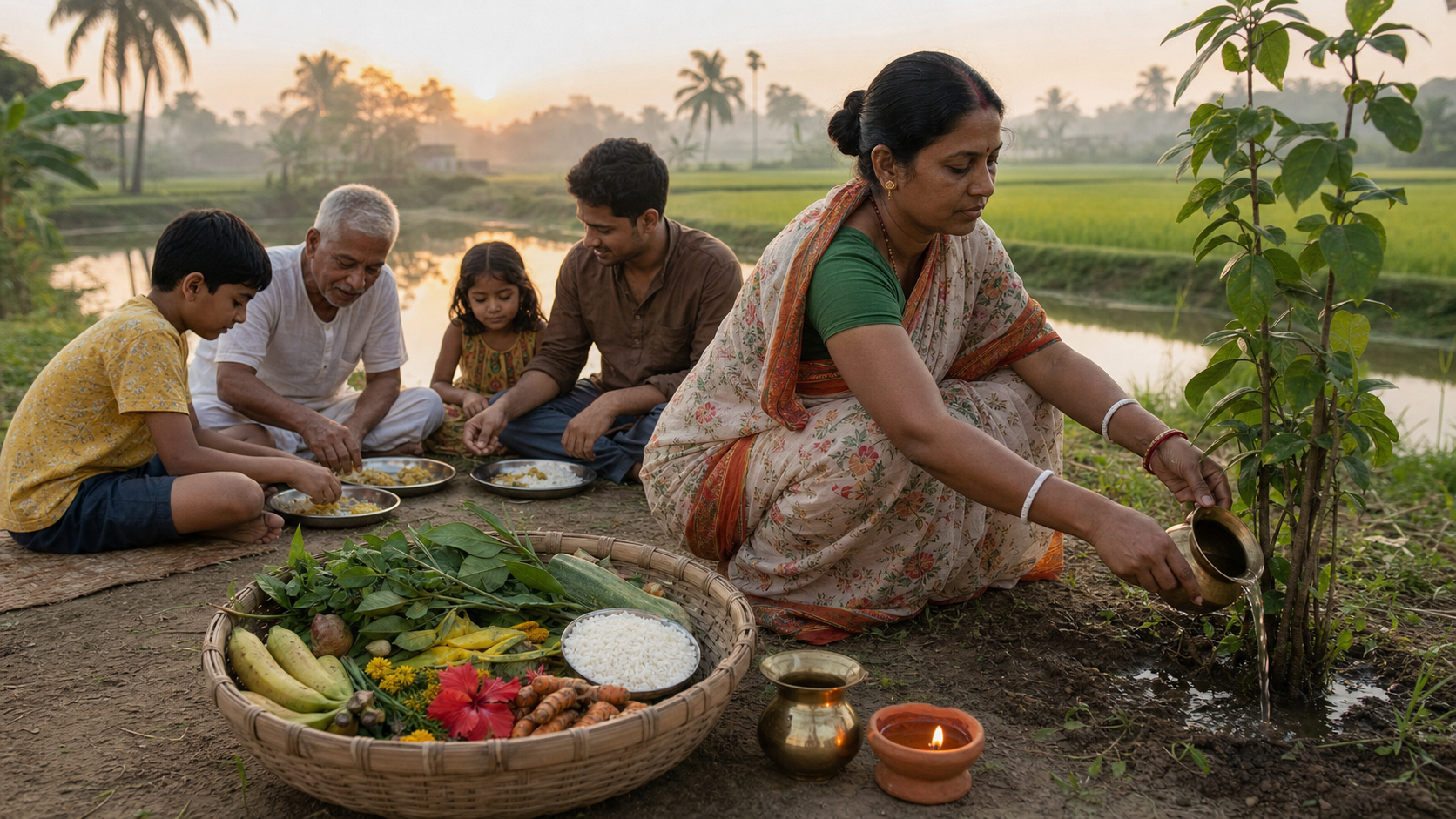
You may already avoid plastic during Puja and still wonder whether that is all sacred ecology asks of you. It is not. In eastern Indian traditions, especially Bengali Shakta and solar forms, the deeper test is whether worship changes how you receive food, use water, mark the seasons, and share nourishment.
This gives you a practical way to approach your next observance. Identify the living relationships within the rite, protect those relationships through your material choices, and carry at least one obligation beyond the altar.
Sacred ecology begins where symbolism becomes obligation
A plant on an altar can be treated as decoration. A river can become scenery for a procession. The sun can be reduced to a pleasing background for morning prayer. Sacred ecology begins when these presences are understood as conditions of life to which you owe gratitude, restraint, and care.
Four questions help distinguish an ecological discipline from nature-themed symbolism:
- What materially sustains the rite? Name the plants, grain, water, soil, light, fuel, cloth, clay, and human labour involved.
- What cycle determines its time? Notice whether the observance is tied to dawn, monsoon rhythms, a harvest period, or another seasonal threshold.
- Who makes nourishment possible? Look beyond the finished offering to the farmer, vendor, cook, family member, artisan, and water system behind it.
- What duty follows the prayer? Decide whether reverence will change waste disposal, food sharing, water use, agricultural support, or your treatment of living beings.
This framework avoids two common mistakes. The first is to claim that every inherited ritual was modern environmentalism in another name. The second is to praise ecological symbolism while ignoring the waste produced by the celebration. Neither position is adequate. A Dharmic reading begins with Prakriti and Shakti as living principles, but it becomes credible only when the altar and the cultivated landscape are treated as parts of one sustaining relationship.
Nabapatrika teaches you to see a field at the altar
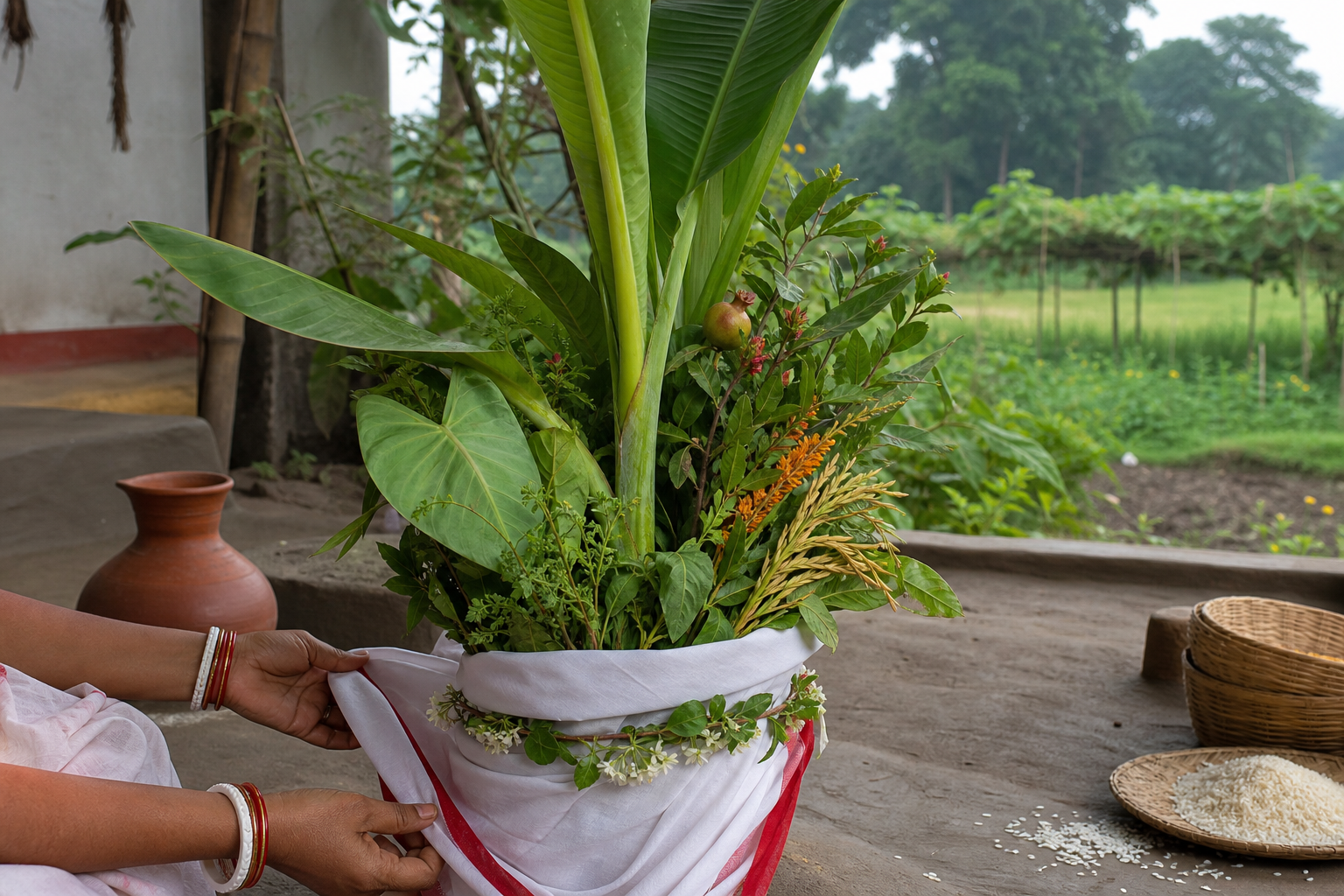
On Saptami during Durga Puja in Bengal, the Nabapatrika rite gathers nine plants around a banana stem. The bundle, popularly known as Kola Bou in living tradition, is bathed at dawn, consecrated, and installed as an embodiment of Durga’s nourishing presence.
The exact plants can vary by region and lineage. A typical assembly includes banana, turmeric, paddy, bilva, pomegranate, ashoka, and colocasia. That variation matters. You should not turn one commonly encountered list into a universal botanical rule or correct a family whose inherited practice differs. Ask a knowledgeable elder or ritual specialist which plants belong to the local observance and how their names are pronounced in the community’s own language.
Then read the bundle relationally. Paddy points to seed, field, rain, harvest, and staple food. Banana, colocasia, pomegranate, and turmeric bring cultivated plant life into the sacred assembly. Bilva and ashoka recall that a plant may inhabit devotional, household, and ecological worlds at once. The dawn bath makes water part of the rite rather than an invisible utility. Nine plants become a compact map of dependence.
Shakambhari gives this map a theological centre. Her name evokes shaka, greens or vegetables, and her form celebrates the Divine Mother as the bearer of vegetation, fruit, herbs, and nourishment when the land has become barren. She therefore directs your attention beyond abundance in the abstract. The question is whether the edible diversity that sustains a community is being cultivated, respected, prepared, and shared with care.
You can make this teaching visible without turning the altar into a museum display. A family can record the regional names of its nine plants and ask an elder how each entered household life. A Puja committee can place a small plant key near, but not on, the sacred installation, subject to ritual decorum. Include each plant’s local name, its everyday use, and where it was obtained. Children then encounter Nabapatrika as living knowledge rather than as an unexplained bundle.
Sourcing and aftercare are equally important. Buy cultivated plants from local growers or markets where practical, and do not strip a wild grove merely to complete a display. Use natural binding materials when the ritual form permits them. Before immersion or another customary form of return, remove plastic ties, wire, synthetic cloth, foil, and packaging. Where composting or another land-based disposition is permitted by the tradition, agree on it before the festival rather than improvising after the procession.
The contradiction to avoid is simple: honouring vegetation as Devi while allowing the materials attached to it to pollute water. Biodegradable offerings, plastic-free decoration, responsible immersion, and support for local farmers are not optional public-relations gestures. They are direct ways to make the material conduct of the Puja answer to its own sacred meaning.
Surya worship turns time and water into discipline

Nabapatrika makes the cultivated landscape visible. Surya worship makes ecological time visible. In Bengal and neighbouring eastern regions, Surya is revered in local forms such as Dharma Deva or Ral Deva, joining sunlight and seasonal fertility with righteousness, prosperity, and dependable conduct.
At dawn, devotees offer arghya while facing the rising sun at ponds, ghats, rivers, or suitable places near home. Water, light, bodily posture, and intention meet in one brief action. The purpose is not to inform the sun that it is sacred. The practice trains the worshipper to receive another day as a gift governed by an order larger than personal convenience.
You can preserve three layers of this discipline:
- Material care: If arghya belongs to your practice, keep the offering simple and prevent plastic, wrappers, synthetic garlands, or toxic material from entering a pond or river. Leave the ghat cleaner than you found it.
- Attention to time: Let dawn matter. The solar moment is part of the practice, not merely an attractive setting that can be detached from the rhythm it honours.
- Ethical follow-through: Pair the offering with one concrete vow for the day, such as truthful speech, avoiding food waste, refilling a shared water vessel, or completing a neglected duty of care.
The agricultural calendar, particularly seasonal observances around Poush and Magh, strengthens this connection among sunlight, crops, household welfare, and community continuity. You do not need to invent a new ceremony to respond. Purchase seasonal grain from a known local seller, thank the person who prepared the household’s food, repair a preventable water loss, or support the cleaning of a local pond or ghat. A seasonal festival should leave a seasonal responsibility behind.
Surya worship also should not be reduced to a wellness routine. Its local moral vocabulary is more demanding: light is associated with knowledge, warmth with sustaining life, and steady movement with reliability. Vedic understandings of Surya as a witness and guardian of cosmic order place human conduct inside that pattern. The ecological lesson is therefore not simply to admire sunlight, but to become more dependable in the duties through which communal life is maintained.
Shared Dharmic values do not require identical theology
Sacred ecology can reveal a family resemblance among Hindu, Buddhist, Jain, and Sikh traditions, but only if their differences are respected. Calling every path nature worship erases the categories through which each community understands its own discipline.
A more careful comparison asks what kind of relationship each practice trains. Bengali Shakta worship can recognize food-bearing vegetation as a manifestation of Devi. Solar devotion links cosmic regularity with dharma and daily reliability. Jain and Buddhist disciplines bring ahimsa, mindful consumption, compassion, and interdependence to the foreground. Sikh langar places shared nourishment, service, and equality at the centre of a communal meal.
The common insight is not that the metaphysics are identical. It is that the eater is never an isolated consumer. Food arrives through living systems, labour, water, land, time, and social cooperation. Each tradition can turn that dependence into a discipline: non-harm, gratitude, self-restraint, seva, equitable sharing, or reverence for the Sacred Feminine.
If you are organizing an inter-Dharmic gathering, avoid a panel of generic statements about respecting nature. Ask each participant to explain one actual observance, the materials it uses, the ethical obligation it creates, and one way practitioners can reduce the gap between symbol and conduct. That method preserves difference while producing guidance people can use.
A practical audit for your next observance
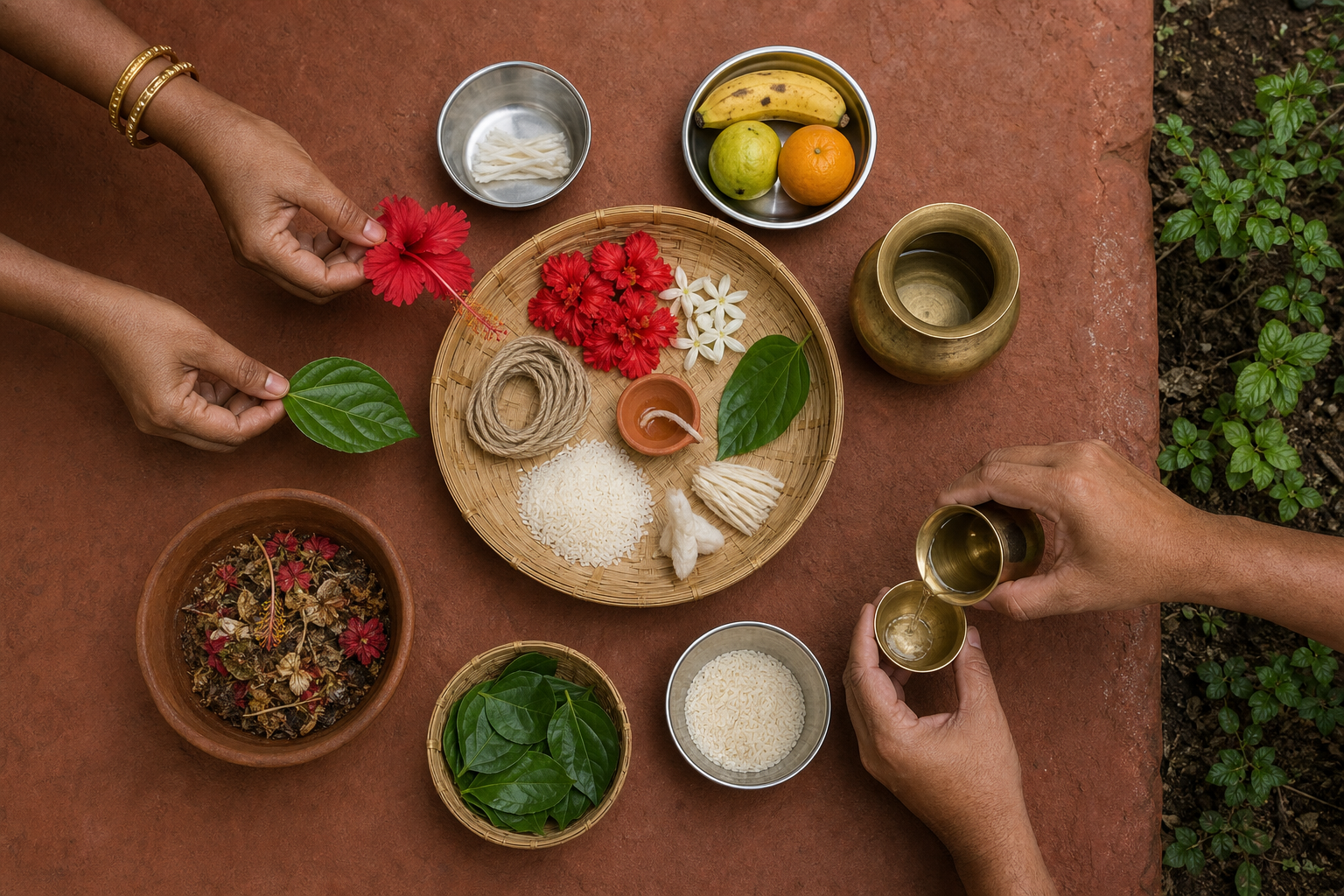
You do not need a large campaign to begin. Use one upcoming Puja, vrata, dawn offering, community meal, or seasonal celebration as a test. Complete this audit before purchasing decorations or assembling offerings:
- Name the rite precisely. Record its regional and family form. Do not substitute a generic internet checklist for local ritual knowledge.
- Inventory everything entering the sacred space. Include plants, grain, fruit, water, clay, pigment, fabric, lamps, fuel, fasteners, flowers, packaging, and serving materials.
- Verify what is ritually necessary. Ask an elder, purohit, granthi, teacher, or organizer appropriate to the tradition. This prevents ecological changes from accidentally discarding an essential practice while leaving unnecessary waste untouched.
- Trace the food and plants. Learn what is seasonal, what is locally available, and whether a farmer or small vendor can supply it. For Nabapatrika, confirm the actual plant list followed by your lineage.
- Assign an afterlife to every material. Mark each item for reuse, respectful return, composting where permitted, ordinary waste, or an approved immersion process. If nobody knows where an item will go, resolve that before bringing it in.
- Protect the water in advance. Decide what may enter the pond or river, who will remove attachments, and how remnants will be collected. A label saying biodegradable does not by itself make an object suitable for immersion under all conditions.
- Plan nourishment as carefully as decoration. Estimate realistic portions, arrange clean storage or sharing for suitable surplus food, and give the cooks and servers the dignity owed to participants in the sacred work.
- Teach one living relationship. Help a child or first-time participant name one plant, identify one grain, describe where the water came from, or explain why a material must not enter the river.
- Carry one duty forward. Choose a commitment that lasts beyond the event: regular support for a local grower, reduced single-use plastic, care for a ghat, less household food waste, or a seasonal community meal.
For a committee, the most useful audit is binary. Either every material has a known origin and destination, or it does not. Either someone is responsible for removing non-biodegradable attachments, or no one is. Either participants learn why plants, water, grain, and sunlight matter, or the ecological meaning remains implicit and easy to forget. Clear ownership is more valuable than a vague promise to be green.
Key takeaways
- Sacred ecology is not mere admiration of nature; it joins reverence to a specific duty of care.
- Nabapatrika makes soil, seed, water, cultivated diversity, and household nourishment visible within Durga Puja.
- Shakambhari directs attention to edible plant life and the communal responsibility to sustain it.
- Surya worship links light and seasonal time with reliable conduct, water care, and daily dharma.
- Hindu, Buddhist, Jain, and Sikh practices can share ecological and ethical concerns without being treated as identical paths.
- Plastic-free materials, responsible immersion, local sourcing, food sharing, and intergenerational teaching make ritual symbolism materially credible.
Before your next observance, take one sheet of paper and write four headings: living materials, water, nourishment, and aftercare. Fill them in before anything is purchased. Then choose one duty that will continue after the lamps are extinguished. Sacred ecology becomes dharma when reverence develops into dependable care for the relationships through which life reaches you.
References
- DharmaRenaissance Blog – Nabapatrika and Shakambhari: How Durga Puja Honors Earth’s Harvest and Sacred Ecology
- DharmaRenaissance Blog – Surya in Bengal: The Sacred Dharma Deva (Ral Deva) Uniting Light, Righteousness, and Prosperity
