
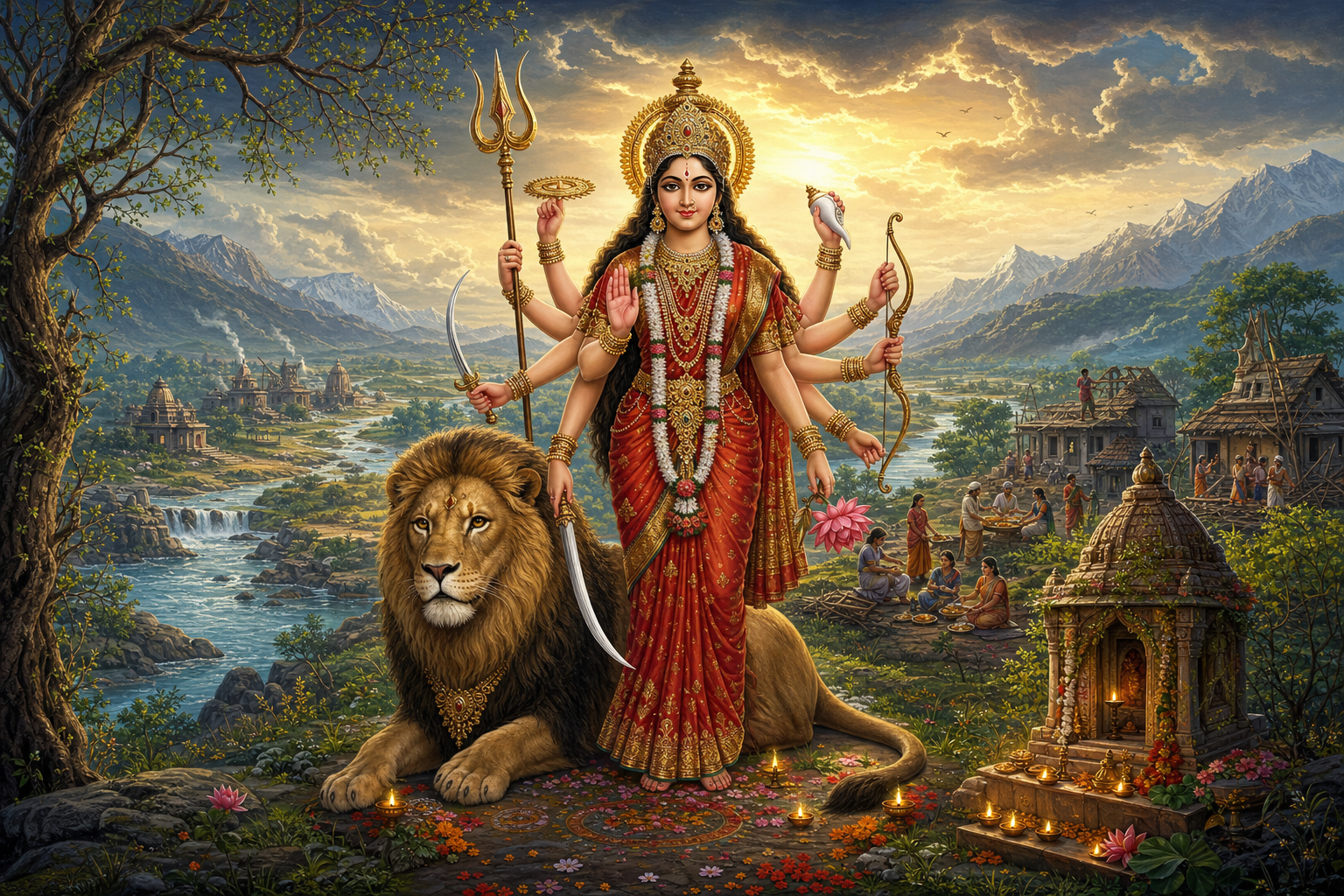
If Durga’s weapons make her look only like a goddess of battle, you are seeing the climax but missing the work that gives it meaning. She does not enter a broken world merely to overpower an enemy. She restores the relationships, knowledge, nourishment, and disciplined practices without which dharma cannot endure.
That distinction matters when you face disorder in a family, community, institution, or within yourself. The useful question is not simply whether to be peaceful or forceful. You first need to identify what has been disrupted, protect what is vulnerable, and determine whether the situation calls for reconciliation, resistance, or both in the right sequence.
What cosmic order looks like after the crisis
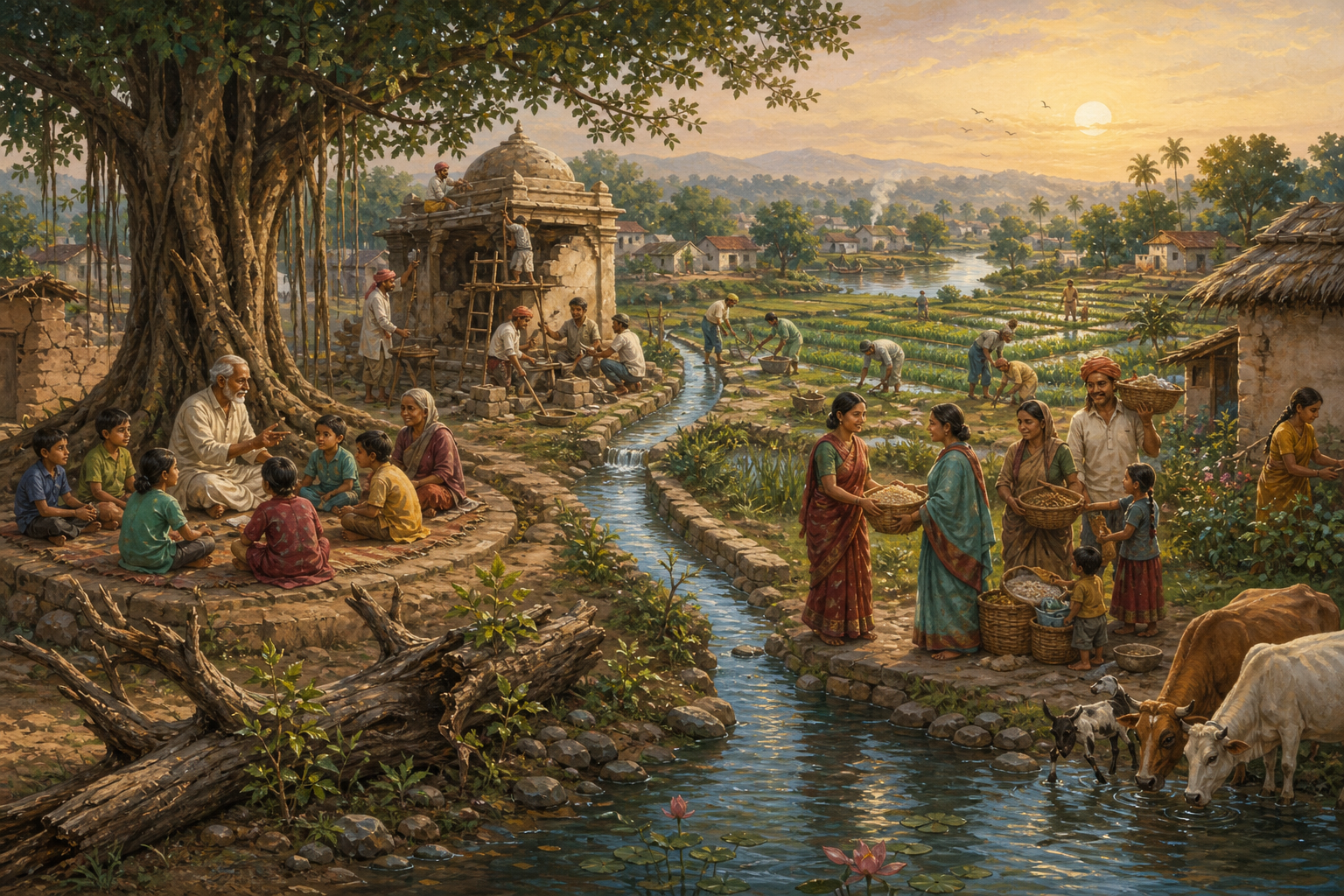
Cosmic order is not frozen stillness. Nor is it the unquestioning continuation of whatever arrangement already exists. In the Dharmic vision embodied by Durga, order is a living coordination of distinct powers: preservation and transformation, knowledge and action, nourishment and discipline, compassion and courage.
You can recognize this order by what becomes possible when it returns. In the conflict between Hari and Hara, destructive rivalry gives way to cooperation. In Durga’s encounter with Durgamasura, sacred knowledge becomes accessible again, nourishment returns, and the practices sustained by that knowledge can resume. Victory is therefore more than the silencing of an opponent. It is the reopening of life-giving relationships and responsibilities.
- Necessary powers return to relationship. Preservation no longer treats every change as a threat, while transformation no longer destroys what should be carried forward.
- Knowledge can circulate. People can learn, remember, question, teach, and act from a shared moral foundation.
- Life receives material support. Food, water, care, and ecological well-being are treated as conditions of dharma rather than as concerns beneath spiritual attention.
- Practice becomes possible again. Study, worship, service, restraint, and responsible work recover their place in daily life.
This gives you a practical test after any conflict: ask what people can do now that they could not do before. Can truth be spoken without retaliation? Can essential work continue? Can knowledge reach those who need it? Can legitimate differences coexist without paralysing the common purpose? If the answer remains no, hostilities may have paused, but order has not yet been restored.
Two forms of disorder require two forms of strength
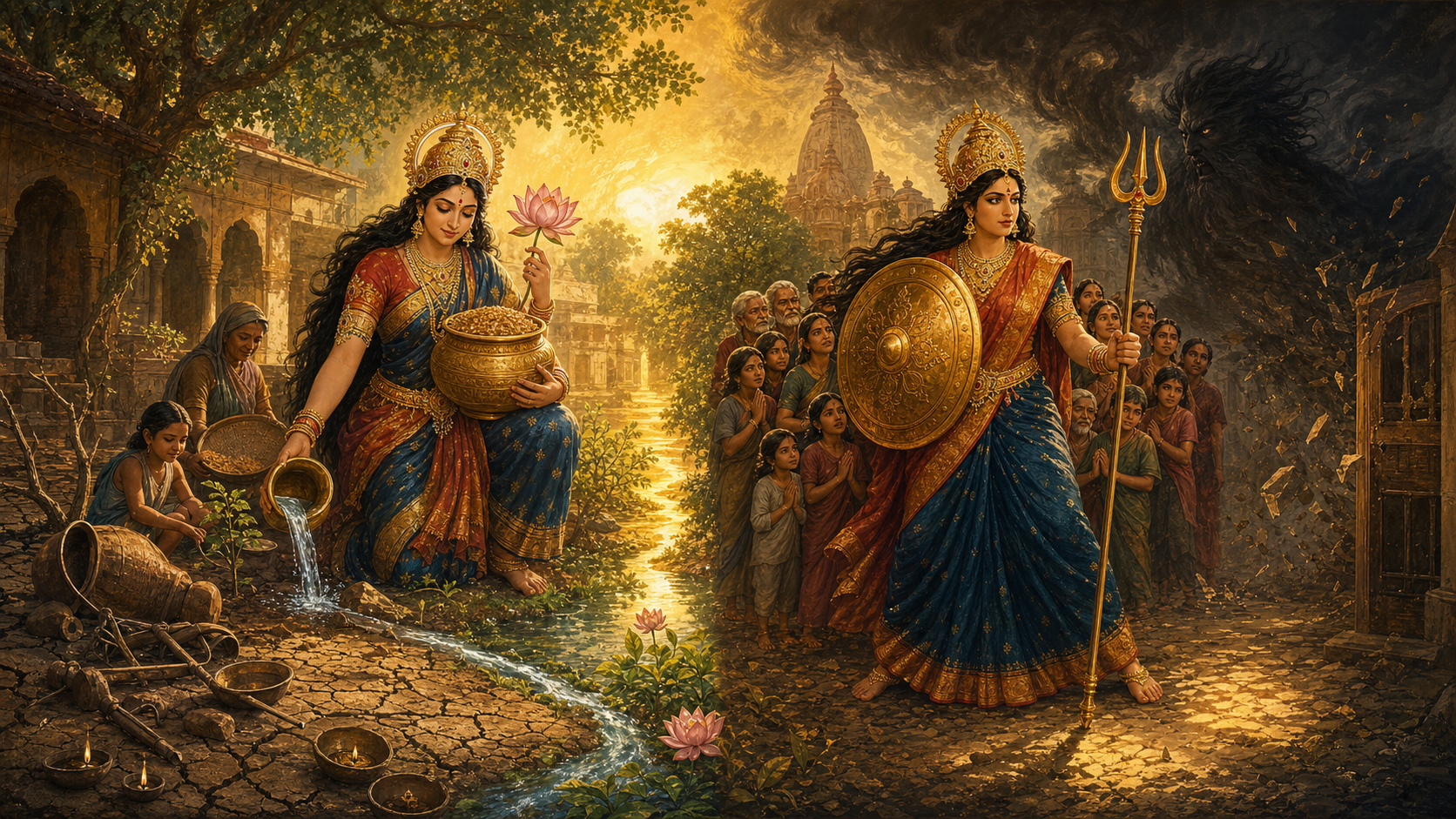
Durga does not apply one response to every crisis. The difference between Shanta Durga and the warrior who defeats Durgamasura is not a contradiction in the Goddess. It is discernment expressed through different forms.
When necessary powers become rivals
In the conflict between Vishnu and Shiva, the danger arises from forces that both have indispensable cosmic roles. Vishnu preserves; Shiva transforms. Preservation without transformation can harden into stagnation. Transformation without preservation can become rupture. The problem is not that one principle must exist and the other must disappear. The problem is their loss of right relationship.
Shanta Durga intervenes without becoming another combatant. Her peacefulness is active, disciplined, and authoritative. The familiar Goan iconography of the Goddess holding or balancing the two deities captures this function: she stands at the center so that neither legitimate power mistakes itself for the whole.
Before treating a dispute as a battle against adharma, check whether it has these features:
- Each side protects something that genuinely matters.
- The disagreement concerns methods, priorities, pace, or boundaries rather than the destruction of the shared purpose.
- Both sides remain capable of accepting duties and limits.
- A higher principle exists to which both can be recalled.
If those conditions are present, start with mediation. Name what each side is trying to preserve. Identify what must change and what must not be lost. Replace accusations about motives with clear statements about responsibilities, boundaries, and the next action each side will take. A Shanta Durga-like mediator is not neutral about chaos; the mediator is committed to restoring a just relationship without denying the dignity or proper function of either party.
When obstruction attacks the conditions of life
Durgamasura represents a different kind of disorder. Through the power gained by tapas and boons, he obstructs or obscures the Vedas. Yajna, study, and sacred remembrance decline. A prolonged drought follows, rivers diminish, and communities experience scarcity. The progression matters: when knowledge and ethical memory are blocked, the damage does not remain intellectual. It reaches collective practice and the material conditions of life.
The Goddess responds first to suffering. As Satakshi and Shakambari, she watches over afflicted beings and provides vegetables, greens, and grains. Only after life has been sustained does she assume the fierce form that defeats Durgamasura. Nourishment is not a sentimental pause before the important part. It is already an act of restoration.
This form of disorder cannot be solved by balancing two equally legitimate claims. Mediation becomes inadequate when one party deliberately withholds essential knowledge, prevents others from carrying out their responsibilities, benefits from their helplessness, or continues inflicting harm after a fair path back to cooperation has been offered. The immediate duty is then to protect life, recover access to truth, and end the obstruction.
Use this distinction carefully. Calling every rival an asura is spiritually dangerous because it converts wounded pride into imagined righteousness. Examine conduct rather than assigning mythic identities to people. Ask what has actually been withheld, who is being harmed, whether the harm continues, and whether good-faith correction remains possible. Firm action becomes dharmic through its purpose and discipline, not through the intensity of your anger.
Restoration follows a sequence: sustain, clarify, then act
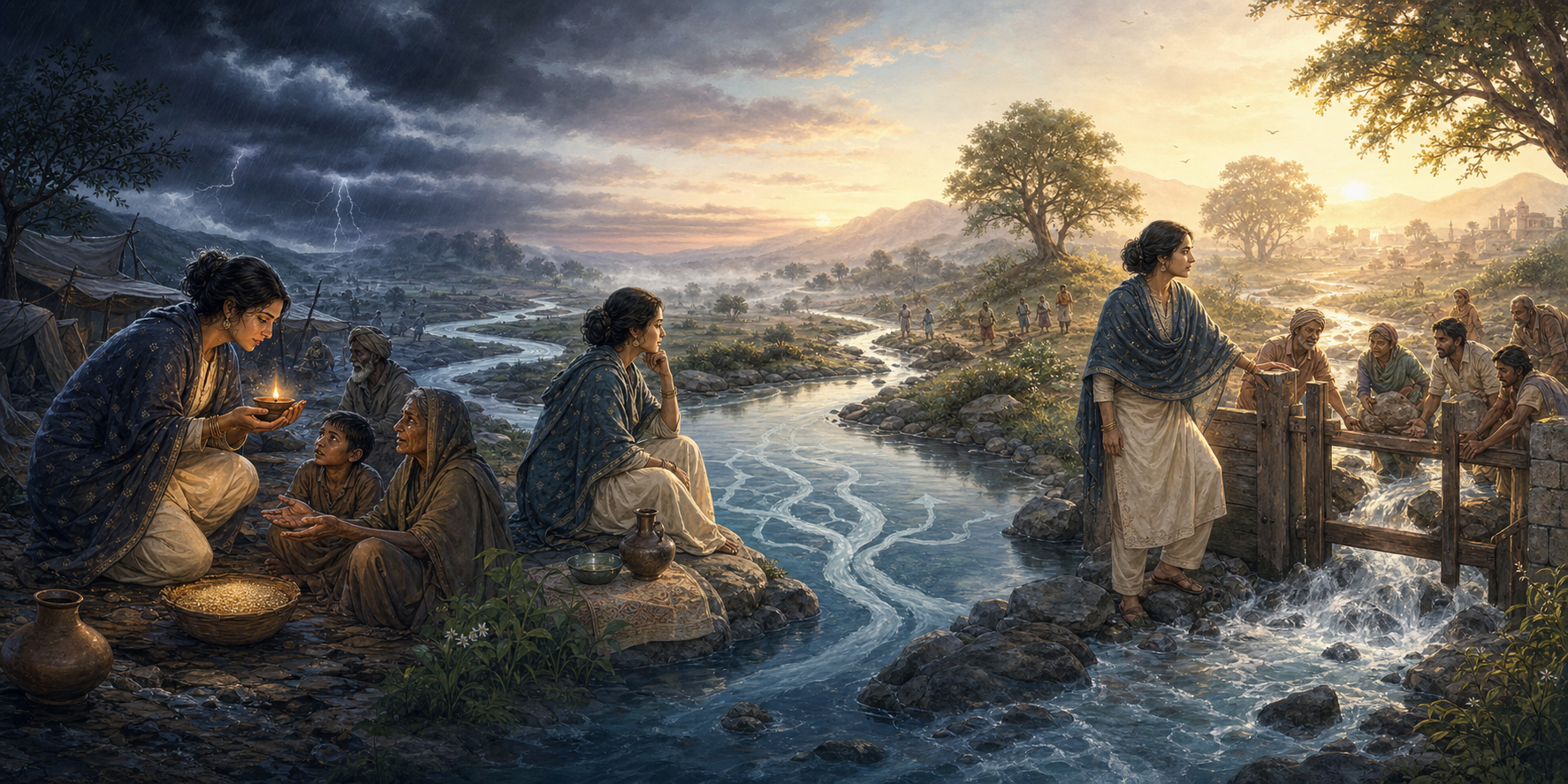
A response can contain the right ingredients and still fail because they are used in the wrong order. Durga’s nourishing and martial forms establish a practical sequence. Care keeps beings capable of recovery; knowledge reveals what must be corrected; courage removes the obstruction; renewed practice makes the repair durable.
- Name the broken function. Begin with what people can no longer do. They may be unable to obtain food, learn the truth, carry out a duty, worship freely, speak honestly, or coordinate necessary work. This keeps attention on the real injury rather than on dramatic labels.
- Stabilize what is vulnerable. Direct immediate effort toward the people, relationships, or institutions bearing the cost. In a household, that can mean protecting ordinary care and responsibilities from an escalating quarrel. In a community, it can mean ensuring that food, assistance, teaching, or essential service reaches people before factional arguments consume all attention.
- Restore knowledge and memory. Bring relevant teachings, facts, records, rules, and responsibilities back into view. Make them accessible to everyone affected. A group cannot act dharmically when crucial information remains hidden or when collective memory has been replaced by slogans.
- Match the remedy to the disorder. Reconcile legitimate but competing functions. Confront deliberate obstruction. Some situations require both: mediate among those still committed to the common good while setting firm limits on conduct that continues to injure it.
- Rebuild the sustaining rhythm. Do not confuse the decisive intervention with completion. Restore the habits that keep dharma alive: study, worship, service, stewardship, honest deliberation, and accountable roles. Without those rhythms, the same disorder returns under a new name.
This sequence also corrects a common misunderstanding of courage. During acute suffering, feeding people and preserving their capacity to recover may be more urgent than winning an argument. Once life and clarity have been secured, however, indefinitely postponing necessary action can allow adharma to deepen. Compassion determines what must be protected. Discernment chooses the method. Courage carries the decision through.
Peace and force are servants of dharma, not rival absolutes
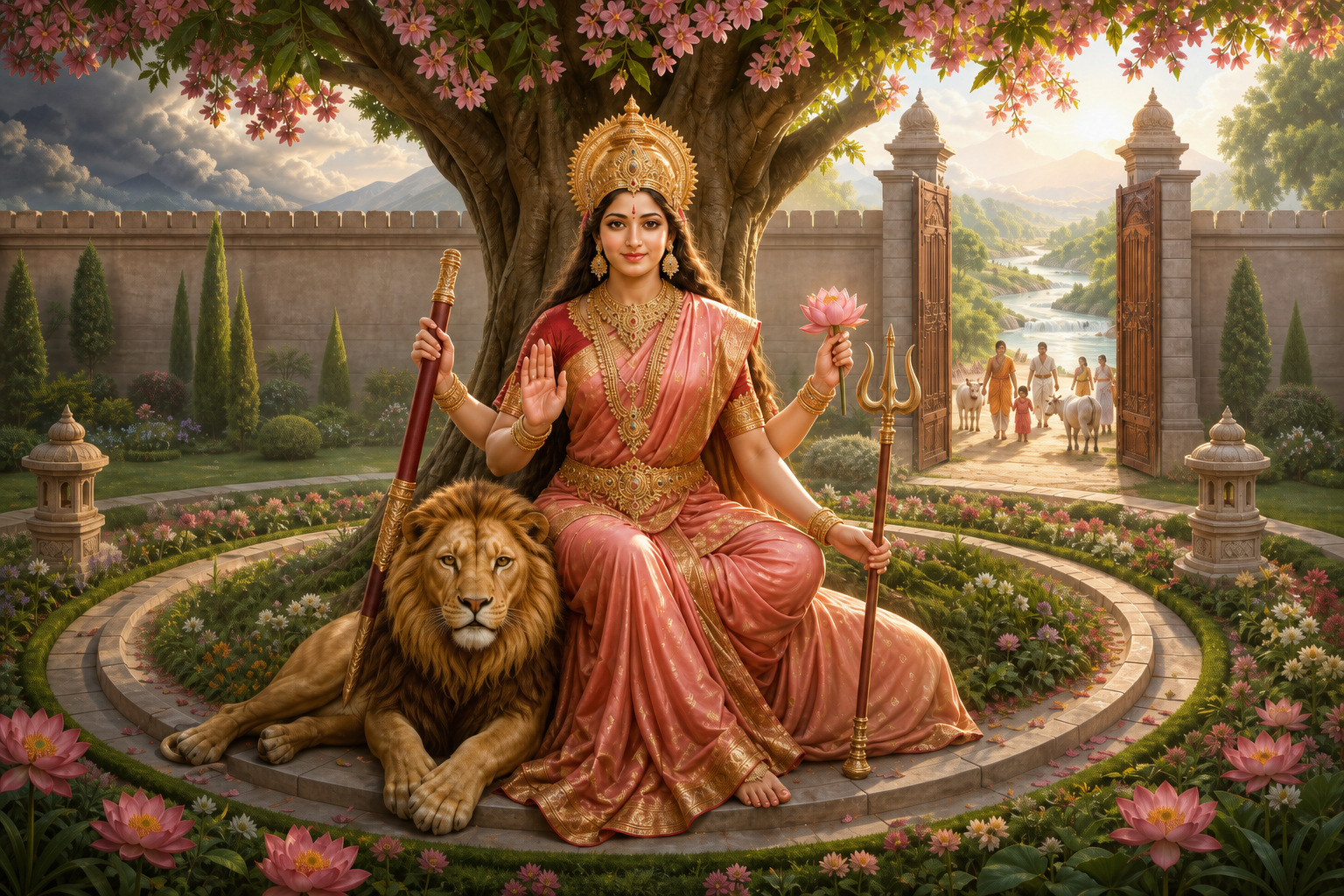
Shanta Durga’s peace is not passivity, and warrior Durga’s force is not vengeance. Both forms intervene. Both accept responsibility for the world as it is. The difference lies in what has disturbed the order and what will genuinely restore it.
- Order is not mere compliance. Silence produced by fear can conceal disorder rather than resolve it.
- Reconciliation is not an automatic compromise. Splitting the difference makes no sense when one proposal preserves a necessary function and the other destroys the conditions under which anyone can participate.
- Firmness is not hatred. Resistance should stop the harmful act and restore the common good, not make humiliation into an additional objective.
- Unity is not uniformity. Vishnu and Shiva remain distinct. Harmony coordinates difference; it does not erase it.
This balance also creates a meaningful conversation across the wider Dharmic family without pretending that all traditions teach identical doctrines. Shanta Durga’s compassionate mediation resonates with Jain ahimsa and aparigraha, Buddhist karuna and upaya, and Sikh daya and santokh. The union of nourishment and courage also finds an ethical parallel in the Sikh pairing of seva and shaurya: service does not exclude bravery, and bravery does not excuse neglect of those who suffer.
These are points of ethical resonance, not reasons to collapse distinct paths into one system. In a plural Dharmic setting, you can work with the shared vocabulary of compassion, restraint, truthful knowledge, service, and courage while respecting the particular theology and discipline through which each community understands those virtues.
When you must choose between conciliation and confrontation, avoid asking which option appears kinder or stronger. Ask which one will reopen the conditions of responsible life. Peace that leaves people starved of truth or sustenance is not Shanta Durga’s harmony. Force that serves ego, revenge, or domination is not Durga’s defence of dharma.
Key takeaways
- Durga restores cosmic order by reopening life-giving relationships, knowledge, nourishment, and disciplined practice.
- When legitimate powers have fallen into rivalry, the Dharmic response is strong mediation under a higher shared purpose.
- When deliberate obstruction attacks knowledge or the conditions of life, protection and firm resistance may be necessary.
- Sustain vulnerable beings before demanding that they carry the burden of confrontation.
- Judge restoration by what becomes possible again, not by how completely an opponent has been humiliated.
- After the immediate crisis, rebuild the practices that keep dharma present in ordinary life.
At the next sign of disorder, write down three questions before you react: What life-giving function has been blocked? What needs protection immediately? Am I facing a legitimate partner in conflict or a continuing obstruction to the common good? Let the answers determine your next step. Mediate without weakness, resist without hatred, and continue until people can once again learn, serve, nourish, worship, and fulfil their duties.
References
- DharmaRenaissance Blog – Shanta Durga’s Grace: Ending the Shiva-Vishnu Conflict and Restoring Cosmic Harmony
- DharmaRenaissance Blog – Goddess Durga’s Triumph over Durgamasura: A Sacred Tale of Dharma, Grace, and Renewal
