
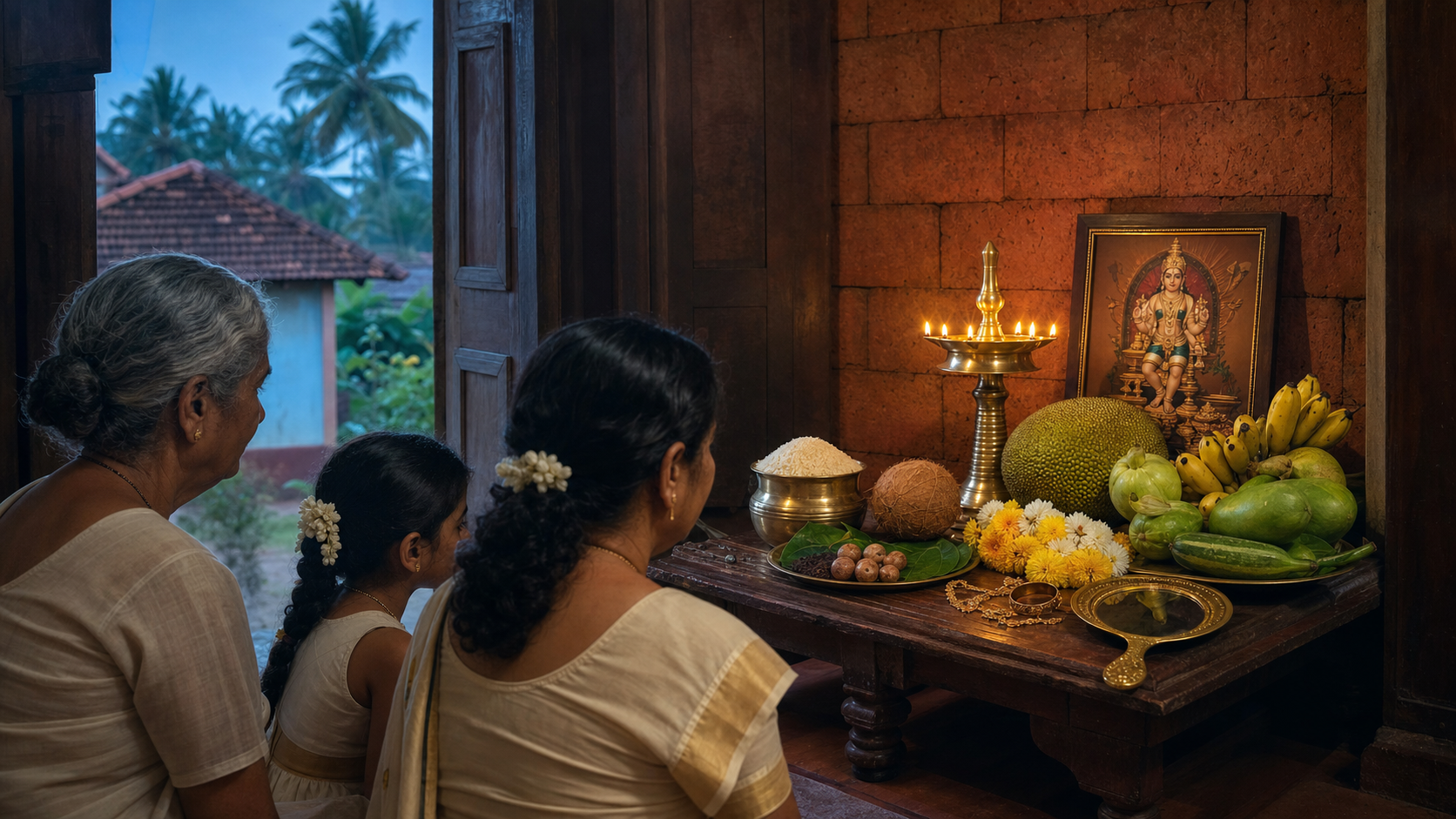
If Bisu is approaching and you want to observe it at home, you do not need an elaborate ceremony. You need the right date, a thoughtfully prepared first sight, and enough space at dawn for prayer, blessings, and family.
For 2026, set aside April 14 for Bisu. Prepare the household the previous evening so the new Tuluva year begins with intention rather than morning confusion.
Key takeaways
- Bisu is the Tuluva New Year observed across Tulunadu, including Udupi, Dakshina Kannada, and parts of Kasargod.
- In 2026, Bisu falls on April 14 at the solar transition of Mesha Sankranti.
- Its date comes from the Souramana Panchanga, a solar system of reckoning, rather than the lunisolar calculation used for Ugadi.
- Prepare an auspicious first sight with rice, seasonal fruits, flowers, a lamp, and the symbols of abundance familiar to your household.
- Give the morning to prayer, blessings between generations, temple darshan where practical, and a festive meal shaped by seasonal produce.
- Keep Bisu distinctly Tuluva while teaching children that it belongs to a wider dharmic family of solar new year observances.
Why April 14 is the right Bisu date in 2026

Bisu begins the year in the Tuluva calendar followed in Tulunadu, the coastal cultural region encompassing Udupi and Dakshina Kannada in Karnataka and extending into parts of Kasargod. Its position in the year is determined through the Souramana Panchanga.
Souramana reckons time by the Sun. Bisu is placed at Mesha Sankranti, the Sun’s ingress into Aries, which is why it arrives in mid-April. In 2026, that transition places the observance on April 14.
This distinction matters when your family calendar also contains Ugadi. Ugadi is set through a lunisolar system and usually comes earlier; it does not replace Bisu, and Bisu does not need to be treated as a delayed Ugadi. A family connected to both traditions can observe each on its own calendrical terms.
Write “Bisu – Mesha Sankranti” on your calendar for April 14 rather than recording only “New Year.” That small addition preserves the reason for the date and gives younger family members a useful question to ask. For a future year, consult the relevant Souramana Panchanga instead of automatically copying the 2026 date.
Prepare the first sight before the household sleeps
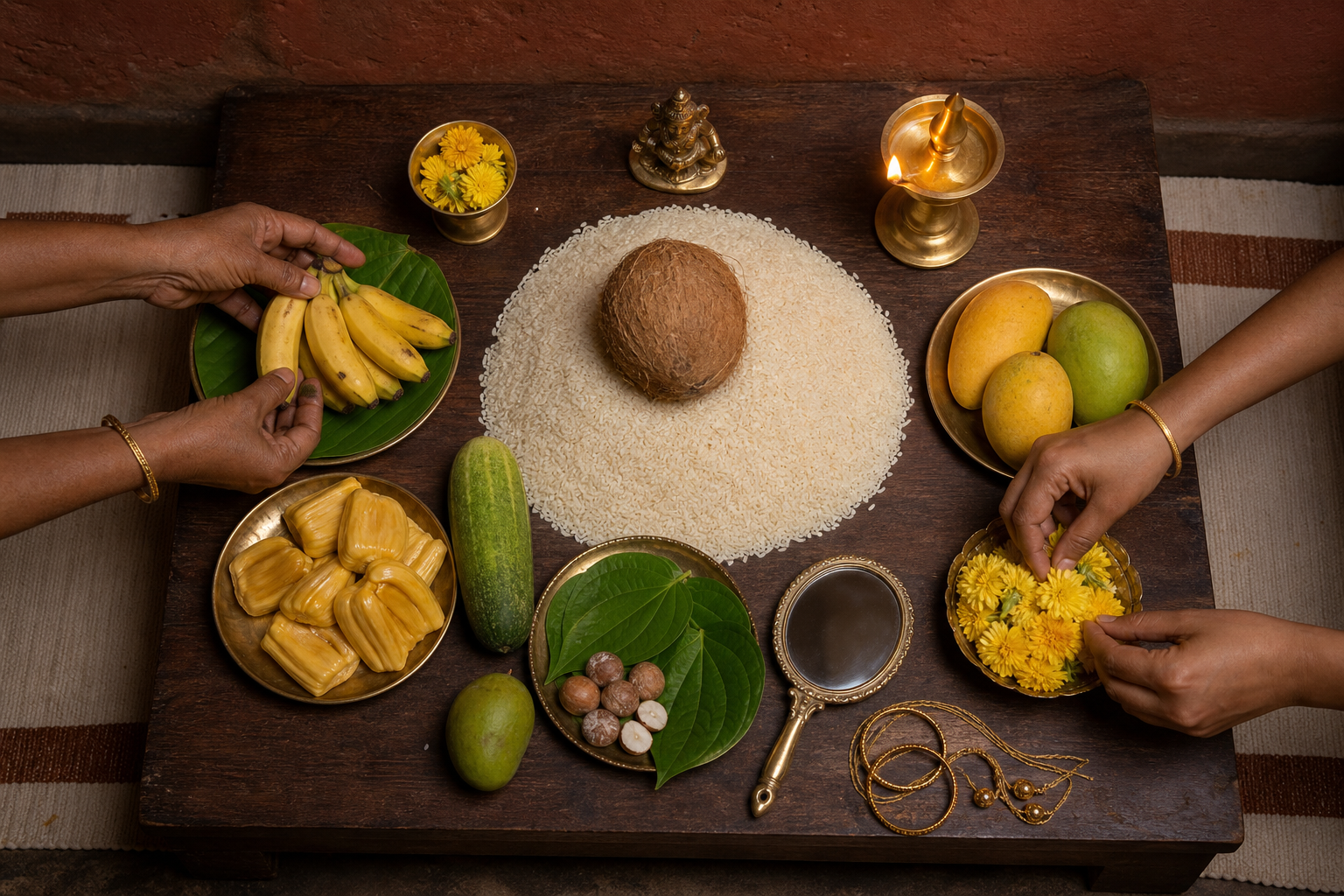
The most useful preparation happens on the evening before Bisu. Many households arrange an auspicious visual tableau so that abundance, light, and the fruits of the natural cycle become the first intentional sight of the morning.
- Choose a clean, calm place that household members can approach easily at dawn.
- Arrange rice, seasonal fruits, flowers, and a lamp. Add any established symbols of abundance that belong to your family’s own custom.
- Keep the display coherent and uncluttered. It is meant to direct attention, not demonstrate how much was purchased.
- Decide who will light the lamp in the morning, and keep everything needed for that nearby and safely placed.
- Tell the household where to gather so the first minutes of the day are not spent looking for people or rearranging objects.
Do not turn this into a rigid shopping list. Rice and seasonal produce carry meaning because they connect prosperity with sustenance, cultivation, and nature’s recurring generosity. Flowers and lamplight give the arrangement a devotional character. The household’s inherited practice should guide any additions.
If you are reviving Bisu after a gap, call an elder before buying decorations. Ask one precise question: “What did our household place for the first sight?” Record the answer, including any variation the elder remembers. That conversation may preserve more Tuluva cultural memory than an impressive but generic festive display.
Give the Bisu morning a clear and unhurried order
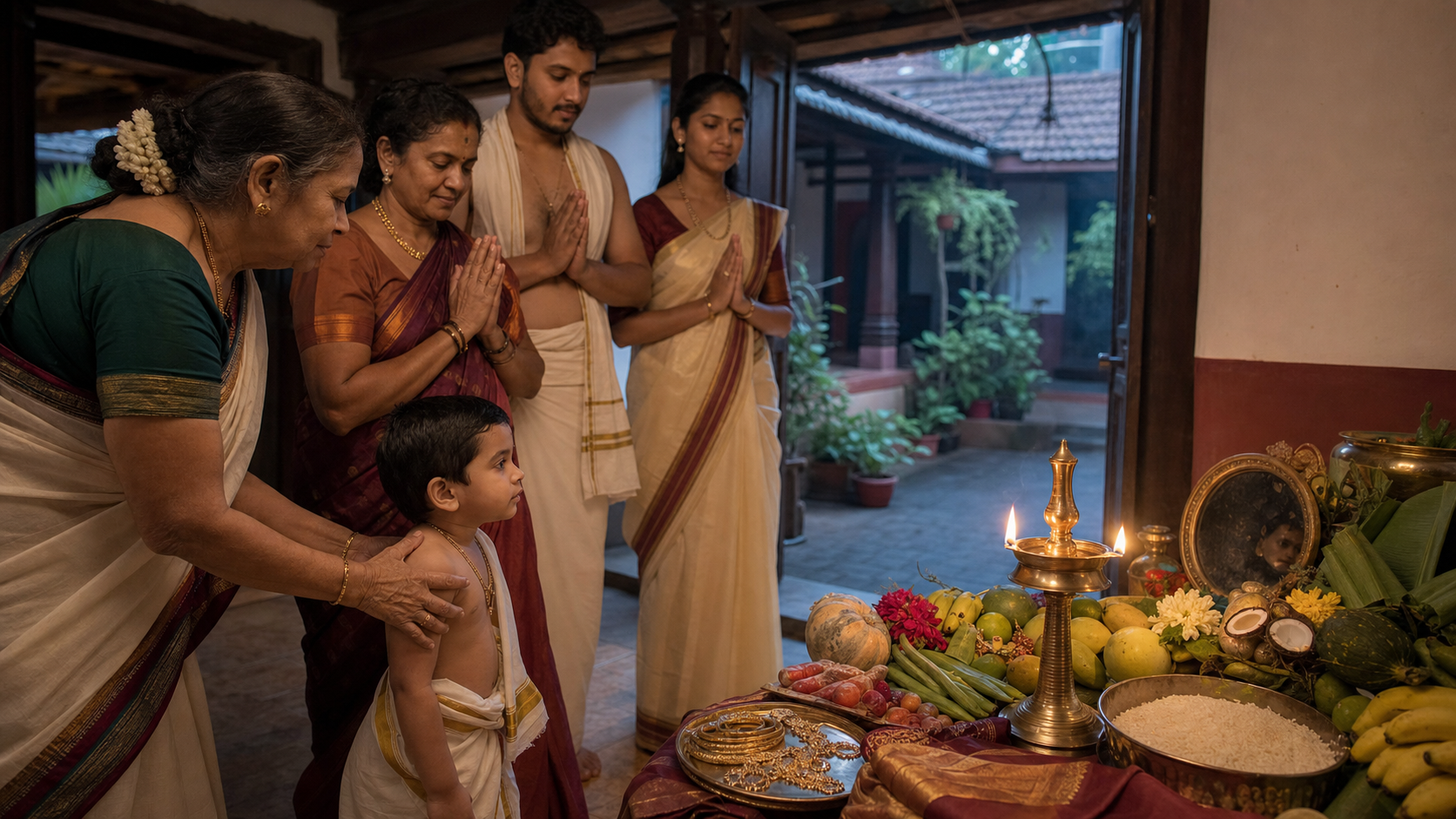
Bisu begins at dawn with serenity and devotion. The observance works best when its central actions happen before routine errands, entertainment, or a later community program takes over the day.
- Begin with the prepared arrangement as the household’s first deliberate sight of the new year.
- Light the lamp and offer prayers for wellbeing, clarity of purpose, and right conduct in the year ahead.
- Make time for elders and younger family members to exchange blessings and respect. Do not reduce this to a hurried greeting on the way out.
- Visit a temple for darshan where that is part of your family’s practice and circumstances permit it.
- Gather for a festive meal that gives seasonal produce a meaningful place rather than treating the menu as unrelated to the season.
- If a local celebration is available, support Tulu language, heritage, or performing arts by attending and taking younger relatives with you.
The meal does not need an invented “universal” Bisu menu. Family recipes and locally available seasonal ingredients are the more honest guides. What matters is the connection between food, gratitude, the coastal economy, and the natural cycle that sustains the household.
When family members live apart, protect the intergenerational element rather than focusing only on the meal. Arrange the blessing call early enough that it still belongs to the Bisu morning. Ask elders about one remembered practice, and give children time to listen instead of treating the call as a ceremonial formality.
Keep Bisu Tuluva while recognising the wider dharmic rhythm
Bisu stands near Vishu in Kerala and Puthandu in Tamil Nadu because these observances share a mid-April solar setting. Vaisakhi also often falls on the same date among Sikh communities. This proximity reveals a broad civilisational rhythm, but it does not make the festivals interchangeable.
You can explain the relationship to a child in three sentences: Bisu is the Tuluva solar New Year. It begins at Mesha Sankranti according to the Souramana Panchanga. Other communities welcome renewal near the same time through their own names, memories, and customs.
That explanation avoids two common mistakes. The first is isolating Bisu as though Tulunadu has no connection to the wider dharmic calendar. The second is flattening several regional traditions into one generic “Indian New Year.” Unity becomes more meaningful when each tradition’s language, calendar, geography, and household practices remain visible.
Your next step is simple: mark April 14, speak with an elder about your family’s arrangement, and gather the few meaningful items you will place the previous evening. Let the new year begin with a practice your household can remember and repeat.
References
