
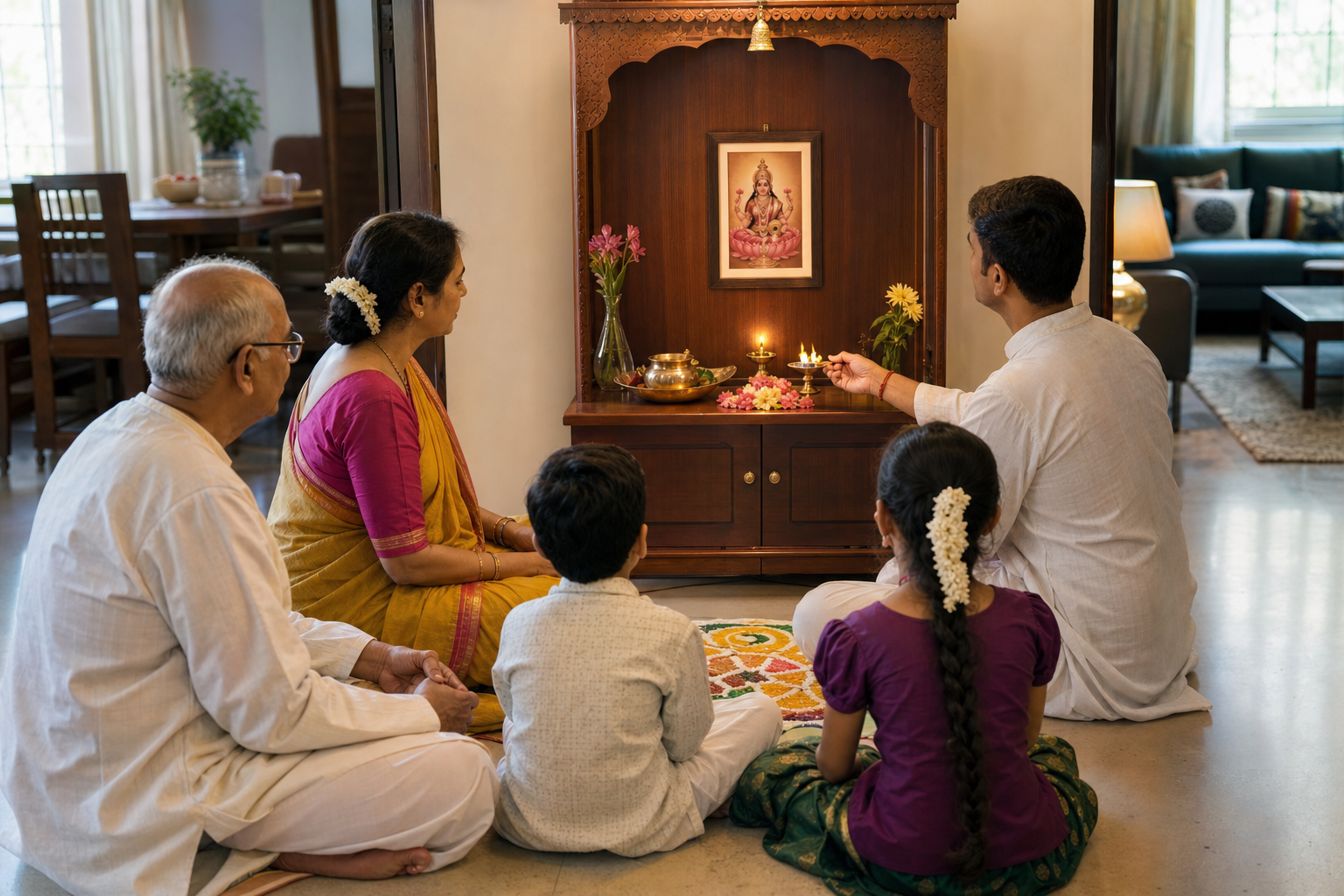
You know the name of the vrata your family observes, but you have three different dates, two lists of offerings, and no certainty about which instructions belong to your tradition. The answer is not to combine everything. A regional vrata stays coherent when you follow one calendar, one living line of guidance, and a discipline your household can actually complete.
Your aim is fidelity, not ritual volume. Preserve the deity, intention, sacred timing, core observance, and proper conclusion. Adapt the household logistics without pretending that every regional variation is interchangeable.
Choose one living chain of authority
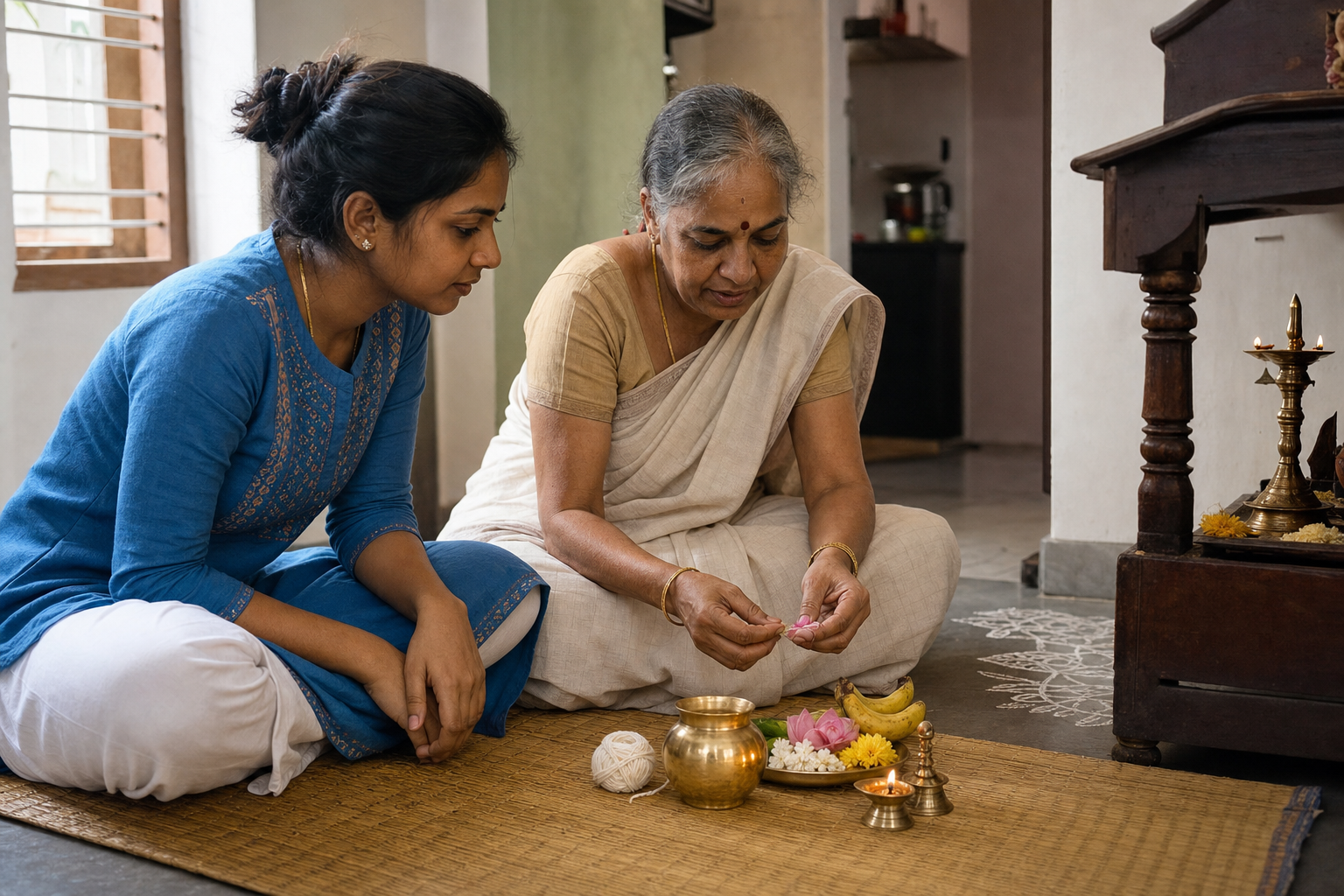
When instructions conflict, the real question is not which version looks most elaborate. It is which version belongs to your family, locality, and sampradaya. A vrata transmitted in Andhra Pradesh or Telangana may share its scriptural foundation with observances elsewhere while retaining a Telugu calendar, local temple rhythm, characteristic offering, or household procedure.
Use this order to settle uncertainty:
- Begin with your family practice. Ask the elder who has actually seen the vrata performed in the household. Record the vrata’s local name, the deity invoked, the fasting rule, the essential offering, and how the vow is concluded.
- Use one reliable regional panchangam. Confirm that it is intended for your locality and the calendar followed by your family. Do not take the opening tithi from one calendar and the concluding tithi from another.
- Check the temple connected to the tradition. A local temple can clarify its schedule, the form of worship it follows, and whether a priest-led component is customary.
- Treat general instructions as a preparation aid. They can help you remember lamps, offerings, readings, and charity, but they should not silently replace a known family procedure.
The calendar question matters because a tithi does not always fit neatly inside one civil date. In 2026, households following the same Telugu panchangam place the beginning of Payo Vratham on 18 February, at Phalguna Shukla Padyami, while the civil date associated with the concluding Dwadashi can vary slightly by location and tradition. That variation is a reason to verify your calendar, not evidence that one household must be doing the vrata incorrectly.
Before making a shopping list, write four details at the top of one page: your locality, the panchangam being followed, the family or sampradaya authority you consulted, and the confirmed beginning and conclusion. This small record prevents most last-minute confusion.
Protect the devotional core before adding detail
A vrata is a sankalpa expressed through time, restraint, worship, and conduct. Food rules matter, but fasting alone is not the vrata. A person can keep a demanding diet while neglecting prayer, patience, or truthful conduct. Another person may need a medically safer food discipline while maintaining the vow’s devotional rhythm with care. The whole observance has to point in the same direction.
Payo Vratham: twelve days organized around Vishnu
Payo Vratham is especially cherished in parts of Andhra Pradesh. Its scriptural frame is associated with Aditi Devi, the manifestation of Vamana, and the Srimad-Bhagavatam’s emphasis on disciplined devotion to Vishnu. Its household form is a twelve-day observance from Phalguna Shukla Padyami through Shukla Dwadashi.
If this is your family vrata, establish the following before the first morning:
- The twelve-day span according to the regional panchangam you will use.
- The milk-centered, sattvic regimen appropriate to your health and inherited practice.
- A consistent period for Vishnu puja, lamp lighting, and japa.
- The text you will recite or read, such as Vishnu Sahasranama where that is part of your practice.
- The ksheera or other naivedyam your household traditionally offers.
- The Dwadashi procedure, including gratitude and dana where appropriate.
Do not make the diet the only memorable part. The twelve-day structure is valuable because it creates repetition: the same sacred intention is renewed through daily worship, restraint, reading, and remembrance. Set a realistic daily minimum that you can maintain even on a workday, then add longer recitation or temple darshan when circumstances allow.
Putra Ganapati Vratam: prayer without a promise of outcome
Putra Ganapati Vratam carries particular significance in Andhra Pradesh and Telangana. Married couples undertake it with an intention centered on blessings for children and family well-being. Its customary elements include worship of Putra Ganapati, a suitable fast, durva grass, modaka, Ganesha recitation, and acts of charity. Its timing is generally settled through the regional panchangam, temple guidance, and the auspicious Chaturthi observed by the community.
Keep the sankalpa devotional rather than transactional. The vrata is a way to bring hope, steadiness, ethical discipline, and prayer into a painful or uncertain part of family life. It is not a guaranteed method of conceiving a child, a measure of anyone’s worthiness, or a substitute for appropriate medical care. No couple should be told that an outcome proves or disproves the sincerity of their faith.
These two vratas illustrate an important rule: preserve the distinguishing form of the vow you are keeping. Do not import the milk discipline of Payo Vratham into a Ganapati vrata, or add another vrata’s offerings merely because a longer list appears more complete. More ritual objects do not create more fidelity.
Turn the sankalpa into a schedule your home can sustain
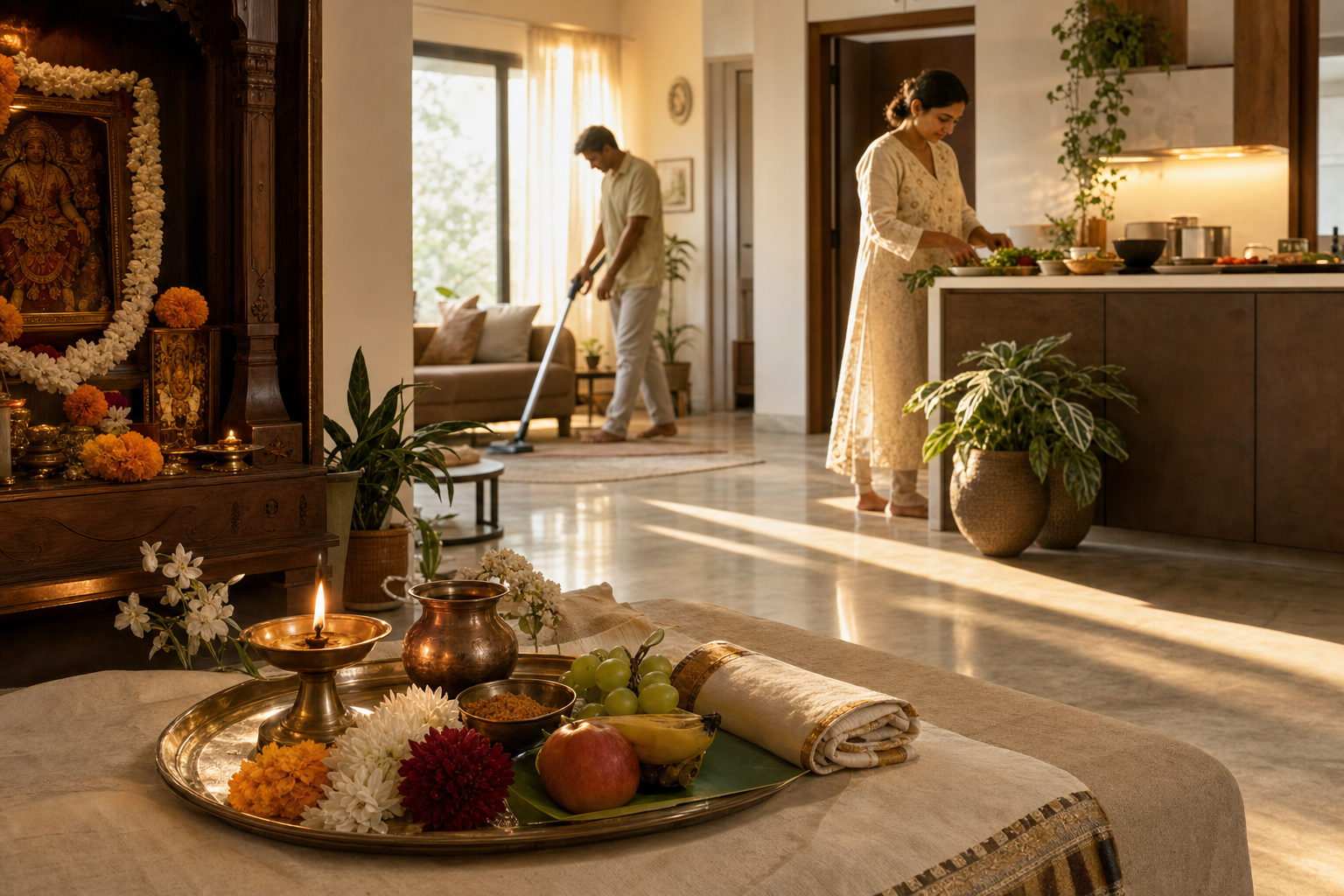
A vague plan usually fails at the ordinary pressure points: a rushed morning, an unplanned meal, a missing offering, or uncertainty about the final day. Resolve those points before the vrata begins.
- State the intention in one sentence. Name the deity and the quality you seek to cultivate, such as devotion, steadiness, gratitude, or family harmony. Avoid language that treats worship as a bargain for a guaranteed result.
- Write the beginning and ending separately. Record the relevant tithi and civil date for your locality, along with any temple time you plan to follow.
- Define the food discipline in advance. Write what you will consume rather than deciding when you are already hungry. If a traditional restriction could conflict with your health or clinical advice, choose a safe modification in consultation with appropriate medical guidance and a trusted family or temple authority. A vrata should not require avoidable harm.
- Set a daily minimum. Choose a fixed time for the lamp, puja, japa, stotra, or scriptural reading. A modest practice kept every day is more faithful to a sustained sankalpa than an ambitious first day followed by neglect.
- Prepare the physical items together. Keep the lamp, puja materials, text, offering ingredients, and any amount set aside for dana in one place. This turns preparation into support for worship rather than a daily search through the house.
- Confirm the closing procedure before you begin. Ask what should happen on Dwadashi, Chaturthi, or the relevant concluding occasion. Clarify naivedyam, temple participation, food sharing, and dana instead of improvising the ending.
If you miss part of the routine, do not invent an expiation from an unrelated tradition or quietly abandon the vow. Ask the same elder or temple authority whose procedure you adopted, then follow that guidance. Consistency of authority is as important after a lapse as it is at the beginning.
Let the household carry the tradition without coercion
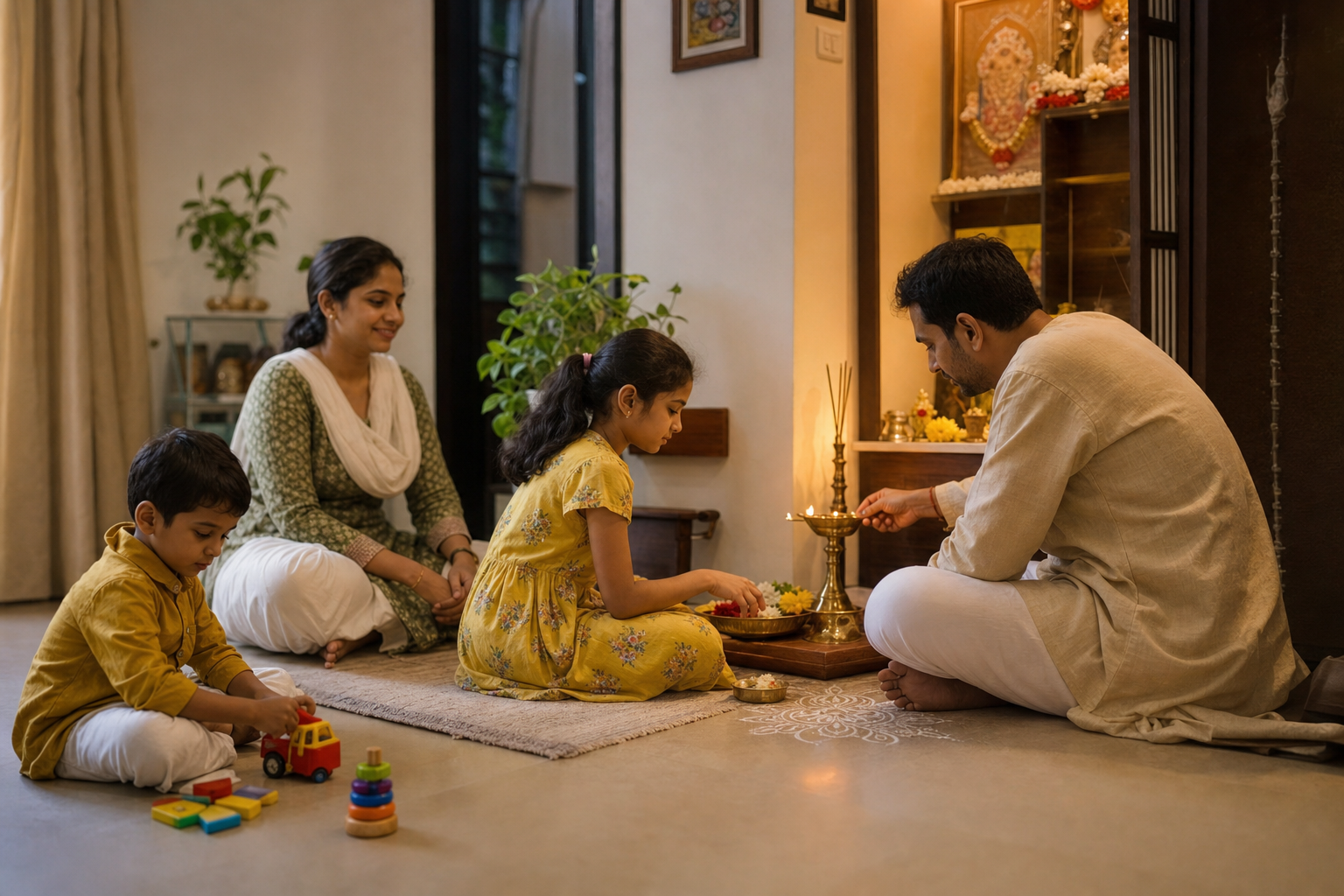
A household vrata survives when each generation knows both what to do and why it is being done. Children do not need to imitate an adult fast to participate meaningfully. They can clean the puja space, place flowers, help prepare naivedyam, listen to the account of Aditi and Vamana, learn a short name of Vishnu or Ganesha, or accompany the family for darshan.
Give each person a clear role:
- The person keeping the sankalpa maintains the agreed discipline and daily worship.
- Another adult protects the prayer time by handling interruptions, meals, or necessary household work.
- An elder explains the family form and identifies which details are essential rather than merely familiar.
- Children receive small, safe, repeatable responsibilities instead of pressure to perform an adult austerity.
- The temple provides darshan, collective chanting, calendrical confirmation, or priestly guidance where those belong to the observance.
Putra Ganapati Vratam requires particular sensitivity. Let the couple decide how publicly they want to speak about their sankalpa. Relatives should not turn a private prayer into questioning about fertility, predictions about results, or comparisons between families. Support can be practical: protect their worship time, prepare the agreed offering, join the prayer if invited, or assist with anna dana.
Dana and food sharing should extend the vrata’s discipline into conduct. They are not payments for divine favor. They train the household to connect worship with generosity, just as a sattvic routine should deepen restraint rather than produce irritability toward everyone else.
Values such as ahimsa, self-discipline, compassion, service, gratitude, and mindful conduct resonate across Hindu, Buddhist, Jain, and Sikh communities. That kinship should encourage mutual respect without erasing distinct forms of worship. A Vishnu vrata remains a Vishnu vrata; a Ganapati vrata retains its own mantra, offering, sacred story, and lineage.
Key takeaways
- Follow one chain of guidance: family sampradaya, one regional panchangam, and a trusted local temple.
- Record the opening and concluding tithis before buying offerings or planning meals.
- Preserve the vrata’s deity, intention, core discipline, daily worship, and closing procedure.
- Do not combine unrelated regional instructions merely to make the observance look more elaborate.
- Choose a fasting or food discipline that respects health needs; ritual restraint is not a substitute for medical care.
- Give children meaningful roles without imposing adult austerities.
- Treat dana, patience, and ethical conduct as part of the vow rather than optional decoration.
Your next step is simple: speak to the elder or temple you trust, choose the panchangam for your locality, and make a one-page vrata plan. Once the timing, core practice, safe discipline, and conclusion are clear, the household can stop debating versions and begin the vow with steadiness.
References
- DharmaRenaissance Blog — Payo Vrata 2026: Sacred 12-Day Vishnu Vow in Phalguna Masam—Dates, Origin, Rituals
- DharmaRenaissance Blog — Putra Ganapati Vratam 2026: Auspicious vow for blessings of children in Andhra–Telangana
