
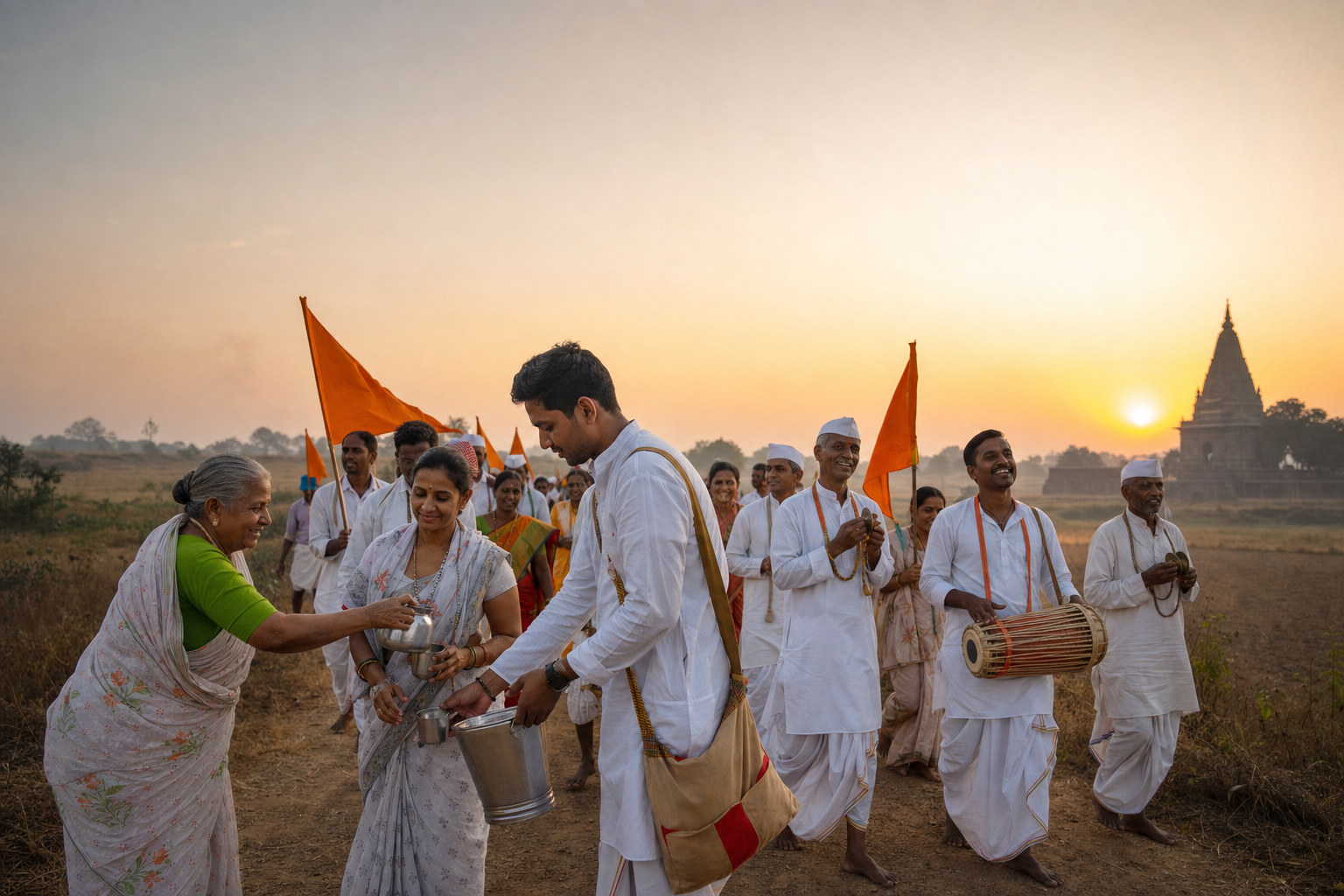
If you want to observe Tukaram Beej but aren’t sure what belongs at the centre of the day, begin with a practical question: will remembering Sant Tukaram change how you speak, serve, sing, or treat another person?
The Varkari answer joins devotion to conduct. Abhang, nama-sankirtana, satsang, pilgrimage, and seva are not competing ways to celebrate. They reinforce one another, carrying remembrance of Vithoba from the voice into ordinary life.
Remember the ascent, not only the anniversary

Tukaram Beej is observed as Sant Tukaram Punyatithi. The name “Beej” denotes Dwitiya, the second lunar day, and the observance falls in the Hindu month of Phalguna. In 2026, it fell on March 5. That civil date applies to 2026; for another year, check the relevant Hindu calendar rather than carrying the date forward.
The day commemorates the traditional belief that Sant Tukaram bodily ascended to Vaikunth, the abode of Lord Vishnu. Preserving the words “traditional belief” matters. Tukaram Beej is not merely a date on a biographical timeline, but neither should a devotional conviction be presented as though it were an ordinary historical observation.
Sant Tukaram lived from 1608 to 1650 and was born in Dehu. As a Marathi saint-poet of the Varkari bhakti movement, he renewed devotion through abhangs and nama-sankirtana centred on Vithoba, understood as a form of Vishnu or Krishna. His teaching made spiritual life accessible through remembrance, ethical conduct, and devotion expressed in the language of the people.
Before beginning your observance, therefore, choose a simple intention. You might dedicate the day to remembering Vithoba without contempt, serving without seeking recognition, or correcting one habit that contradicts compassion. A defined intention prevents the occasion from becoming a sequence of activities that leaves your conduct untouched.
Build the observance around four Varkari practices
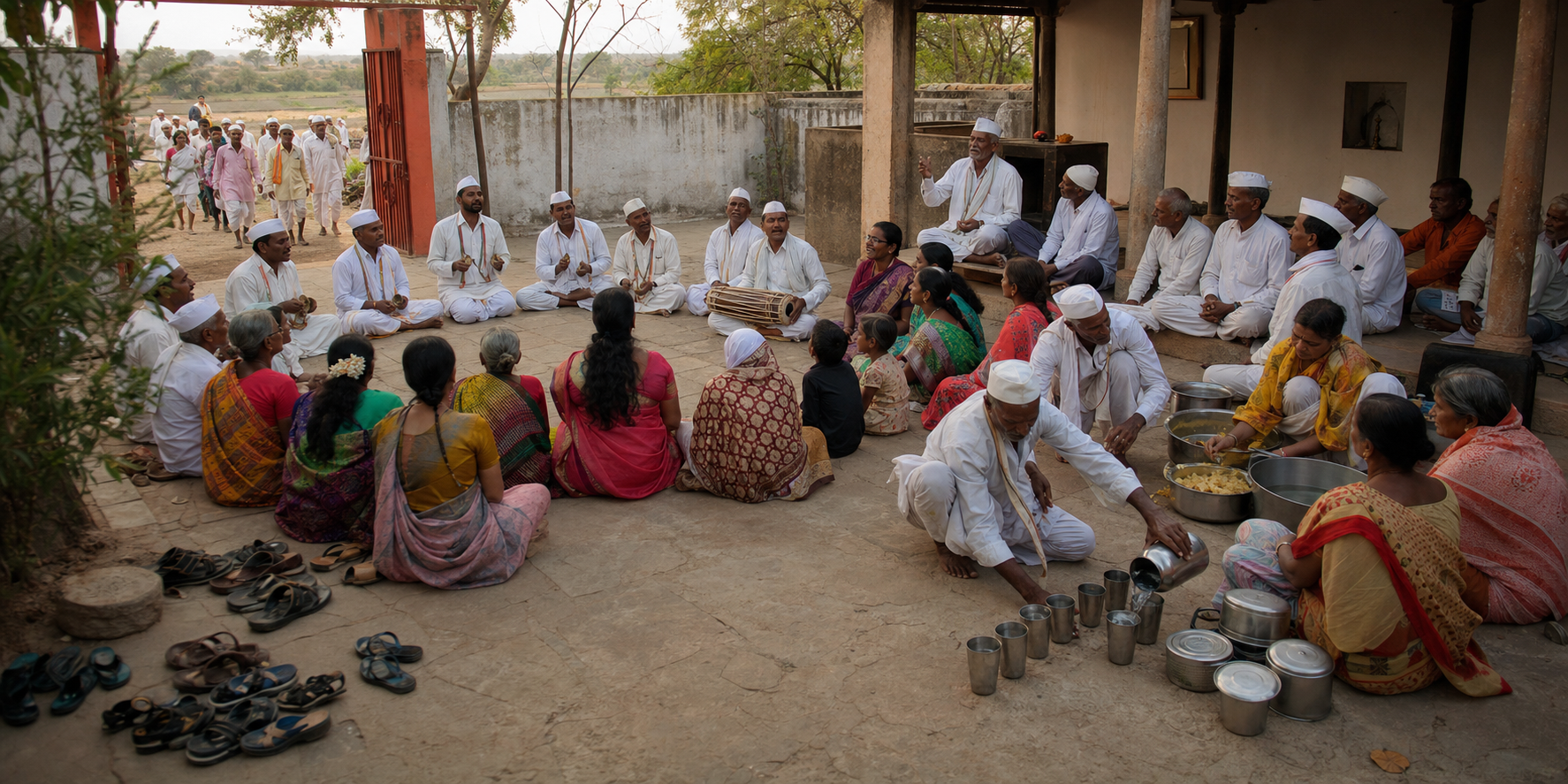
A meaningful programme does not need to be elaborate. It needs a clear movement from remembrance to reflection, fellowship, and service. The established forms of observance include kirtan, abhang recitation, satsang, study of the Tukaram Gatha, pilgrimage, palkhi, and seva. You can organise them around four practices.
- Begin with nama-sankirtana. Repeat or sing the Divine Name with attention rather than treating it as background music. If you are leading a group, select a form everyone can follow. The purpose is shared remembrance, not a display of musical skill.
- Spend time with an abhang. Sing or read a manageable selection, then pause. Ask what the words reveal about humility, attachment, equality, compassion, or remembrance of Vithoba. If some participants do not understand Marathi, provide a trustworthy translation or explain the meaning before singing. Sound draws people together; understanding lets the teaching travel beyond the gathering.
- Turn the reflection into satsang. Invite participants to name one teaching and one concrete way it bears on daily life. Keep the discussion anchored in Tukaram rather than allowing it to become a general exchange of opinions. A useful contribution connects devotion with a choice the speaker can actually make.
- Complete a defined act of seva. Food distribution and charitable initiatives are associated with Tukaram Beej. Decide in advance who will be served, what is genuinely useful, who is responsible, and how the work will be completed. A vague promise of charity is easy to admire and easy to forget.
The order matters less than the connection between the parts. Nama gathers the mind. Abhang gives remembrance language. Satsang tests understanding in community. Seva prevents devotion from ending with the final song.
Choose a form that fits your actual circumstances
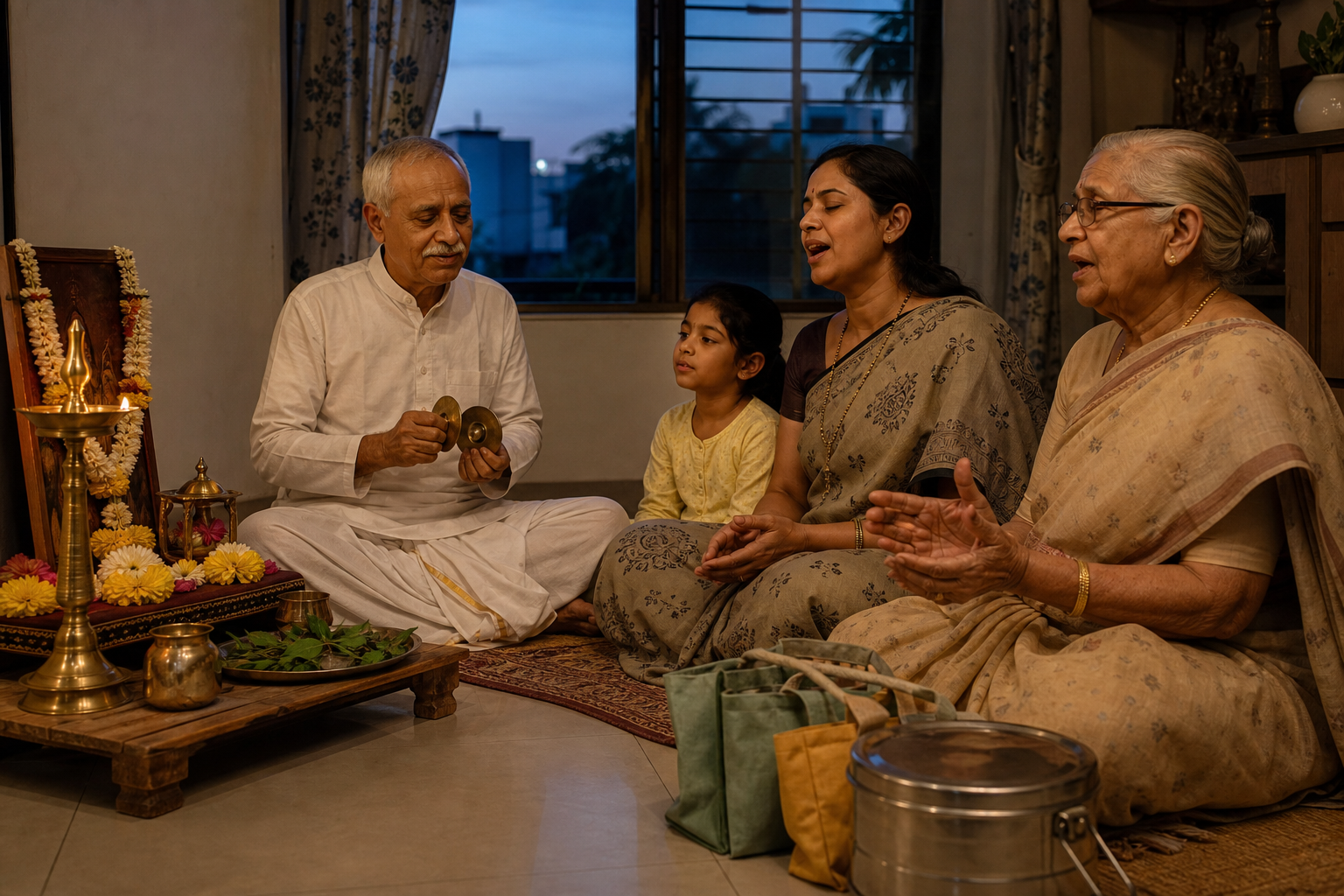
You do not have to imitate a pilgrimage gathering at home, and a large community event should not feel like an enlarged private prayer session. Choose the setting honestly, then preserve the same Varkari movement from nama to ethical action.
If you are observing at home
Gather the household, explain what the day remembers, sing or repeat Vithoba’s name, read an abhang or a passage from the Tukaram Gatha, and discuss one value that needs practice. End by assigning a real act of service rather than merely agreeing that service is good.
Do not let language become a barrier. Marathi preserves the literary and devotional setting of Tukaram’s abhangs, but reflection requires comprehension. Use the original where possible and accompany it with a language your household understands. This is more faithful to accessible bhakti than recitation without attention.
If you are organising a community gathering
Design the programme so participation does not depend on social standing, fluency, or performance ability. Provide the text being sung, explain unfamiliar terms, and create space for congregational response. Give visible duties and quiet duties equal dignity. Preparing food, welcoming families, cleaning the space, and helping someone follow an abhang can express the day’s teaching as directly as standing before the microphone.
Attach the gathering to one completed seva effort. Name the purpose when inviting participants and report plainly what will happen after the collection or distribution. This keeps service accountable and protects it from becoming a ceremonial gesture.
If you are joining a pilgrimage or palkhi
Dehu near Pune is the principal spiritual focus of Tukaram Beej, while devotees also undertake pilgrimage to Pandharpur. Local programmes may include early kirtan, devotional singing through the day, evening congregations, and community processions. Confirm the current programme with its organisers instead of assuming that every venue follows the same schedule.
Join a palkhi through the local community directing it, follow the discipline of the gathering, and reduce the waste you carry or leave behind. Pilgrimage is not spiritual tourism. Let walking, waiting, singing, and cooperating with strangers become part of the practice.
Let conduct, not attendance, measure the day
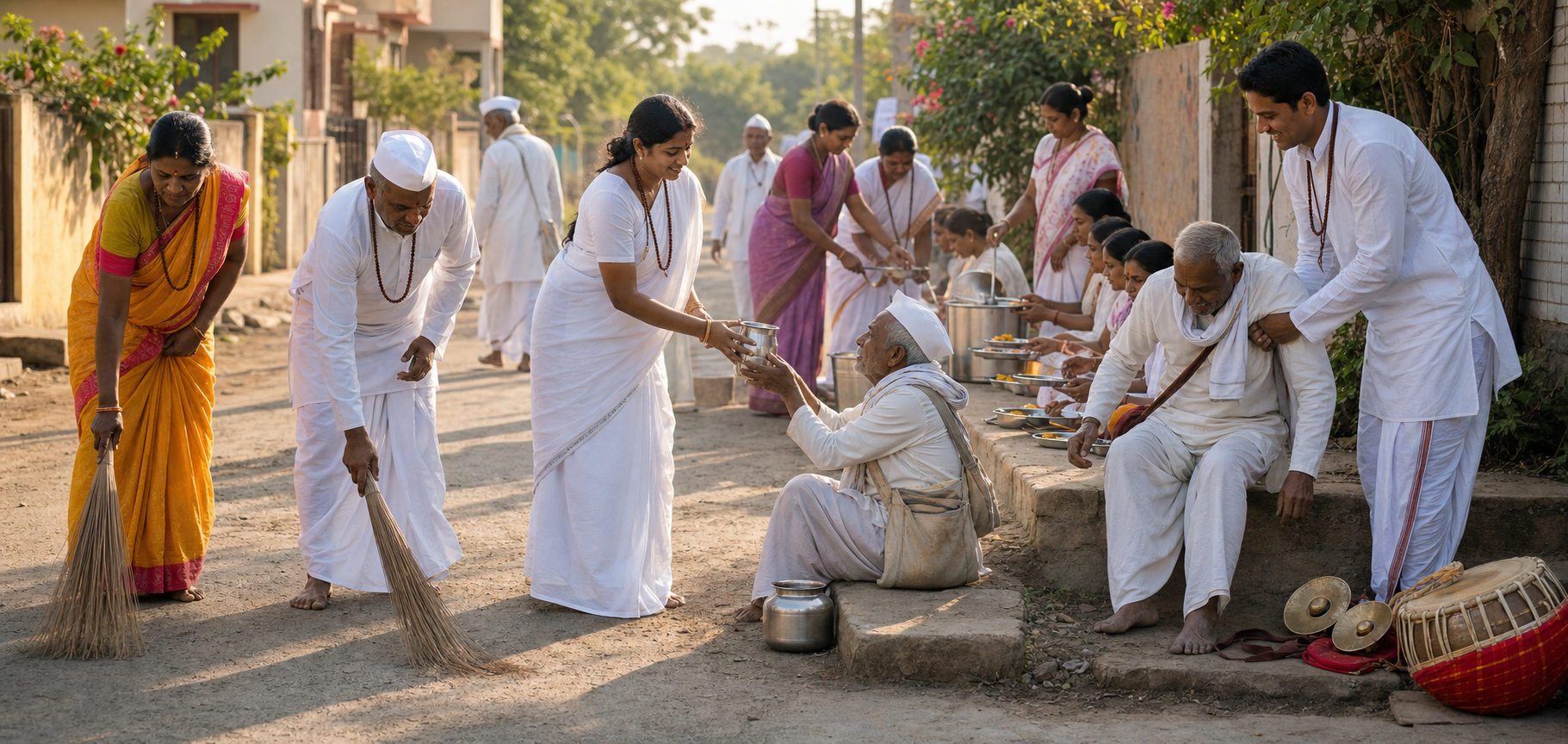
Tukaram’s legacy is associated with humility, compassion, equality, simple living, ethical conduct, and continuous remembrance of the Divine. These values are useful only when they become tests of behaviour.
- Test humility through the work you accept. Take a necessary task that brings little recognition. If devotion only places you where others can see you, it has not yet challenged the ego.
- Test compassion through usefulness. Ask what the recipient of seva needs, not what is most convenient to give. Compassion begins by noticing another person’s situation accurately.
- Test equality through participation. Notice who is heard, who serves, who leads, and who remains at the edge of the gathering. Inclusion is not an announcement; it appears in the distribution of attention and responsibility.
- Test remembrance after the festival. Choose a repeatable practice connected to Vithoba’s name, an abhang, or service. The aim is not to preserve the mood of one congregation but to give remembrance a place in ordinary life.
The same ethical field creates meaningful resonance with other Dharmic paths: Buddhist karuna, Jain ahimsa, and Sikh seva each direct attention beyond self-interest. You can acknowledge those shared moral concerns without pretending that distinct traditions, vocabularies, and disciplines are interchangeable. Dharmic unity becomes stronger when kinship is recognised without erasing difference.
This also gives you a way to distinguish a culturally busy observance from a spiritually serious one. A large programme can be worthwhile, but scale is not the measure. Look for attentive nama, intelligible engagement with Tukaram’s words, dignified participation, accountable service, and a commitment that continues after people disperse.
Key takeaways for your Tukaram Beej observance
- Tukaram Beej marks the traditional bodily ascent of Sant Tukaram to Vaikunth; in 2026, the observance fell on March 5.
- Keep Vithoba nama, abhang, satsang, and seva connected instead of treating them as unrelated programme items.
- At home, choose comprehension over ceremony without attention. In a community, make participation accessible and service accountable.
- Dehu is the principal place of remembrance, while Pandharpur is also associated with pilgrimage; verify local timings and arrangements before attending.
- Use humility, compassion, equality, and continuing remembrance as the real measures of the day.
For your next observance, make three decisions before the day arrives: which abhang you will understand, which form of nama everyone can join, and which act of seva will actually be completed. Then carry one of those practices forward. That is how Tukaram Beej remains a living Varkari discipline rather than a date remembered and released.
References
- HinduPad — Tukaram Beej 2026 (Sant Tukaram Punyatithi): Sacred Date, Meaning, and Varkari Traditions
