
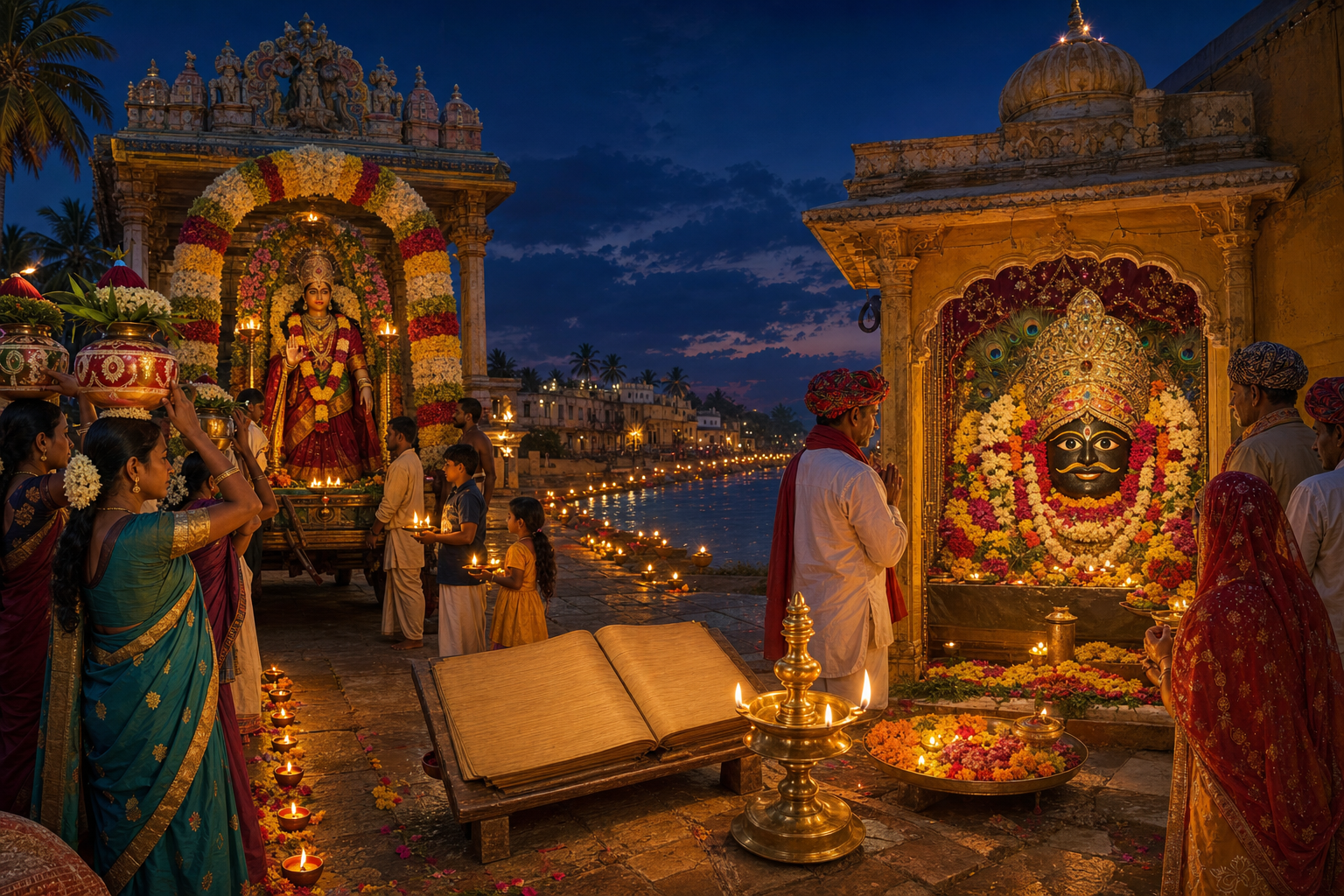
If you have encountered Draupadi as a goddess in a South Indian procession or heard Barbarika addressed as Shyam Baba, you may have wondered whether this is still the Mahabharata or a later religion attached to it. The useful answer is that an epic identity and a living devotional identity can overlap without being identical.
Once you know what to look for – the local name, the form of worship, the vow, the ethical demand, and the community carrying it – you can enter an unfamiliar tradition without dismissing it as folklore or assuming that every honored Mahabharata character is worshipped as a deity.
Key takeaways
- A Mahabharata figure becomes devotionally present through a sustained relationship: darshan, vrata, procession, sacred teaching, name remembrance, seva, or protection.
- Draupadi Amman is approached as Devi Shakti and a protective local presence, especially through Karaga and related South Indian observances.
- Barbarika is venerated as Khatu Shyam through a tradition of divine naming and a boon from Sri Krishna; devotees express that bond through darshan, nishan offerings, bhajans, vows, and seva.
- Krishna is encountered as Lord, charioteer, and teacher through the Bhagavad Gita, while figures such as Bhishma, Vidura, Karna, and Yudhishthira can remain ethically powerful without automatically becoming temple deities.
- To understand any local tradition, ask what devotees do, what relationship the local name expresses, and what discipline the practice expects from them.
One epic can sustain several devotional relationships
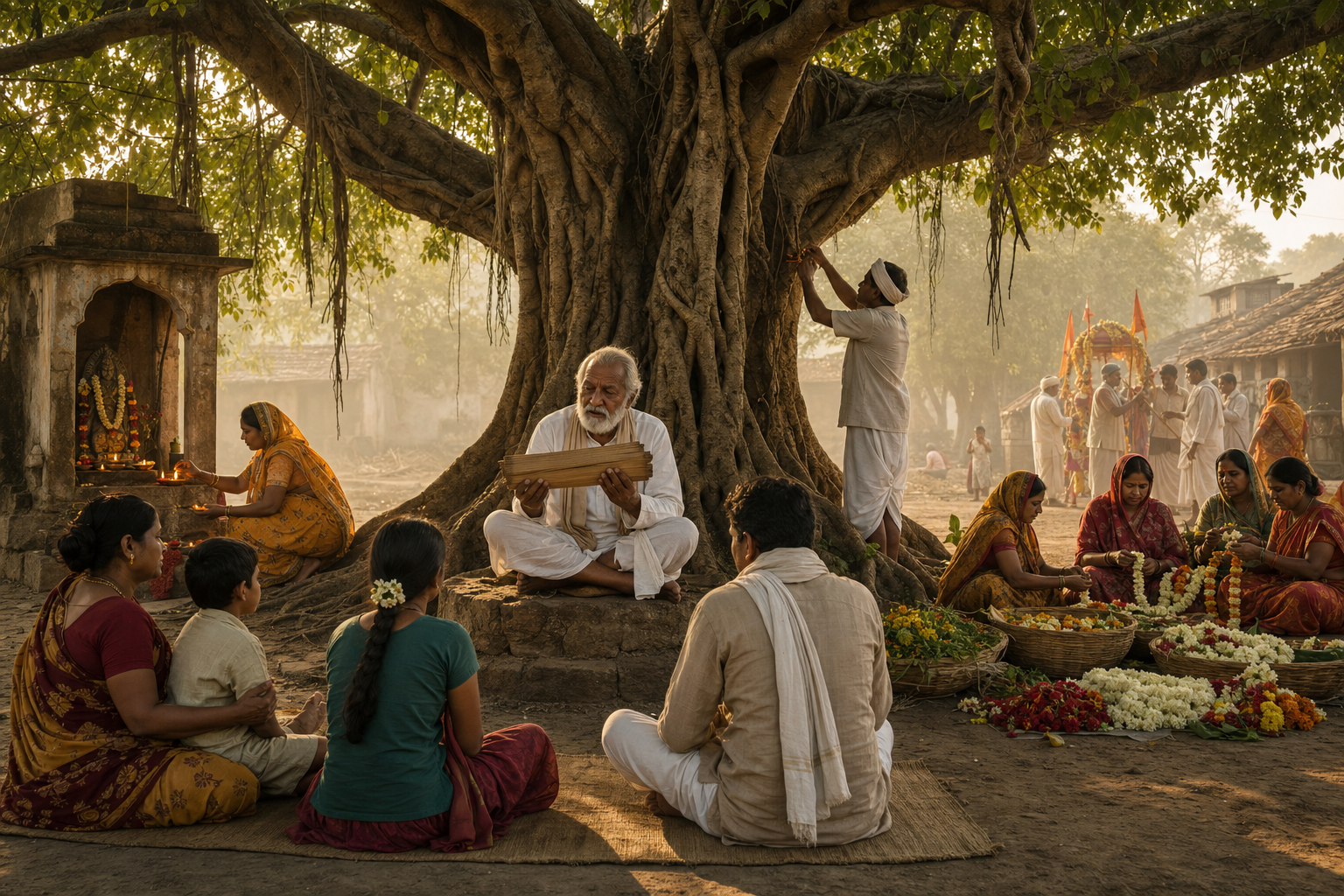
The Mahabharata is not a flat collection of heroes waiting to be ranked. It is an itihasa in which kinship, governance, vows, devotion, suffering, and spiritual realization are tested through human choices. Its nested debates and morally difficult episodes make dharma something to be discerned, not merely a rule to be repeated.
Living traditions continue that work in more than one way. A figure may be worshipped as Ishvara, recognized as Devi, approached as a regional protector, remembered through a boon-centered lineage, or retained as an ethical exemplar. These are different relationships, not a ladder from primitive belief to sophisticated philosophy.
| Mahabharata figure | Devotional or ethical relationship | Characteristic response | What you should notice |
|---|---|---|---|
| Sri Krishna | Lord, charioteer, and spiritual teacher | Bhakti and reflection on the Bhagavad Gita | Action becomes an offering rather than a pursuit of results alone. |
| Draupadi | Draupadi Amman, Devi Shakti, and protective local presence | Vrata, Karaga procession, temple worship, and allied fire-walking observances | Dignity, moral courage, protection, and disciplined power remain central. |
| Barbarika | Shyam Baba through Sri Krishna’s naming and boon | Darshan, nishan offerings, bhajans, nama-smarana, pilgrimage, and seva | Surrender and gratitude matter more than battlefield fame. |
| Bhishma, Vidura, Karna, and Yudhishthira | Moral interlocutors and exemplars with different degrees of complexity | Study, remembrance, and testing one’s choices against theirs | Reverence for a quality does not require declaring the whole life flawless. |
The distinction matters because the word worship can hide more than it reveals. A devotee seeking Draupadi Amman’s protection, a yatri carrying Shyam Baba’s flag, and a reader confronting Arjuna’s crisis in the Gita are all meeting the Mahabharata devotionally, but they are not doing the same thing.
Use the local name as your first clue. Amman tells you that Draupadi is being approached through the sacred grammar of the Mother. Shyam Baba identifies a compassionate devotional presence authorized, in that lineage, by Krishna’s boon. Krishna as Arjuna’s charioteer places divine guidance in the middle of a crisis of action. The name tells you what kind of relationship has become possible.
Draupadi Amman: when moral dignity becomes protective Shakti
Draupadi’s devotional life does not abandon the woman who challenged the Kuru court. In the Sabha Parva, she asks whether a man who has already lost himself possesses the right to stake his wife. That legal and moral interrogation exposes the failure of an entire assembly. Her refusal to treat power as justice becomes essential to understanding why later communities recognize more than endurance in her.
Across parts of the Tamil-Kannada region, Draupadi is revered as Draupadi Amman: a manifestation of Devi Shakti, a protector, and in some settings a grama-devata who guards communal and moral order. Regional narratives emphasize her courage, protective motherhood, fidelity to dharma, and capacity to answer humiliation without surrendering her moral center. The epic queen remains present, but her significance is concentrated through the relationship between devotee and goddess.
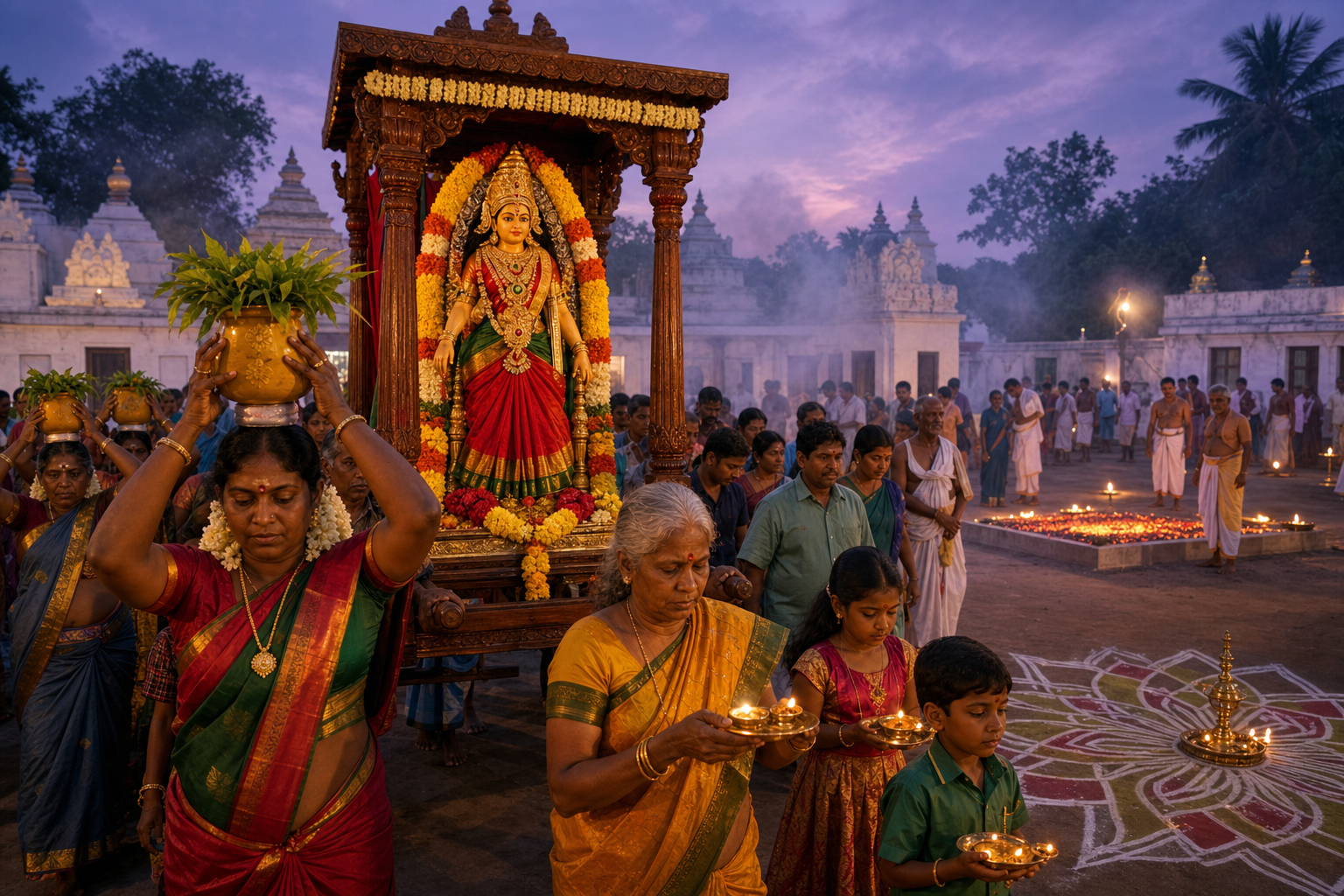
Bengaluru Karaga makes that relationship visible. Around Chaitra Purnima, vows, ritual bathing, dietary discipline, celibacy, seclusion, alankara, and temple rites prepare for a nocturnal procession associated with the Sri Dharmaraya Swamy Temple. At its center is the karaga, an earthen vessel holding sanctified water beneath a high floral arrangement of jasmine and neem. The bearer balances it on the head without supporting it by hand as the procession moves through the city.
If you see only a difficult feat of balance, you miss the rite. The vessel functions as a mobile kalasha and a locus of sacred presence. Water carries the meanings of life, renewal, and abundance; jasmine conveys purity; neem conveys protection. The movement of the karaga turns streets, markets, shrines, and neighborhood memory into a temporary sacred field.
The bearer, traditionally chosen from the Vahnikula Kshatriya or Thigala community, adopts feminine attire, bangles, and anklets. That transformation is not comic impersonation or secular theater. Within the rite, the prepared human body becomes an instrument of Shakti. You should therefore resist photographing or describing the bearer as a costumed performer. The theological claim is presence, not representation alone.
The Veerakumaras surrounding the karaga carry ceremonial swords and observe demanding vows. Their martial appearance expresses kshatra dharma under discipline: sacred power is protected through courage, restraint, fidelity, and self-mastery. The swords do not authorize private aggression. They place strength under a vow.
This combination helps you read Draupadi Amman more accurately. Her Shakti is not passive patience, but neither is it uncontrolled vengeance. Honor is defended without turning hatred into a deity. Righteous anger is made accountable to vrata, ritual order, guardianship, and communal responsibility.
Related Draupadi Amman traditions in Tamil communities include Theemithi, or fire-walking, in South India and the diaspora. Karaga and Theemithi should not be treated as interchangeable ceremonies, yet both embody devotion through physical discipline and vow-keeping. Their regional forms can differ while Draupadi’s resilience, chastity, protective force, and commitment to dharma remain recognizable.
If you attend such an observance, learn which moments are open to photography, do not obstruct the bearer or protective retinue, use designated donation channels, and follow the route instructions given by temple volunteers. Give elders, children, and people with special needs room to move. These are not merely crowd-management courtesies. They are the practical form your reverence takes.
Khatu Shyam: how Barbarika becomes a refuge for devotees
Barbarika may surprise you if your knowledge of the Mahabharata has centered on the Pandavas, Kauravas, Krishna, Bhishma, Karna, and Draupadi. Yet a figure does not need the largest share of the Sanskrit narrative to acquire a vast devotional life.
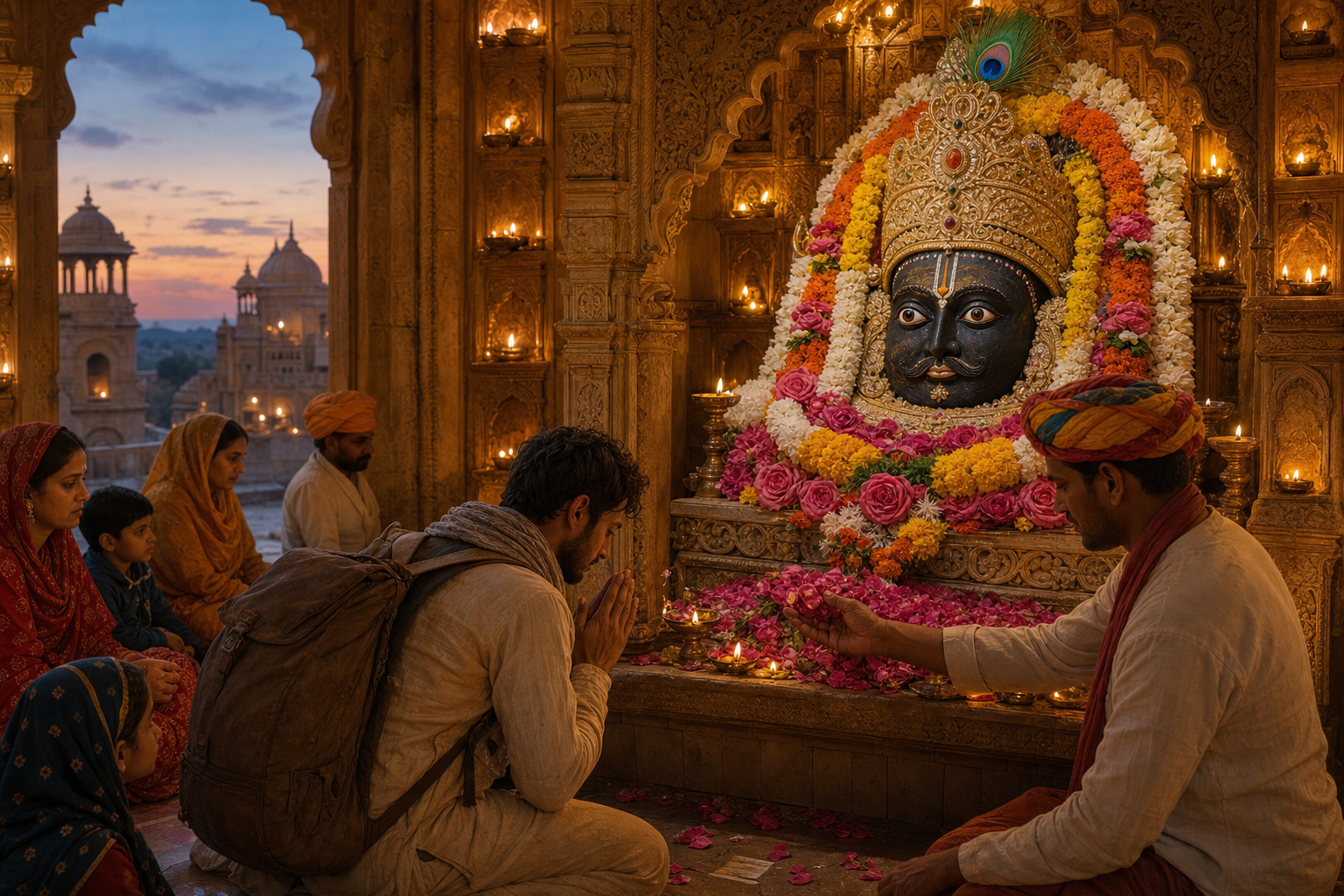
The Khatu tradition makes a precise theological connection. Barbarika is venerated as Shyam Baba because, according to revered tradition, Sri Krishna gave him the name Shyam and granted that he would be worshipped in Kali Yuga as a compassionate form linked to Krishna. Barbarika names the Mahabharata-era identity; Shyam Baba names the living relationship established through divine grace.
This is why trying to settle the tradition with the bare question, Is Shyam Baba Barbarika or Krishna, produces more confusion than clarity. The tradition preserves Barbarika’s identity while grounding his devotional authority in Krishna’s naming and boon. The connection is neither a simple replacement nor a claim that biography alone produces divinity.
The clearest way to understand Shyam devotion is to watch what devotees actually offer. During the Falgun Mela at Khatu in Rajasthan, yatris carry triangular nishans, often after making a vow connected with gratitude, healing, or a cherished wish. Groups travel on foot while singing bhajans and remembering the divine name. At the shrine, the flag is offered with prayers that can extend from personal needs to sarva-mangalam, the well-being of all.
The nishan is therefore not festival decoration or a souvenir waiting to be photographed. It is a materialized sankalpa. It carries intention through distance, bodily effort, collective song, and final offering. If someone is bearing a flag after a vow, the important question is not how ornate it looks. Ask what act of surrender the journey is completing.
Khatu’s devotional grammar also includes darshan, aarti, bhajan, akhand nama-japa, annadana, volunteer service, and assistance to pilgrims. These practices reveal the form of Shyam Baba’s presence more clearly than an argument over whether he belongs on a list of major or minor epic characters. Devotees approach him as a compassionate refuge whose remembrance calls forth humility, gratitude, and service.
The scale of the Falgun gathering also shows why seva is part of worship rather than an administrative afterthought. Water points, food service, sanitation, first aid, one-way pedestrian flow, and attention to vulnerable pilgrims allow darshan to remain possible. A flag carried in devotion and a cup of water offered to a tired yatri belong to the same moral world.
If you join a nishan yatra, begin with the sankalpa rather than the spectacle. Learn the group’s discipline, carry only essential belongings, follow the established queue, keep the approach to the sanctum clear, and place offerings through the channels the temple provides. Nama-smarana in a long queue may be a more faithful participation than competing for the closest image.
A practical method for reading any Mahabharata devotion
Do not confuse reverence with deification
Not every figure who commands reverence becomes an object of temple worship. Krishna’s relation to the devotee is not the same as Vidura’s relation to a reader seeking honest counsel. Draupadi Amman’s ritual presence is not the same as the moral admiration directed toward Karna’s generosity. Keeping these distinctions intact protects both theology and the complexity of the epic.
Bhishma can be honored for his discipline and studied for his teachings on rajadharma, emergency ethics, and giving while his vow-bound choices remain open to judgment. Vidura’s fearless counsel can guide anyone responsible for speaking truth to power. Karna can evoke compassion for exclusion and admiration for generosity without making his allegiance beyond criticism. Yudhishthira’s refusal to abandon the dog at heaven’s threshold can make compassion a test of spiritual maturity rather than a decorative virtue.
Arjuna provides another important distinction. His despair is not worshipped. It becomes the human opening through which Krishna teaches karma-yoga, jnana-yoga, and bhakti-yoga. The Bhagavad Gita does not erase his grief; it redirects him toward disciplined action without attachment to its fruits. A living encounter with Arjuna can therefore begin when you recognize paralysis in yourself and ask what duty remains after self-justification has been stripped away.
The Mahabharata’s power depends on refusing easy camps. Admiration should sharpen moral judgment, not suspend it. If attachment to a favored figure forces you to excuse every choice that figure made, you have replaced dharmic inquiry with partisanship.
Use six questions before drawing conclusions
- What name is being used? Draupadi, Draupadi Amman, Barbarika, and Shyam Baba do not carry identical relational meanings. Record the local name before applying a general label.
- Who is the figure to the devotee? Ask whether the relationship is with a Lord, Mother, protector, boon-bestowed refuge, guru, ancestor, guardian, or ethical exemplar. Do not decide from iconography alone.
- What is the central ritual verb? Are people taking a vow, carrying a vessel, offering a flag, walking through fire, seeking darshan, singing the name, studying a teaching, giving food, or guarding a procession? What devotees repeatedly do is often more informative than an abstract definition.
- What discipline makes the rite possible? In Karaga, purity codes, fasting, mental steadiness, and the bearer’s preparation precede the public climax. In a nishan yatra, sankalpa, walking, song, queue discipline, and final offering give the flag its meaning. Look behind the visible moment.
- What ethical quality is being cultivated? Protection, humility, courage, service, truthfulness, restraint, compassion, and fidelity to dharma are not interchangeable. Identify the particular demand the tradition places on its devotees.
- Which narrative lineage does the community preserve? A regional retelling or temple tradition may emphasize dimensions that a brief epic summary does not. Ask how the community tells the story before judging it against a single remembered version.
This method also prevents two opposite errors. One is to dismiss every regional form as an addition to the real epic. The other is to declare every admired figure a deity because devotion surrounds the name. Living tradition is more exacting than either shortcut: it joins narrative memory to a defined relationship, repeated practice, sacred place, communal transmission, and ethical obligation.
On your next encounter with a Mahabharata figure outside the book, write down four things: the local name, the devotee’s relationship, the repeated practice, and the moral demand. Then take one grounded next step – read the related episode, learn the temple’s etiquette, keep the appropriate vrata, or support the seva that makes participation possible. That is how you begin to see the Mahabharata not merely as a story remembered, but as dharma still being practiced.
References
- DharmaRenaissance Blog – Decoding the Karaga: Draupadi’s Living Shakti, Symbolism, and Community Unity in South India
- DharmaRenaissance Blog – Mahabharata Made Clear: A Comprehensive, Soul-Stirring Summary of Dharma, War, and Wisdom
- DharmaRenaissance Blog – Falgun Mela 2026 at Khatu Shyamji: Nishan Yatra, Lakkhi Mela Dates, Rituals, Travel Guide
