
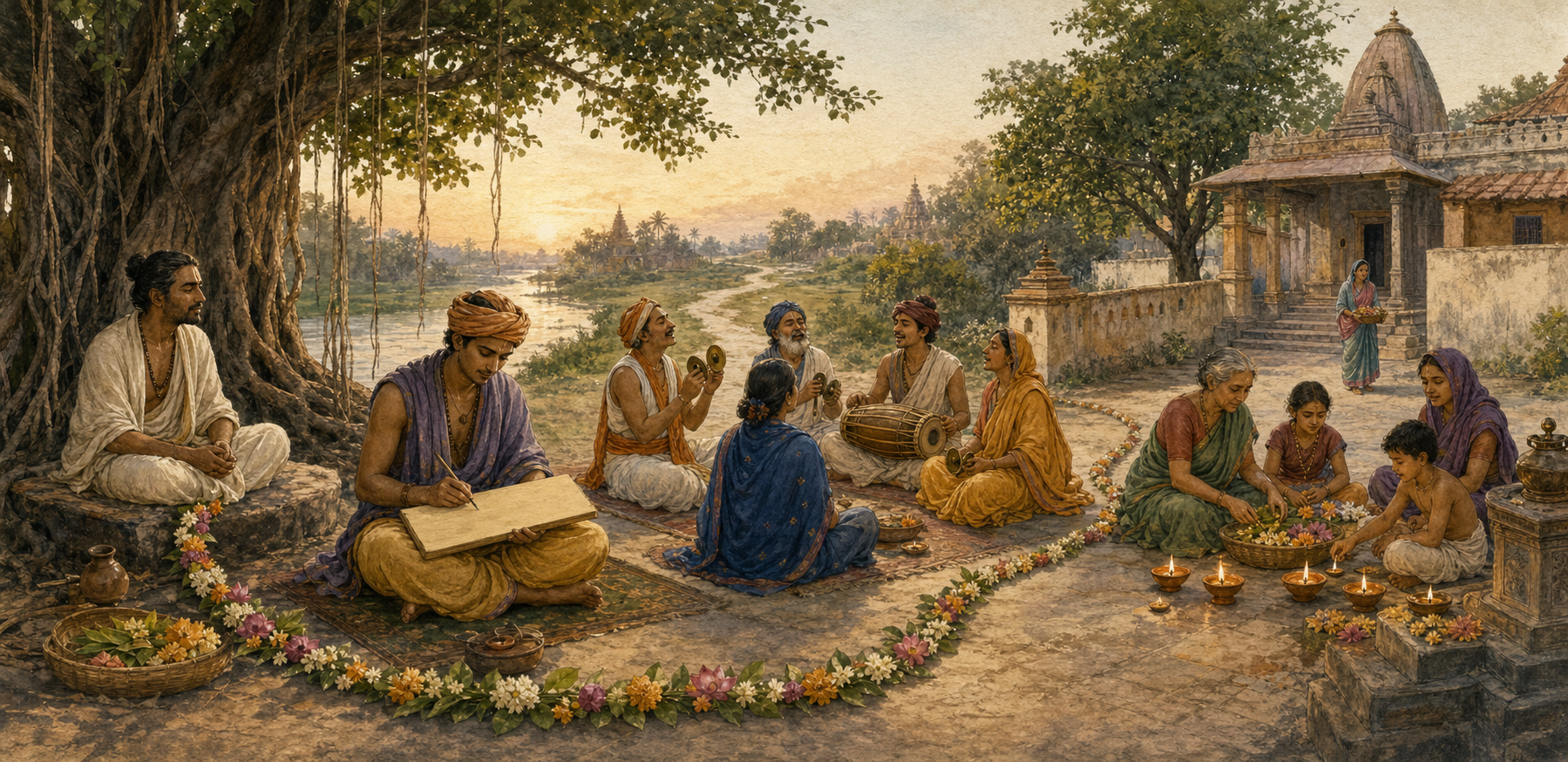
You may know the names of several bhakti saints, keep their songs in a playlist, and still feel unsure where to begin. Is the saint’s life the teaching? Is the poem a prayer, a theological text, or music for a gathering? Does taking inspiration from a poet mean entering that poet’s lineage?
You can answer those questions without ranking saints or blending every devotional tradition into one indistinct movement. Learn to see four connected carriers of dharma: the exemplary person, the crafted poem, the repeated practice, and the community that transmits them. Once you distinguish their roles, you can choose a path with greater clarity and turn admiration into sadhana.
Key takeaways
- The title Dasa, Dasar, or Dasaru expresses devotional service, but it does not prove that everyone bearing it belonged to one period, region, theology, or initiatory lineage.
- Read a saint’s life on two levels: as sacred memory that forms character and as a historical account whose individual claims may carry different degrees of certainty.
- A bhakti poem is usually more than an expression of feeling. Its names, commands, refrains, and devotional mood teach you how to remember, surrender, serve, and understand the Divine.
- A living lineage connects doctrine, teacher, practice, correction, ethical discipline, and community. A list of revered names by itself is not enough.
- Begin with one clearly attributed composition, learn what it means, practise it consistently, and pair remembrance with a concrete form of seva.
Do not confuse the saint, the poet, and the lineage
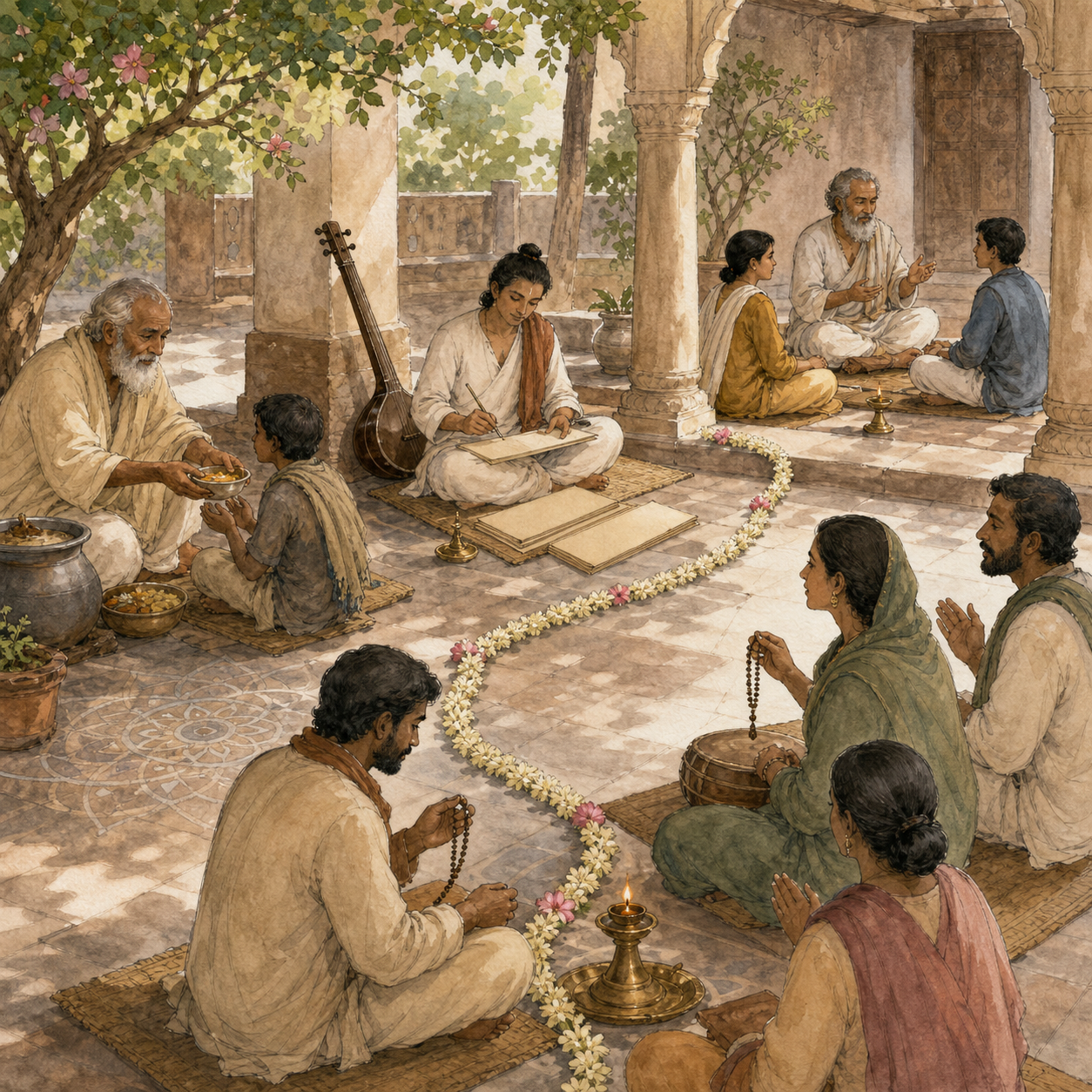
A saint gives a community an embodied answer to the question, “What does devotion look like when someone lives it?” A poet gives devotion memorable language. A lineage preserves a disciplined way of receiving, interpreting, practising, and passing that teaching onward. One person may fulfil all three roles, but the roles remain distinct.
| Lens | What to look for | What it helps you decide |
|---|---|---|
| Saint | Conduct, vows, devotional relationship, service, and response to worldly duties | Which virtues the tradition wants you to embody |
| Poet | Divine names, verbs, refrains, metaphors, emotional posture, and theological claims | What the composition asks you to remember or do |
| Practice | Recitation, kirtana, nama-smarana, study, worship, pilgrimage, or seva | How an idea becomes a repeated discipline |
| Lineage | Teacher-disciple relationships, authoritative teachings, communal observances, and methods of correction | How the discipline retains continuity and coherence |
The devotional name Dasa illustrates why these distinctions matter. It means servant and can disclose dasya-bhava, the devotional attitude of serving the Divine. Yet a shared title is not a shared biography. Sri Hanuman Das is remembered through service to Hanuman and, through Hanuman, devotion to Rama. Narottama Dasa Thakura belongs to the Gaudiya Vaishnava world of Krishna-bhakti after Shri Chaitanya. Madhava Dasar is remembered as a learned devotee whose title connects him with the wider Dasa or Dasaru culture of publicly communicated devotion. The honorific identifies an orientation of humility and service; it cannot establish an initiatory connection among these figures.
This prevents a common reading error. Do not search a devotional name, collect everyone who shares it, and assume you have found one movement. Ask instead: Whom does this person worship? In what relationship? What doctrine guides that worship? Which practice expresses it? Who transmitted it? A name opens the inquiry; it does not complete it.
The same care applies to the broad label bhakti. Devotion to Rama through the model of Hanuman’s service is not identical to Gaudiya cultivation of loving devotion to Krishna. A householder-sage ideal shaped by Vedanta and the example of Janaka is not interchangeable with organized congregational kirtana. These paths can illuminate one another without losing their respective siddhanta, vocabulary, or discipline.
Read sacred memory without manufacturing certainty
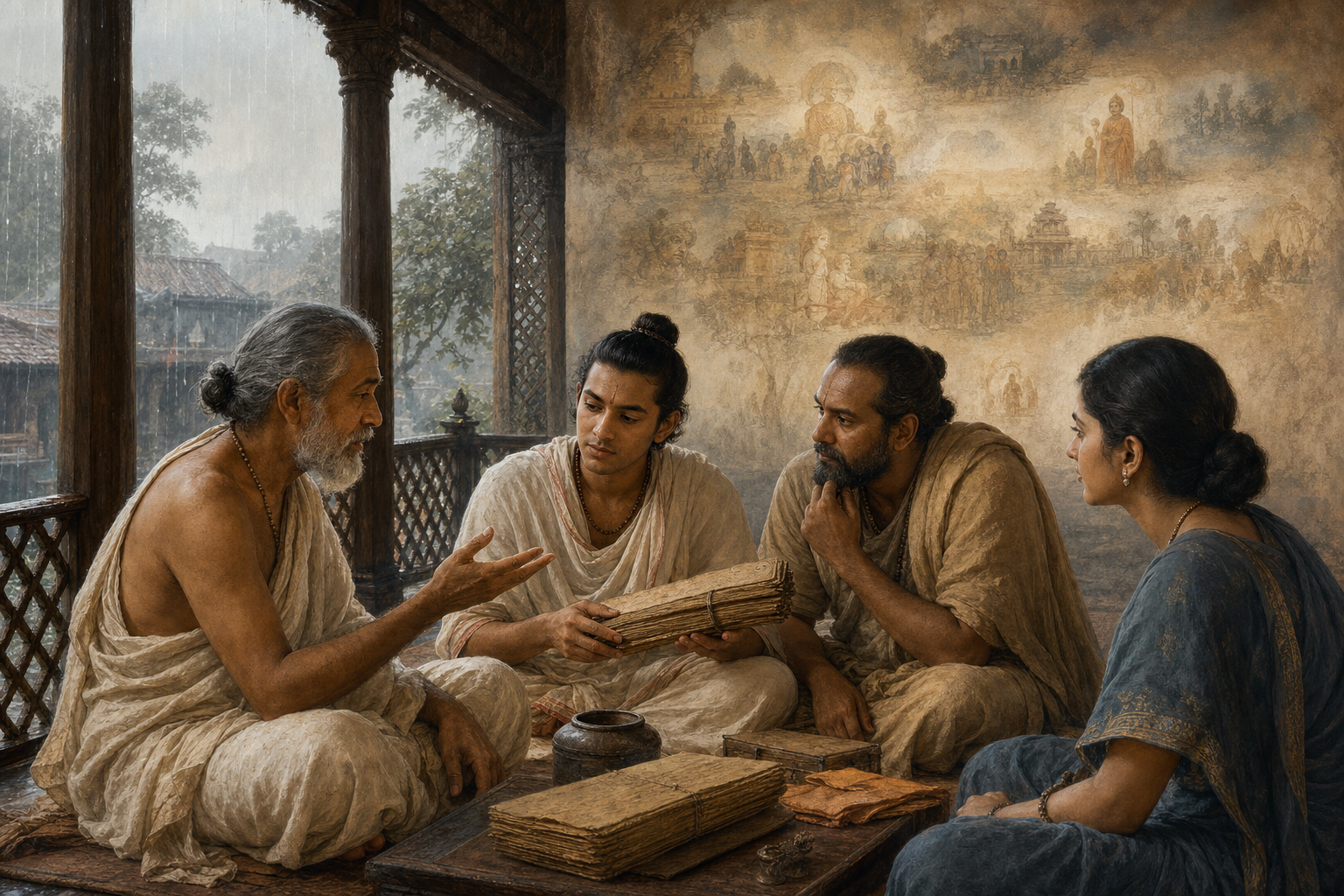
Bhakti communities often preserve a saint through katha, temple memory, oral performance, songs, manuscripts, and the conduct of later devotees. That memory can transmit moral and spiritual truth even when modern historical documentation is incomplete. Respect for sacred memory does not require you to present every date, journey, or attribution with the same confidence.
Sri Hanuman Das shows why the distinction is necessary. Regional oral tradition places him in the first century CE and remembers him as Ramachandra, a devotee-poet from present-day Uttar Pradesh. Yet the proposed date rests on later compilations, local katha, temple lore, and manuscript notices rather than securely dated inscriptions or colophons. Tradition also associates Sanskrit praise of Rama and Hanuman with him, while secure titles for individual compositions remain elusive. The responsible formulation is therefore precise: this is how the saint is remembered, but the early date and textual corpus are not firmly established.
Madhava Dasar presents a related challenge. His remembered portrait emphasizes moral excellence, study of the four Vedas, engagement with Vedanta and Vaiseshika, and the composed involvement in worldly duty associated with Janaka. The available historical archive is fragmentary. That means you can responsibly study the portrait’s integrated ideal – ethical restraint, analytical thought, devotion, and responsible household life – without inventing a detailed chronology or assigning unattributed lyrics to him.
Narottama Dasa Thakura offers firmer anchors. He belongs to the sixteenth- and seventeenth-century Gaudiya world; Vrindavan, Kheturi, Jiva Goswami, Lokanatha Goswami, Prema-bhakti-candrika, and Prarthana give his life recognizable intellectual, geographic, and textual coordinates. Devotional memory also describes his reception of divine love at the Padma River. You need not force the historical and hagiographic claims into one category. One identifies public anchors; the other communicates how the community understands divine grace and the saint’s inner vocation.
Use a simple four-part method whenever you encounter a saint’s life:
- Record the traditional claim accurately. Preserve phrases such as “regional oral tradition remembers” or “devotional accounts describe” when that is the actual status of the claim.
- Identify the firm anchors. Look for named compositions, teachers, places, festivals, manuscript colophons, inscriptions, or a securely situated historical network.
- Separate an attribution from a surviving text. A tradition may remember someone as a poet even when individual titles or stable textual forms cannot yet be confirmed.
- Ask what the memory is training you to notice. A katha may form humility, courage, fidelity, detachment, or service even when it cannot supply a modern critical biography.
This approach avoids two equal mistakes. Credulity turns uncertainty into false precision. Dismissiveness treats an incomplete archive as proof that a community’s memory has no value. Dharmic discernment can hold reverence and discrimination together.
Follow the practice carried by the poetry
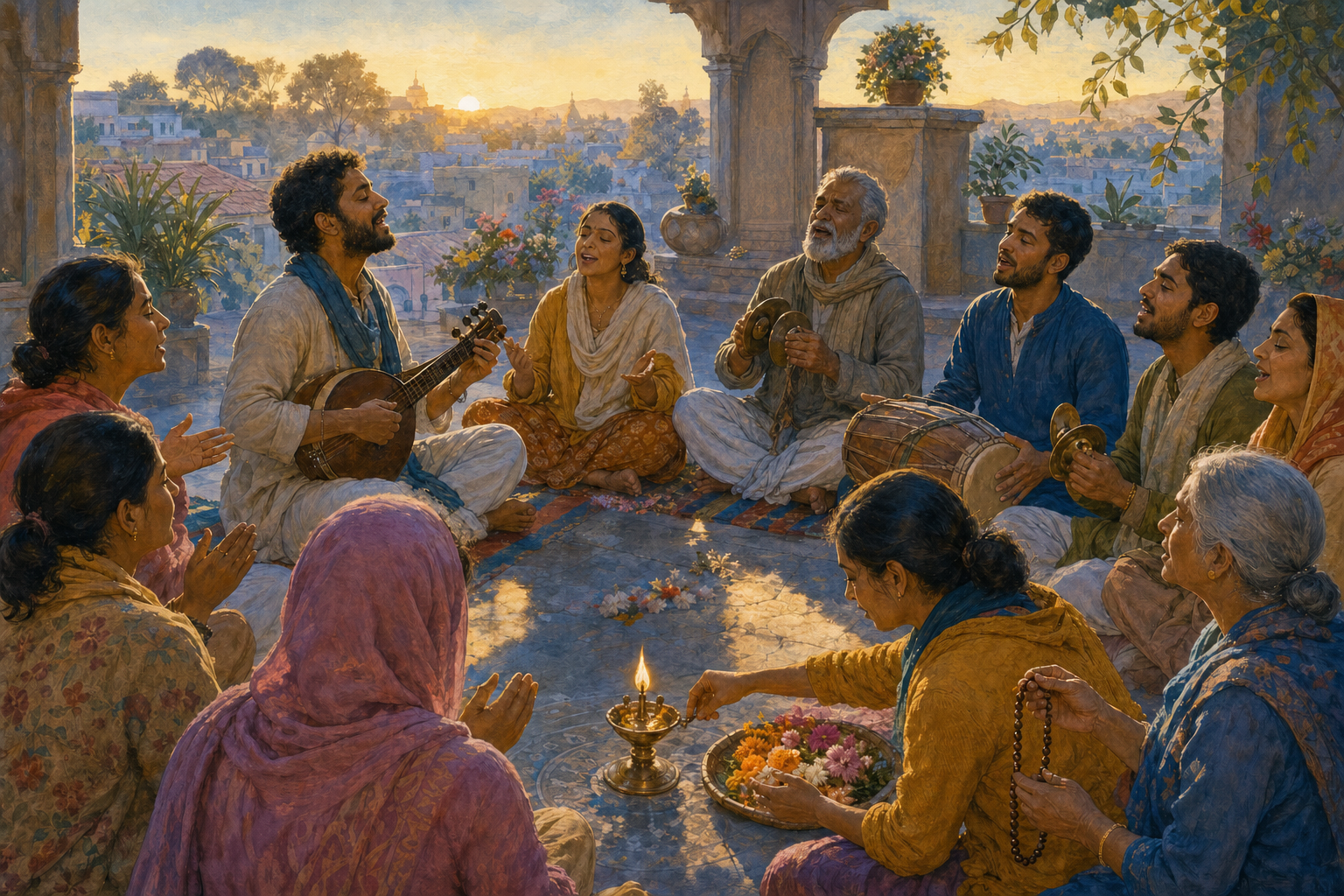
A devotional song is not merely a compressed biography of its composer. It can function as prayer, doctrinal instruction, meditation, emotional formation, and a script for collective worship. Melody and repetition make the teaching inhabitable: the congregation does not only hear an idea but breathes, voices, and remembers it together.
Narottama Dasa Thakura’s Bengali works make this especially visible. His Prema-bhakti-candrika and Prarthana guide devotees through humility, surrender, remembrance, and loving service. Songs such as Hari hari! bifale janama goainu and Gauranga bolite habe join theological content to a form that a community can sing. Doctrine is not discarded for emotion; it is carried by rhythm, voice, and shared attention.
The poetic form also tells you how to read. Repeated Divine Names focus remembrance. Verbs disclose the demanded action: call, remember, bow, serve, surrender, behold, or lament. The speaker’s posture reveals the bhava – perhaps service, longing, humility, dependence, or gratitude. Images and epithets place the emotion within a theological world rather than leaving it as free-floating sentiment.
With Sri Hanuman Das, the remembered center is dasya: Hanuman’s disciplined loyalty becomes the way toward Rama-bhakti. Rama represents dharmic sovereignty and compassion; Hanuman represents strength governed by humility and service. This gives the devotee a practical test. Courage that feeds vanity has departed from the model. Remembrance that never reaches the hands as seva remains incomplete.
Madhava Dasar’s remembered synthesis adds another correction. Study and song need not compete. Vedanta asks about the Self, ultimate reality, bondage, and liberation. Vaiseshika cultivates analytical clarity about reality, difference, qualities, motion, and relation. In a bhakti life, disciplined thought can protect devotion from confusion, while devotion can prevent learning from becoming sterile display.
When you take up a bhajan, pada, stotra, or kirtana, work through it in this order:
- Confirm the attribution before repeating it. If the authorship is uncertain, say that plainly. Do not attach a famous saint’s name merely because a circulating image or recording does so.
- Read the meaning before relying on the melody. Identify the deity, the speaker, the devotional relationship, and the central request or confession.
- Mark the theological words. Terms such as nama, seva, guru, prema, smarana, and saranagati are not decorative synonyms. Each carries a discipline and a doctrinal context.
- Notice the verbs and refrain. They reveal what the composition is training your mind and body to repeat.
- Sing without severing sound from meaning. Pronunciation and melody matter, but attention to the prayer’s intent keeps performance from becoming display.
- Complete the song through conduct. If the verse praises humility, watch your speech. If it invokes service, perform useful service. If it calls for remembrance, return to the Name outside the musical setting.
This method is also a safeguard against devotional consumption. Constantly collecting new recordings can create the feeling of spiritual abundance while preventing any one teaching from settling into memory. Repetition becomes sadhana when the words begin to govern attention and action.
Let the lineage change your routine, not just your vocabulary
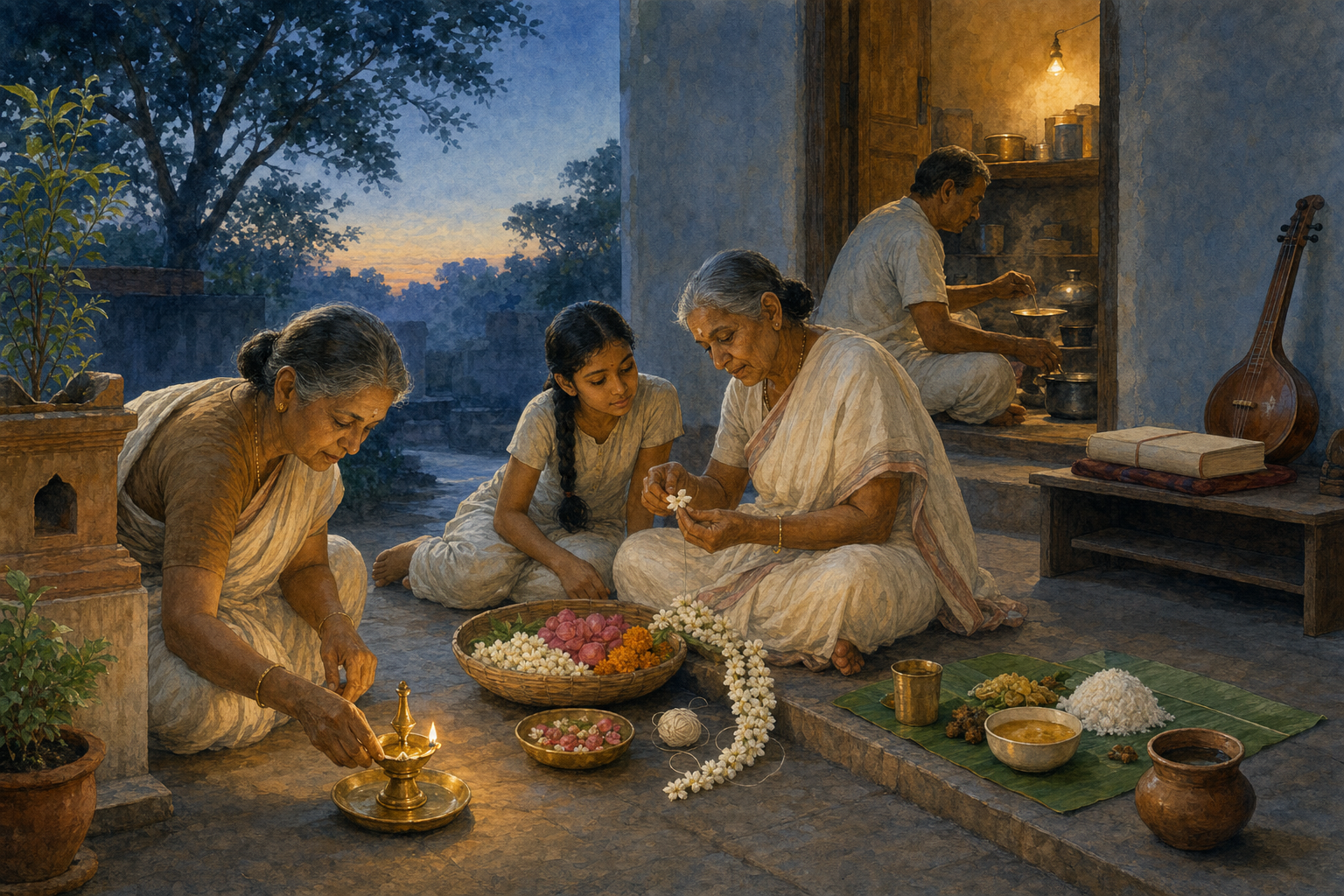
A devotional lineage is more than a family tree of gurus. It solves several transmission problems at once: what is taught, how it is practised, who corrects misunderstanding, where community gathers, and which virtues demonstrate that the practice is bearing fruit.
Narottama Dasa Thakura’s legacy shows these elements working together. He studied theology in Vrindavan, received initiation from Lokanatha Goswami after sustained service, composed accessible devotional works, trained disciples, and helped organize collective worship. The Kheturi Mahotsava associated with him gathered Gaudiya communities through Deity worship and kirtana. Scholarship, song, festival, teacher-disciple transmission, and communal organization reinforced one another. That is how a devotional awakening acquires continuity without becoming only an institution.
Less textually secure traditions can survive through a different balance. Household recitation, temple lore, dawn and dusk worship, pilgrimage, and oral explanation may carry the memory of a figure such as Sri Hanuman Das when a fixed corpus is difficult to establish. Madhava Dasar’s householder-sage profile likewise reminds you that transmission does not happen only in monasteries. A family routine, a village gathering, hospitality to a seeker, ethical work, and disciplined study can all become places where bhakti is preserved.
Before committing yourself to a devotional community, ask concrete questions:
- What is its siddhanta? Learn what it teaches about the Divine, the self, bondage, liberation, grace, and the purpose of practice.
- What does it actually ask you to do? Look beyond inspirational language to the regular disciplines of remembrance, study, worship, conduct, and seva.
- Which texts and compositions guide interpretation? Find out whether translations, songs, and stories are attributed carefully and taught in context.
- How does correction happen? A lineage needs a responsible way to address misunderstanding, misconduct, and the misuse of authority.
- What kind of person does the practice form? Humility, truthfulness, restraint, courage, compassion, and unadvertised service are more persuasive than status or theatrical fervor.
- Can it honour another path without erasing difference? Unity does not require pretending that every deity, doctrine, mantra, or liberation teaching is interchangeable.
The last question matters across the dharmic family. Hindu bhakti’s remembrance and seva can resonate with Buddhist compassion, Jain commitments to ahimsa and aparigraha, and Sikh seva and naam-simran. Shared ethical language creates room for friendship and cooperation. It does not cancel the distinct accounts of reality, authority, practice, and liberation found in Hinduism, Buddhism, Jainism, and Sikhism. Respect becomes stronger when it is informed.
You do not need to begin by mastering the whole history of bhakti. Choose one saint whose devotional relationship speaks clearly to your present duty. Find one composition with a responsible attribution and an intelligible translation. Learn its theological center, repeat it until its words become familiar, and attach its central virtue to an act of service in your ordinary life.
Then watch for fruit. If the practice makes your speech more truthful, your duties steadier, your learning less arrogant, and your service less dependent on recognition, the lineage has begun to move from your vocabulary into your character. That is where a saint’s memory and a poet’s words become living dharma.
References
- HinduPad – Who Was Madhava Dasar? A Profound Bhakti Legacy Across Vedas, Vedanta, and Vaiseshika
- HinduPad – Sri Hanuman Das: A 1st-century Devotee-Poet of Rama and Hanuman – History, Poetics, Legacy
- HinduPad – Narottama Dasa Thakura: Unifying Gaudiya Bhakti Through Timeless Kirtana and Scholarship
