
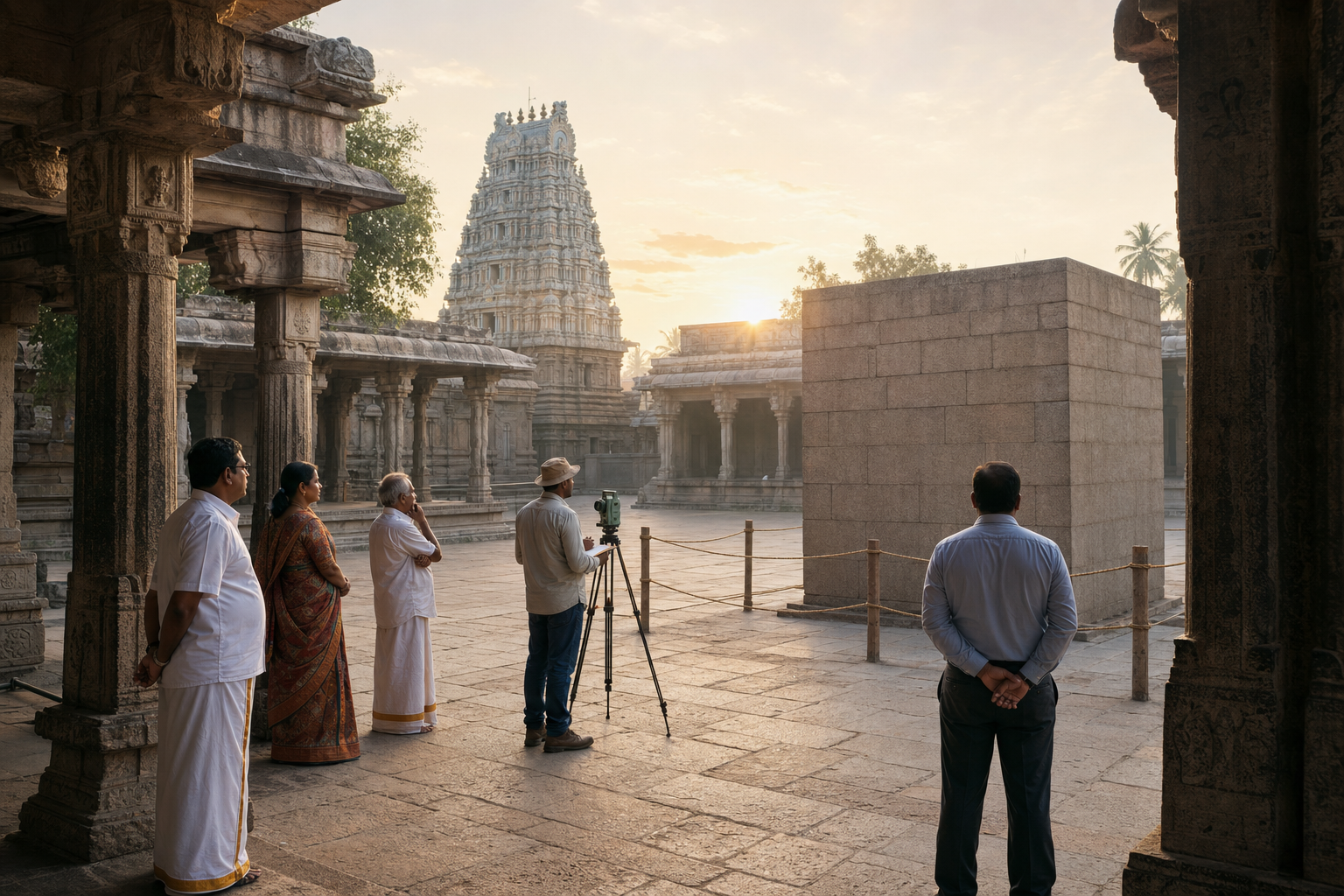
If you saw messages about a “mazaar-like” structure at Sri Siddheshwara Temple and are deciding what to believe or share, pause at one crucial distinction: an unexplained construction within temple premises deserves prompt scrutiny, but appearance alone cannot prove its purpose, authorization, ownership, or builder.
That is not a reason for devotees to remain silent. It is a reason to make the demand more precise: ask the responsible authorities to preserve and inspect the site, establish the relevant records, issue a written finding, and act on the evidence. You can defend a sacred kshetra firmly without turning an allegation into a verdict.
What can and cannot be said about the structure
On 26 July, a structure described as “mazaar-like” was reportedly found within the Sri Siddheshwara Temple premises at Mattur, near Maldare in Virajpet taluk, Karnataka. Hindu Suraksha Samiti opposed its presence, characterized it as illegal, and demanded action against those responsible.
Four different propositions must not be compressed into one. The presence of a structure is a reported observation. Its resemblance to a mazaar is a description. Its alleged illegality is a claim requiring examination. Responsibility for constructing or maintaining it remains to be established.
The description “mazaar-like” does not by itself establish religious identity or use. Shape and appearance cannot tell you who built something, why it was built, whether permission existed, or whether the relevant land was under a particular form of control when construction occurred. Likewise, “illegal” is a legal and administrative conclusion, not a synonym for “unexplained” or “objectionable.”
The facts presently available do not include an official inspection finding, land or management records, construction authorization, a reliable construction date, the identity of a builder, or an explanation of the structure’s function. They also do not establish whether the temple administration or a government authority has issued a response. The dispute is therefore real, but its central factual and legal questions remain unresolved.
Key takeaways for concerned devotees
- Treat the reported structure as grounds for a prompt, transparent inquiry, not as permission for summary judgment.
- Use “mazaar-like” only as an attributed description until the structure’s origin and function are established.
- Ask for the boundary record, authorization record, construction history, site inspection, and written administrative finding.
- Do not enter a restricted area, alter the structure, remove material, or damage the site. Such action could destroy evidence and create legal or safety consequences.
- Keep protests and public statements peaceful, specific, and directed toward accountability for the temple premises.
The records and answers that would resolve the dispute
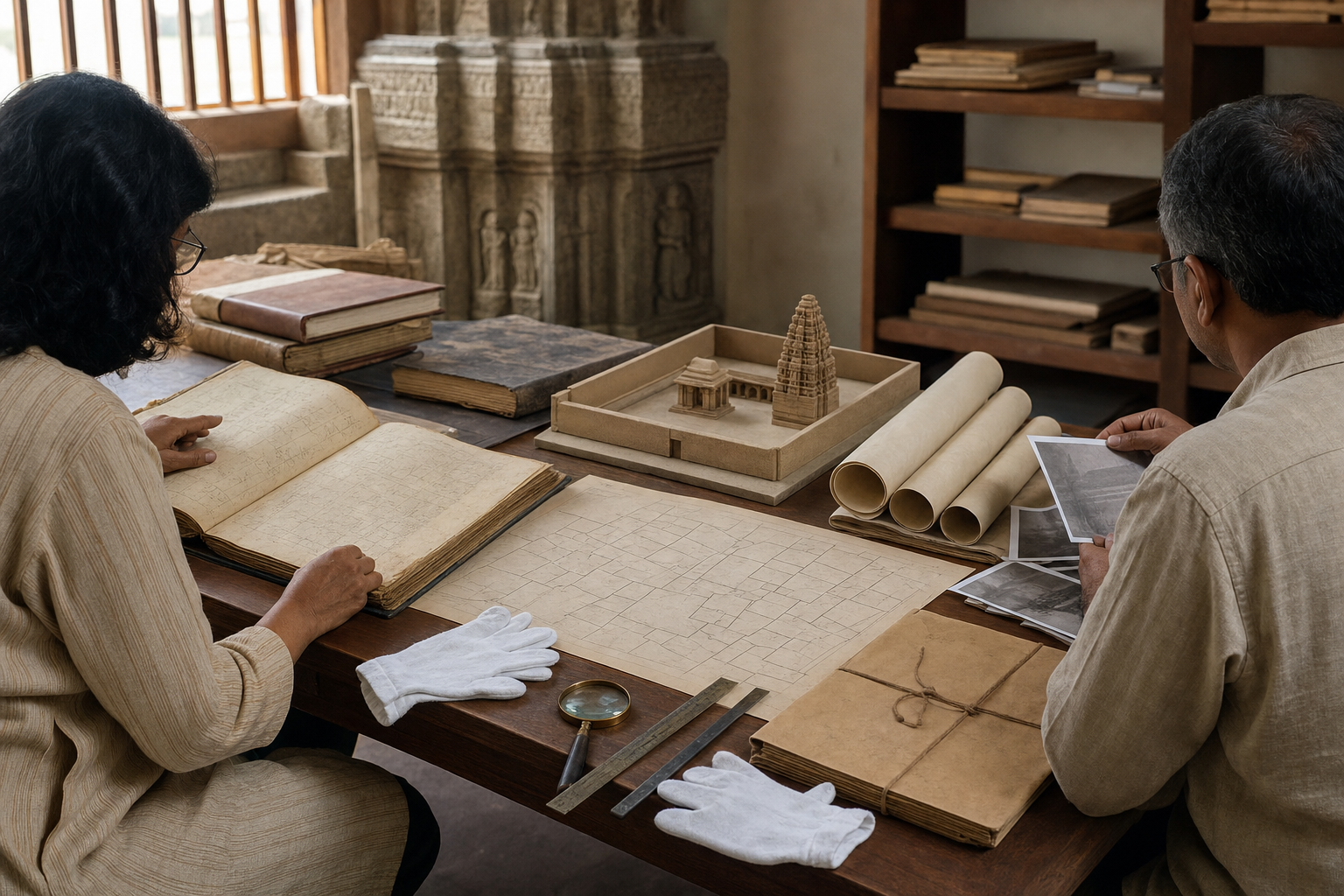
A broad demand to “take action” is easy to acknowledge without answering. A record-based demand is harder to evade. Devotees, temple representatives, and community organizations should seek clear answers to the following questions:
- What land, survey, title, endowment, or management record defines the temple premises, and does the precise location of the disputed structure fall within that boundary?
- Was any person or body given written authorization to construct, restore, maintain, or use the structure? If officials say that no authorization exists, which records were checked?
- When did the structure first appear? Contemporaneous photographs, registers, work orders, maintenance records, and dated correspondence are more reliable than guesses based on weathering or appearance.
- What was the structure actually used for, and who maintained it? Religious identity should not be assigned from visual resemblance alone.
- Which competent authority has inspected the site? The public needs the resulting observations, the applicable administrative or legal basis, and the next procedural step in writing.
- If an unauthorized construction is established, what evidence identifies the responsible individual or individuals? Accountability must follow evidence rather than assumption about an entire community.
Ask for written acknowledgment whenever a representation or complaint is submitted. Keep a copy of what was sent, the date, the recipient, and any reply. A verbal assurance may calm a meeting, but it does not settle a boundary, authorization, or provenance question.
If access to records is refused, or if physical intervention is being proposed, an authorized temple representative should obtain advice from a qualified local lawyer. Property control, religious-institution administration, and permissible remedies depend on records and applicable law; a social-media claim cannot substitute for that assessment.
Protect the temple without weakening the case
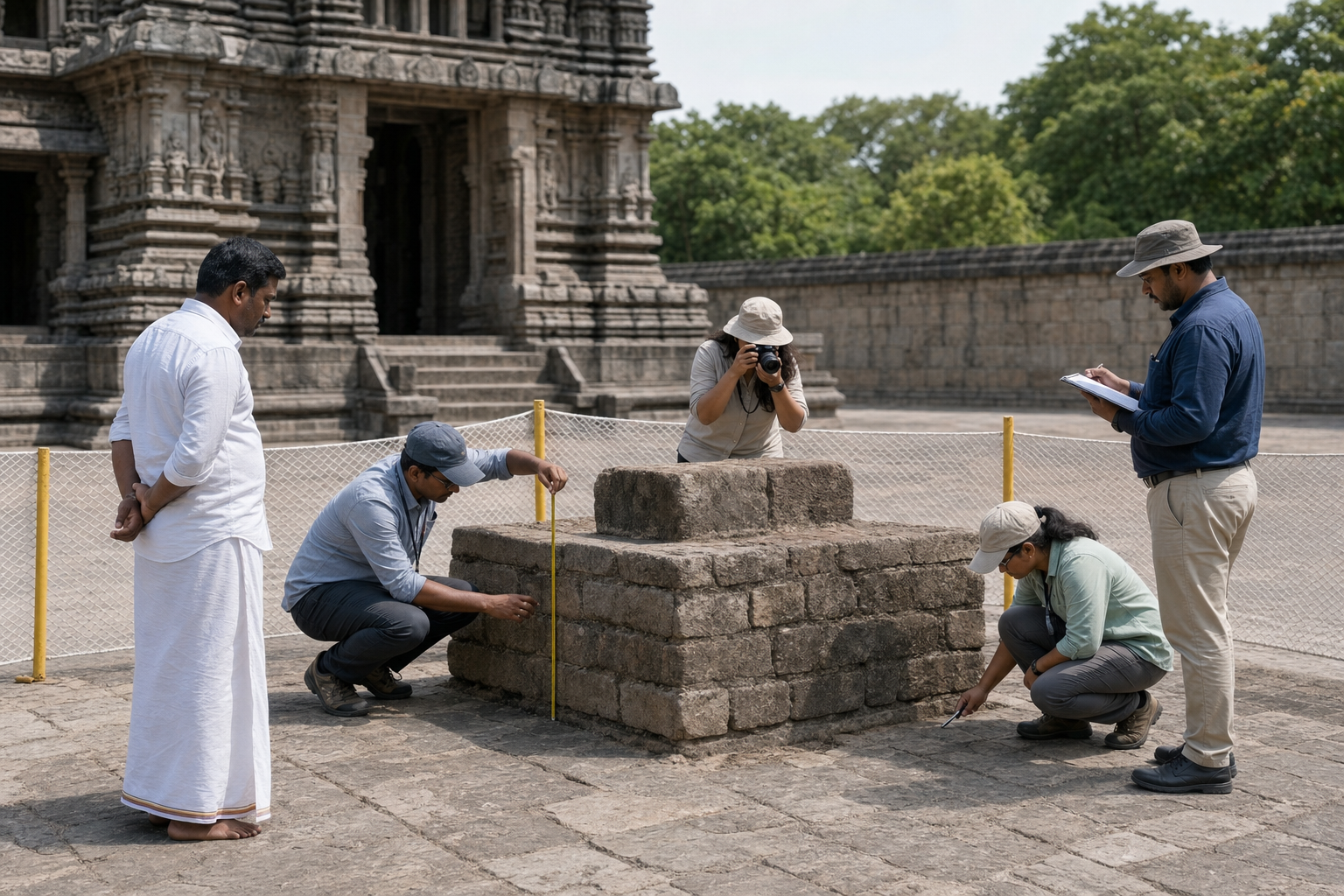
What devotees do while an inquiry is pending can either preserve the truth or make it harder to establish. A disciplined response has several practical parts:
- Preserve original photographs or videos with their available date, time, location, and surrounding context. Do not rely only on cropped screenshots or repeatedly forwarded files.
- Separate firsthand observation from forwarded information. Record who directly saw the site, what that person actually observed, and which details came from someone else.
- Route requests for access and inspection through the lawful custodian or competent authority. Do not trespass, dig, paint, mark, cover, decorate, dismantle, or place new objects at the location.
- Maintain an incident log listing each request, its recipient, acknowledgment, inspection, response, and promised follow-up. This turns a passing controversy into an accountable administrative record.
- Use careful public language. Until a formal determination exists, a defensible formulation is: “A disputed structure described by activists as mazaar-like has been reported within the Sri Siddheshwara Temple premises. Devotees have requested verification of the boundary, authorization, origin, and use.”
- If a gathering or protest is held, designate responsible coordinators, reject threats and collective blame, avoid obstructing worship or emergency access, and comply with lawful safety directions.
- Do not attempt removal merely because the structure appears unauthorized. An unapproved intervention could destroy evidence, cause injury, damage temple property, or expose participants to legal consequences. Seek written authority and local legal advice first.
This approach does not dilute the demand for temple protection. It concentrates that demand on the questions that matter: whose land it is, what permission existed, what the structure was for, who was responsible, and what remedy the competent authority will implement.
Firmness and restraint serve the same Dharmic duty

Temple protection is not served by careless speech. Satya requires us not to turn resemblance into certainty. Ahimsa requires us not to turn vigilance into intimidation or vandalism. Dharma also requires those entrusted with sacred property to answer legitimate questions and protect the integrity of the kshetra.
A pro-Hindu response can be uncompromising on three points: temple boundaries must be respected, any construction proven to be unauthorized must receive a lawful remedy, and administrators should provide a transparent written explanation. The same response should be uncompromising against rumor, threats, damage, and blame assigned without evidence. Those actions distract from the disputed structure and weaken the devotees’ demand for accountability.
Your most useful next step is to choose one unresolved question and request the corresponding record in writing. Until an answer arrives, share only what you can substantiate. If an official finding establishes unauthorized construction, insist on lawful remedial action and evidence-based accountability. If the facts turn out to differ from the original claim, correct the public account promptly. Protecting a kshetra includes protecting the truth spoken in its name.
References
