
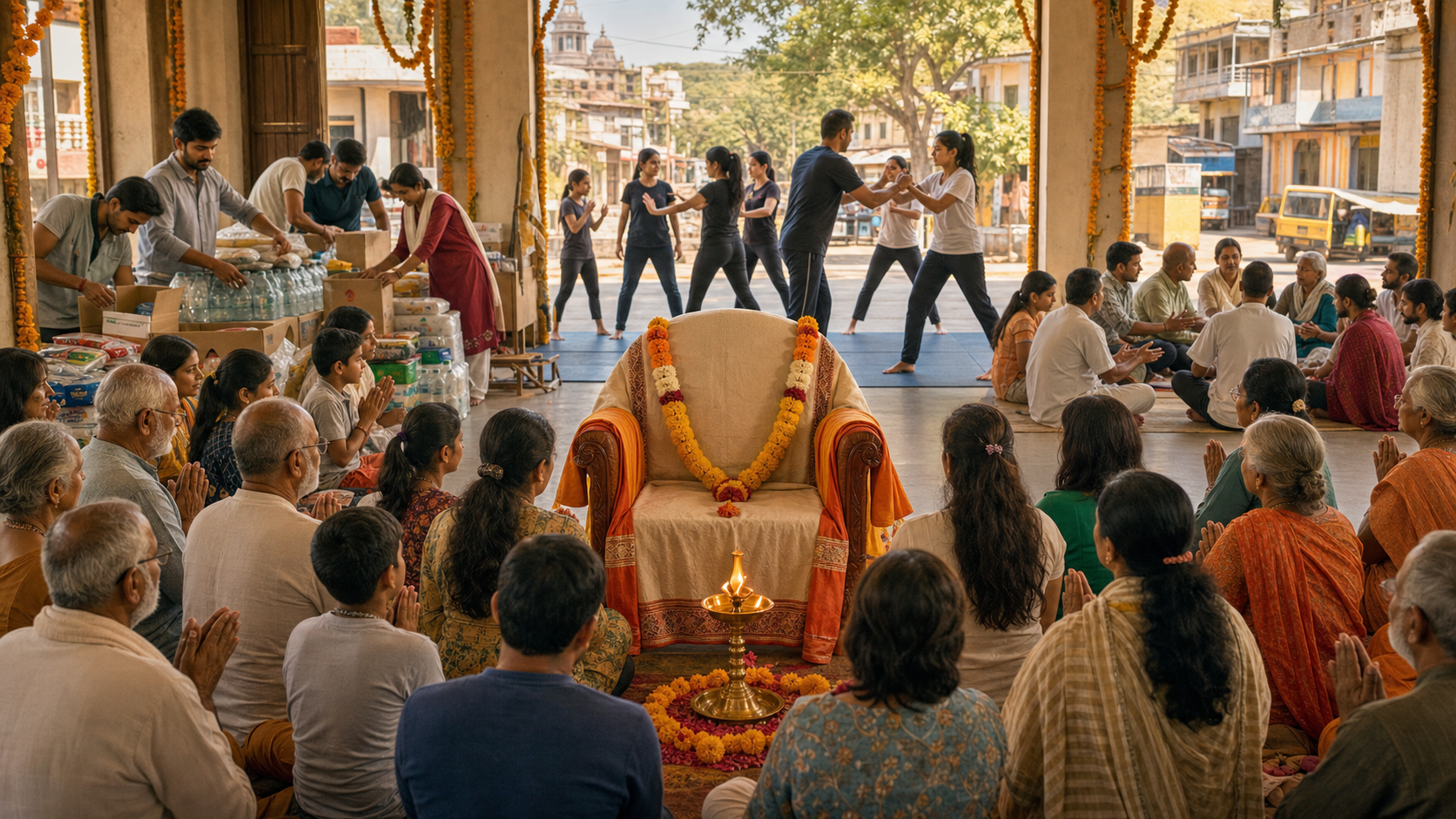
Seeing that Guru Purnima was marked at dozens of venues may leave you with a practical question: was this mainly a devotional celebration, a preparedness programme, or a gathering for Hindu political advocacy? Hindu Janajagruti Samiti (HJS) brought all three dimensions into the same public platform.
The Mahotsav reached 64 locations across Bharat. Its themes extended from respect for the guru to Hindu unity, self-reliance, emergency preparedness, self-defence and the establishment of a Hindu Rashtra. Understanding the distinctions among those themes will help you judge what the celebrations achieved—and what would require sustained local work after the stage programme ended.
Key takeaways
- HJS used Guru Purnima as both a spiritual observance and a platform for organised Hindu public action.
- The figure of 64 refers to locations. By itself, it does not establish total attendance, geographic coverage within Bharat or the depth of the programme at each venue.
- Hindu unity, self-reliance and emergency preparedness were presented as connected responsibilities rather than unrelated slogans.
- Self-defence demonstrations can introduce a discipline, but watching a demonstration is not the same as acquiring safe, tested proficiency.
- Discourses on establishing a Hindu Rashtra made the Mahotsav explicitly civilisational and political as well as devotional.
Why the 64-location footprint matters—and what it cannot prove

A celebration conducted at 64 locations is more than an isolated ceremony. A common occasion and a common set of themes can give separate Hindu communities a shared vocabulary. Local participants hear that unity, preparedness and self-reliance belong to the same field of responsibility, even when their immediate circumstances differ.
That is the real significance of the footprint: it allows a message to be carried through local gatherings instead of remaining confined to one central event. It also gives organisers potential points from which recurring activity can grow.
Yet the number must be read precisely. Sixty-four locations does not necessarily mean 64 cities, 64 districts or representation in every region of Bharat. Nor can a venue count tell you how many people attended, how long each programme ran or whether every activity appeared everywhere. Those conclusions would require separate evidence.
If you want to assess the reach of this or any future multi-location celebration, look beyond the headline number. Ask for the list of places, turnout at each place, the programme delivered locally and the follow-up activity scheduled afterward. Those details distinguish a broad commemorative presence from a durable organisational network.
Four responsibilities were placed beside guru-bhakti
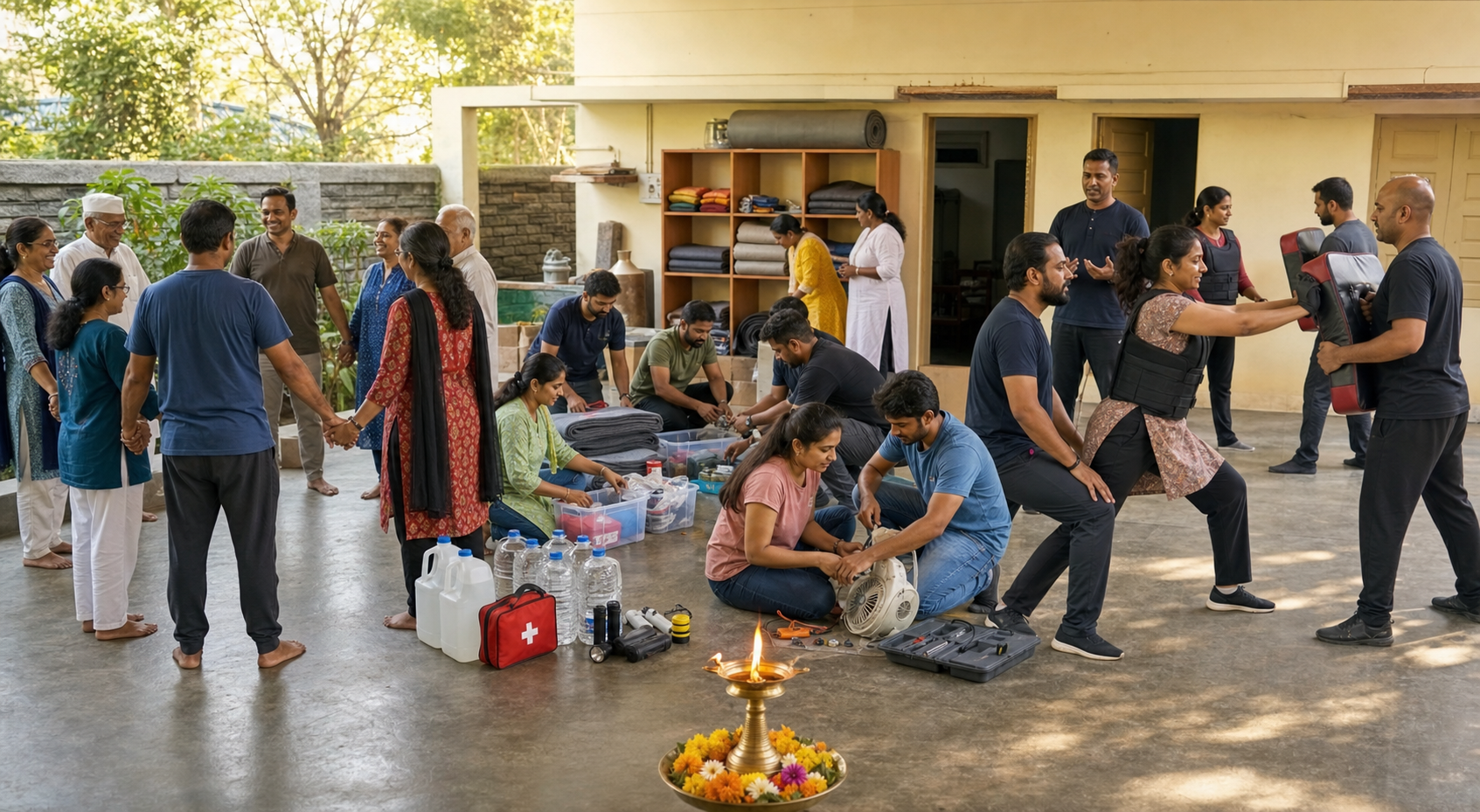
Guru Purnima centres gratitude toward the guru and the lineage through which knowledge and discipline are transmitted. HJS gave that reverence a public-duty dimension by emphasising Hindu unity, self-reliance, preparedness for future emergencies and self-defence demonstrations. Each element requires a different kind of follow-through.
- Hindu unity: Unity becomes concrete when people can cooperate on a shared task. An attendee should therefore ask what participants from the local area are expected to do together after the celebration. A contact list, a recurring meeting or a defined community responsibility says more than agreement during a discourse.
- Self-reliance: This should not be mistaken for isolation or refusal of legitimate assistance. Its practical value lies in developing the knowledge, discipline and local relationships needed to act responsibly instead of waiting helplessly for someone else to organise the first response.
- Emergency preparedness: The phrase is broad. A useful programme must eventually identify the kind of emergency being considered, who coordinates communication, what responsibilities participants can safely accept and which tasks require qualified professionals. Awareness is the beginning of preparedness, not its completion.
- Self-defence: A demonstration can show that disciplined training is possible and can motivate someone to begin. It cannot establish competence in the audience. Safe ability requires qualified instruction, supervised practice, gradual progression and repeated correction.
One practical logic connects these themes. Unity creates relationships; self-reliance encourages initiative; emergency planning gives that initiative a defined situation; and structured self-defence training develops one form of personal capability. The weak link is usually continuity. If nothing recurs after the Mahotsav, the audience may retain inspiration without gaining dependable capacity.
You should also distinguish a demonstration from a training session. Do not reproduce high-risk techniques from memory after seeing them on a stage. Ask whether a qualified instructor offers a beginner pathway, what safety rules govern practice and whether instruction continues beyond a single event. For medical, fire or disaster procedures, rely on qualified local services and trained responders rather than treating a public discourse as operational instruction.
Hindu Rashtra was an explicit aim, not a background implication
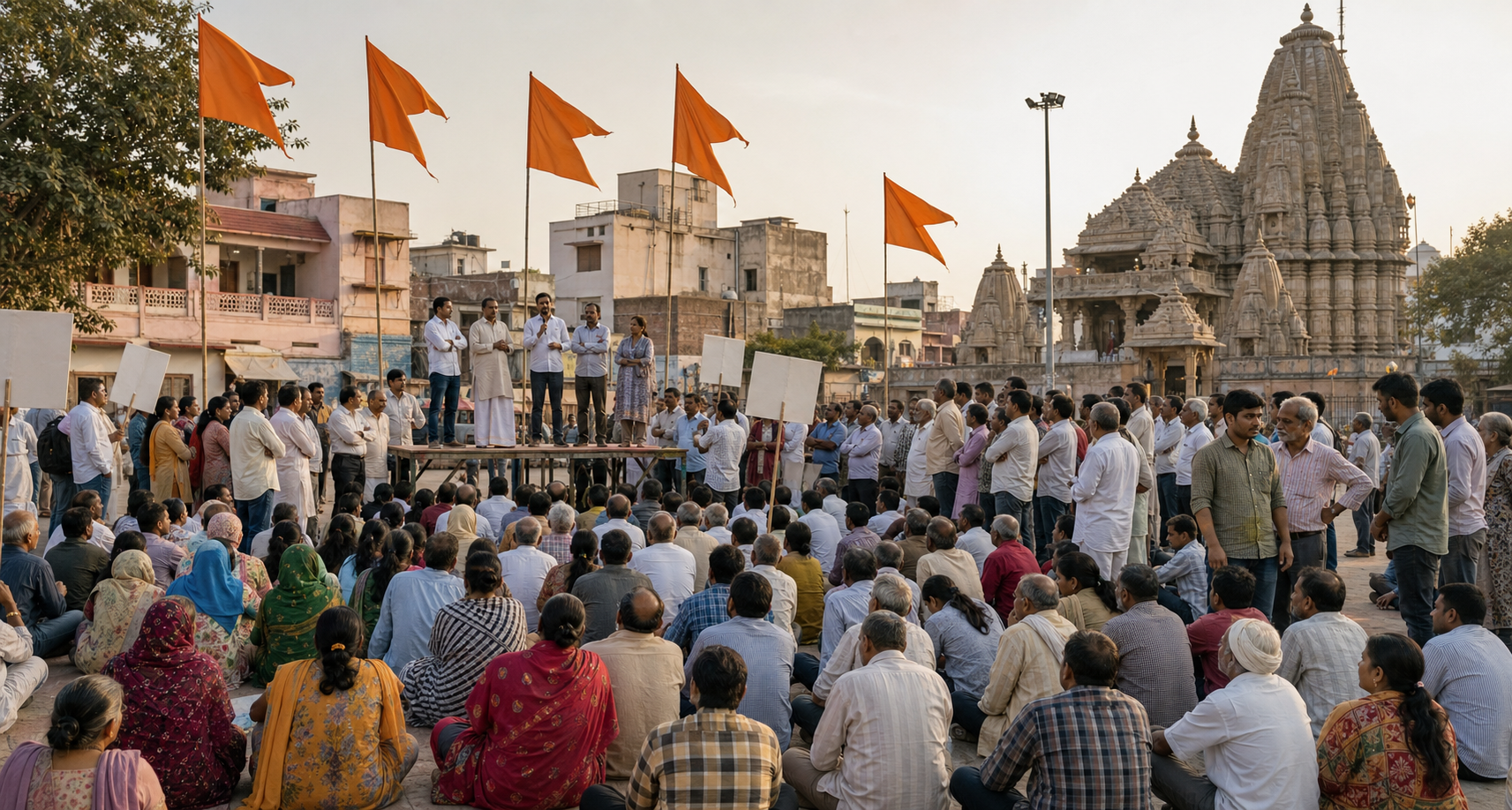
The programme included discourses on the establishment of a Hindu Rashtra. That places the celebrations within cultural and political advocacy as well as religious observance. Anyone attending should understand that this was not presented as a politically neutral festival format.
For a pro-Hindu reader, acknowledging that advocacy is straightforward. It is equally important to ask what the expression “Hindu Rashtra” means in the discourse being delivered. The term can remain emotionally compelling while practical questions are left unanswered. Serious civilisational thought needs enough precision to guide conduct.
- Is Hindu Rashtra being described primarily as a civilisational ethos, a programme of governance, a constitutional proposal or some combination of these?
- Which lawful means are proposed for moving toward it—education, cultural work, community organisation, public policy or electoral participation?
- What duties would supporters accept personally rather than assigning every responsibility to institutions or leaders?
- How are justice, public order and protections for people with different beliefs addressed within the proposed vision?
- What measurable local work can begin now without pretending that a slogan is already a governing framework?
These questions do not weaken a Dharmic aspiration. They prevent a devotional atmosphere from doing the work of an argument. A claim about the future of Bharat becomes more credible when its terms, methods and ethical boundaries can be stated plainly.
How to carry a Mahotsav into lasting local practice
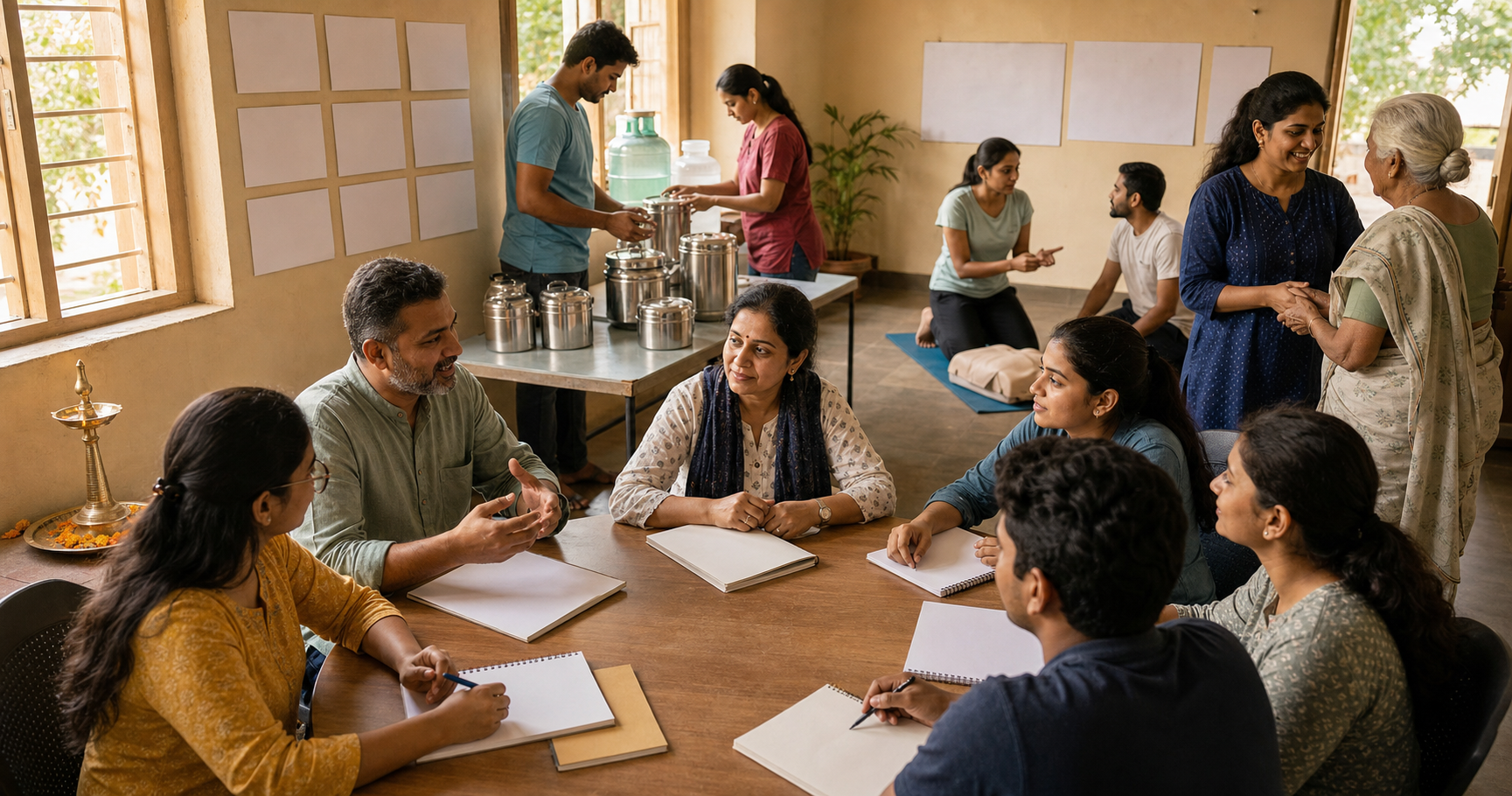
If you attended a celebration—or plan to attend a similar gathering—the most useful test begins when the programme finishes. Convert one theme into a defined, repeatable action rather than trying to carry every message home at once.
- Name the commitment. Write down the one responsibility you are willing to accept: joining a verified preparedness activity, beginning supervised self-defence training, helping maintain a local communication chain or supporting another clearly defined community task.
- Find the continuing structure. Ask who is responsible for the next activity, where it will happen and how participants will be informed. If there is no identifiable next step, treat the stage message as inspiration rather than evidence of an operating programme.
- Verify before you train. For self-defence, ask about the instructor’s qualifications, the beginner curriculum, supervision and safety rules. Enthusiasm should lead you into disciplined learning, not unsupervised imitation.
- Make preparedness scenario-specific. Identify the emergency being planned for, the communication method, the people responsible for coordination and anyone who may need additional help. Do not assume that a general speech has prepared participants for an actual crisis.
- Measure unity through cooperation. At the next gathering, ask what people completed together and what they learned from doing it. Shared work reveals coordination problems that declarations of unity cannot expose.
- Keep the civilisational discussion precise. When Hindu Rashtra is invoked, request definitions, lawful pathways and concrete duties. Support grounded in clear thought is stronger than assent produced by atmosphere alone.
Guru Purnima reminds you that receiving guidance creates responsibility. The most faithful response is therefore not to leave with only admiration for what was said. Leave with one verified next step, place it within a trustworthy local structure and keep returning until inspiration becomes disciplined capability.
References
