
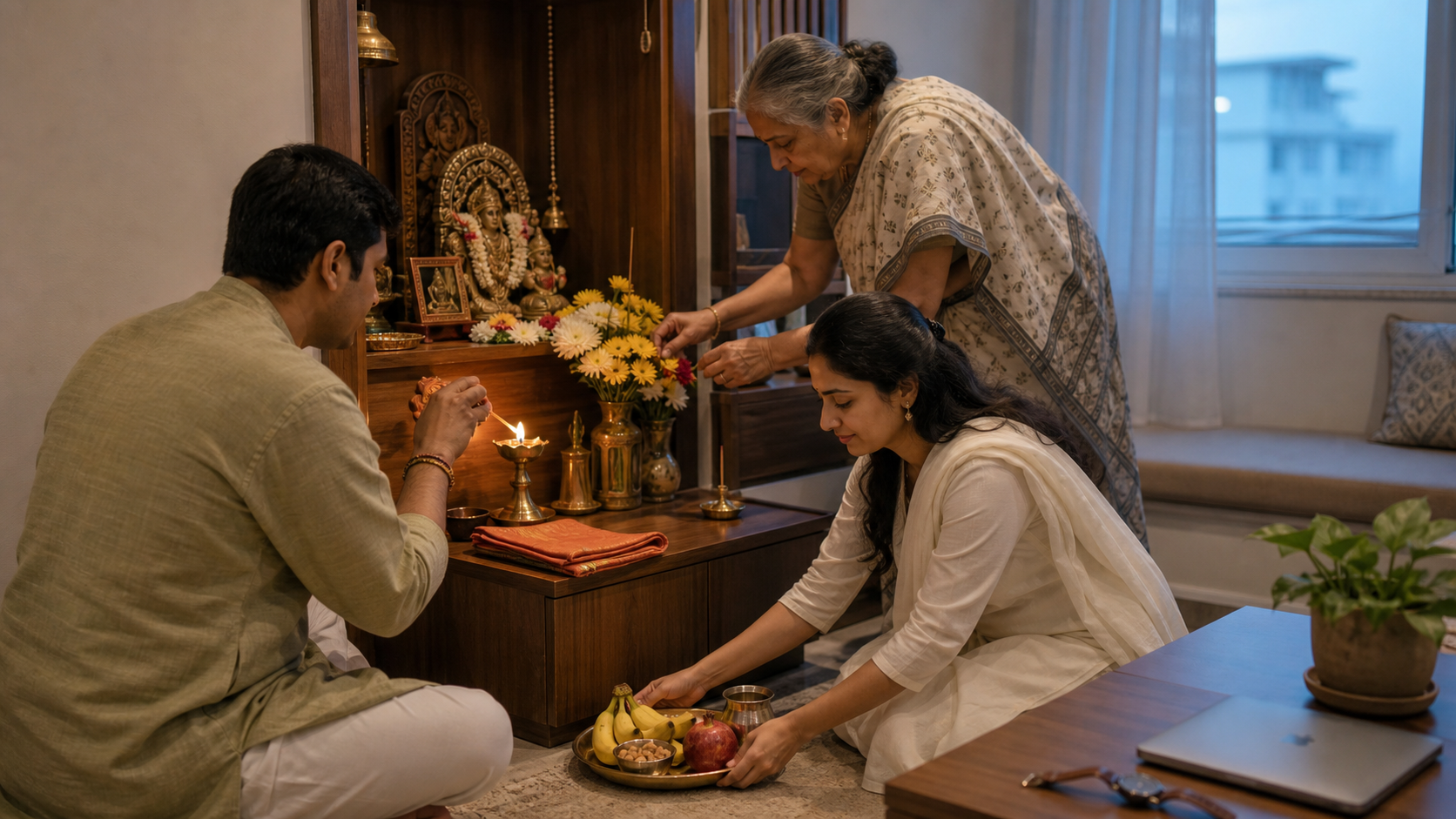
You know the festival date, but the practical questions begin afterward. Should you keep a full fast or eat phalahari food? Which family rules apply? If you can attend only part of a temple festival, which part should you choose? And what should you do when devotion, work, health, and household custom do not fit neatly together?
A sound observance is not the harshest one you can endure. It is a coherent vrata: a clear intention, an appropriate discipline, time for worship, respect for parampara, and a safe way to conclude. Food matters, but it should support the sacred work of the day rather than become the whole of it.
Decide what the observance asks of your day
Begin with the purpose, not the menu. A vrata may include restraint, puja, japa, dana, remembrance, pilgrimage, or participation in an utsava. If you choose food rules first, you can spend the entire day planning special dishes while leaving little attention for the deity or sacred occasion.
Write a one-sentence sankalpa before deciding how to fast. Keep it concrete: “On this Somvati Amavasya, I will observe a phalahari vrata, perform Shiva puja, complete my japa, and offer dana.” A workable sankalpa tells you what you are doing, for whom you are doing it, and when the observance ends. It also prevents severity from expanding impulsively during the day.
Somvati Amavasya is a useful example because its lived observance can join several practices. The day is the Amavasya that falls on a Monday and is associated in many households with Shiva worship. Depending on regional and family tradition, devotees may also undertake snana-dana, Peepal puja and pradakshina, or remembrance connected with the pitrs. Fasting is therefore one limb of the day, not a substitute for all the others.
Use four anchors to plan any observance:
- Sankalpa: State the devotional purpose and the form of restraint you will keep.
- Sadhana: Reserve actual time for puja, japa, patha, dhyana, pradakshina, or seva. Put these periods on your calendar before arranging meals.
- Ahara-niyama: Choose food rules that match the vrata, your household tradition, and your physical condition.
- Samapti: Know when and how you will conclude. A vrata should not end in confusion, overeating, or an argument over an ingredient.
For a temple festival, let the liturgical sequence shape your participation. A Brahmotsavam is not merely a crowded darshan repeated over several days. At Karvetinagaram, for example, the cycle moves from preparatory sanctification and Ankurarpanam through Dwajarohanam, morning and evening vahana processions, major moments such as Garuda Seva, and finally Chakrasnanam and Dwajavarohanam. That ordered ritual arc gives each visit a place within a larger act of worship.
Choose a fast your body can safely carry
The first decision is not which flour to buy. It is whether the vrata will be nirjala or phalahari. These are meaningfully different disciplines.
- Nirjala vrata means abstaining from both food and water. It is an austere form suited only to experienced practitioners in robust health and appropriate conditions.
- Phalahari vrata permits hydration and a limited range of fruits and vrata-approved foods. It preserves restraint while giving you enough steadiness for worship, family duties, and necessary travel.
Do not treat nirjala as the spiritually superior default. Elders, adolescents, pregnant or lactating women, and people with diabetes, renal disease, peptic ulcer, or migraines triggered by dehydration should not undertake a no-water fast as an act of willpower. Anyone managing a medical condition should discuss fasting with an appropriate clinician. Prescribed medication must not be stopped to make a vrata appear stricter; medically necessary food or water takes precedence.
The same judgment applies when a festival involves heat, long queues, or outdoor processions. Do not combine a no-water fast with a hot daytime pilgrimage merely because both practices are individually valued. The Karvetinagaram Brahmotsavam planning details specifically place hydration and protection from summer conditions among the practical needs of pilgrims. Choose phalahari observance, attend a cooler procession, or change the austerity rather than creating a preventable medical problem.
If phalahari is appropriate, build a small, functional plate. The governing qualities are simplicity, freshness, digestibility, and compatibility with your body. Within an Ayurvedic understanding of vrata, light food is meant to avoid overburdening agni and producing the lethargy that makes attentive worship harder. This is a ritual and dietary framework, not a substitute for medical nutrition advice.
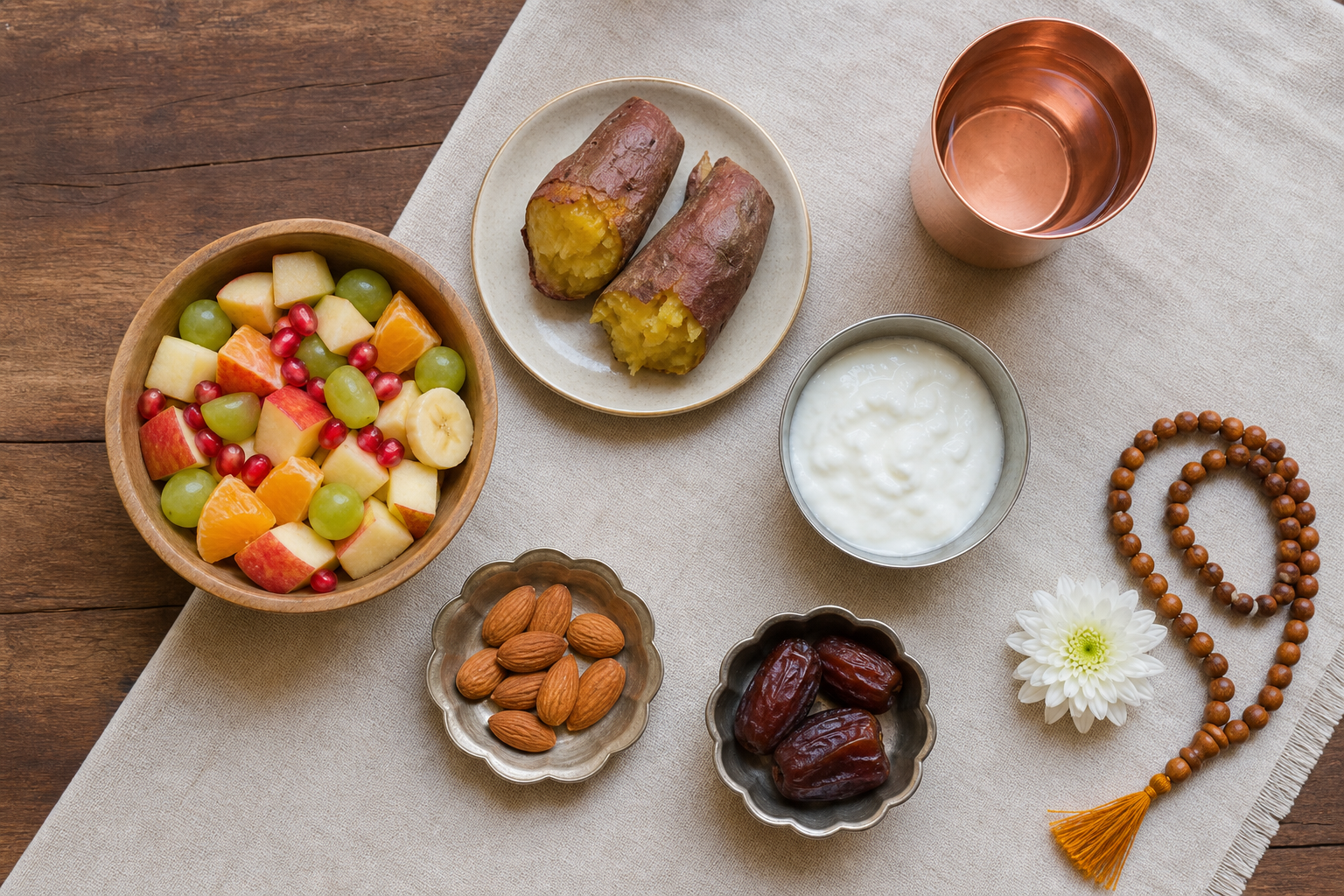
A practical phalahari meal can be assembled from four parts:
- Hydration: Water, tender coconut water, lemon water with sendha namak where permitted, milk, or another simple household-approved drink. Reduce tea and coffee if stimulation works against the quiet you are trying to cultivate.
- A modest energy base: Samak, rajgira, kuttu, singhara, makhana, shakarkand, or sabudana, according to parampara. These foods are commonly treated as vrata fare, but no single list overrides household practice.
- A simple vegetable or fruit: Banana, papaya, pomegranate, melon, potato, sweet potato, lauki, pumpkin, cucumber, or another item accepted in your family.
- A small supporting fat or protein-containing accompaniment: Ghee, dahi, milk, paneer, soaked nuts, or peanuts where permitted and tolerated.
Sabudana needs particular restraint. It is predominantly starch, so an oversized bowl can leave you with a rapid rise and fall in energy. Pairing it with peanuts and a modest amount of ghee makes a more balanced vrata preparation. Deep-frying technically permitted ingredients into a heavy feast defeats the practical aim: you may satisfy the ingredient list while becoming too dull for evening puja.
Across many Somvati Amavasya traditions, the usual exclusions are wheat, ordinary rice and other regular grains; dals and legumes; meat, fish, eggs, alcohol, onion, and garlic. Sendha namak commonly replaces ordinary salt. Commercial hing is often excluded because it may be compounded with wheat flour. Turmeric, ginger, coriander, lemon, chaas, tomatoes, peanuts, particular oils, and some root vegetables belong to the gray zone: ask what your kula or griha parampara does instead of announcing a universal prohibition.
One manageable day might begin with water and fruit, continue with a small samak-and-lauki preparation, and end with makhana, milk, or a modest sabudana dish if those items are accepted in your home. Prepare naivedya first and keep portions small enough that the meal serves worship. You do not need four varieties of “fasting food” to prove that you fasted.
Plan the end before the hunger begins. After nirjala observance, do not break the fast with a large fried meal. Begin with two or three sips of room-temperature water, take a few bites of soft fruit or cooked sweet potato, and wait. If you remain comfortable after about 15 to 20 minutes, move to diluted milk, a thin soup, or a small phalahari meal. Pain, faintness, confusion, persistent vomiting, or other severe symptoms call for medical help, not a ritual test of endurance.
Enter a temple festival as a participant, not a spectator
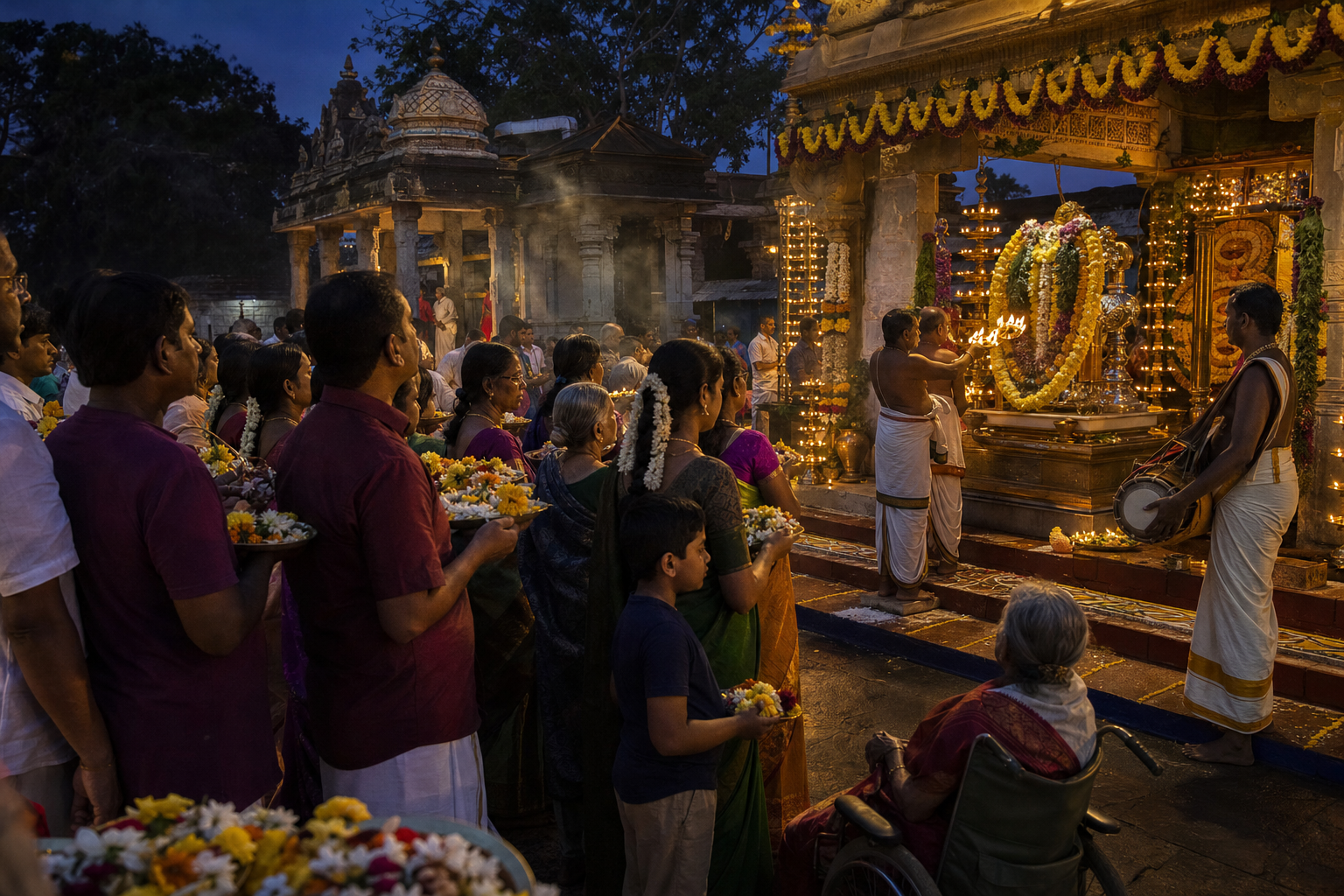
When you cannot attend every day of an utsava, do not assume that only the largest procession is worthwhile. Choose the moment that fits your devotional relationship and practical capacity.
- Attend the opening if you want to witness the formal commencement. In a Vaishnava Brahmotsavam, Dwajarohanam raises the Garuda emblem and inaugurates the festival cycle.
- Choose a vahana procession if you want public darshan and congregational participation. The utsava murti entering the streets extends sacred presence beyond the fixed sanctum.
- Choose Garuda Seva if Vishnu’s sovereignty and Garuda’s service are central to your bhava. It is normally a major focal point and may draw a larger gathering.
- Attend the conclusion if completion matters to your sankalpa. Chakrasnanam and Dwajavarohanam express purification and formal closure rather than an event simply fading out.
Check the temple’s current notice before fixing your travel around a particular vahanam or start time. A traditional sequence can be anticipated, but the exact daily order, seva slots, access routes, and crowd arrangements are local facts. At Karvetinagaram, devotees are explicitly advised to verify the final vahana order and timings with the temple. The same habit is sensible elsewhere.
Once there, give yourself a role. Chant with attention. Walk in parikrama without pushing. Accept prasada respectfully. Offer seva if the temple has an appropriate arrangement. Follow volunteers, police, queues, photography restrictions, and sacred-zone rules. These acts may appear less dramatic than obtaining the closest possible view, but they are how a crowd becomes a worshipping community.
Plan for the people accompanying you. An elder may need a shaded viewing point rather than the longest procession route. A child can participate through flowers, nama-japa, music, or receiving prasada without being made to keep an adult fast. A person with limited stamina may choose one morning or evening procession and still participate meaningfully in the festival’s larger rhythm.
At home, connect the public utsava to a small domestic act. Light a lamp before leaving, recite the deity’s nama, carry your vrata through the journey, and return without turning the outing into an ordinary entertainment trip. The temple schedule and the household altar need not compete; together they make the observance lived rather than merely watched.
Preserve parampara without making variation a quarrel
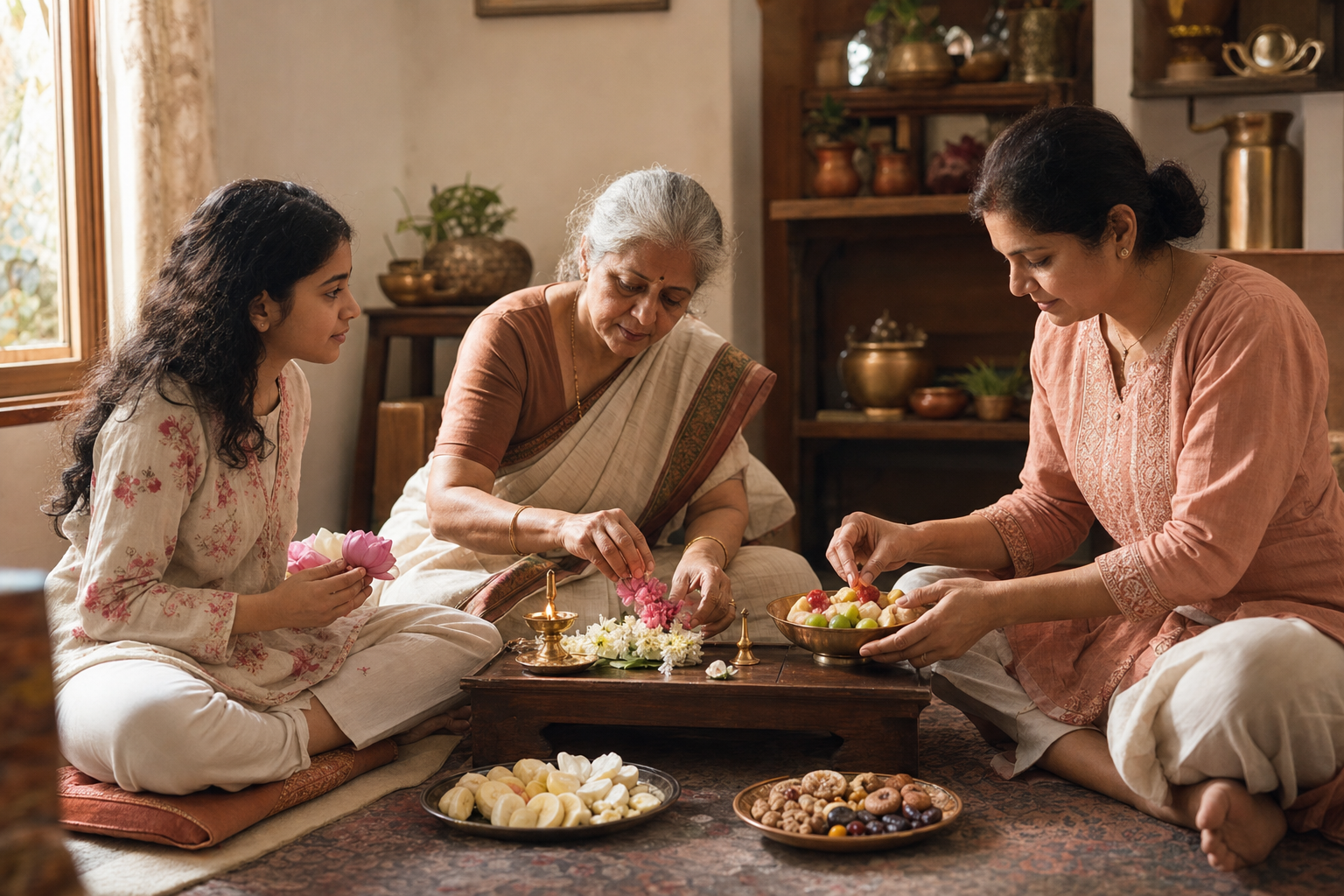
Hindu observance is disciplined, but it is not mechanically uniform. One family permits lemon during a vrata; another reduces sour tastes. One uses turmeric; another sets it aside. One prepares samak, while another keeps only fruit and milk. These differences do not disappear because a social-media list uses the word “allowed.”
When you are unsure, resolve the question in this order:
- Follow the temple or sampradaya for temple-specific rites. A Vaishnava Agama festival, a Shiva vrata, and a household Amavasya observance do not automatically use identical procedures.
- Ask the person who actually carries your family practice. A parent, grandparent, family purohita, or long-standing practitioner can often tell you not only what is omitted but when the vrata begins, what puja accompanies it, and how it ends.
- Respect medical necessities. Health-preserving adjustments are not casual indulgences. Keep essential hydration, food, and medication.
- If no inherited rule is available, choose a simple and transparent observance. State your sankalpa, use a narrow sattvic menu, omit disputed ingredients, perform the worship, and avoid pretending that your provisional choice is universal.
This order also helps in a mixed household. You do not have to force everyone onto one plate to share the sacred day. The person keeping vrata can have a plainly prepared phalahari meal, while others eat an ordinary sattvic meal without bringing prohibited items into the vrata preparation. Separate utensils or cooking order can be arranged when that is part of the household discipline. The point is to remove friction before puja time, not litigate custom when everyone is hungry.
If work prevents a full day of observance, protect the parts you can genuinely keep. Decide the food discipline in advance, reserve a fixed period for japa or puja, and attend a procession or temple darshan when feasible. Do not silently replace the whole vrata with a special menu. A reduced but coherent observance retains more meaning than elaborate “fasting cuisine” with no sankalpa, worship, or samapti.
Key takeaways
- Write the sankalpa before choosing the menu: name the deity or occasion, the discipline, the worship, and the point of completion.
- Use nirjala only when health, experience, and conditions make it safe. Never stop medication for a fast.
- For phalahari vrata, choose a small combination of hydration, fruit or a permitted staple, and a modest accompaniment rather than recreating a feast.
- Let parampara decide gray-zone ingredients such as turmeric, lemon, chaas, particular oils, and some vegetables.
- Read a multi-day temple schedule as a ritual arc. Choose an opening, procession, principal seva, or conclusion that you can attend attentively.
- Verify exact temple timings locally, especially before traveling for a particular vahanam or seva.
For your next observance, make one page with four lines: sankalpa, sadhana, food, and samapti. Then confirm the family rule or temple timing that remains uncertain. That small act of preparation leaves the sacred day free for what the discipline was meant to create: steadiness, remembrance, seva, and attentive darshan.
References
- HinduPad — Somvati Amavasya Vrat Foods: Ayurvedic, Sattvic Guide to What to Eat and What to Avoid
- HinduPad — Karvetinagaram Venugopalaswamy Brahmotsavam 2026: Dates, Rituals, Vahanams, and Pilgrim Guide
