
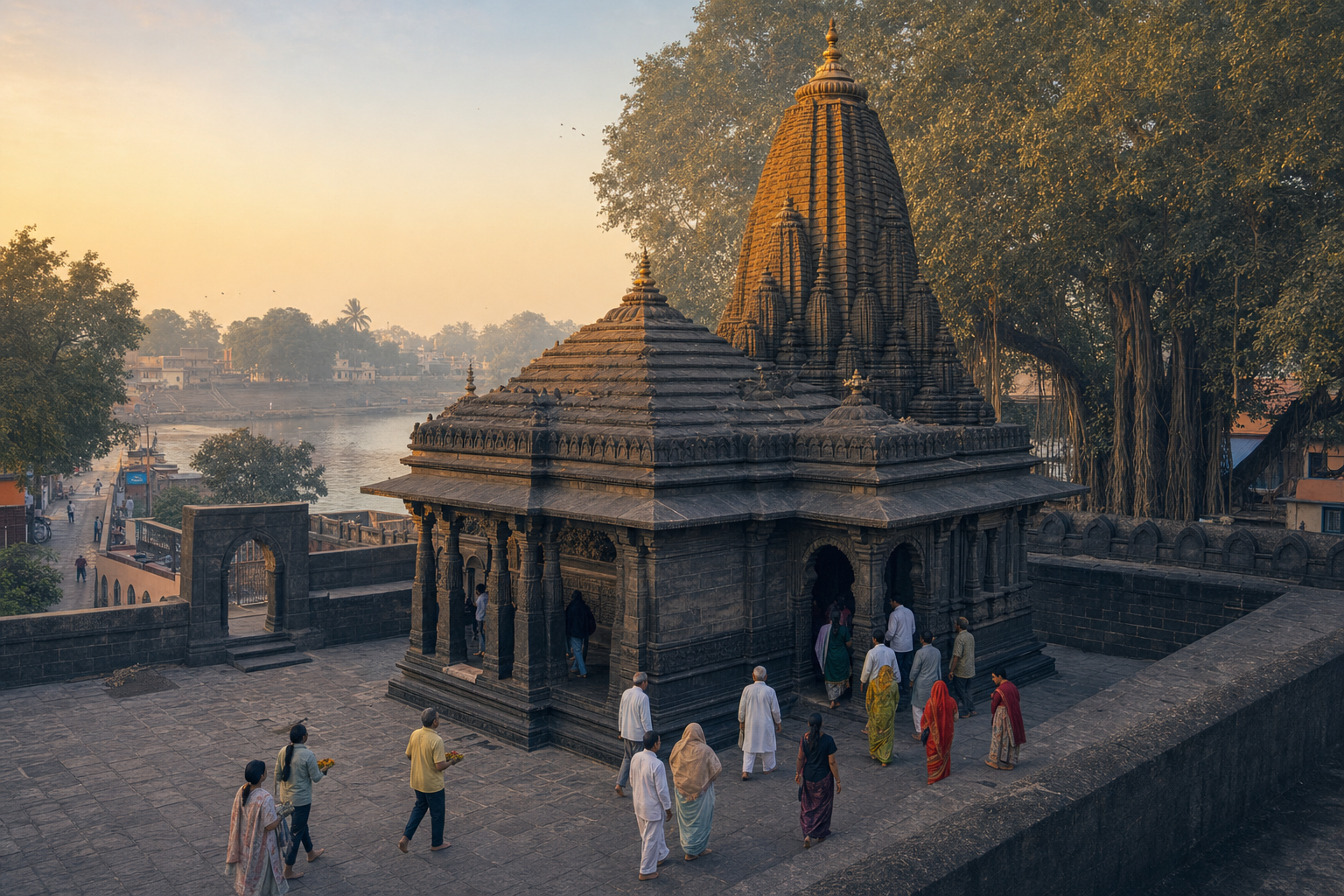
You may reach Panchavati with only a morning to spare and a list of famous places that all seem essential. The real decision isn’t how many stops you can fit in. It is whether you will experience them as disconnected attractions or as parts of one Ramayana landscape.
Begin with Kalaram Mandir and let the rest of Panchavati unfold from there. Its black-stone forms of Bhagavan Sri Rama, Mata Sita and Lakshmana give the circuit a devotional centre; Ramkund, Sita Gufa and Tapovan then place that darshan within river, exile and sacred geography. This approach works whether you come to worship, study architecture or understand why Nashik holds such a durable place in Hindu memory.
Key takeaways before you go
- Treat Kalaram Mandir as the centre of a Panchavati pilgrimage, not as an isolated monument.
- Go at dawn if you want a quieter darshan before the principal crowds gather, but confirm the current ritual and access timings locally.
- Keep local sacred tradition and architectural history distinct: both matter, but they answer different questions.
- Notice the route from plinth to mandapa to sanctum. The building guides your attention as deliberately as the liturgy does.
- Make room for the 1930 temple-entry satyagraha. Equal darshan is part of the mandir’s moral history, not a footnote outside it.
Follow Panchavati as a pilgrimage route, not a checklist
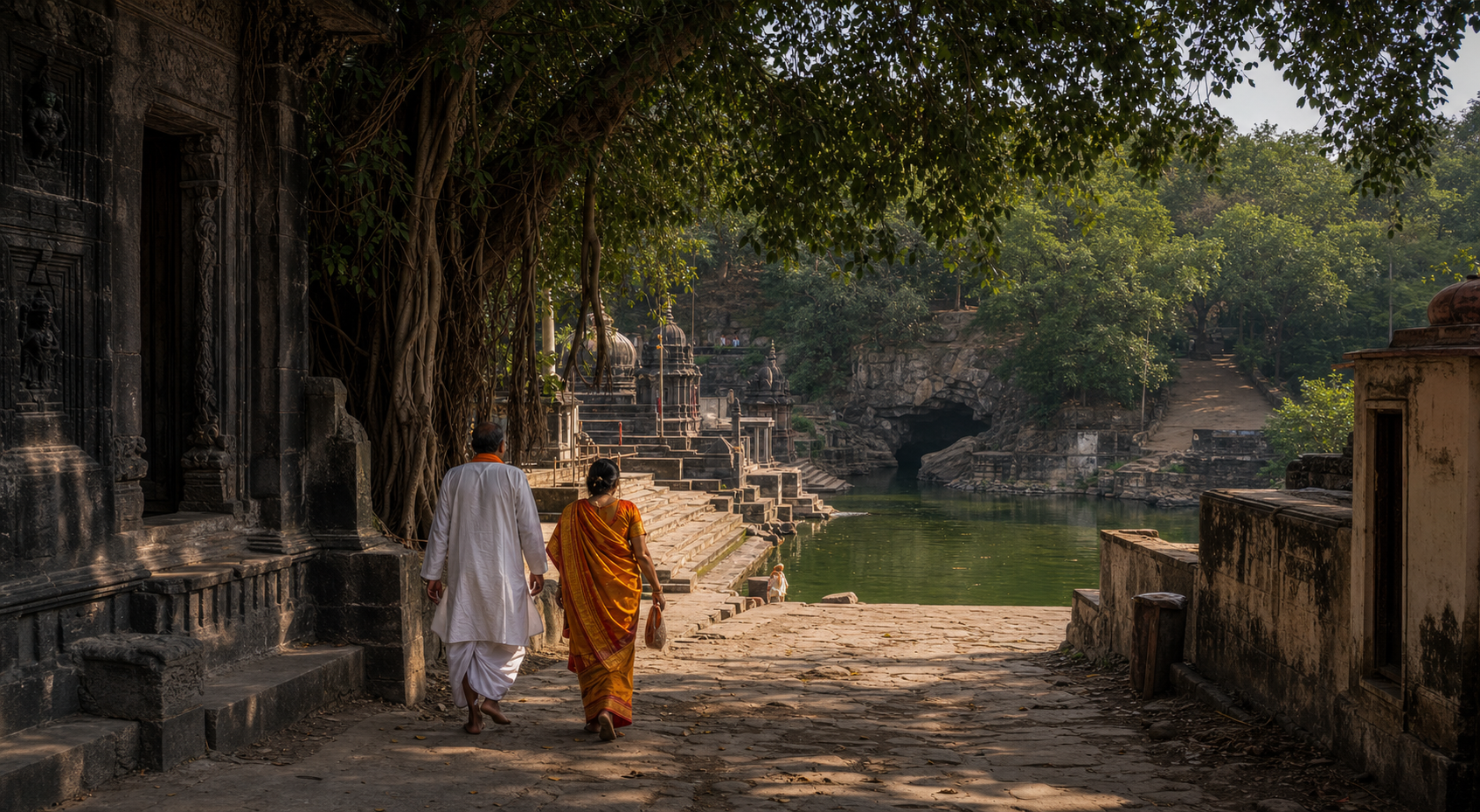
Panchavati is identified in Ramayana tradition as a place where Rama, Sita and Lakshmana lived during vanvas. That association is a sacred tradition rather than a claim that must be forced into the language of archaeological proof. You can honour the landscape without confusing devotion, inherited memory and material dating.
A coherent route keeps those layers together:
- Begin at Kalaram Mandir. Before joining the darshan queue, decide what has brought you there: a vrata, gratitude, study, prayer or simple attention. A clear sankalpa prevents the visit from becoming hurried sightseeing.
- Continue to Ramkund. The temple lies within walking distance of this Godavari tirtha. The river is revered here as the Dakshin Ganga, so pause long enough to notice how water, ghat and temple create one sacred precinct. Don’t reduce the kund to a backdrop.
- Visit Sita Gufa. It is also within walking distance of the mandir and shifts the emphasis from royal Rama to the vulnerability and discipline of vanvas. Let that change in scale register before moving on.
- Give Tapovan its own attention. It belongs to the wider Panchavati circuit, but you needn’t squeeze it into an already rushed walk. If your time is limited, make it a deliberate later leg rather than a hurried extra stop.
The point of this order isn’t logistical perfection. It is to move from darshan to river to remembered exile. If you have read or heard the relevant Ramayana episodes, recall them at the corresponding places. If you haven’t, carry one simple question through the circuit: what does Rama’s maryada demand when comfort, certainty and status have been removed?
Read the murti, stone and spatial sequence carefully
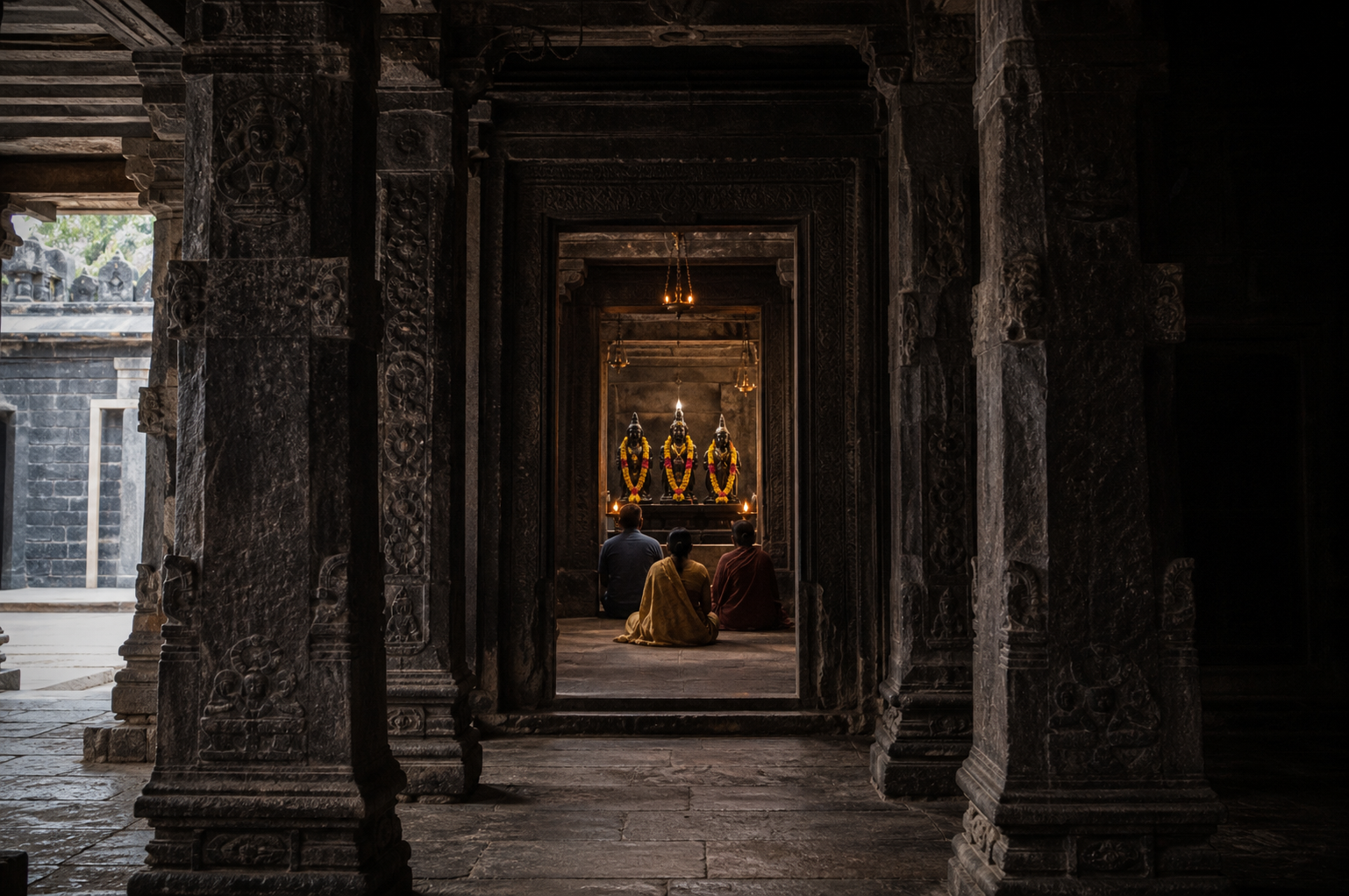
The name Kala Ram comes from the dark stone image of Sri Rama. He is worshipped with Sita and Lakshmana, while a nearby Hanuman shrine reinforces the temple’s Ramayana focus. Local devotion also reveres the deity as swayambhu. Don’t hurry past the triad after identifying the central figure: notice the relationship among the three forms and how alankara changes their visual presence through the ritual calendar.
The temple’s origin is carried through a local tradition involving the Peshwa-era noble Sardar Rangarao Odhekar. He is remembered as having received a dream of the deity and subsequently recovered a black image from the Godavari at Panchavati. The grand stone temple followed through his patronage and community support. Its main construction is generally placed in the late eighteenth century, around the 1780s–1790s, although a precise inscriptional date remains scarce. Say these claims accurately: the dream and river recovery belong to living local memory, while the period attribution rests on architectural character and historical context.
Once inside, read the structure in sequence. The stone plinth lifts the sacred complex out of the surrounding street. Multiple entrances connect it to Panchavati’s lanes, but the interior arrangement progressively concentrates your movement: mandapa, antarala and garbhagriha. Rows of pillars establish rhythm before the sanctum establishes stillness. Finely dressed basalt blocks make the interior cool and acoustically resonant, allowing bells, mantras and kirtan to occupy the space without needing visual excess.
Stand aside rather than blocking the queue and look at how the architecture does this work. Observe the joints between the dark basalt blocks, the repeated pillars and the change in light as you approach the sanctum. Oil lamps and ornament bring the black forms forward without erasing the surrounding darkness. The contrast is part of the experience of Kala Ram.
The stone may look indestructible, but a living temple carries the marks of weather, load and constant footfall. External faces weather; thresholds become polished; the pillared mandapa must continue bearing both structural weight and heavy use. Follow barriers and designated movement paths, and don’t lean on, scratch or treat historic surfaces as props. Good conservation in an active mandir depends on compatible materials, minimal reversible intervention and restrained modern services, but it also depends on ordinary pilgrims refusing to add needless wear.
Time your darshan around worship rather than convenience
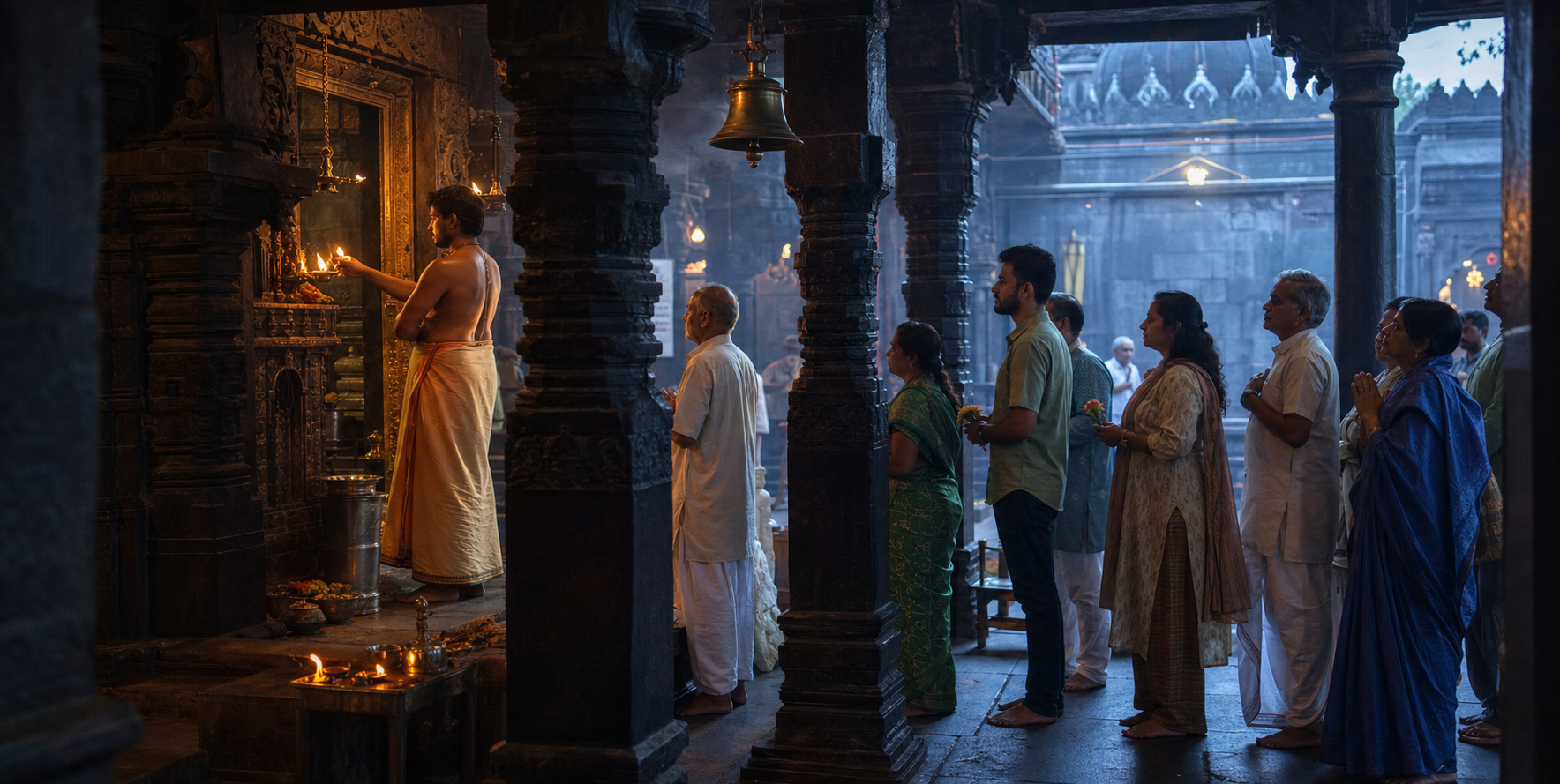
Kalaram Mandir is not a monument that happens to contain worship. Its daily identity is produced by worship. The customary cycle begins at dawn and includes suprabhatam, abhishekam, alankara and archana; panchamrita is often used for abhishekam. Arriving early therefore gives you more than smaller crowds. It places you near the point at which the deity is ritually awakened, bathed, adorned and approached for the day.
Exact public timings and access during individual rites can change, so don’t build a tight itinerary around an unverified hour. Confirm locally, arrive with margin and accept that ritual priority may alter the pace of the queue. Wear modest clothing, keep conversation low near the sanctum and perform clockwise pradakshina only where the temple permits it. These aren’t decorative courtesies. They keep your presence from disrupting someone else’s worship.
Shri Rama Navami is the great annual concentration of Rama bhakti in Panchavati, bringing lamps, flowers, kirtan and locally organised processions such as a palkhi or ratha. Navaratri, Deepavali, Hanuman Jayanti and Dussehra add other peaks to the ritual year. Choose a festival visit if collective worship is your purpose. Choose an ordinary dawn if you need enough quiet to notice the murti, architecture and recitation. One visit cannot optimise for both intimacy and festival intensity.
The Nashik Kumbh Mela magnifies the entire Godavari sacred field every twelfth year. Panchavati then receives an exceptional gathering of pilgrims, sadhus and seekers. If you come during that cycle, plan for a pilgrimage environment fundamentally different from an ordinary temple morning; quiet-darshan assumptions won’t carry over.
Nashik Road railway station is roughly 9–10 kilometres from Kalaram Mandir. Treat that figure as distance, not promised transfer time. Leave enough margin that local movement and the darshan queue don’t force you to choose between rushing the sanctum and missing your onward journey.
Carry the 1930 struggle into your understanding of darshan
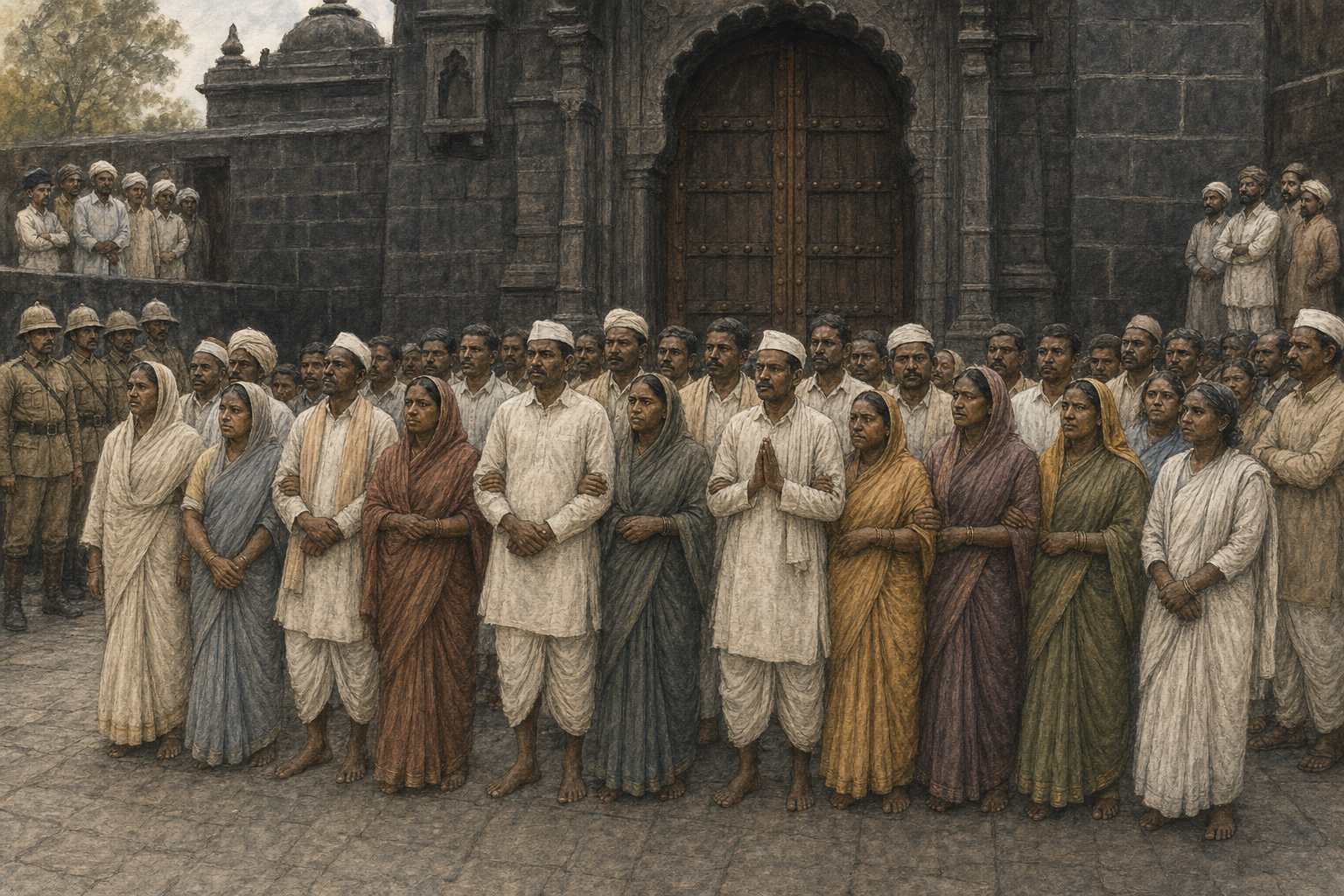
Kalaram Mandir holds a difficult civic memory alongside its devotional and architectural inheritance. In 1930 it became the centre of a major temple-entry satyagraha concerned with access, dignity and equal darshan. The episode pressed Maharashtra to confront who could enter a public sacred space and on what terms.
You don’t have to choose between revering the mandir and facing that history. A serious pilgrimage can do both. In fact, the tension makes the ethical demand of darshan harder to evade: devotion to Rama’s dharma, satya, karuna and maryada must appear in the way worshippers recognise the dignity of the person standing beside them.
That memory also changes how you should behave in the present. Don’t use status, familiarity or impatience to make another pilgrim feel less entitled to the sacred space. Respect orderly access, assist without patronising and understand seva as more than festival labour. Equal regard in the queue is a small but direct expression of equal darshan.
If you come from another Dharmic tradition, you needn’t pretend that Hinduism, Buddhism, Jainism and Sikhism are interchangeable. Compassion, disciplined conduct, service and reverence for sacred places provide enough common ground for a respectful visit without erasing real differences.
Before leaving Panchavati, choose one practice that will outlast the route: begin a regular passage of Ramayana recitation, make seva part of a future visit, or return to one tirtha with enough time to attend rather than collect it. The measure of this pilgrimage is not the number of sites you covered. It is the discipline you carry away from them.
References
