
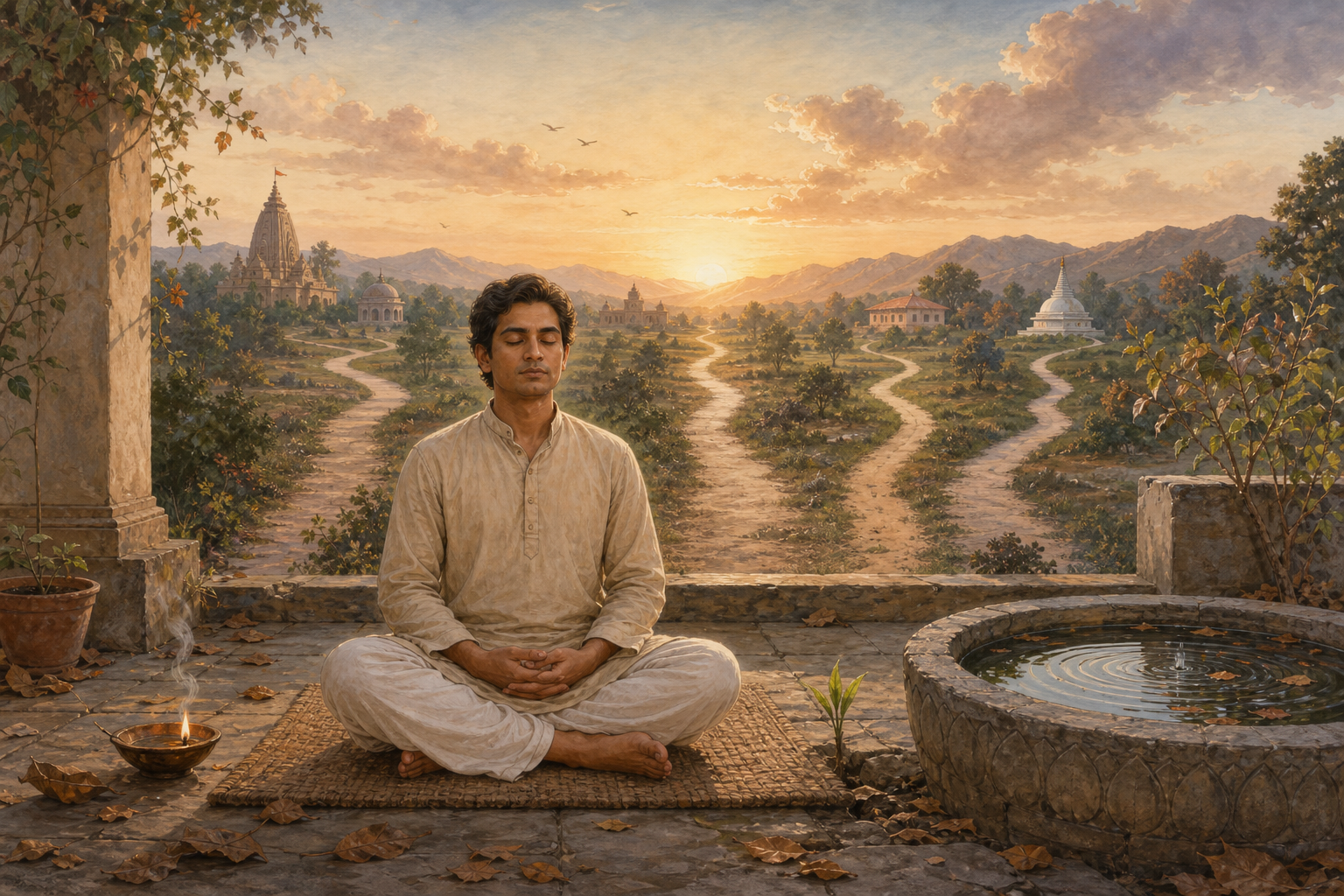
You finally get what you wanted, feel satisfied for a while, and then notice the mind preparing its next bargain: another achievement, purchase, relationship milestone, or burst of stimulation. The problem is not that you failed to appreciate the good thing. You asked a changing experience to provide a kind of security that changing experiences cannot provide.
Dharmic philosophy offers a more workable aim. You can enjoy what is pleasant without making your stability depend on it. Lasting happiness grows as conduct, attention, discernment, devotion, and service stop pulling in different directions. The first step is to become precise about the happiness you are seeking.
Stop asking temporary pleasure to become lasting happiness

A useful Dharmic distinction separates sukha, śānti, and ānanda. Sukha is ordinary pleasure: comfort, praise, success, affection, good food, or any welcome experience produced by favourable conditions. Śānti is relative peace, the quiet that appears when agitation settles. Ānanda is deeper. It is not an especially intense pleasure but a fullness that does not have to be manufactured by the next event.
This distinction is not an argument against pleasure. The Bhagavad Gītā warns that experiences born from contact have beginnings and endings; it does not require you to resent them. Enjoyment becomes bondage when the mind adds a demand: this must continue, this must complete me, or this must prove my worth. The pleasure itself may be innocent. The demand placed upon it produces anxiety before the experience, grasping during it, and disappointment after it.
Nor is ānanda a permanently cheerful mood. A spiritually grounded person can still experience grief, fatigue, frustration, and bodily pain. The practical question is whether a passing condition governs your identity, your conduct, and your capacity to see clearly. Equanimity is not emotional numbness; it is the ability to feel without surrendering the whole inner life to what is felt.
Use śreyas and preyas at the moment of choice
The Kaṭha Upaniṣad distinguishes śreyas, what leads toward genuine well-being and liberation, from preyas, what is immediately pleasant. They sometimes coincide. Nourishing food, affectionate companionship, honest work, and restorative rest can be both pleasant and beneficial. The distinction matters when short-term relief asks you to betray a deeper good.
When you feel pulled toward an impulsive response, pause long enough to ask:
- Will this choice leave the mind clearer, or will it strengthen the same craving that brought me here?
- What duty, relationship, or value will bear the cost of this relief?
- Would I still consider this action right if it brought no praise, status, or visible reward?
- After the pleasant effect passes, what tendency will remain in the mind?
You do not need to reject every preyas. You need to stop allowing it to overrule śreyas automatically. That small change turns philosophy into discernment.
Choose a Dharmic path without erasing real differences
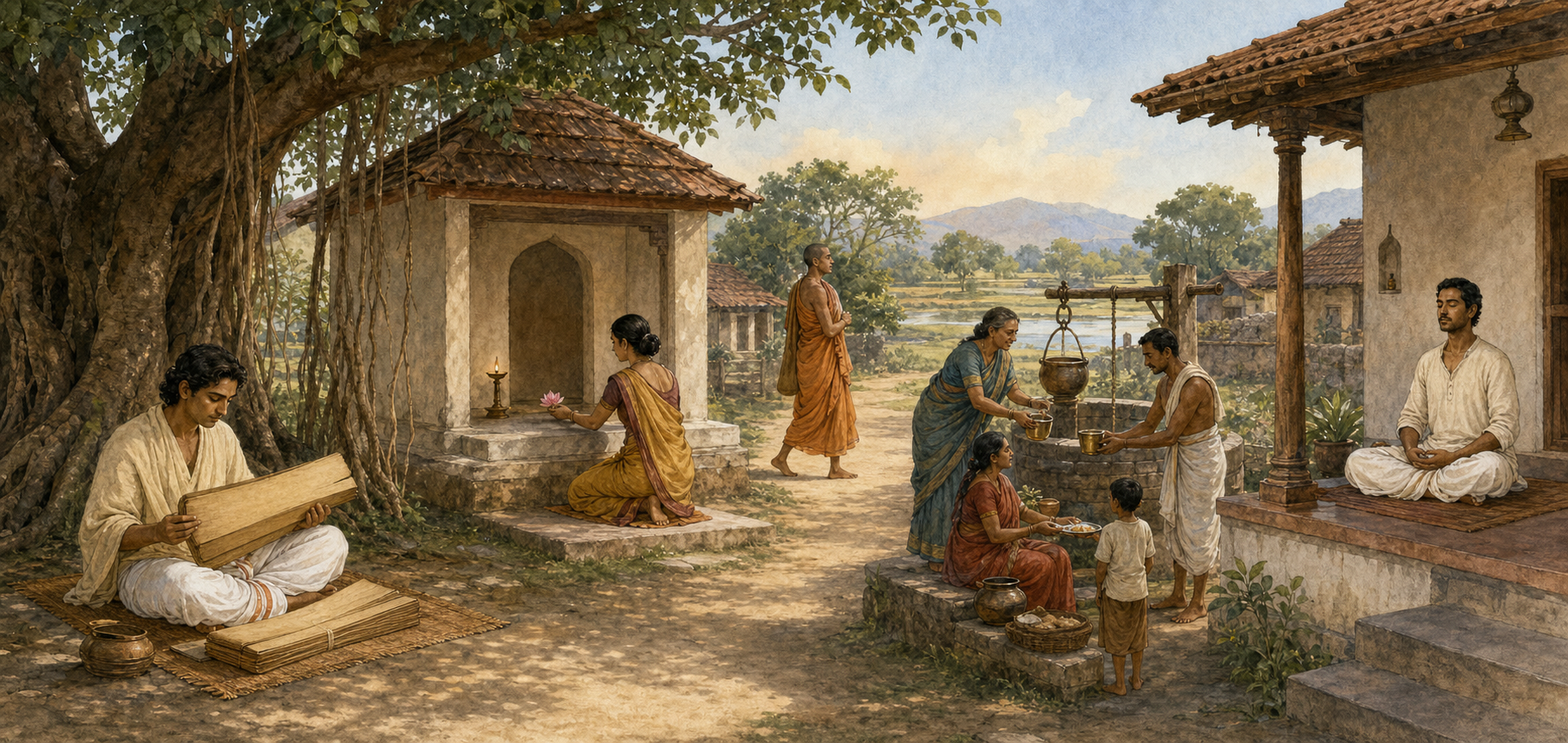
Hindu, Buddhist, Jain, and Sikh traditions do not teach one interchangeable metaphysics. Their practical convergence lies in disciplined conduct, reduced grasping, contemplative steadiness, compassion, and freedom from compulsive self-centredness. You can learn from that convergence without pretending that ātman and anattā mean the same thing.
Hindu paths locate fullness through Self, Divine relationship, or both
Advaita Vedānta understands the deepest error as avidyā, ignorance that makes the limitless Self appear to be an isolated, deficient individual. Jñāna removes this error through hearing the teaching, reflecting upon it, and contemplative assimilation: śravaṇa, manana, and nididhyāsana. Ānanda is therefore not imported into the Self. It is uncovered when mistaken identification loosens.
Viśiṣṭādvaita does not reduce the individual self and Īśvara to an undifferentiated identity. It understands the self through an inseparable relation with the Divine. Dvaita preserves an eternal distinction between the individual and the Supreme. For these devotional orientations, lasting joy matures through communion, dependence, service, and loving surrender rather than through a claim that personal difference was never ultimately real.
Bhakti gives this relationship an intimate form. Nāma-japa, kīrtan, pūjā, listening to sacred narratives, and remembrance redirect attention from constant self-evaluation toward the iṣṭa-devatā. Gauḍīya Vaishnavism, Śaiva Siddhānta, and Śākta traditions articulate the relation differently, but all refuse the idea that devotion is merely emotional decoration. It reorganizes desire around the sacred.
Karma Yoga works through action. You perform the duty that is yours, give it full care, release the demand to possess its result, and dedicate the work to the Divine or the common good. Rāja Yoga trains the same freedom through yama, niyama, āsana, prāṇāyāma, pratyāhāra, dhāraṇā, dhyāna, and samādhi. Its sequence matters: concentrated meditation rests upon ethical and bodily foundations, not upon technique alone.
Buddhist, Jain, and Sikh disciplines begin from different accounts
Buddhist analysis does not uncover an eternal ātman. It examines impermanence, dukkha, and anattā so that clinging can cease. Ethical conduct and practices such as mindfulness and ānāpānasati expose how sensations, feelings, and mental reactions arise and pass. The operative move is not to secure every pleasant state but to stop constructing a permanent refuge from what cannot remain permanent.
Jain philosophy affirms the soul and directs the seeker toward its unobscured luminosity through rigorous ahiṁsā, aparigraha, discipline, and knowledge, culminating in kevala-jñāna. This makes restraint inseparable from happiness. A mind cannot become inwardly free while its habits keep producing harm, possessiveness, and bondage.
Sikh spirituality centres Ik Onkar. Nāma-simran turns attention toward the Divine Name, while sevā prevents spirituality from collapsing into private self-absorption. Sahaj is not manufactured excitement. It is an unforced steadiness ripened through remembrance, honest living, humility, and service.
Choose your main doorway by noticing your actual obstruction. If the mind is scattered, begin with attention and breath awareness. If you are trapped by outcomes, practise Karma Yoga or sevā. If spiritual life feels dry and overly cerebral, establish nāma-japa or devotional remembrance. If the central confusion concerns identity, undertake careful inquiry and svādhyāya. If possessiveness or harmful conduct is the obstacle, begin with ahiṁsā and aparigraha. Do not collect practices merely to feel advanced.
The Hindu principle of iṣṭa-devatā recognizes that temperaments differ. Jain anekāntavāda adds a discipline of intellectual humility: a viewpoint may reveal an aspect of truth without exhausting it. Let this plurality make your practice sincere rather than vague. Learn deeply within a coherent path while treating neighbouring Dharmic paths with accuracy and respect.
Build peace by removing contradictions from the whole life
Meditation cannot reliably settle a life organized around deception, injury, excess, and compulsive acquisition. Ethics is not a ceremonial entrance exam that you leave behind once meditation becomes interesting. It removes the disturbances that otherwise follow you onto the cushion.
The yogic yamas name five restraints: ahiṁsā, satya, asteya, brahmacarya, and aparigraha. Practically, they ask you to reduce harm, speak truthfully, stop taking what is not yours, discipline desire and energy, and loosen possessiveness. The niyamas add śauca, santoṣa, tapas, svādhyāya, and Īśvara-praṇidhāna: cleanliness, contentment, sustained discipline, sacred study or self-examination, and dedication to the Divine.
Each has a direct psychological consequence. A lie requires protection and memory. Possessiveness requires continual guarding and comparison. Injury feeds fear, resentment, or callousness. Unrestrained stimulation makes ordinary quiet feel intolerable. By contrast, truthful and restrained conduct reduces the number of inner conflicts competing for attention. Santoṣa then becomes more than forced gratitude; it is the capacity to recognize sufficiency without abandoning responsible effort.
Use the antahkaraṇa as a map of the disturbance
A classical working map distinguishes manas, buddhi, ahaṁkāra, and citta. Terminology varies among schools, but the map helps you locate where a reaction is being sustained.
| Inner function | What to notice | Question that restores direction |
|---|---|---|
| Manas | Attention jumps among sensations, options, worries, and impulses. | What is the mind chasing or resisting right now? |
| Buddhi | Discernment becomes clear, compromised, or conveniently silent. | Is this śreyas, or merely the most attractive preyas? |
| Ahaṁkāra | An event is appropriated as a verdict about me and mine. | What result am I using to prove or defend an identity? |
| Citta | An old impression gives the present event more force than it warrants. | What familiar pattern is this reaction repeating? |
This map prevents a common mistake: trying to argue with every thought at the level of content. Sometimes the immediate problem is scattered attention, not faulty philosophy. Sometimes attention is calm but buddhi has rationalized a selfish decision. Sometimes the decision is sound but ahaṁkāra demands admiration for making it. Apply the remedy where the disturbance is operating.
The guṇas provide another diagnostic. Rajas pushes through restlessness, urgency, and compulsive activity. Tamas weighs the mind down through inertia, confusion, or avoidance. Sattva brings clarity, harmony, and receptivity. Rajas and tamas are not substances you can simply hate out of existence; embodied life uses activity and rest. Your task is to notice when either prevents clear seeing, then cultivate the sattvic conditions in which buddhi can function.
Work through the pañca-kośas instead of spiritualizing every problem
The Taittirīya Upaniṣad maps embodied experience through annamaya, prāṇamaya, manomaya, vijñānamaya, and ānandamaya kośas. As a practical diagnostic, it stops you from treating every disturbance as a metaphysical crisis.
- Annamaya: Attend to food, bodily care, posture, and rest. Exhaustion is not always a failure of faith.
- Prāṇamaya: Let posture and careful breathing reduce needless agitation. Do not turn the breath into another contest.
- Manomaya: Use mantra, mindfulness, prayer, or sense restraint when attention is being carried away by impressions.
- Vijñānamaya: Use svādhyāya, reflection, and inquiry to correct the understanding that directs action.
- Ānandamaya: Allow quiet and contemplative absorption to reveal a happiness that is not identical with a passing mood.
When you are highly agitated, begin from the outside and move inward: settle the body, allow the breath to become unforced, gather the mind, examine the governing belief, and then remain quiet. Jumping straight to a declaration that everything is Brahman can become avoidance if the body, conscience, and duties are still in disorder.
Use a daily sādhanā that can survive an ordinary working day

A sustainable practice needs clear anchors. It should not depend on having an unusually peaceful day, a perfect room, or a dramatic spiritual feeling. The following rhythm combines remembrance, disciplined action, inquiry, and service without requiring you to imitate every Dharmic tradition at once.
At waking: establish the centre before receiving demands
- Before opening messages or news, sit in a stable posture and let the breath become natural.
- Use the practice native to your path: nāma-japa, quiet prayer, breath awareness, or contemplative remembrance. Stay with a chosen method instead of changing techniques whenever the mind becomes bored.
- Bring the day’s main duties to mind. Dedicate the effort to Īśvara, Dharma, or the welfare served by the work.
- Identify the result you do not control. Resolve to govern preparation, honesty, and effort without treating the outcome as a verdict on your worth.
This sequence joins Bhakti and Karma Yoga before the day fragments attention. The aim is not to create a protected morning mood. It is to establish the standpoint from which you will meet interruption.
During action: convert triggers into practice
When praise, criticism, delay, envy, or uncertainty activates you, do not begin with a grand metaphysical claim. First notice the body and allow an unforced breath. Name the movement plainly as grasping, aversion, fear, or self-defence. Then ask what Dharma requires in the next action you actually control.
Karma Yoga does not mean indifference to quality. It means full attention to the action without a proprietary claim over every consequence. Define the duty, perform it competently, correct mistakes, and release the mental rehearsal in which you repeatedly demand a preferred result. Detachment from the fruit is not detachment from responsibility.
Add sevā where your self-concern is most entrenched. Do something useful that does not improve your status, and resist converting it into a story about your virtue. At work, this may mean making a handoff genuinely usable, sharing credit, or helping without creating dependence. At home, it may mean completing an unglamorous duty before seeking recognition for more visible contributions.
Practise pratyāhāra by creating real boundaries around stimulation. Let notifications wait during prayer, meals, sacred reading, and important conversation. When unsettled, stop adding inputs merely to escape the unsettledness. Sense restraint is not hostility toward the world. It is the recovery of your ability to choose what receives attention.
At day’s end: digest the day instead of carrying it forward
- Read a manageable passage from the Bhagavad Gītā, an Upaniṣad, or the scripture and teaching tradition you genuinely follow. Choose material you can contemplate rather than accumulating pages.
- Review where you caused harm, distorted the truth, grasped at a result, or avoided a duty. Use the review for correction, not self-punishment.
- Notice where restraint, service, devotion, or clear discernment appeared. This helps buddhi recognize the difference between deep satisfaction and stimulation.
- Make any repair that can responsibly be made, and form a specific intention for the unresolved situation.
- Close with gratitude, mettā, nāma-simran, prayer, or quiet remembrance. Release the day rather than continuing its arguments in imagination.
Regular satsang can protect practice from private rationalization and discouragement. If you belong to a lineage, let its mature teachers and established disciplines provide coherence. If you do not, begin with ethical restraint, natural breath awareness, sacred study, service, and a simple devotional practice. Forceful prāṇāyāma or sensationalized kuṇḍalinī methods are not shortcuts; subtle-energy practice calls for care and competent guidance.
Measure freedom, not spiritual excitement
A pleasant meditation is welcome, but it is not decisive evidence of transformation. Look instead for changes that survive outside the practice period:
- You recover from praise and blame without building an identity around either.
- You can enjoy something without immediately calculating how to repeat, display, or secure it.
- You notice a harmful impulse before converting it into speech or action.
- You perform necessary work with less bargaining for recognition.
- You can admit an error without making self-defence the next task.
- Silence becomes inhabitable rather than an empty space that must instantly be filled.
- Service feels less like a loss deducted from your private happiness.
Also watch for spiritual versions of the original trap. Chasing visions, unusual sensations, ecstatic moods, or praise for being detached is still dependence on experience. Using non-attachment to neglect family, work, health, or civic duty is not Karma Yoga. Using witness-consciousness to refuse grief or accountability is suppression, not freedom. Ritual becomes transactional when it is performed mainly to force reality to obey desire.
If distress is persistent or seriously interferes with ordinary functioning, seek qualified mental-health support. Sādhanā can accompany appropriate care; it should not be used to conceal a need for it or presented as a substitute.
Key takeaways for your next choice
- Sukha is conditional pleasure, śānti is relative peace, and ānanda is fullness not manufactured by favourable circumstances.
- The decisive shift is not from enjoyment to rejection, but from dependence to right relationship.
- Hindu, Buddhist, Jain, and Sikh paths share disciplines of restraint, attention, compassion, and reduced grasping while retaining genuine metaphysical differences.
- Ethics stabilizes happiness because conduct that produces harm, deception, possessiveness, and inner division also disturbs contemplation.
- A useful daily rhythm joins remembrance at waking, non-grasping action during the day, sevā, sense restraint, sacred study, and an honest evening review.
- Judge progress by greater freedom in ordinary situations, not by the intensity of a meditation experience.
At your next transition—before opening the phone, answering a provocation, pursuing a purchase, or demanding recognition—pause and identify the choice that serves śreyas. Then perform that choice as your practice. Lasting happiness becomes credible when the search for a better state gives way to a better way of seeing and acting.
References
