
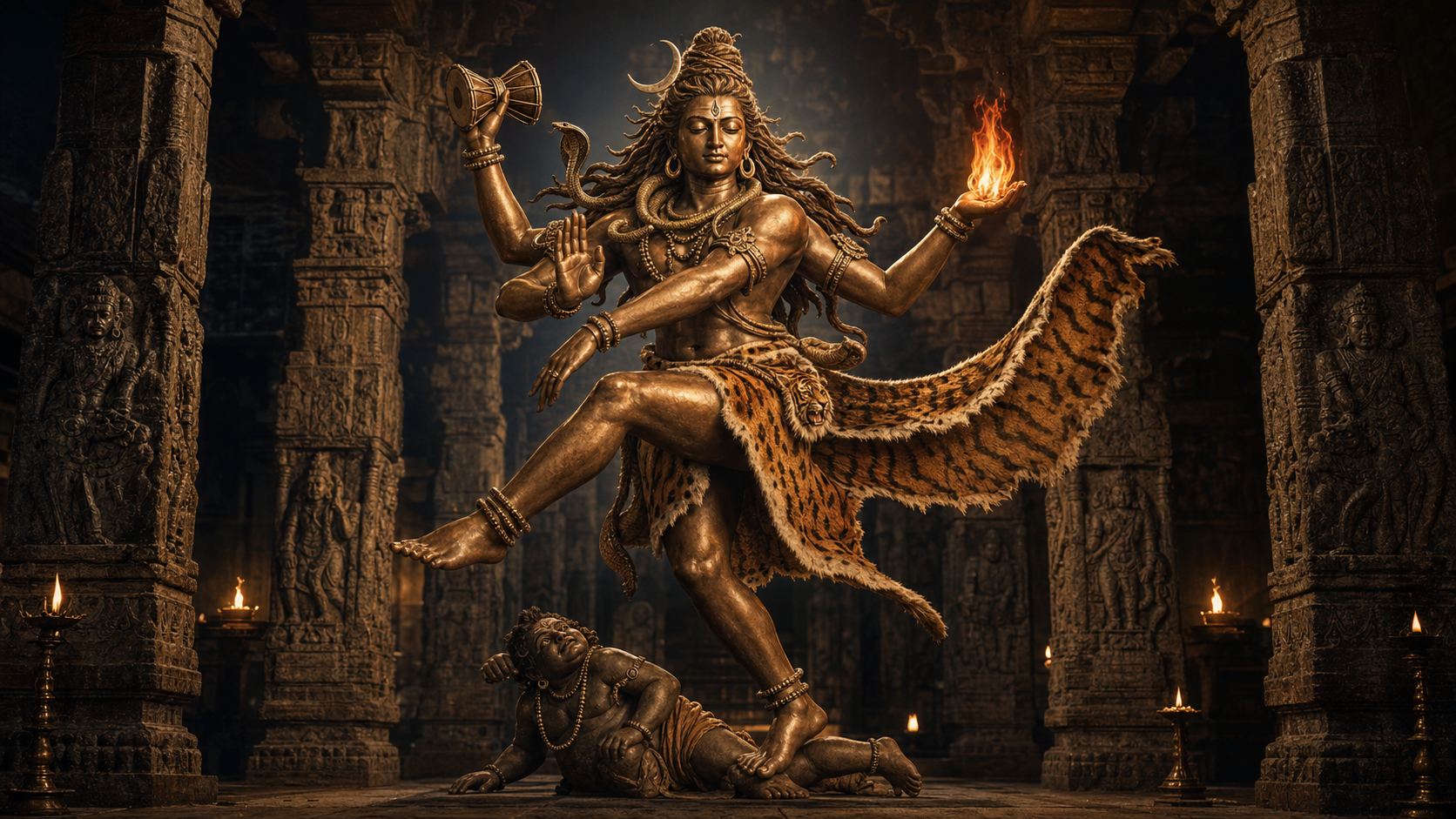
If your puja, vrata, study, or temple service is making you easier to offend and quicker to judge, the problem is not necessarily the ritual. It may be the identity you have built around performing it. Shiva as the Tiger-Slayer gives you a precise way to see that problem without abandoning discipline or treating tradition as disposable.
Sardula Samhara Murti asks a demanding question: is your practice transforming your impulses, or merely giving them sacred language? Once you learn to read the tiger hide, the fire, the drum, the serpents, and the dwarf beneath Shiva’s foot, the icon becomes an examination of practice rather than a spectacle of divine violence.
The tiger appears when spiritual discipline becomes self-importance
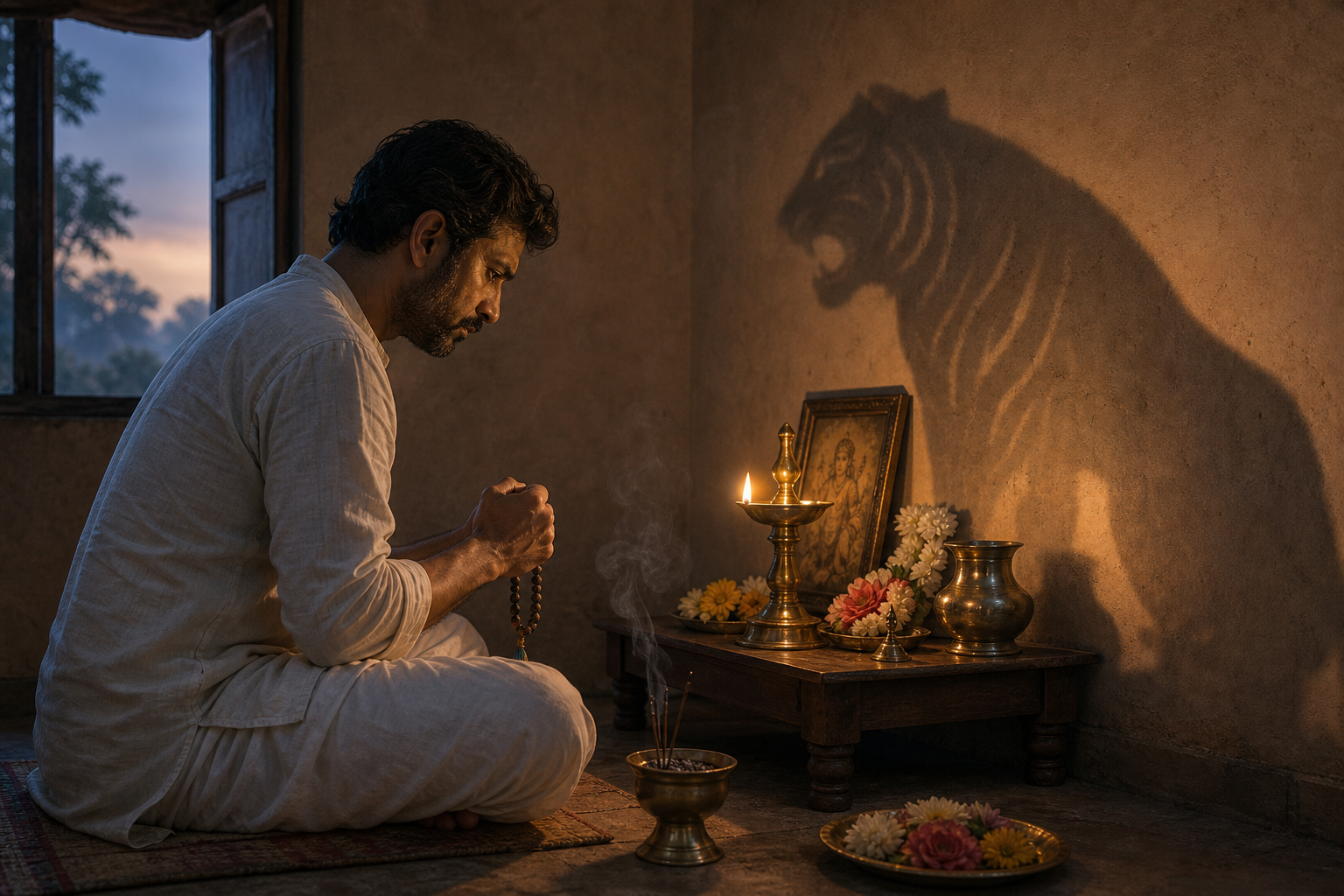
The Darukavana sages were not careless people with no spiritual training. They were ascetics associated with tapas and yajna. Their error was subtler: competence in sacred action had hardened into confidence in their own spiritual power. Shiva entered their world, often remembered in the form of Bhikshatana and accompanied by Uma, to expose the distance between accomplished ritual and genuine freedom.
The sages responded to this disturbance by directing their ritual power against him. They produced a tiger, which Shiva subdued and flayed. They sent serpents, which became his ornaments. Apasmara, the dwarf of forgetfulness, was pressed beneath his dancing foot. The sequence turns every attempted weapon into part of Shiva’s iconography: ferocity becomes clothing, danger becomes adornment, and ignorance loses its commanding position.
This is why the image should not be reduced to a story about killing a tiger. Its theological target is avidya, ignorance, and ahankara, the ego that appropriates spiritual achievement. Samhara here means the dissolution of an obstruction. It is not destruction pursued for pleasure, and the tiger is not an invitation to project violence onto another person or community.
Nor is Darukavana an argument against ritual. An anti-ritual reading misses the fact that the problem arose through attachment to ritual power, not through the mere existence of yajna, tapas, consecration, or worship. Shaiva practice continues to honour the murti through forms such as abhisheka, alankara, and the offering of light. The correction is therefore internal: retain the form, but remove the claim that performing it makes you inherently superior.
Key takeaways
- The tiger represents force, appetite, and spiritual power that have escaped the guidance of discernment.
- The tiger skin shows mastery and sublimation, not denial of energy and not permission for outward violence.
- Darukavana criticises ritual pride, not rigorous ritual practice.
- The practical test of a rite is the disposition it cultivates: humility, clarity, steadiness, compassion, and truthfulness.
- When practice becomes a badge of rank, correct the intention before multiplying the observances.
How to read Sardula Samhara Murti in a temple or museum
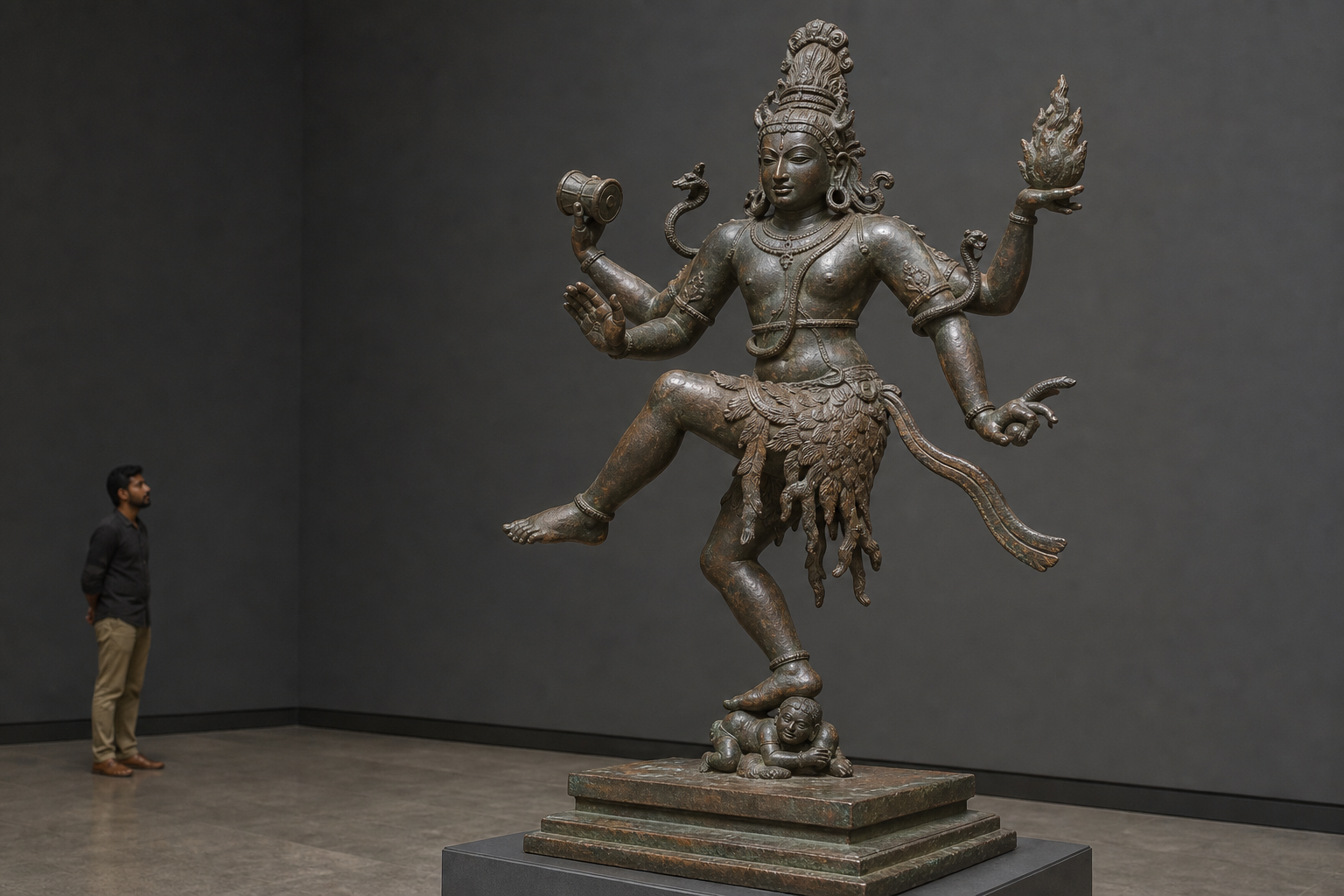
Begin with the hide. Sardula Samhara concerns the tiger of Darukavana, while Gaja Samhara belongs to a different narrative centred on an elephant hide. The two are related as fierce Samhara forms, but they are not interchangeable. A tiger skin also appears in broader ascetic Shiva imagery, so do not identify the murti from one feature alone. Look for a cluster of attributes and for a dynamic or poised stance connected to Shiva’s dance.
Regional Agamic and sculptural traditions do not impose a single visual template. Forms with two to eight arms are attested, and the hide may be held open, worn, draped, or used as a seat. Damaru, agni, abhaya, serpents, and Apasmara may appear in different combinations. Absence of one attribute does not automatically invalidate the identification.
| What you see | What it discloses | What to notice in yourself |
|---|---|---|
| Tiger hide | Raw power has been mastered and given a rightful place. | Which appetite, ambition, or grievance is currently wearing sacred justification? |
| Damaru | Creation and dissolution belong to one cosmic rhythm. | Has discipline become so rigid that any interruption feels like a threat? |
| Agni | Clarity consumes confusion and false identification. | Which honest correction are you resisting because it damages your spiritual self-image? |
| Abhaya gesture | The fierce act ultimately serves fearlessness and grace. | Can you admit an error without fearing the loss of status? |
| Serpents | Prana, time, danger, and vigilance are held consciously rather than expelled. | Can you remain alert to an impulse without immediately obeying or condemning it? |
| Apasmara | Forgetfulness of first principles is placed beneath awareness. | Have details of procedure displaced the purpose of the rite? |
The whole composition matters more than any isolated symbol. Shiva does not look depleted after overcoming the tiger. He appears poised, rhythmic, and sovereign. That is an important correction to the idea that self-mastery means becoming lifeless. The energy remains; its allegiance changes.
This visual grammar overlaps with Nataraja. Damaru sets the pulse, agni transforms, Apasmara lies beneath awareness, and movement resolves into balance. Sardula Samhara places special emphasis on the tiger and the conceit that force, austerity, or ritual proficiency can compel liberation. Read the image from threat to transformation: what attacks Shiva is not merely defeated but reassigned within a larger order.
A direct audit for ritual ego

Ritual ego rarely announces itself as vanity. It often speaks in the respectable vocabulary of purity, correctness, lineage, learning, or service. None of those things is inherently suspect. The warning sign is what happens when they are challenged.
- Watch your reaction to interruption. If a small mistake or delay produces disproportionate anger, the rite may have become a means of controlling other people.
- Watch what you compare. Knowing a procedure well is useful. Rehearsing who performs it less correctly turns knowledge into rank.
- Watch how you receive correction. If accuracy matters only when you are correcting others, the tiger is defending status rather than dharma.
- Watch what happens after worship. A meticulously completed rite followed by contempt, deceit, or avoidable cruelty exposes a gap between sacred form and ethical fruit.
- Watch your claim on results. Discipline does not place the divine in your debt. Entitlement to recognition, influence, or reward converts offering into transaction.
Do not answer these signs by abandoning ritual in disgust. Ego can become equally proud of being spontaneous, intellectual, sceptical, or supposedly beyond tradition. The better response is to repair the relationship between form and purpose.
Before beginning an observance, state its intention in plain language. Avoid grand claims. You might dedicate the act to steadiness, gratitude, remembrance, or the welfare of another person. Afterward, examine the first moment of friction you encounter. That moment shows whether the ritual’s order can survive contact with a world you do not control.
When you notice pride, name the concrete attachment beneath it. Is it the need to be recognised as learned? Fear that a changing custom will erase continuity? Anger that others do not value your effort? Attachment becomes workable when it is named precisely. A vague confession of ego can itself become a performance of humility.
Then redirect the energy instead of merely suppressing it. Learning can become patient teaching. Concern for correctness can become careful preparation. Institutional loyalty can become accountable service. Strong emotion can become the courage to defend a principle without humiliating a person. That redirection is the meaning of wearing the tiger skin: the force remains available, but it no longer claims the throne.
Turn darshan into a discipline of attention
Sardula Samhara can support dharana, focused contemplation, without requiring an elaborate new ritual. Use the murti as a sequence of attention. If you are standing before an image in a temple, follow the local discipline of worship and do not turn the space into a private performance.
- Locate the tiger. Bring to mind one active impulse that is difficult to govern: resentment, the hunger for praise, the urge to dominate a discussion, or dependence on being seen as devout.
- See the hide, not a dead end. Ask what legitimate energy is trapped inside that impulse. The desire for praise may contain a wish to contribute; anger may contain concern for justice; rigidity may contain care for continuity.
- Attend to agni. Let discernment separate the legitimate concern from the self-serving demand attached to it.
- Attend to the damaru. Return to rhythm. Choose a sustainable practice rather than compensating for insecurity with a dramatic display.
- Notice Apasmara. Recall the first principle you had forgotten: worship serves awakening, ethical conduct, remembrance, and grace. Procedure serves that end.
- End with abhaya. Choose one corrective act you can perform without defensiveness: apologise, accept instruction, share credit, listen, or complete an unnoticed duty.
This contemplation should make conduct more exact, not merely produce an intense inward mood. The useful question is not whether you felt spiritually powerful before the murti. It is whether you became less governed by the impulse you identified.
The relationship between Samhara and anugraha is crucial here. Shiva removes the obstruction so that grace can operate. If self-examination ends in self-hatred, it has repeated the tiger’s aggression inward. The task is to relinquish false ownership of practice, learn from the exposure, and return to dharma with greater clarity.
Preserve sacred form without turning it into a weapon
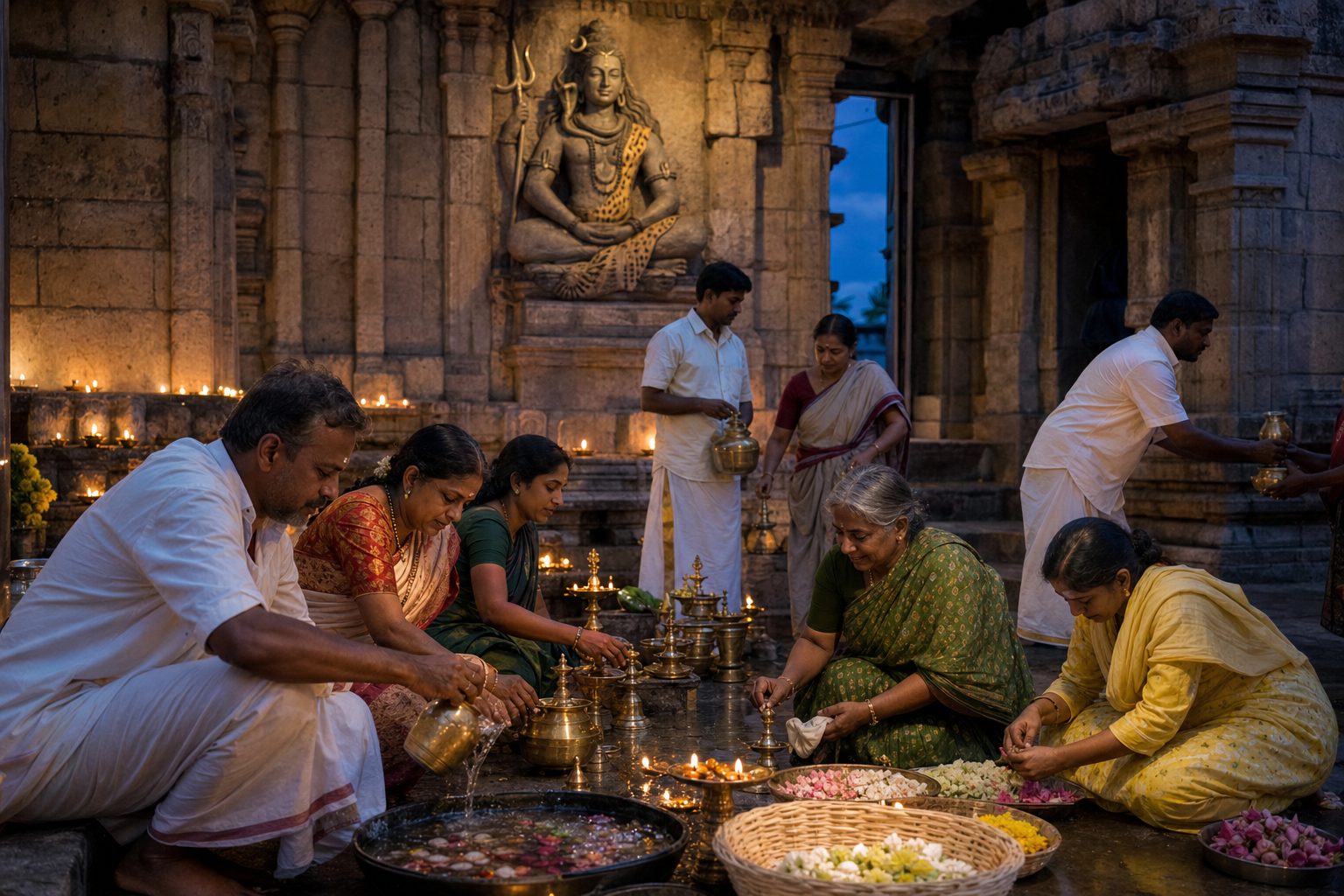
The Darukavana warning applies to families, temples, study circles, and institutions as much as it applies to individuals. Ritual knowledge requires training, standards, memory, and legitimate authority. Yet those protections become brittle when questions are treated as insults, inherited roles are confused with personal infallibility, or correction is delivered through humiliation.
A healthy community distinguishes between preserving a form and protecting someone’s prestige. It explains why a practice matters, teaches newcomers without contempt, and permits knowledgeable correction to travel in more than one direction. It also keeps means aligned with dharmic ends. Contemporary worship can preserve the tiger-skin symbolism through cloth representations, maintaining the iconographic teaching while honouring ahimsa.
The icon also has meaningful resonances across Dharmic traditions without erasing their doctrinal differences. Jain reflection on the kshayas confronts anger, pride, deceit, and greed. Sikh teaching confronts haumai, the self-making that obstructs truthful living. Buddhist Mahakala imagery can express the compassionate removal of obstacles to awakening. These are not interchangeable theologies, but they share a civilisational recognition: outward discipline cannot substitute for mastery of the forces that distort perception and conduct.
The next time you complete a sacred observance, do not measure it only by whether every external element went as planned. Notice how you respond to the first person, delay, disagreement, or correction that unsettles you. That is where the tiger steps out of the forest. Meet it there, and let the discipline you value become the means by which its energy is finally worn lightly.
References
