
Your June calendar can look settled and still be ritually wrong. A civil date tells you when to take leave or travel; it does not tell you whether the required tithi is present at sunrise, sunset, or the part of the day prescribed for a vrata.
If you are arranging a home puja, visiting Kanchipuram, or coordinating observances across time zones, mark the firm dates first and calculate the sacred windows for your location second. The plan below separates what you can schedule now from what still needs confirmation in a local Panchang.
The June dates to place on your calendar first
| Date | Sacred observance or transition | What you should do now |
|---|---|---|
| Tuesday, June 2 | Sri Shankara Vijayendra Saraswathi Shankaracharya Swamiji Ashrama Sweekara day at Kanchi Kamakoti Peetham | Reserve the day for Guru Vandana, Vedic recitation, study, seva, or attendance at the Peetham. Confirm the institutional programme before travelling. |
| Tuesday, June 9 | Krishna Paksha Navami at sunrise in most regions, changing to Dashami at 8:54 PM IST | Complete any practice specifically requiring Navami before the transition. Use the period after 8:54 PM IST only for an activity appropriate to Dashami, after converting the time for your location. |
| Friday, June 12 | Shukra Pradosham at Kanchi Kamakoti Peetham | Keep the local sunset period free for Shiva worship. Obtain the final pradosha kala from the Peetham or a reliable local Panchang. |
| Saturday, June 27 | Shani Pradosham at Kanchi Kamakoti Peetham | Plan for a disciplined evening observance and arrive early if attending in person. Do not reuse the June 12 clock time because sunset and tithi boundaries will differ. |
| Monday, June 29 | An additional Kanchi Kamakoti Peetham observance whose designation and precise timing require confirmation | Hold the date provisionally. Check the Peetham’s monthly communication or on-site notice before choosing a ritual, making a sankalpa, or arranging travel around it. |
Treat this as a planning map, not as a replacement for your sampradaya’s calendar. The Kanchi dates describe the Peetham’s June programme, while the ritual clock for your home still depends on your location and the rule governing the particular observance.
Why a sacred date is not a fixed twenty-four-hour box
A tithi is determined by the changing angular relationship between the Moon and the Sun. Each interval of 12 degrees forms one tithi. Navami ends when that separation crosses 108 degrees, so the boundary can fall in the morning, afternoon, or night rather than at civil midnight.
This explains the important distinction on June 9. Navami continues until 8:54 PM IST and Dashami begins after that instant, yet the day is generally identified as Navami because Navami is present at sunrise. This sunrise rule, often called udaya-tithi, gives the civil day its traditional tithi name in many Panchang systems.
Udaya-tithi does not settle every ritual question. A vrata may require the tithi at sunrise, during aparahna, at sunset, or during pradosha kala. Pradosham is a clear example: Trayodashi must intersect the twilight period around local sunset. A date printed beside Pradosham is therefore the beginning of your calculation, not permission to worship at any convenient hour.
The commonly used Pradosha window extends approximately one and a half hours before and after sunset, subject to Trayodashi being present. If Trayodashi ends before that window or begins partway through it, the usable period has to be selected according to the applicable rule. For June 12 and June 27, use Kanchipuram timings when attending the Peetham and your own local timings when observing at home elsewhere.
Month names may also differ without indicating that one calendar is defective. North Indian Purnimanta reckoning runs the lunar month from one Purnima to the next, while Amanta reckoning used in many southern regions runs from one Amavasya to the next. The waning phase after the early-June Purnima may be described as Jyeshtha Krishna Paksha, but regional naming should not be mistaken for a disagreement about the underlying lunar motion.
Build a location-correct observance window in six steps
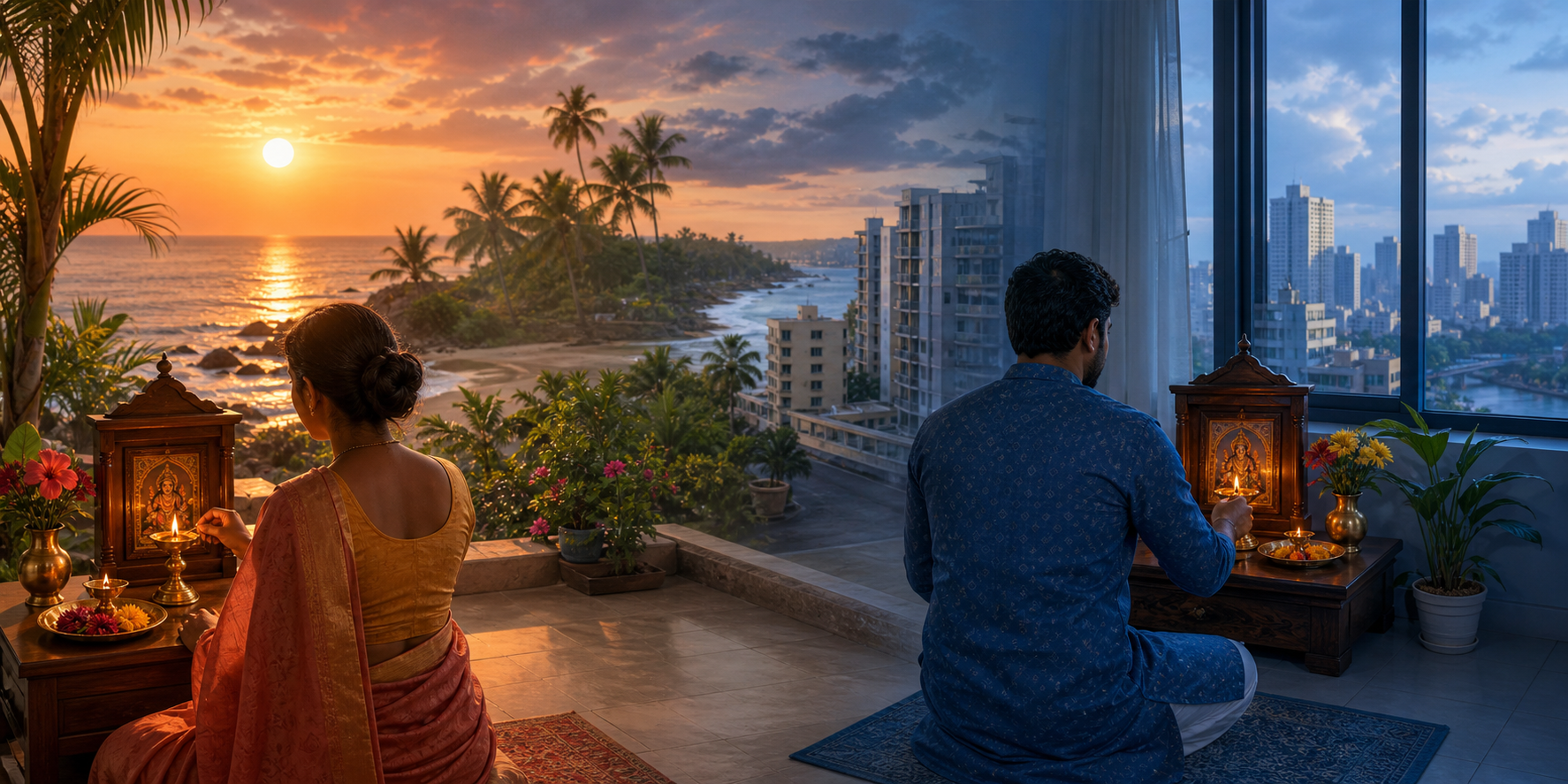
- Choose the place where the act will occur. Use the sunrise and sunset of that location, not the city where a calendar was published. If you will worship in Toronto but watch a Kanchipuram programme online, your home sankalpa and the Peetham’s liturgy operate on different local clocks.
- Write down the ritual condition. Ask whether your practice requires the tithi at sunrise, at aparahna, at sunset, during pradosha kala, or simply before the tithi ends. Do this before looking for a convenient time.
- Convert universal transitions carefully. The June 9 Navami-Dashami boundary is 8:54 PM in Indian Standard Time, or UTC+5:30. Convert that instant to your time zone, then separately determine which tithi is present at your local sunrise.
- Calculate pradosha around local sunset. For June 12 and June 27, identify sunset first, form the approximate window extending one and a half hours on either side, and verify how Trayodashi overlaps it.
- Calculate weekday avoidance periods from daylight length. Rahu Kalam, Gulika Kalam, and Yamaganda are proportional divisions between sunrise and sunset. Fixed clock-time charts are only approximations.
- Check all five Panchang limbs when the undertaking is important. Tithi, vara, nakshatra, yoga, and karana together provide a more complete election than tithi alone. Confirm the day’s nakshatra and Moon rashi locally because the Moon can change position during the civil day.
June 9 shows why the fifth step matters. It is a Tuesday. If daylight were exactly 6:00 AM to 6:00 PM, the conventional illustrative periods would be Yamaganda from about 9:00 to 10:30 AM, Gulika Kalam from about noon to 1:30 PM, and Rahu Kalam from about 3:00 to 4:30 PM. Those are not ready-made June 9 timings for every city. Lengthen, shorten, and shift them in proportion to the actual interval between local sunrise and sunset.
Abhijit Muhurat can provide a useful general option when no more specific window governs the task. It is centred on local solar noon and normally spans roughly 24 minutes on either side. It should not be used to override a ritual’s explicit tithi requirement or to replace a full Panchanga-shuddhi check for a major samskara or irreversible commitment.
Turn each June observance into a workable practice
June 2: make Guru bhakti concrete
Ashrama Sweekara day commemorates Sri Shankara Vijayendra Saraswathi Shankaracharya Swamiji’s acceptance of sannyasa. Its practical grammar is Guru-tattva, fidelity to shastra, and service for loka-sangraha rather than admiration without discipline.
If you cannot attend Kanchi Kamakoti Peetham, choose a modest practice you can complete attentively: Guru Vandana, Veda Parayanam already known to you, study of an Advaita teaching, support for dharmic education, or seva performed without publicity. Keep the sankalpa specific. One completed act of study or service expresses the day better than an ambitious list abandoned by noon.
June 9: separate the day’s name from the evening transition
Use the morning identity of Navami for the day’s general sankalpa, subject to your local Panchang. If an inherited vrata or temple instruction explicitly requires Navami, finish it before 8:54 PM IST or the corresponding instant in your time zone. Do not move the Indian clock time unchanged into a calendar abroad.
The waning fortnight is well suited to japa, scriptural reading, quiet seva, and honest review of habits. Tuesday’s association with Mangala adds a constructive emphasis on courage, protection, and disciplined effort. Choose one neglected duty and complete it without turning the symbolism into a prediction about how the day must unfold.
Some families perform tarpana during Krishna Paksha, but family and regional practice varies. If you have not received the method, consult the person who maintains your family’s ritual tradition rather than assembling an ancestral rite from unrelated instructions.
June 12 and June 27: prepare for two different Pradosha evenings
Both evenings centre on Shiva worship during Trayodashi at twilight, but their weekday associations give them different devotional accents. Shukra Pradosham on June 12 is traditionally connected with auspiciousness and gentle grace. Shani Pradosham on June 27 places greater emphasis on steadfastness, atonement, and endurance through difficulty. These associations can shape your sankalpa; they do not change the need to calculate the local tithi-sunset overlap.
At Kanchi, Pradosha worship may include Sri Chandramouliswara Puja, Mahanyasa-purvaka Rudrabhishekam, Panchamrita Abhisheka, Bilva Archana, Sri Rudram and Chamakam recitation, and Deepa Aradhana. Panchamrita uses milk, curd, ghee, honey, and sugar. These are elements of a developed liturgical sequence, not a checklist every household must reproduce.
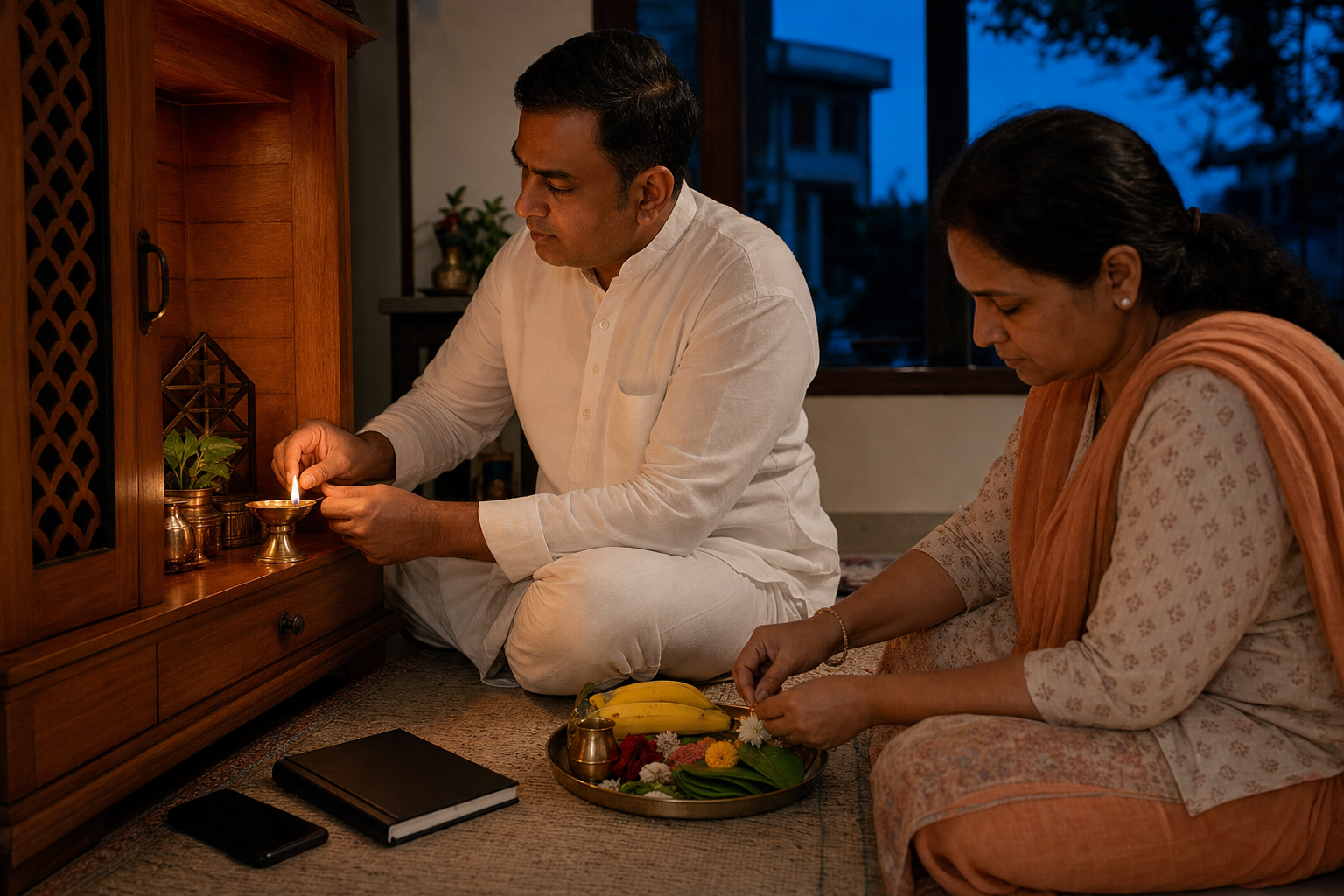
For a simple home observance, clean the worship area before the calculated window, prepare the lamp and permitted offerings, and keep the twilight period free of avoidable interruptions. Follow the abhisheka and recitation method received in your family or lineage. If you do not know the advanced sequence, a sincere repetition of Namah Shivaya, a lamp offering, and quiet contemplation are more appropriate than imitating technical rites without guidance.
If you are going to the Peetham, arrive well before pradosha kala, wear attire appropriate to the sacred setting, and put your phone away in the puja area. Prepare your personal sankalpa in advance so that the moment of collective prayer is not spent deciding what to ask for. Aligning it with universal well-being keeps personal devotion connected to the wider dharmic purpose of worship.
June 29: preserve the date without guessing the rite
The Peetham calendar reserves June 29 for an additional observance, but its designation and exact timing are not established here. Mark it as provisional, then verify the monthly notice before committing to travel, fasting, offerings, or a specialised sankalpa. An unnamed programme is a reason to confirm, not an invitation to fill the gap with a plausible festival name.
Across Hindu, Buddhist, Jain, and Sikh life, disciplined remembrance, ethical restraint, contemplation, and seva provide a recognisable civilizational thread. You can honour that kinship without treating distinct rites as interchangeable. A Buddhist lunar discipline, Jaina samayika, Sikh simran, and Shaiva Pradosha each retain their own authority, method, and community context.
Key takeaways for your June planning
- Put June 2, 9, 12, 27, and the provisional June 29 programme on your calendar now.
- On June 9, Navami ends at 8:54 PM IST; convert the instant for your location and still check the tithi at your own sunrise.
- For Pradosham, calculate from local sunset and confirm that Trayodashi intersects the twilight window.
- Never copy Rahu Kalam, Gulika Kalam, Yamaganda, or Abhijit timings from another city without recalculating them.
- Use the Peetham’s schedule for attendance in Kanchipuram and your local Panchang for a home observance elsewhere.
- Confirm June 29 before assigning it a ritual name or making travel and fasting commitments.
Start by entering the five dates with two reminders: one a week before for travel or materials, and one close to the day for the final Panchang check. That small separation between planning the date and verifying the sacred window will prevent most avoidable timing errors.
References
- DharmaRenaissance Blog – June 9, 2026 Panchang Master Guide: Krishna Paksha Navami to Dashami, Shubh Muhurat, Nakshatra, Rashi
- DharmaRenaissance Blog – June 2026 Vishesha Pujas at Kanchi Kamakoti Peetham: Ashrama Sweekara Day & Pradosha Guide
