
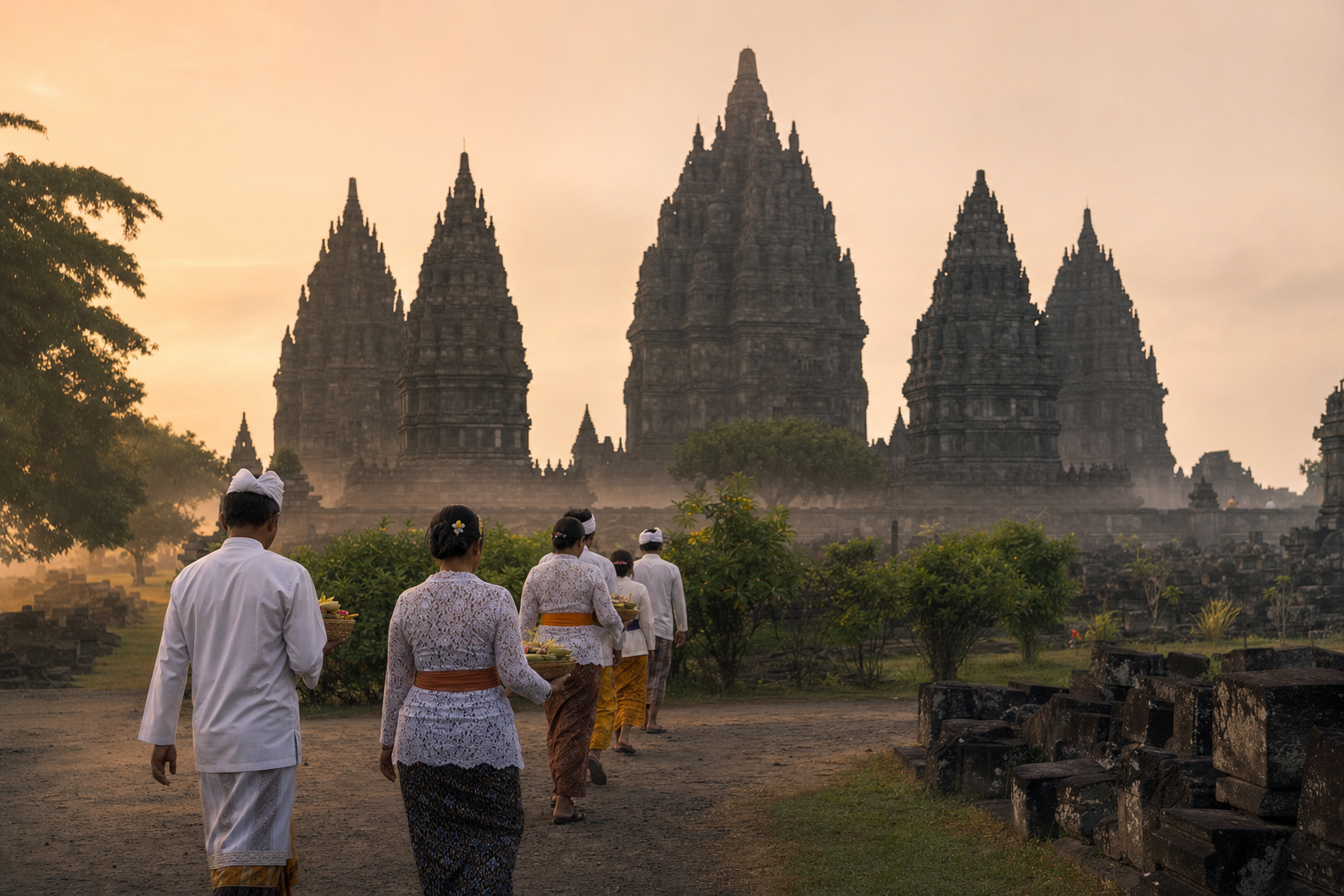
If you came here after seeing Prime Minister Modi perform puja at Prambanan Shiva Temple, you may be wondering how that public Hindu act fits within Muslim-majority Indonesia. The question becomes much clearer once you separate the presence of Dharma from its classification by the state.
The short answer is that formal government acceptance is dated to 1962, and Hinduism had to be presented as monotheistic. That date concerns legal recognition. It does not, by itself, tell you when Hindu traditions reached Indonesia, how Indonesians practised them, or what Prambanan meant to earlier generations.
The 1962 date answers a legal question, not a civilisational one
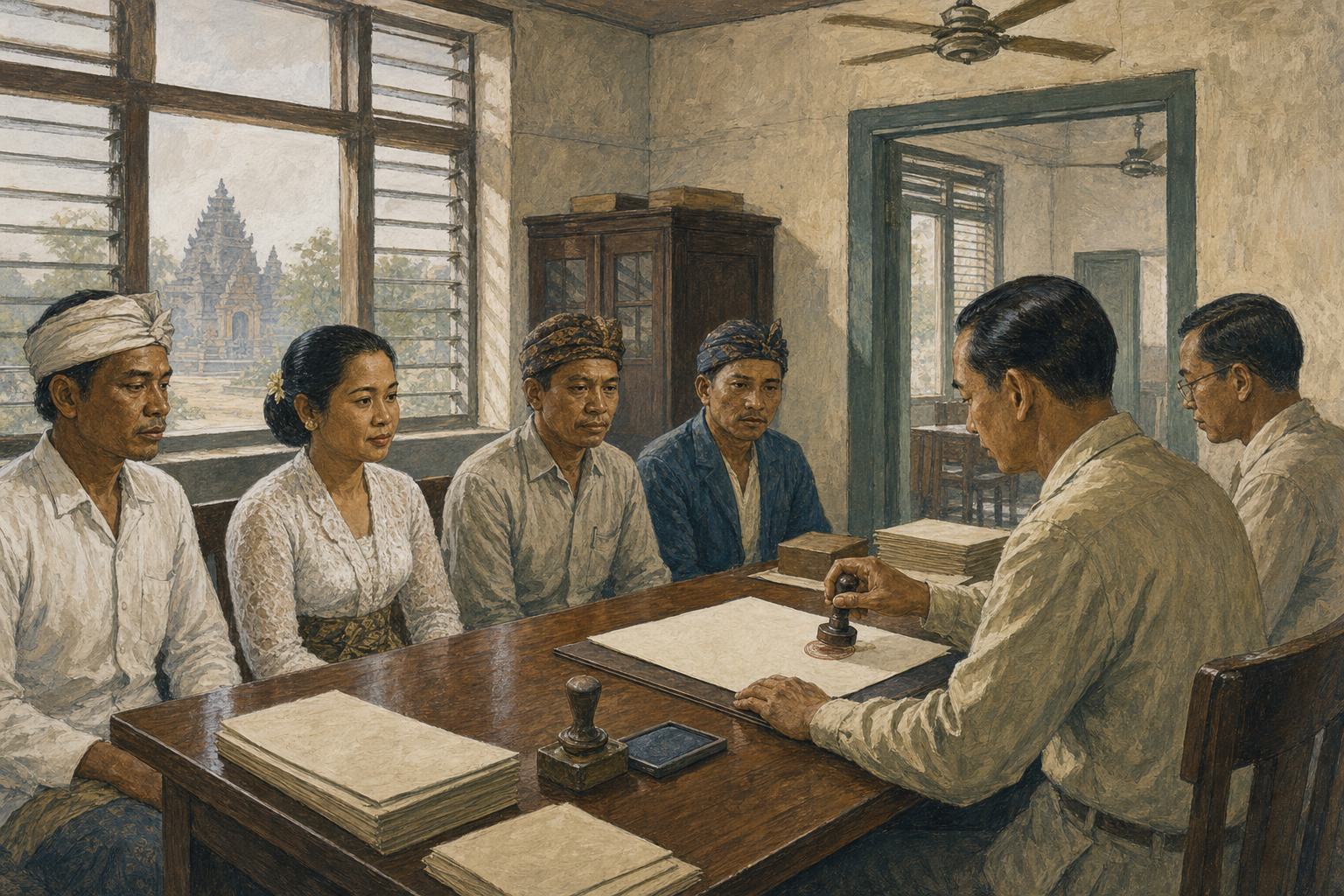
Three questions are often collapsed into one. The first is historical: when did Hindu thought, ritual and sacred culture become present in Indonesia? The second is social: how did communities preserve or practise that inheritance? The third is administrative: when did the government recognise Hinduism as a religion?
The year 1962 answers the third question. A date of government approval cannot, on its own, date a tradition’s arrival or measure the depth of its cultural influence. It marks the point at which Hinduism satisfied the state’s conditions for recognition.
This distinction changes how you should repeat the fact. Say, “Hindu Dharma received formal government recognition as a religion in Indonesia in 1962.” Do not shorten that to “Hinduism began in Indonesia in 1962.” The second sentence makes a historical claim that the recognition date cannot support.
The word “accepted” also needs an object. Accepted by whom, and for what purpose? It can mean tolerated by neighbours, incorporated into national culture, recognised by law or understood by officials. In this case, the relevant meaning is government approval as a religion. Keeping that noun attached to the date prevents most of the confusion.
Why monotheism became the decisive test
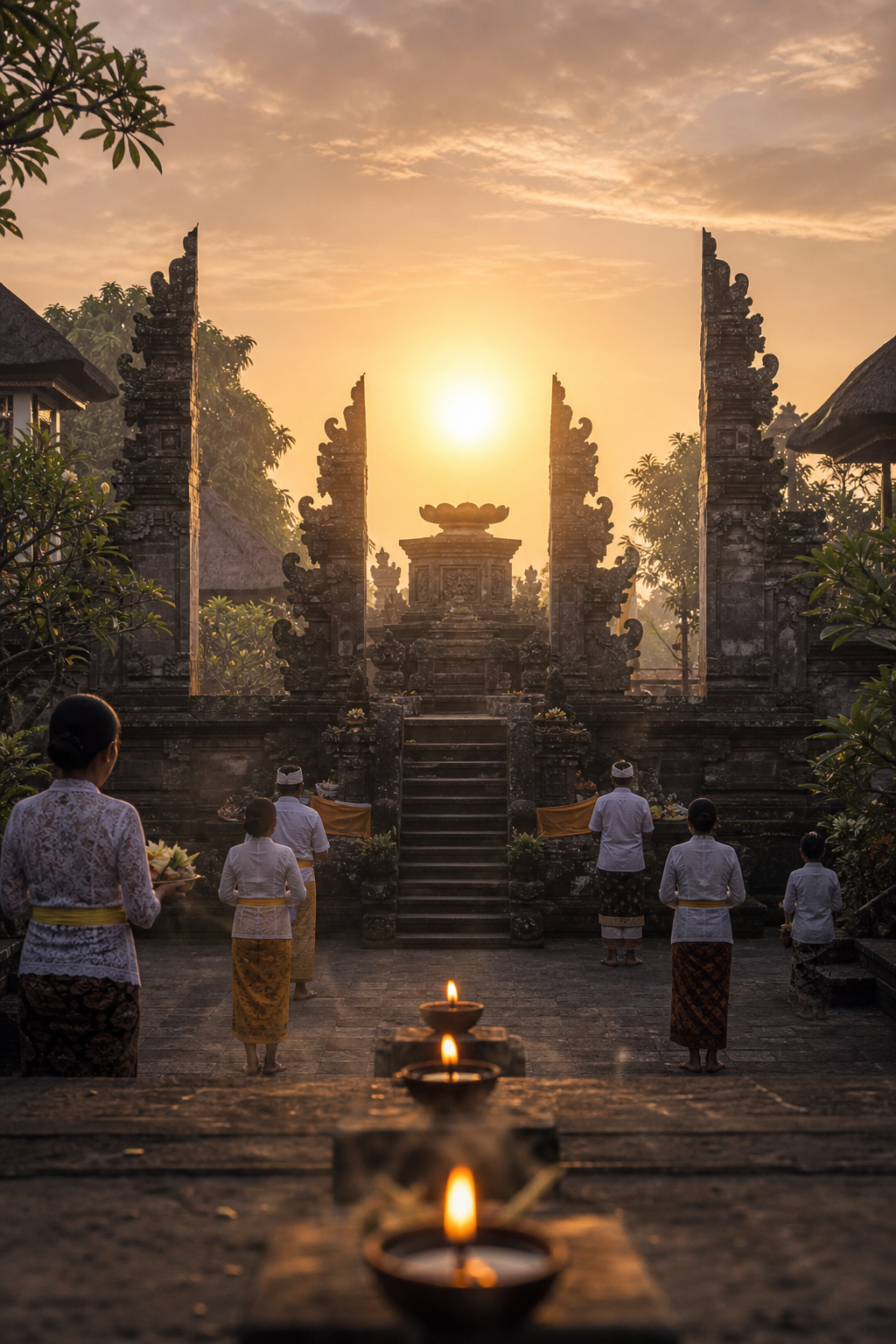
The administrative difficulty was easy to state: Hindu Dharma has numerous devas, devis, names, forms and pratimas, while government recognition required proof that the religion was monotheistic. A complex family of traditions therefore had to answer a narrow institutional question: does the presence of many sacred forms imply belief in many unrelated ultimate gods?
That implication does not automatically follow. Within Hindu thought, plurality can operate at several levels. A devotee may worship a particular divine form with complete dedication. Different communities may use different names and images. Philosophical traditions may then understand the relationship between those forms and ultimate reality in different ways. Some strongly emphasise unity; others give greater weight to the distinct reality of the worshipped Lord. Hindu traditions should not be forced into one philosophical sentence merely because an administrative form demands one.
The careful answer is therefore narrower than either popular extreme. Many divine names and forms need not represent a collection of rival supreme beings. At the same time, it is misleading to claim that every Hindu school explains those forms in precisely the same way. Unity is a defensible response to the monotheism question; uniformity is not.
This is the practical lesson behind recognition. A religious community sometimes has to translate its self-understanding into categories created by the state. Translation can be necessary and truthful while still being incomplete. A formula designed to secure legal standing should not be mistaken for an exhaustive account of Hindu siddhanta, bhakti and ritual life.
The defensible historical claim remains limited: recognition depended on satisfying a monotheism requirement. The precise language used in that process, and the institutional steps by which it was accepted, should be verified from primary Indonesian records before they are repeated as settled detail.
Prambanan shows why counting images is not enough
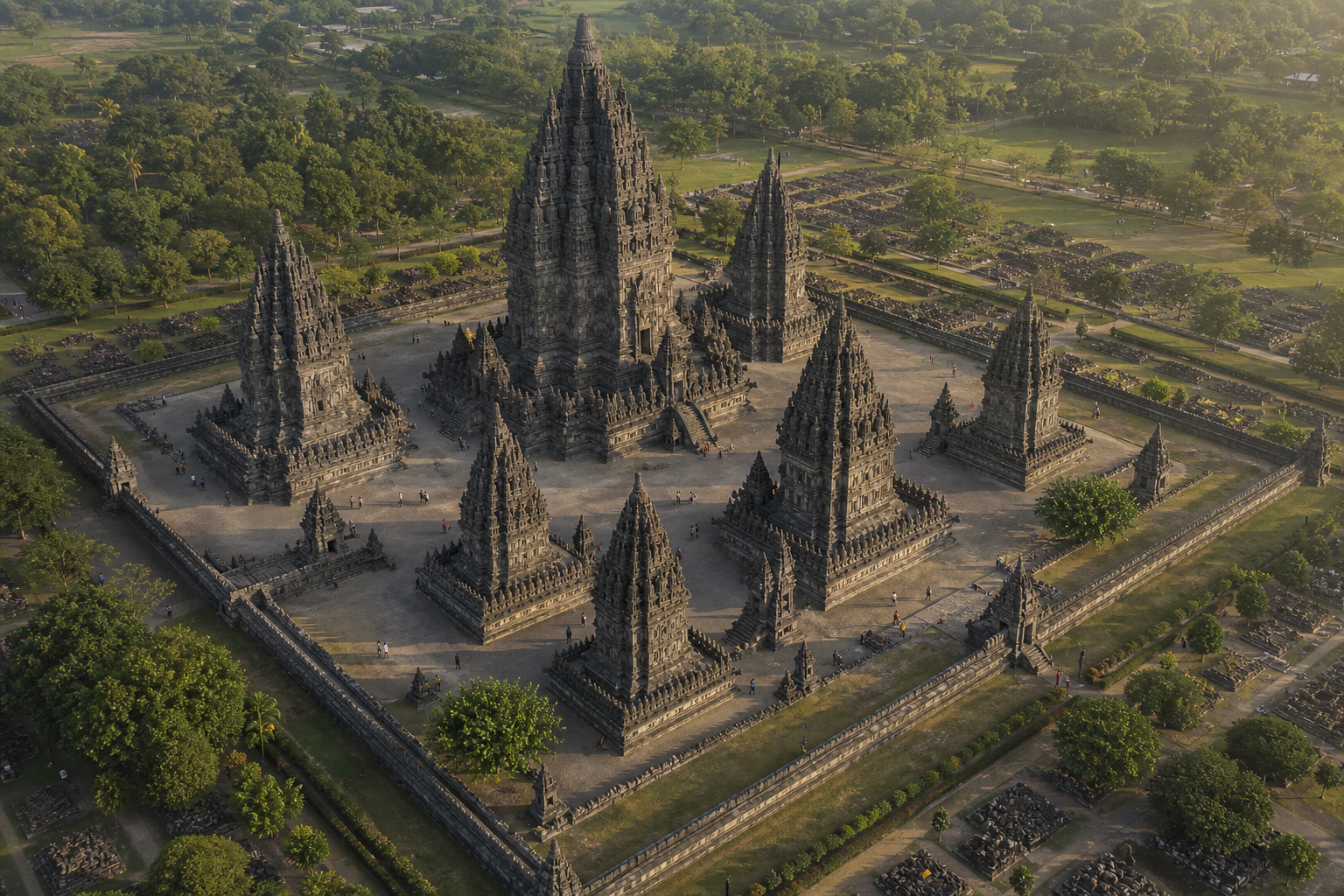
Prambanan brings the apparent contradiction into physical view. If Hinduism can affirm divine unity, why does a Shiva temple contain sacred images? The mistake lies in treating an image count as a count of competing absolute beings.
In Hindu worship, a pratima can serve as a sacred focus through which the devotee approaches the divine. Its meaning comes from theology, ritual and relationship, not from its material form alone. Several sacred forms may express distinct relationships with the divine without functioning as independent rivals. Different Hindu traditions may explain that relationship differently, which is precisely why the number of images cannot settle the philosophical question.
When explaining Prambanan to someone unfamiliar with Dharma, begin with the word “pratima” or “murti” and explain its ritual function. Starting with the dismissive assumption that an image is merely an idol concedes the argument before Hindu worship has even been described on its own terms.
Prime Minister Modi’s puja at Prambanan demonstrates that the temple can still be approached as sacred space in public life. It does not, by itself, explain every aspect of Indonesia’s legal system or every Indonesian Hindu belief. Use the temple as a concrete doorway into the subject, not as a substitute for the distinctions between heritage, worship, philosophy and law.
Key takeaways
- Use 1962 as the date of formal government recognition, not as the beginning of Hindu Dharma in Indonesia.
- The decisive condition described for recognition was that Hinduism had to be shown as monotheistic.
- Many devas, devis and pratimas do not automatically imply many unrelated supreme realities.
- Hindu traditions are internally diverse, so a legal statement about divine unity should not be presented as the complete theology of every school.
- Prambanan should be interpreted through the purpose of worship and the relationship between sacred forms, not through a simple count of images.
How to discuss Indonesian Hinduism without flattening it
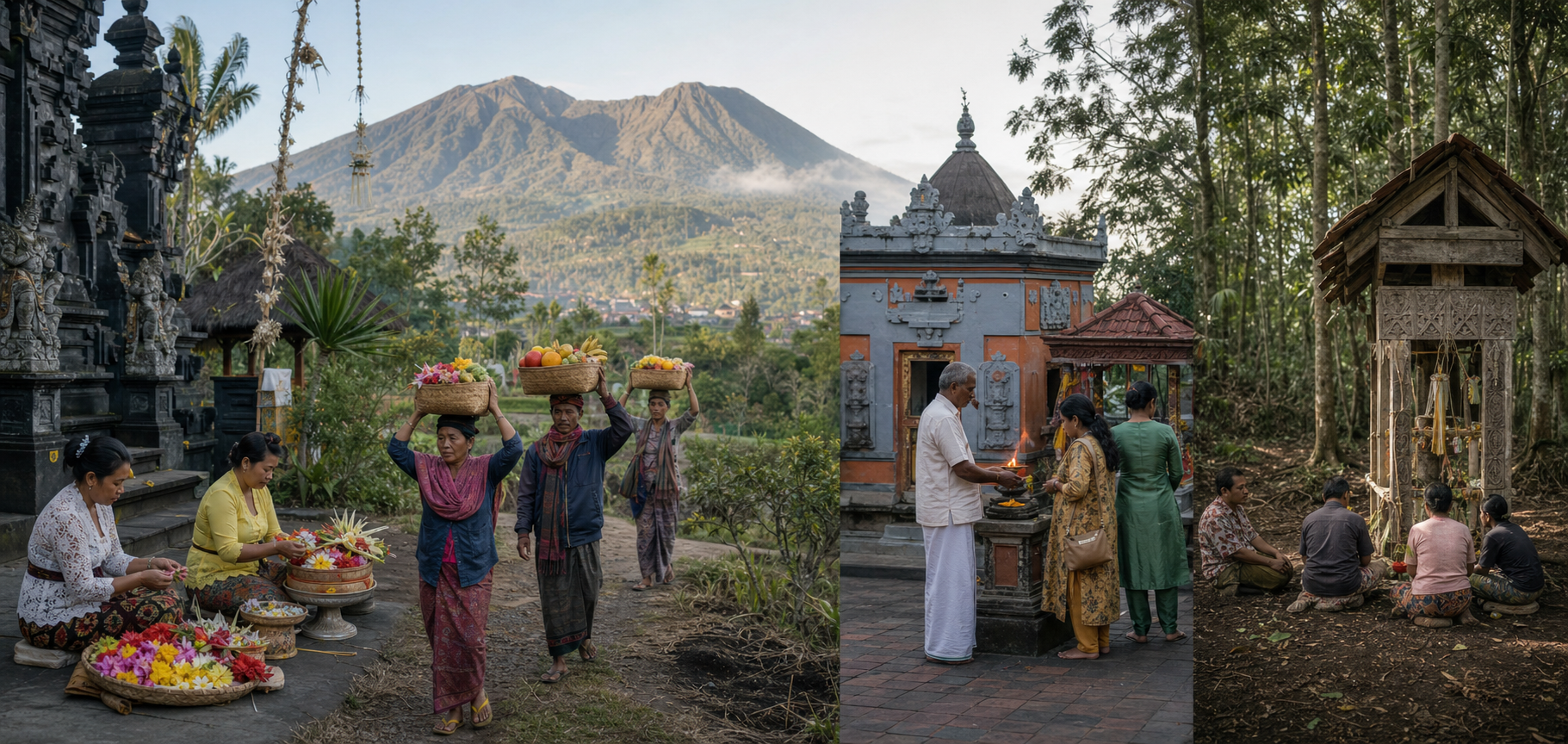
If you are teaching, writing or answering a debate question, use a disciplined sequence. First, identify 1962 as a legal-recognition date. Second, state the condition that made recognition difficult: the requirement to demonstrate monotheism. Third, explain that plurality of worship does not necessarily deny an ultimate unity. Fourth, acknowledge that this administrative explanation does not erase the philosophical variety within Hindu Dharma.
That sequence avoids two opposite errors. One is to portray Indonesian recognition as proof that Hindu Dharma is nothing more than a conventional monotheism wearing many cultural costumes. The other is to accept the crude claim that every divine name or pratima must represent a separate, competing god. Neither description gives Hindu categories room to speak for themselves.
A pro-Dharma account does not need inflated claims. Precision is stronger. It allows you to recognise the pressure created by a narrow state category while also recognising the intellectual resources within Hindu Dharma for expressing unity through plurality.
The next time someone asks how Hinduism can be recognised in Indonesia despite its many deities, do not begin by counting gods. Ask whether the discussion concerns law, philosophy, ritual or history. Then answer at that level. That one habit will make your explanation both more accurate and more faithful to Dharma.
References
