
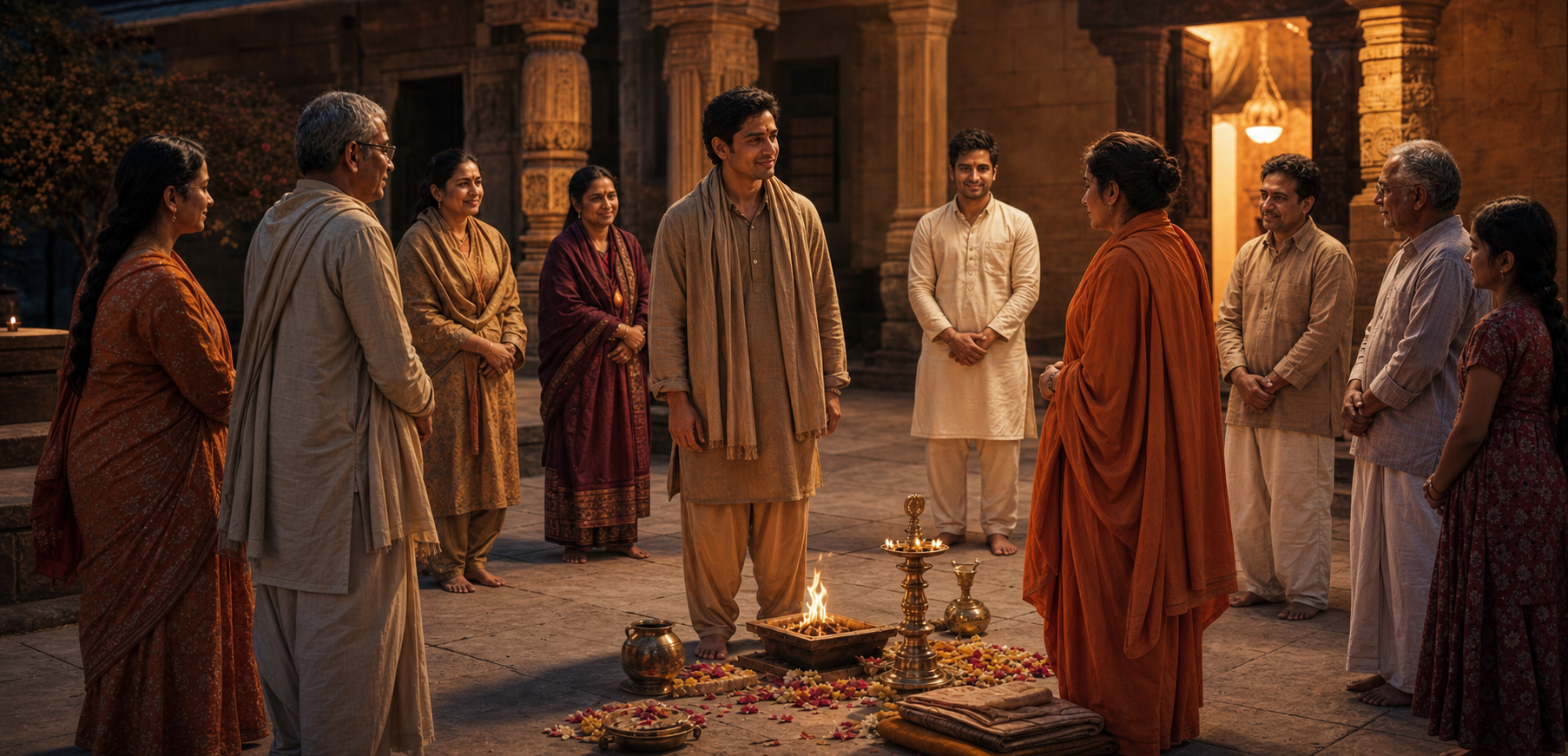
If you help lead a temple, ashram, Hindu association, or local Dharma group, the difficult question is not whether a homecoming ritual can be performed. It is whether the person who comes forward will still have a home after the lamps are extinguished, the photographs are taken, and the organisers leave.
History gives you a clear answer on principle: return is possible. It also gives you a warning. Paravartana succeeds only when spiritual authority, social acceptance, personal consent, and long-term community support operate together. A ceremony without those foundations can leave the returnee stranded between identities.
Return has Dharmic precedent, not merely political utility
Ghar-wapsi is the contemporary public phrase. Older Hindu discussions generally used Paravartana, meaning return or turning back, and Shuddhi, a rite of purification or restoration. The vocabulary matters, but the underlying principle matters more: separation from Hindu society was not always treated as permanent.
The Dharmashastra tradition developed responses to an emergency that older social rules had not anticipated. The Devala-Smriti addressed the restoration of people subjected to coercion, while related procedures appeared in the Atri-Smriti and Atri-Samhita. The reported provisions included women who had endured sexual violence and pregnancy. Whatever ritual form was prescribed, the civilisational principle was unmistakable: victims were not to be permanently expelled for violence committed against them.
That principle endured. Vijnaneshvara’s twelfth-century commentary on the Yajnavalkya-Smriti addressed restoration after captivity and coercion. Vidyaranya later used a Brahmana’s return after appropriate prayaschitta as an analogy in the Pancadasi, which would make little sense if return were regarded as impossible. P.V. Kane consequently treated restoration as a recognised part of the Dharmashastra response to historical disruption.
None of this establishes one rite binding every sampradaya, region, jati, and family. It establishes a narrower and more useful conclusion: the claim that a person can only be born Hindu and can never enter or return is not the only position available within Hindu tradition. Historical practice could adapt when the survival and dignity of people required it.
- Coercion cannot create a permanent moral disability. A victim of force, fraud, captivity, or abuse should not carry the offender’s blame.
- Prayaschitta should restore relationship. If a rite ends without admission to worship, festivals, family life, and community institutions, the work remains incomplete.
- Local forms may differ without cancelling the right to return. An acharya may determine the appropriate rite for a lineage, but procedural variation should not become a pretext for indefinite exclusion.
- The language of Shuddhi requires care. Leaders should explain that restoration addresses a disrupted religious relationship; it does not declare a coerced or returning person inherently polluted.
Four historical moments reveal what makes homecoming durable
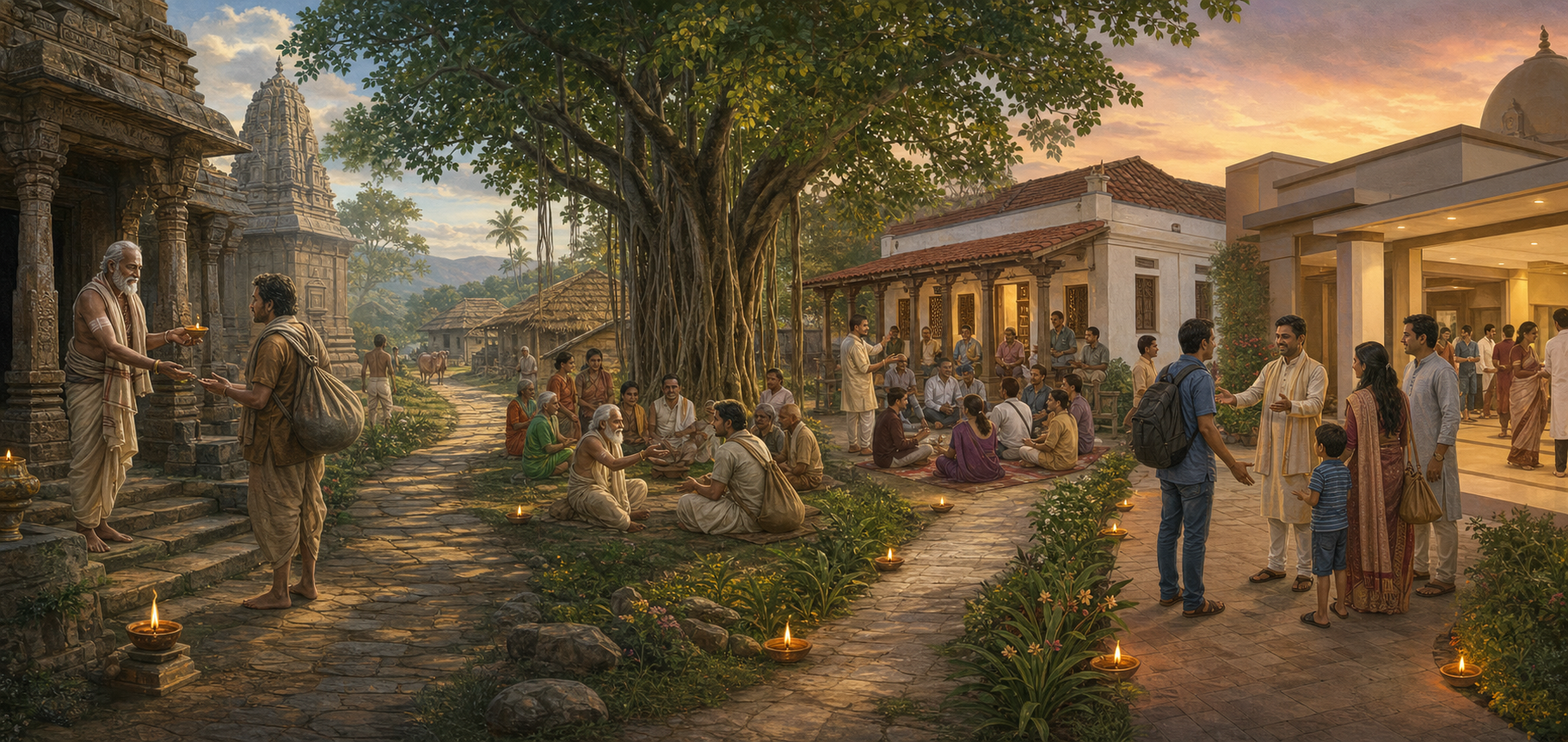
Paravartana became harder when foreign rule acquired the power to sustain itself across territory and generations. The problem was no longer only the performance of a rite. Hindu communities needed political protection, recognised adjudication, social confidence, and the ability to preserve ancestral memory. Four moments bring those requirements into focus.
- Vijayanagara joined liberation to social restoration. After the Bahmani-Vijayanagara conflict concluded in 1398, captives who had been forcibly converted were released and readmitted through a mass Shuddhi ceremony. The important strategic fact is the sequence: physical recovery was followed by religious and social recovery. Rescue without readmission would have left the aggressor’s intended social rupture intact.
- The Maratha system gave return an institutional route. During the period associated with Chhatrapati Shivaji Maharaja, the Panditarao held responsibility for religious questions. Learned Brahmanas could be convened to determine prayaschitta and restore a forcibly converted Hindu. This was more reliable than leaving each frightened village or family to improvise. Authority, deliberation, and an accepted decision were joined in one process.
- The Arya Samaj converted precedent into organised outreach. Swami Dayananda Saraswati’s movement made Shuddhi a public civilisational programme, and Swami Shraddhananda carried it into village-scale work among communities such as the Malkana Rajputs. His assassination showed that a movement built around a charismatic leader also needs succession, security, records, local workers, and institutions that survive an attack on the centre.
- The Meo and Malkana experiences show why ancestral memory is time-sensitive. In one influential Hindu interpretation of these histories, ancestral memory among the Meos faded over generations, while many Malkanas retained recognisably Hindu customs before the Shuddhi campaigns. Use this contrast as a strategic insight, not as a licence to assign identities to living people. Ancestry can begin a respectful conversation; it can never replace a person’s present choice.
The recurring pattern is practical. Homecoming becomes viable when four layers align: a Dharmic rationale, a recognised decision-maker, a community prepared to accept the decision, and an institution capable of supporting the returnee afterward. Before announcing a campaign, identify which of these layers is missing. Publicity will not repair a missing layer; it will expose it.
A contemporary ghar-wapsi programme needs an operating standard
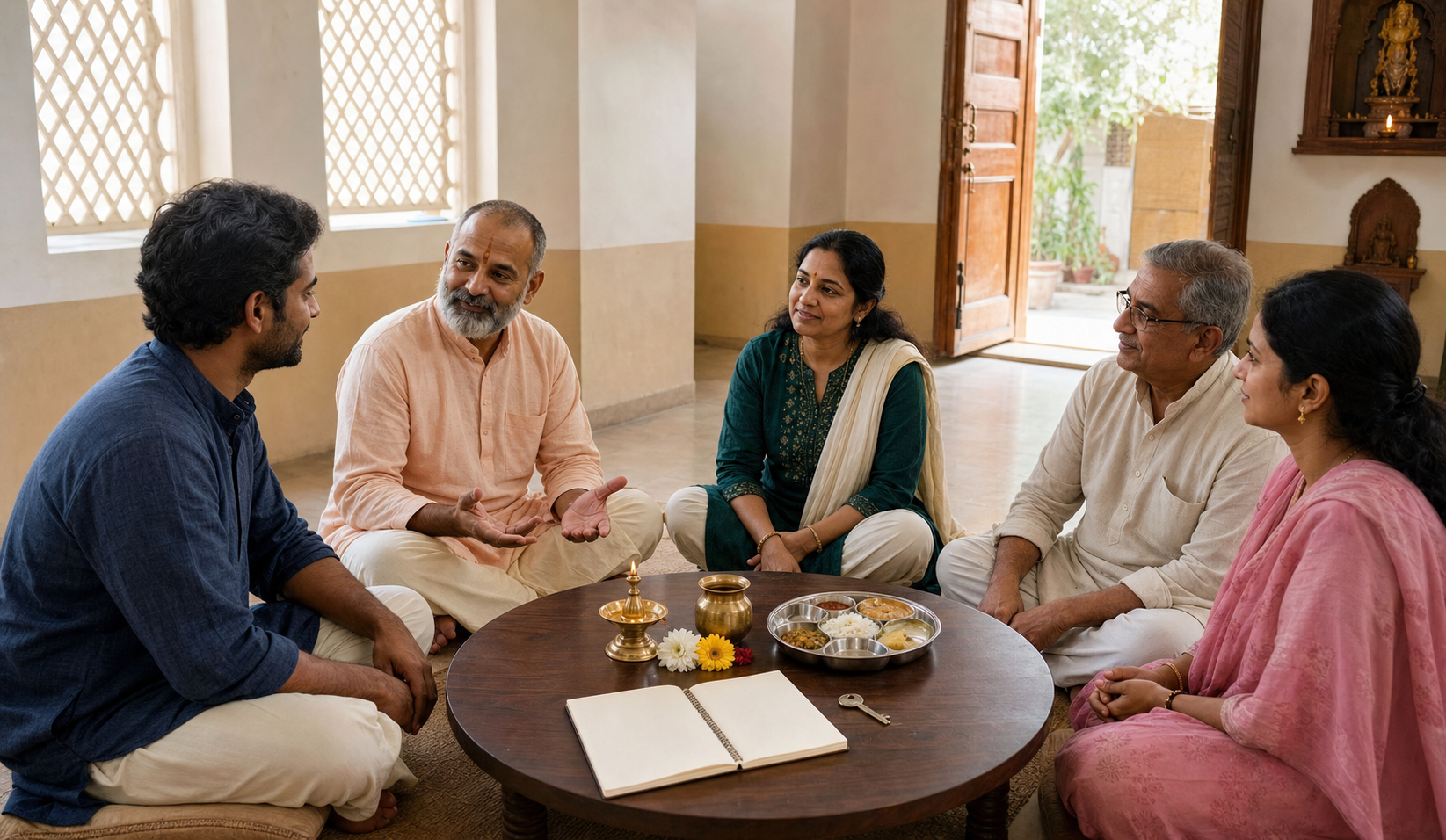
A serious programme should be visibly different from coercive proselytisation. Its strength must come from informed choice, truthful representation, dignified ritual, and dependable belonging. That is not a concession to hostile critics. It is the minimum standard demanded by Dharma itself.
- Adopt a written charter before accepting cases. State that participation must be voluntary; that a person may pause or withdraw; that food, medicine, education, employment, shelter, and emergency help will never be conditional on religious choice; and that organisers will not use threats, deception, or denigration of another community. Give the charter to every worker, priest, donor, and participant.
- Create a small, accountable reception council. Include a qualified spiritual authority, a person responsible for community integration, a woman whom female returnees can approach privately, and someone responsible for records and safeguarding. Obtain separate, current legal advice for the relevant jurisdiction. A priest should decide ritual questions; a lawyer should decide legal ones; neither should casually substitute for the other.
- Begin with a private conversation, not a stage. Ask what the person means by return, whether anyone is pressuring them, whether public identification would create danger, which practices they wish to adopt, and what family consequences they anticipate. Do not demand a theatrical denunciation of their previous religion. A person can affirm Sanatana Dharma without being turned into propaganda.
- Classify the request honestly. Someone recovering a known family tradition, someone who previously left Hindu practice, and someone entering Hindu life without Hindu ancestry may all deserve a respectful path. They are not necessarily the same case. Do not manufacture an ancestral story merely to make a new adoption sound like ghar-wapsi. Truthful language protects the participant and the institution.
- Let competent authorities determine the spiritual form. The appropriate sankalpa, prayaschitta, initiation, vrata, study, or temple observance may differ across traditions. Record who made the determination and why. Avoid inventing a single spectacular rite for media consumption and then presenting it as universally authoritative.
- Secure social acceptance before scheduling the ceremony. Identify the temple or satsanga that will receive the person, the family or mentor who will remain in contact, and the festivals, classes, or seva opportunities through which ordinary belonging can develop. If local leaders will not admit the returnee after the ritual, resolve that conflict first.
- Separate Hindu belonging from compulsory jati assignment. A returnee should not be left in limbo because no one will certify an inherited social location. A sampradaya may have specific rules for initiation or priestly functions, but those rules should not be confused with the person’s basic ability to worship, learn, serve, celebrate, and participate in Hindu community life.
- Protect identity and personal data. Do not publish names, addresses, family histories, certificates, photographs, or videos without specific informed consent. Explain that material placed online may be copied and may never be fully retractable. Store only what is necessary, restrict access, and never circulate lists of returnees for fundraising or political display.
Adults must speak for themselves. If a case involves a minor, a disputed marriage, custody, threats, immigration status, employment consequences, or possible criminal conduct, stop the ordinary process and obtain qualified local legal and safeguarding advice. Religious-conversion rules and procedural duties can differ by jurisdiction and can change. Good intentions do not protect a participant from an avoidable legal or personal crisis.
The same restraint applies when coercive or fraudulent conversion is alleged. Preserve firsthand communications with consent, write down dates and direct observations, and take the matter to competent counsel or lawful authorities. Do not turn an unverified rumour into public accusation, harassment, or collective blame. A false allegation can destroy an innocent person’s life and discredit legitimate protection work.
The ceremony is the midpoint, not the measure of success
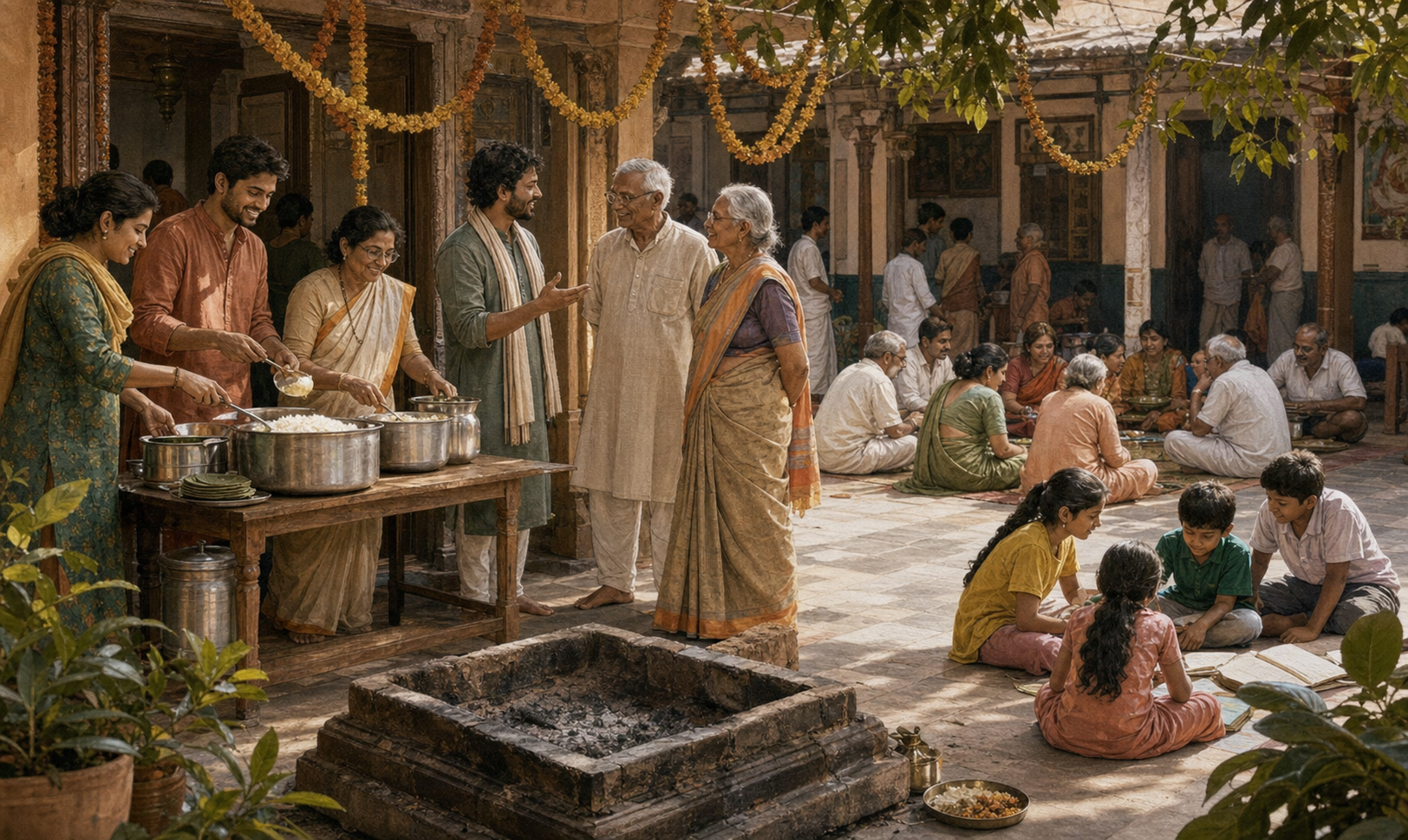
Even a nationwide ghar-wapsi effort would be only a partial answer if ordinary Hindu life remained thin. The wider strategic argument is that homecoming must be accompanied by strong families, regular spiritual practice, community discipline, and civilisational confidence. Counting ceremonies while neglecting those foundations mistakes an event for an ecosystem.
A person generally stays where Dharma becomes livable. That requires more than philosophical agreement. It requires someone to answer basic questions, a place to worship without humiliation, help learning practices, companionship during festivals, and a community that remains present during marriage, illness, bereavement, or family conflict. Temples do not need to become substitutes for doctors, lawyers, or social-service professionals, but they should maintain trustworthy referral networks rather than disappearing when a problem exceeds ritual expertise.
- Make the household a place of transmission. Teach a manageable daily practice, the meaning of the family’s festivals, the stories of local temples, and the names of ancestors and kuladevatas where these are known. A child who only encounters Hindu identity during controversy has been given an argument, not an inheritance.
- Build accessible learning. Offer introductory instruction in the local language, explain unfamiliar Sanskrit terms, and give newcomers a clear route from basic practice to deeper study. Do not test belonging through cultural trivia that lifelong Hindus themselves may not know.
- Provide welfare without a religious price. Food relief, education, medical referral, and emergency aid should be transparent and available according to need. This both serves Dharma and removes the temptation to imitate the very inducement-based methods Hindu organisations criticise.
- Preserve memory without falsifying it. Families can record oral histories, regional customs, pilgrimage routes, surnames, and surviving traditions. Distinguish family testimony from proven genealogy. The purpose is continuity, not the production of exaggerated claims.
- Create, do not merely defend. Invest in teachers, publications, arts, scholarship, digital archives, children’s programmes, and competent temple administration. A civilisation becomes attractive when it can explain itself, care for its people, and produce beauty and knowledge in the present.
Your internal scorecard should therefore ask better questions than how many ceremonies were performed. Did each participant initiate or freely confirm the decision? Could the person withdraw without punishment? Was a receiving community identified? Did the returnee obtain a named contact for later questions? Were privacy commitments honoured? Can the person participate without being repeatedly displayed as evidence of organisational success?
Also record failures without shaming the individual. If someone disengages, the useful questions concern the programme: Was the rite presented as the end of learning? Did jati objections emerge afterward? Did family danger go unaddressed? Did organisers call only when another public event approached? Retention is not ownership, and a returnee remains a person with agency. But honest follow-up will show whether your institution offers a home or only an entrance ceremony.
Key takeaways for a responsible Hindu strategy
- Paravartana has Dharmic and historical precedent; permanent exclusion is not the only Hindu answer to coercion or separation.
- A rite becomes genuine homecoming only when worship, learning, seva, festivals, and ordinary social belonging follow it.
- Present consent is indispensable. Ancestry, community pressure, demographic anxiety, or organisational ambition cannot stand in for it.
- Spiritual authority, community integration, safeguarding, privacy, and current legal review must be assigned before a public programme begins.
- Jati uncertainty should not be used to deny basic Hindu belonging, even where individual sampradayas retain distinct initiatory rules.
- The strongest long-term strategy combines voluntary return with family transmission, accessible education, ethical welfare, cultural memory, and new civilisational creation.
If you are responsible for a Hindu institution, begin with one page rather than one rally. Write the consent and privacy charter. Name the spiritual authority and the receiving community. Establish the private intake path, legal referral, and post-ceremony contact. Then test the process quietly before attaching a public campaign to it.
The first question to place before every proposed ghar-wapsi is simple: what will make this return real for the person returning? If your institution can answer that in terms of dignity, practice, relationships, safety, and lasting participation, it is preparing a home. If it can answer only with a ritual date and a headcount, it is not ready.
References
- Dharma Dispatch — Meos, Malkana Rajputs and a Saga of Missed Opportunities for Ghar-Wapsi
- Dharma Dispatch — Ghar-Wapsi in the Vijayanagara and Maratha Empires
- Dharma Dispatch — The Scary Finale: Ghar-Wapsi in a Time of Rapid Erosion and Existential Crisis
