
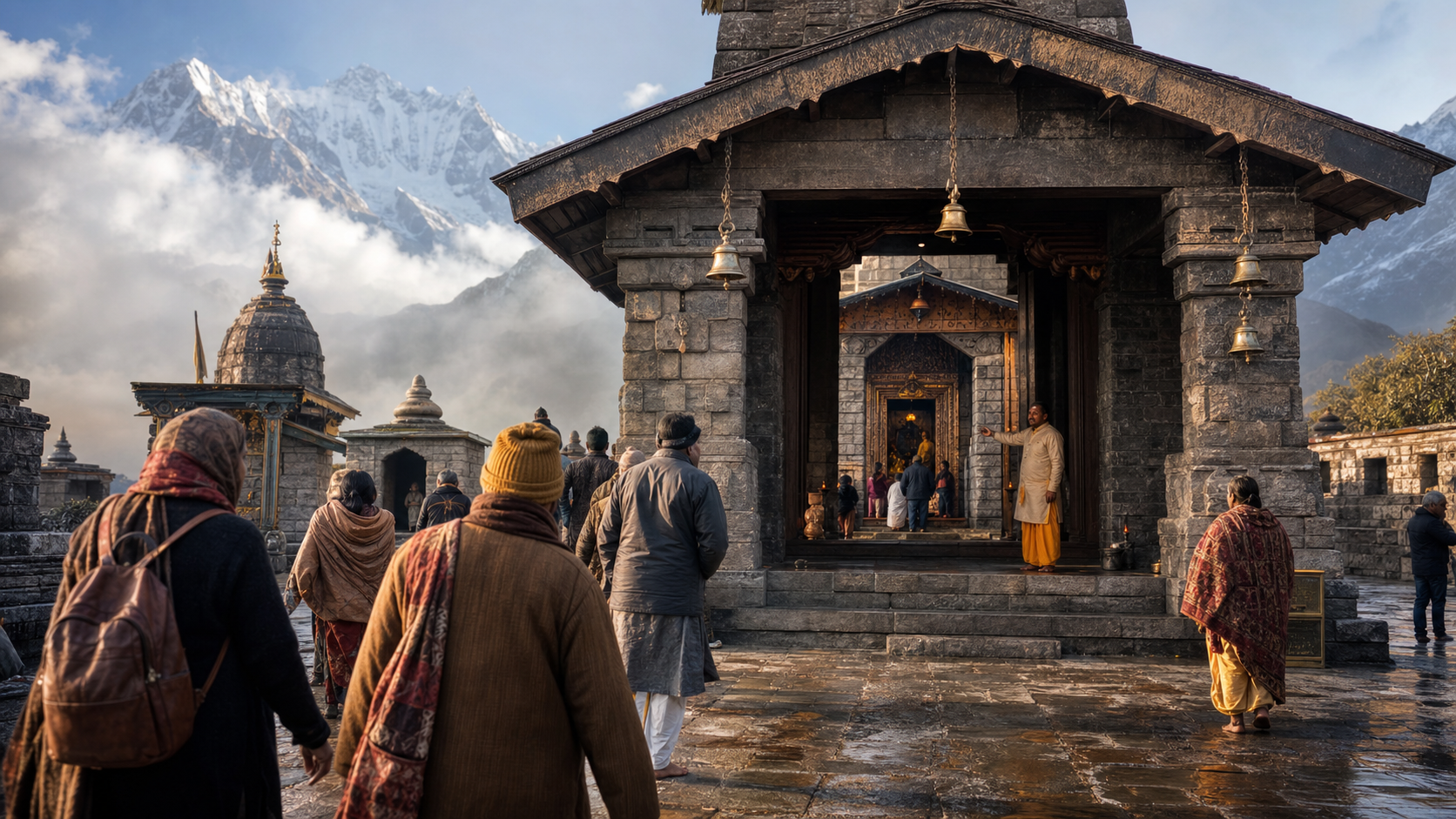
You are planning the 2026 Char Dham Yatra with a non-Hindu friend, an interfaith family, or a group whose members follow different Dharmic paths. A sweeping “temple ban” would change the whole journey. That is not the rule announced for the 47 shrines administered by the Badri-Kedar Temple Committee.
For those shrines, the boundary is the garbhagriha, or sanctum sanctorum, rather than the temple gate. Non-Hindu guests may still enter the wider precincts, take darshan from permitted positions, witness worship from outer halls, and use public facilities. Understanding that distinction before you travel will prevent confusion at the most crowded and emotionally charged point of the visit.
Key takeaways
- The 2026 BKTC policy is not a blanket prohibition on non-Hindus entering temple premises. It restricts their access to the innermost sanctum.
- The rule covers 47 shrines under BKTC, including Badrinath, Kedarnath, and associated temples. Do not automatically treat it as the operating rule at Gangotri or Yamunotri, which are outside the stated BKTC scope.
- Outer mandapas, courtyards, circumambulatory paths, viewing areas, information counters, prasada points, and public amenities remain available to visitors, subject to local crowd, ritual, and safety controls.
- Hindu identity is not an automatic entitlement to cross every inner threshold. Priestly functions, the ritual underway, queue arrangements, and each shrine’s local maryada may further limit sanctum entry.
- For a mixed-faith group, agree on a meeting point before reaching the sanctum queue and ask where every member can take darshan together.
Read the rule as a boundary between zones
Temple access is often discussed as a yes-or-no question: may a person enter, or may they not? That language is too crude for a Hindu temple, whose architecture leads worshippers through spaces with different ritual functions.
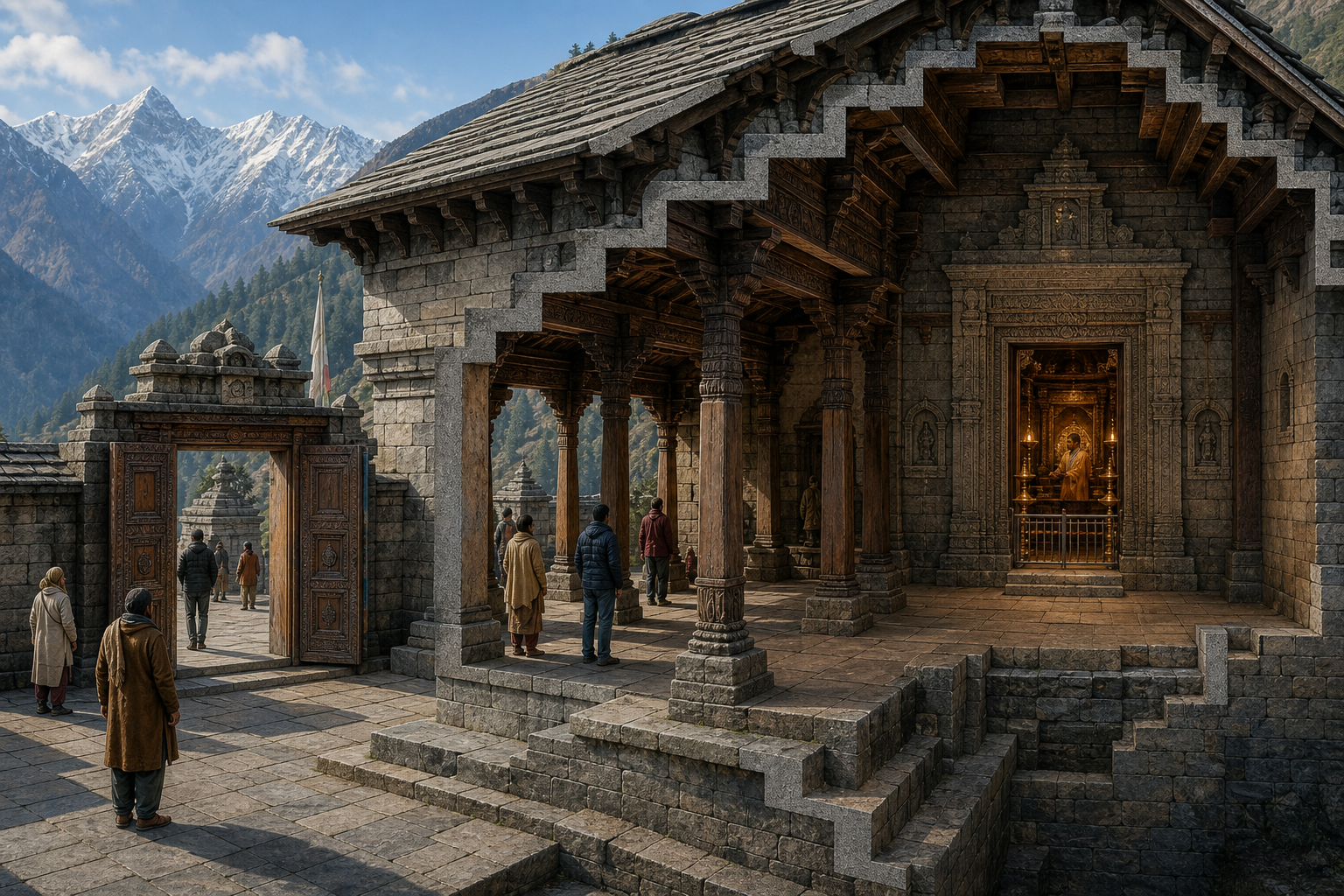
At the BKTC shrines, the relevant distinction is between the consecrated inner core and the shared sacred precinct around it. The practical map looks like this:
- Garbhagriha: the innermost chamber containing the principal altar or murti. This is the restricted zone for non-Hindu visitors under the 2026 policy.
- Antarala: the vestibule or transitional space between the sanctum and hall. Access can depend on a shrine’s layout, barriers, ritual arrangements, and instructions given on the day.
- Mandapa or sabha-mandapa: the hall from which visitors may watch worship, hear chants and bells, and take darshan from the permitted viewing point.
- Courtyards and exterior routes: shared areas that may include circumambulatory paths, architectural viewpoints, and space for waiting or quiet reflection.
- Public service areas: help desks, information counters, prasada distribution points, and visitor amenities. These are not part of the sanctum restriction.
Access to an outer zone does not guarantee unrestricted movement at every moment. A ritual, a queue-control measure, severe weather, or an emergency can temporarily change how people are routed. When a volunteer stops a line, first ask whether the instruction concerns religious eligibility, the particular zone, or a temporary operational closure. Those are different situations and should not be conflated.
The same precision matters for Hindu pilgrims. The policy identifies the boundary that applies to non-Hindus; it does not promise every Hindu lay visitor physical entry into the garbhagriha. Designated priests and ritual functionaries conduct nitya-seva, abhishekam, and naivedya within the inner ritual sphere. Follow the shrine’s instructions even if you have entered inner areas at another temple.
Why the inner room carries a different maryada
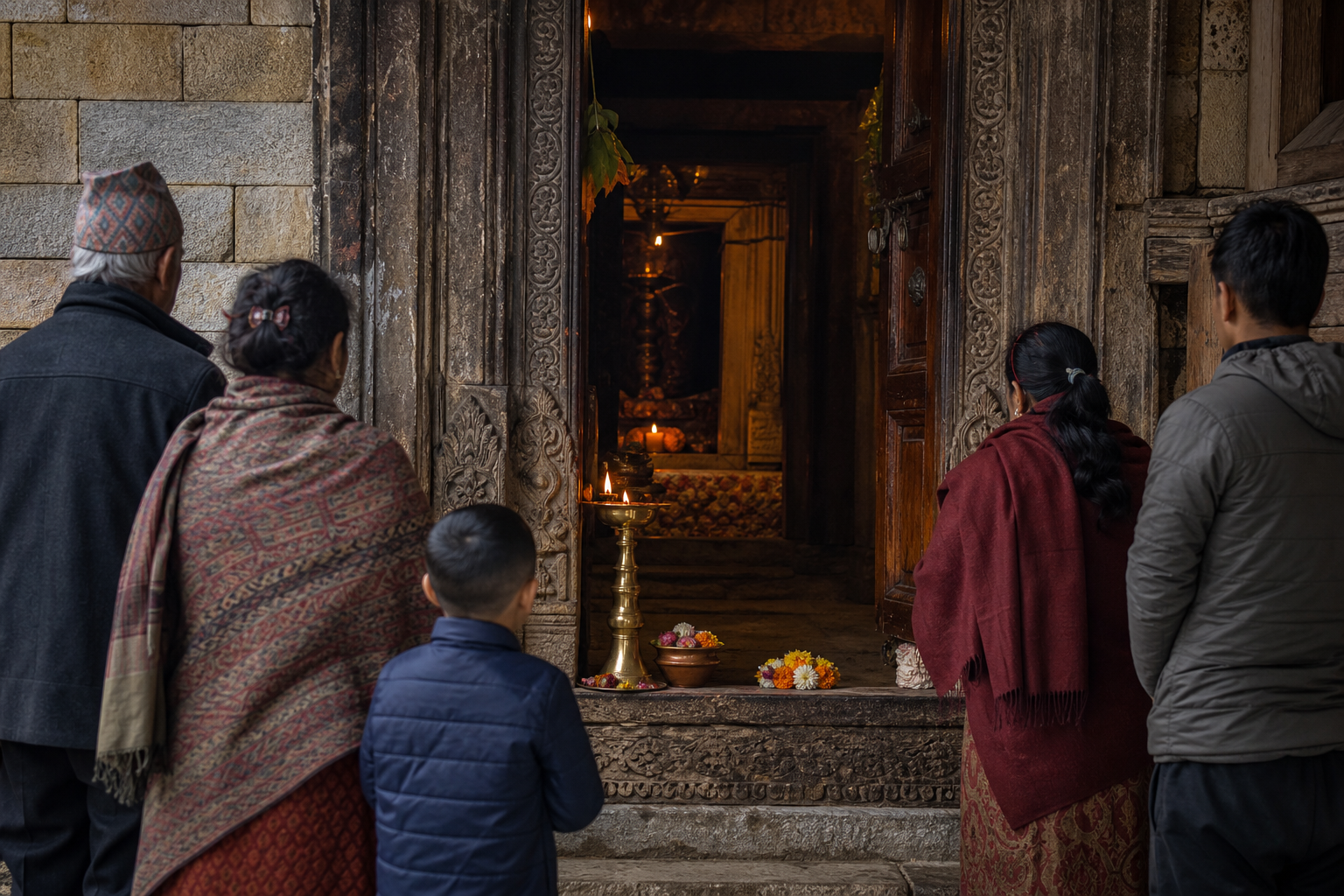
A garbhagriha is not simply the smallest room in an old building. Within Agamic temple practice, it is the most ritually concentrated space in a graded sacred order. Daily worship, offerings, purification disciplines, and the duties of authorised functionaries are organised around that status. The threshold therefore marks a change in religious function, not merely a change in floor area.
Practices vary across Bharat. Some temples reserve the sanctum for priests alone. Some permit limited lay entry under prescribed conditions. Others provide close darshan from the vestibule without allowing visitors into the chamber. A custom followed at one shrine cannot be carried into another as though it were a universal admission rule.
The Himalayan setting adds an operational reason to observe these distinctions carefully. Narrow inner chambers cannot absorb the same flow as a courtyard or congregation hall. At high altitude, a blocked threshold and a compressed queue can also become a safety concern. Crowd management does not create the sanctum’s sacred character, but an established ritual boundary can help protect both worship and orderly movement.
Hospitality and maryada are not opposites. A temple can welcome a guest into its sacred commons without treating every ritual role or space as interchangeable. Sarva dharma sambhava need not mean that every threshold disappears; it can mean receiving people of different traditions with dignity while allowing a living religious institution to maintain its form of worship.
India’s constitutional framework also contains both sides of this balance. Articles 25 and 26 protect individual religious freedom and the ability of religious institutions to manage their affairs, subject to public order, morality, and health. That framework does not settle every possible dispute at a queue barrier, but it explains why personal access and institutional autonomy must be considered together rather than using either one as an absolute slogan.
Plan a mixed-faith visit before joining the queue
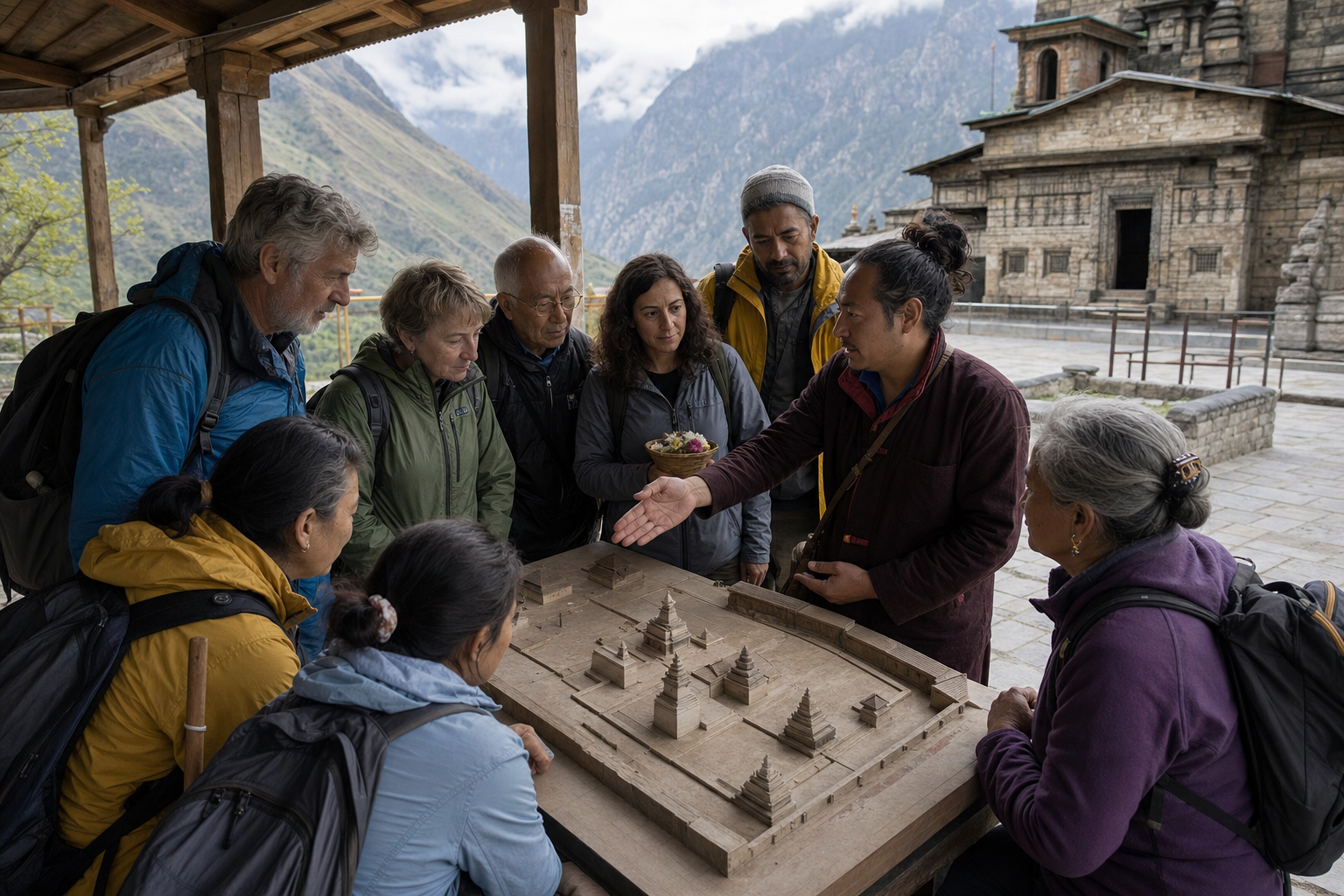
The easiest place to resolve an access question is at an information desk, not at the final threshold with a moving line behind you. Use the following sequence for a mixed-faith or interfaith group:
- Confirm who administers each shrine. BKTC’s stated policy applies to its 47 temples, including Badrinath, Kedarnath, and associated shrines. Ask the relevant administration separately about Gangotri and Yamunotri rather than assuming that one committee’s procedure governs the entire four-dham circuit.
- Ask a zone-specific question. Instead of asking only, “Can non-Hindus enter?”, ask, “From which hall or marked point may our whole group take darshan, and where does the sanctum-restricted queue begin?” That wording is more likely to produce a useful answer.
- Choose a meeting point. Identify a permitted courtyard, help desk, or other unmistakable public location before anyone enters a separate line. Do not rely on mobile connectivity in a crowded mountain precinct.
- Set expectations within the group. Explain that a guest may share the approach, mandapa, chants, aarti, and broader temple experience even if the final inner threshold is restricted. Do this before arrival so the boundary does not feel like a surprise directed at one person.
- Follow the instruction given at the shrine. Signage, barriers, volunteers, and ritual functionaries determine the usable route on the day. Do not cross a rope or follow another group merely because their access conditions appear different.
- Coordinate documentation in advance. Researchers, reporters, photographers, and heritage professionals should obtain permission appropriate to the intended zone. Permission to enter a public-facing hall does not by itself grant permission to photograph worship or document the sanctum.
Identification is expected to be handled through courteous, minimally intrusive communication, with self-declaration used in practice where the question arises. If you are asked, answer honestly. If your tradition’s administrative classification is unclear, particularly within a group drawn from several Dharmic communities, ask an authorised official rather than debating labels with another visitor.
If a staff member appears to apply the rule beyond the sanctum, remain outside the disputed boundary and ask for the help desk or a supervising temple official. State the exact location involved: outer courtyard, mandapa, vestibule, or garbhagriha. A calm request for a zone-specific explanation is more constructive than turning the sanctum queue into an argument.
A non-Hindu guest need not treat the outer experience as a token consolation. The mandapa may provide the appropriate place to see the lamps, hear mantra recitation, observe the movement of worship, receive prasada where offered, and take darshan without entering the chamber in which priestly rites occur. The meaningful question is not, “How close can I get?” but, “How can I participate respectfully from the place this temple has opened to me?”
Keep the access question separate from mountain safety
Prepare for the yatra itself
Resolving the sanctum rule does not resolve the harder physical demands of the journey. Travellers should complete the required Uttarakhand registration through official state channels and keep checking district, traffic, and weather updates. Digital queues or timed darshan windows may be used during busy periods, so verify the on-ground system rather than building an itinerary around an assumed entry time.
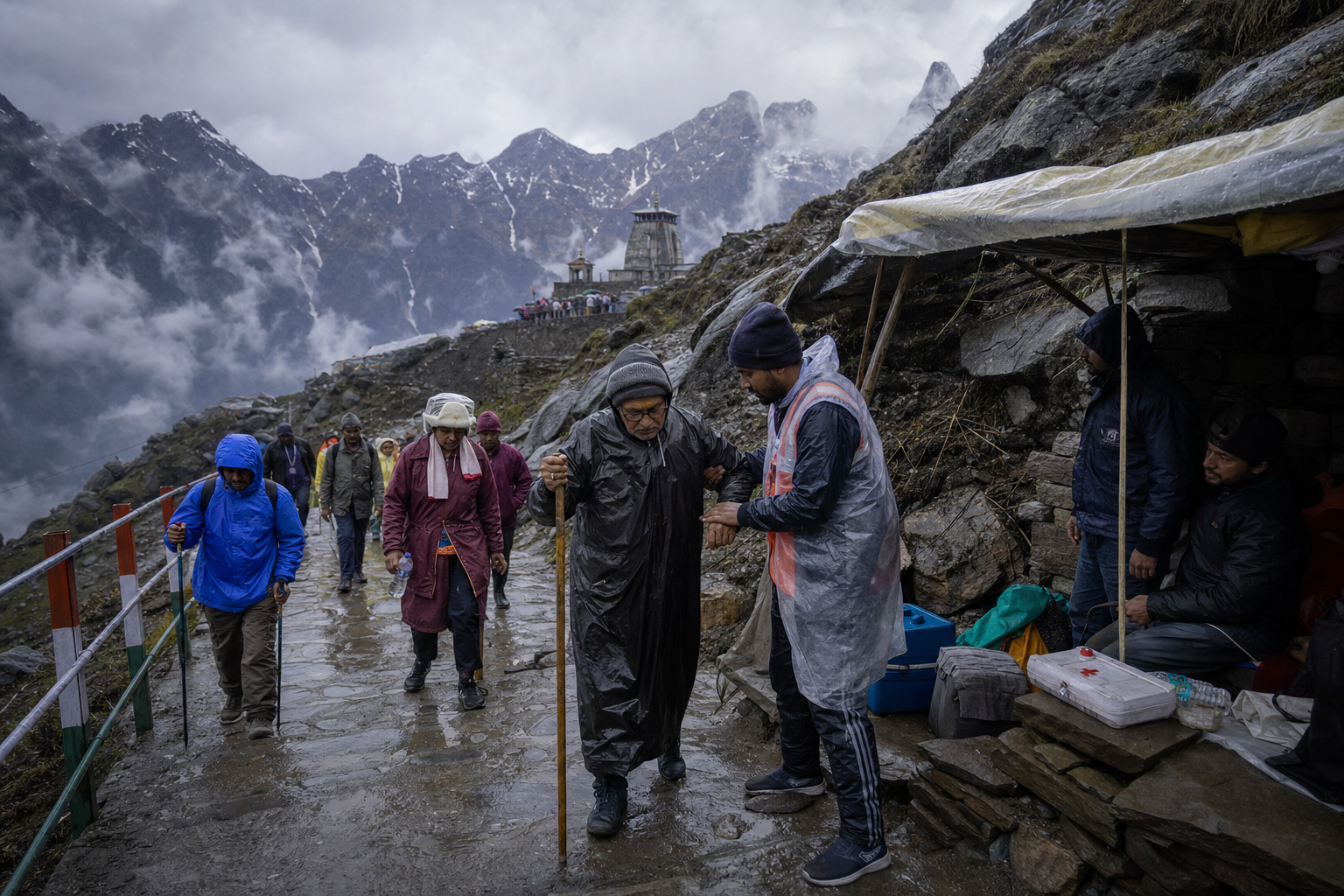
Build acclimatisation and rest into the route. Carry layered clothing, maintain hydration, and obtain an appropriate fitness or medical assessment before high-altitude travel, especially if you are elderly or have an existing health condition. Rapid Himalayan weather changes can lead officials to regulate movement because of rain, snow, or landslide risk. Extra rest days and avoidance of night travel on mountain roads are practical safeguards, not wasted time.
Priority or assistance arrangements may be available for senior citizens, differently abled visitors, and people requiring medical support, but the precise facility depends on conditions at the shrine. Ask at the help desk and carry relevant medical documentation. In a life-critical emergency, follow medical, security, and civil-authority directions immediately; ritual movement rules do not override emergency response.
Observe the temple and ecological rules
Dress modestly, remove footwear where directed, keep your voice low during aarti and mantra recitation, and treat photography as permission-based. A public viewing position is not an invitation to place a camera in front of worshippers or record a prohibited ritual.
The same restraint should extend beyond the stone precinct. Minimise waste, avoid unnecessary plastic, and behave carefully near sacred water bodies. The Himalayan environment is both ecologically fragile and integral to the sacred geography of the yatra. Temple maryada loses coherence if reverence ends at the doorway.
Before departure, verify the administrator for every shrine on your route, complete the required registration, and tell your group exactly where a separation may occur. At the temple, let an authorised volunteer identify the shared darshan point. You can then protect the sanctum’s maryada without turning a narrow ritual boundary into a division across the entire pilgrimage.
References
