

If you are trying to decide whether the Jantar Mantar truce was prudent statecraft or a surrender to street pressure, do not let the word “truce” decide the question. A government is not weak merely because it negotiates. It becomes weak when concessions make coercion more rewarding than lawful representation, or when it cannot explain how peace was secured without abandoning accountability.
The decisive evidence will come after the crowds disperse. You should watch whether the settlement produces credible education reform, whether peaceful protesters are distinguished from people accused of violence, and whether every concession is governed by published criteria rather than political expediency.
Read the truce as two separate settlements
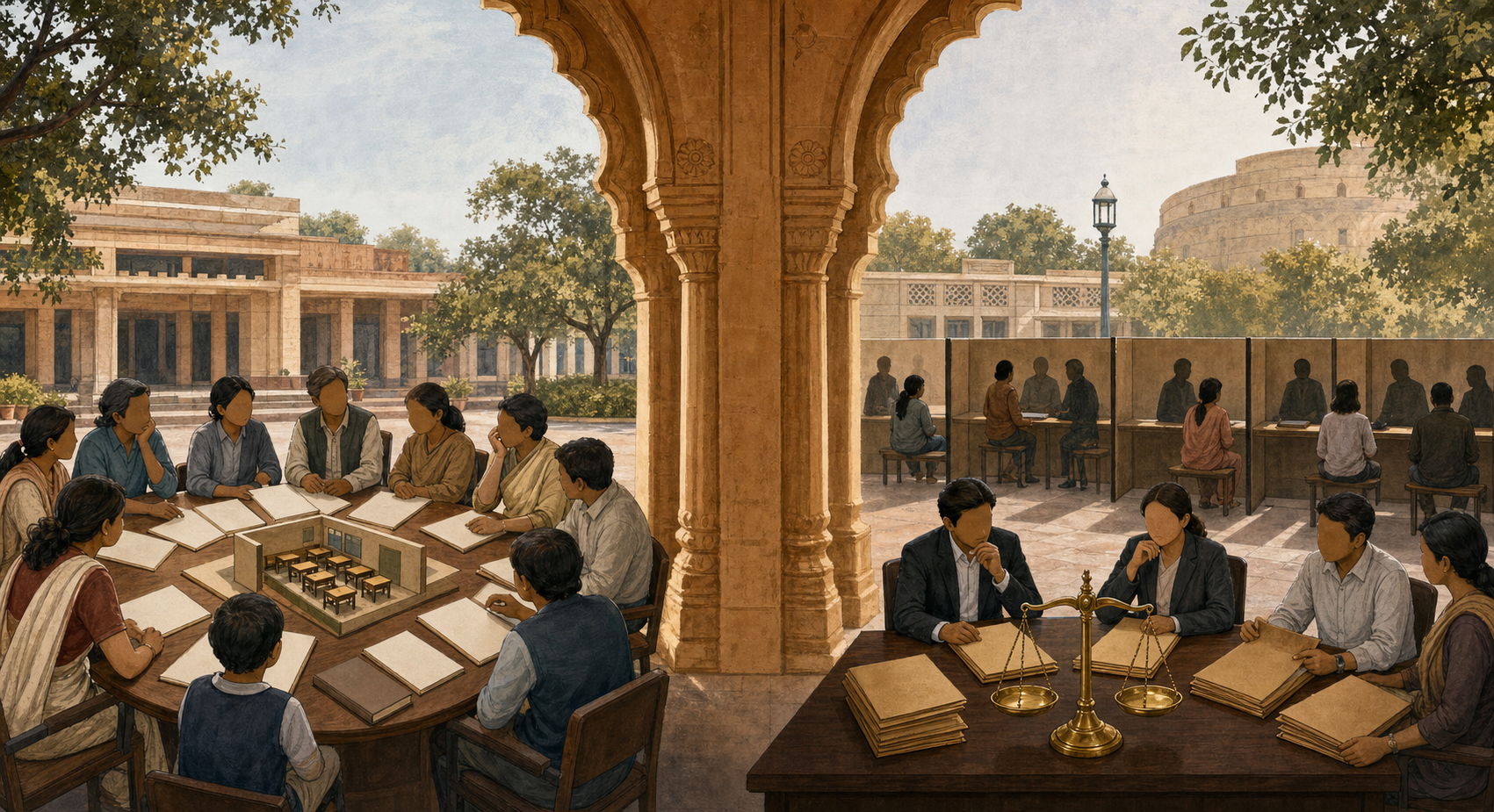
The agitation began with Sonam Wangchuk’s protest over the NEET paper-leak controversy, intensified with an indefinite hunger strike, and expanded after activists associated with the Cockroach Janta Party joined it. The movement’s demands eventually included the resignation of Union Education Minister Dharmendra Pradhan, compensation for families of students alleged to have died by suicide following the controversy, education reforms and withdrawal of FIRs against protesters. The CJP ended its 36-day agitation on 25 July 2026 after the government accepted its remaining demands.
That sequence contains two different questions. The first is whether students had a legitimate grievance concerning exam integrity and institutional accountability. The second is how the state should respond to alleged offences committed during a movement built around that grievance. Combining the two produces a false choice: either reject every demand because disorder occurred, or erase every public-order allegation because some demands were justified.
A responsible settlement must therefore maintain two separate ledgers:
- The grievance ledger: What failed in the education system, who was responsible for correcting it, what relief is justified, and when will reform be delivered?
- The accountability ledger: Who is accused of peaceful civil disobedience, who is accused of ordinary public-order violations, and who faces serious allegations involving violence, arson, property damage or attacks on police?
The second ledger is especially important because the announced FIR withdrawals remain unclear. On 20 July, the agitation was accompanied by reported stone-pelting, attacks on police, damage to vehicles and property, retaliatory police action and detentions in sensitive parts of Delhi. An FIR is not a conviction, and an allegation is not proof. But a political settlement should not silently decide the fate of serious cases. The government must state which categories of cases are being reconsidered and the principles behind that decision.
This distinction lets you reject two equally damaging positions. Supporting lawful protest does not require excusing violence. Supporting public order does not require treating every protester as violent.
Four political risks now sit inside the agreement
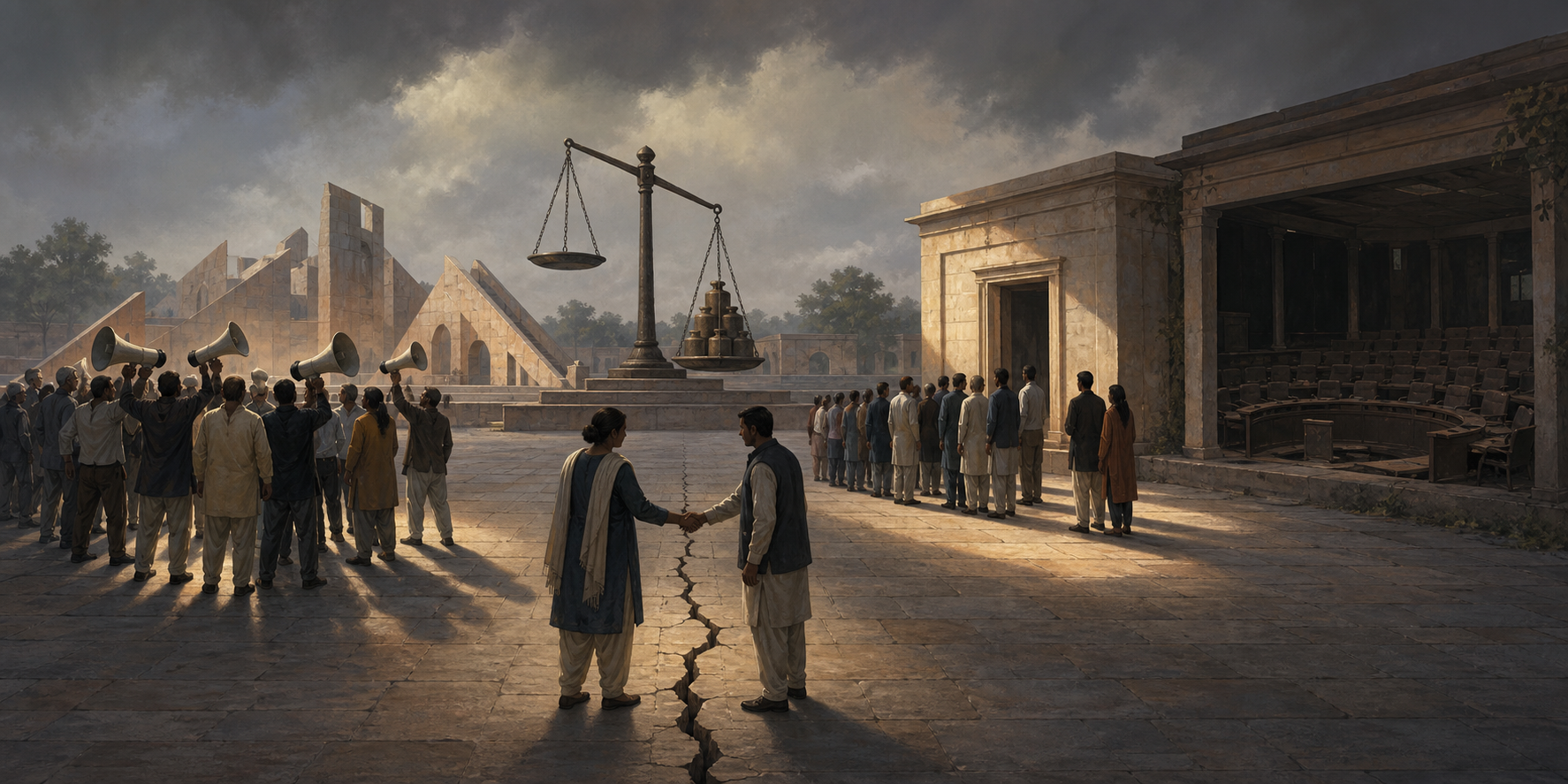
1. Escalation may appear more effective than representation
The most serious precedent is not that the government held talks. Dialogue is a normal instrument of democratic government. The risk is the possible sequence visible to future movements: begin with a protest, raise the cost through an indefinite hunger strike, attract outside political support, allow the confrontation to spread, and hold out until ministerial resignation and case withdrawals become negotiable.
If that becomes the accepted lesson, moderate leaders lose influence. A group that submits evidence, attends hearings and waits for an administrative response may conclude that restraint brings less access than disruption. The government can prevent that conclusion only by showing that relief was granted because the underlying claims met transparent standards, not because unrest became expensive.
Watch the official explanation closely. It should connect each concession to a finding, principle or policy objective. “Peace required it” is insufficient on its own, because purchasing immediate calm without defining a boundary can finance the next confrontation.
2. Criminal accountability may become entangled with political bargaining
Withdrawal of cases can be defensible when allegations are minor, indiscriminate, unsupported or connected only to peaceful assembly. It becomes politically dangerous when a broad promise appears to cover serious allegations without individual scrutiny. The present uncertainty over cases involving alleged violence, arson and attacks on uniformed personnel is therefore not a technical footnote. It is the centre of the rule-of-law question.
The state should publish a classification, not merely a total. You need to know whether it distinguishes peaceful protest, breach of restrictions, damage to property, assault and organised violence. It should also make clear that protest leadership, political affiliation and celebrity support do not determine how an allegation is treated.
Blanket rhetoric is dangerous in both directions. Calling everyone an anarchist erases lawful dissent. Calling every case political victimisation erases the people who were injured and the public whose property was damaged. Individualised scrutiny is the only credible route between those extremes.
3. Ministerial responsibility may be reduced to a pressure tactic
Dharmendra Pradhan’s resignation can be interpreted as political accountability, but accountability needs a defined failure. Was the minister responsible for defective supervision, a delayed response, inadequate safeguards, poor communication or loss of confidence? Without that explanation, the resignation risks becoming a trophy awarded to the side capable of sustaining the most pressure.
This matters beyond one minister. Personal resignation can absorb public anger while leaving the administrative mechanism untouched. If the government does not identify what failed and assign corrective duties to the successor, a change of office-holder becomes a substitute for reform rather than its beginning.
Your test should be simple: can the government name the institutional failure that justified the political consequence? If it cannot, the resignation will look less like responsibility and more like a negotiated concession.
4. A tactical peace may deepen strategic distrust
Many BJP supporters expect the Modi government to combine responsiveness with a firm defence of public order. Their concern is not merely partisan embarrassment. They fear that accepting demands after disorder tells hostile political actors that the state can be compelled to retreat.
Distrust is intensified by the government’s earlier conflict with Wangchuk. The Union government blamed him for the September 2025 violence in Leh, detained him under the National Security Act and later released him in March 2026 as dialogue over Ladakh resumed. Blame is not a conviction, and detention is not proof of guilt. The political point is that the state moved from treating him as a grave security concern to negotiating another settlement in a short period. That reversal requires an explanation grounded in facts, safeguards and changed circumstances.
The opposition’s involvement added another layer. Once opposition politicians and familiar movement figures joined the mobilisation, the dispute widened from an education grievance into a contest over the authority of the BJP, the Modi government and institutions associated with the broader Hindutva movement. A settlement reached in that atmosphere can still be correct, but silence from the government leaves supporters to choose between two crude stories: heroic conciliation or humiliating surrender.
Neither story is an adequate basis for public judgement. The government must explain its decision to the citizens who value both student justice and civil order. A strong state does not merely act; it makes the governing principle visible.
A Dharmic test requires both nyaya and restraint

A pro-Dharma response should not confuse firmness with anger, or peace with passivity. Rajadharma requires the authority to protect the innocent, hear a genuine grievance, impose proportionate consequences and repair institutions that have failed. Each duty limits the others. Order without justice becomes arbitrary. Concession without discernment rewards whoever can create the greatest disturbance.
The relevant moral balance is between nyaya, shanti, danda and viveka: justice, social peace, lawful authority and discernment. In practical political terms, that produces four tests:
- Nyaya: Students affected by a compromised examination system receive a fair remedy, and the responsible institutions are corrected.
- Shanti: The government uses dialogue to end a confrontation before further injury and destruction occur.
- Danda: Credible allegations of violence are examined according to law rather than traded away for political calm.
- Viveka: Peaceful protesters, distressed students, opportunistic politicians and alleged offenders are not collapsed into a single moral category.
This framework also guards against partisan inconsistency. If violence is wrong when used against a government you support, it remains wrong when used for a cause you sympathise with. If peaceful protest deserves protection when conducted by your allies, it deserves protection when conducted by your opponents. Dharma loses its public force when it becomes a label applied only to one’s own camp.
The government’s obligation is therefore harder than either capitulation or indiscriminate repression. It must grant justified relief without establishing a premium for disorder. That is the standard by which the truce should be judged.
What a credible implementation would look like

The immediate protest has ended, but the agreement remains politically unstable until its operational details are visible. The announced education-reform time frame has not been made public in sufficient detail, and the treatment of serious public-order cases remains uncertain. Over the next several weeks and months, look for six concrete disclosures.
- A written schedule of commitments. Each accepted demand should have a responsible ministry or agency, a deadline and a defined result. “Education reform” is not a deliverable until the government identifies which process will change and how completion will be measured.
- A case-by-case framework for FIRs. The government should explain the criteria for reconsidering cases and distinguish peaceful participation from serious allegations involving assault, arson or deliberate property damage. Names need not be politicised, but categories and principles must be public.
- A transparent compensation protocol. The agreement reportedly includes compensation for families of students alleged to have died by suicide after the NEET controversy. Because the causal claim is grave, the eligibility rules, evidentiary basis and disbursement authority require particular care. Compassion and factual rigour must operate together.
- An account of ministerial responsibility. The government should identify the failure for which the Education Minister accepted responsibility and specify what the new leadership must correct. Otherwise, resignation closes the news cycle without closing the institutional gap.
- Periodic implementation reports. Silence between the settlement and a distant deadline encourages both triumphalism and suspicion. Short public status reports should identify completed, delayed and disputed commitments.
- Equal access for non-disruptive petitioners. Students and organisations using ordinary channels must be able to obtain hearings and reasoned decisions. If lawful participation remains slow while disruptive mobilisation receives rapid negotiation, the incentive problem will survive every official assurance.
You can then distinguish three possible outcomes. Prompt publication, narrow and principled treatment of FIRs, and measurable reform milestones would support the case that the government bought space for institutional correction. Blanket withdrawals, undefined promises and official silence would strengthen the charge of surrender. Partial disclosure followed by repeated delays would indicate a tactical pause rather than a settlement.
Do not use the absence of fresh crowds as the sole measure of success. Calm can be temporary. The more durable test is whether the government leaves Bharat with a cleaner examination system, a defensible public-order standard and less incentive for the next movement to escalate.
Key takeaways
- Negotiation is not surrender, but unexplained concessions after disorder can create a dangerous precedent.
- The government should separate legitimate education grievances from individual allegations of violence and property damage.
- FIR withdrawals need published categories and case-specific scrutiny; neither collective guilt nor blanket absolution is credible.
- A ministerial resignation counts as accountability only when the institutional failure and corrective action are identified.
- The truce will prove its value through written deadlines, transparent compensation rules, measurable reform and equal access for peaceful petitioners.
For now, suspend both celebration and despair. Ask for the written terms, mark the promised deadlines, and track what happens to serious cases separately from what happens to education reform. That disciplined scrutiny will tell you whether Jantar Mantar produced responsible peace or merely taught political actors how much pressure the state will bear.