
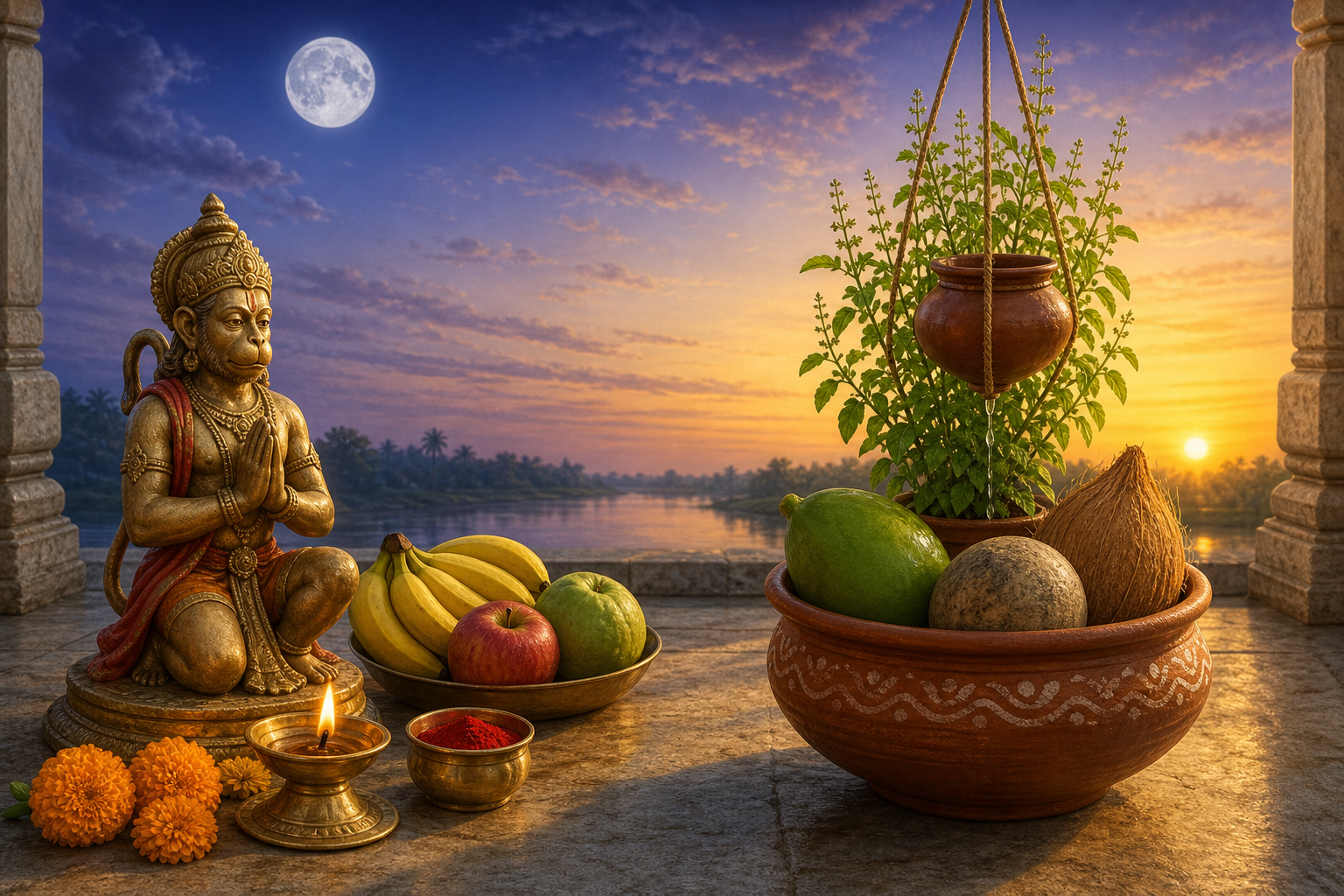
If you are arranging leave, a temple visit, a family vrata, or a community meal in April 2026, copying a date from a national calendar is not enough. One observance depends on the lunar tithi at sunrise; the other is tied to a precise solar ingress. Your city, sampradaya, and regional panjika can therefore change the civil date or the correct worship window.
For April 2026, the two anchor observances considered here are Hanuman Jayanti around Chaitra Purnima and Pana Sankranti on 14 April in Odisha. The calendar below tells you what can be entered immediately, what still requires a local check, and how to turn each date into a coherent observance rather than a collection of disconnected rituals.
A working calendar for the two April observances
The important distinction is between a date and a window. Purnima is a lunar tithi that crosses civil midnights, while Sankranti is the instant at which the Sun enters a new rashi. Neither is defined simply by the page turning from one Gregorian date to the next.
| Civil date | Observance | What you can record now | What you must confirm locally |
|---|---|---|---|
| 1-2 April 2026 | Chaitra Purnima and Hanuman Jayanti | The Purnima tithi spans 1-2 April in Indian Standard Time. Many Indian communities will keep Hanuman Jayanti on 2 April because Purnima prevails at sunrise; some will observe on 1 April. | Check the Purnima tithi at sunrise in your city, your temple announcement, and the custom of your family or guru-parampara. This is especially important outside India. |
| 14 April 2026 | Pana Sankranti, Maha Visuva Sankranti, or Odia New Year | Regional panjikas place Pana Sankranti on 14 April across Odisha. It begins the solar month of Baisakh and marks Mesha Sankramana. | Confirm the local Sankranti instant, Punya Kaal, and Mahapunyakala before fixing time-sensitive rites. The festival date and the most appropriate worship interval are related but not identical questions. |
This is a focused planning calendar, not a claim that every Hindu community has only these two observances in April. Your temple may add local vratas, deity festivals, nakshatra observances, or sampradaya-specific events. Add those from one trusted local panchang instead of merging several calendars whose locations and calculation systems differ.
Read the date the way a panchang does

The Gregorian date answers, “Which civil day is this?” A panchang answers a different set of questions: which tithi is operating, what nakshatra is present, when the Sun changes rashi, and which element governs a particular observance. Calendar disagreements become much easier to resolve once you identify the rule the festival actually follows.
Hanuman Jayanti in the widely followed Chaitra Purnima tradition uses a lunar rule. Purnima begins and ends at astronomical times that rarely coincide with midnight. Under the common udaya-vyapini principle, the decisive civil date is the one on which the required tithi is present at local sunrise. That is why an app may display “Purnima begins on 1 April” while a temple announces Hanuman Jayanti for 2 April. The two statements can describe the same lunar event.
Pana Sankranti uses a solar rule. Mesha Sankramana is the moment when the nirayana, or sidereal, Sun reaches the beginning of Aries. The instant is calculated for the globe, but its local clock time and its position relative to sunrise determine the practical observance window. The festival is therefore a solar New Year in Odisha even though lunar tithis continue to govern many household vratas and temple services during the same month.
Amanta and purnimanta conventions add another layer. They name and divide lunar months differently, so two calendars can label the surrounding lunar period differently without disagreeing about the Moon itself. Calculation schools and regional observance rules can also produce adjacent civil dates. Plurality here is not necessarily an error; an unexplained date with no location or tradition attached is the real problem.
Use this five-part check whenever two calendars disagree:
- Set the location. Enter the city where you will perform the observance, not the city where a calendar publisher is based. A diaspora household should not treat Indian Standard Time as its local ritual time.
- Identify the governing element. Ask whether the observance follows a tithi at sunrise, a Sankranti instant, a nakshatra, or an established regional date.
- Choose one tradition. Follow your family, temple, regional panjika, or guru-parampara consistently. Do not combine the start time from one system with the festival date from another.
- Separate the festival day from the muhurta. You may be able to reserve the correct civil date before the exact Punya Kaal or puja schedule is published.
- Write the rule beside the date. A note such as “2 April: Chaitra Purnima at local sunrise” is more useful next year than a bare reminder saying only “Hanuman Jayanti.”
Plan Hanuman Jayanti without erasing regional tradition
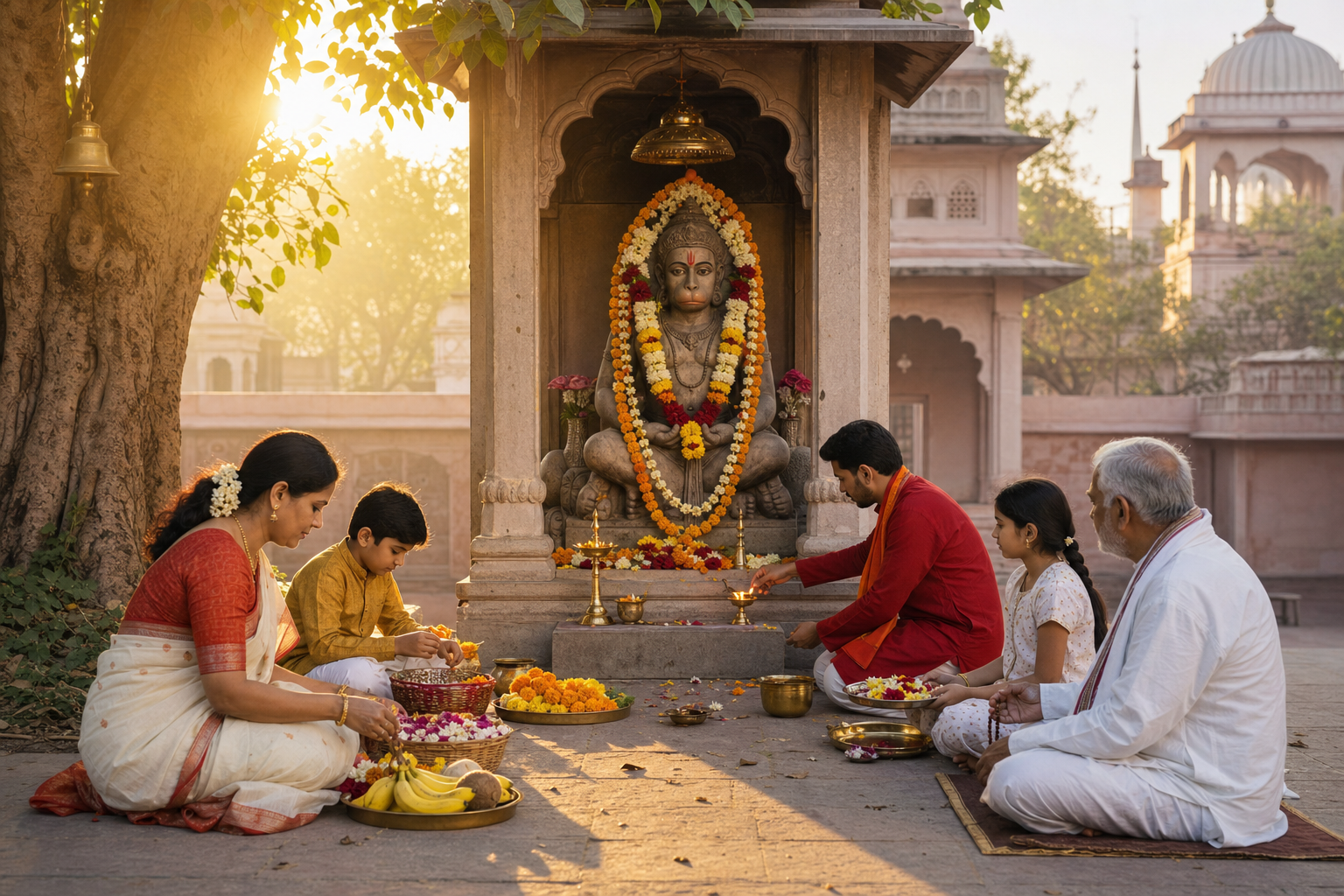
For communities that keep Hanuman Jayanti on Chaitra Purnima, 2 April is the widely expected Indian observance date in 2026, while 1 April remains possible under local or regional rules. Confirm before booking a priest, ordering naivedya, or announcing a public programme. A community invitation should state the city, date, and panchang basis so devotees do not have to guess why another calendar shows the adjacent day.
Do not assume that every Hanuman tradition is meant to move to the Chaitra date. Maharashtra commonly observes Maruti Jayanti on Chaitra Purnima. Many communities in Andhra Pradesh, Telangana, and parts of Karnataka do the same, but some southern traditions keep Hanumath Vijayotsavam later in Vaishakha. Tamil practice traditionally connects Hanumath Jayanti with Margazhi Moola. If your inherited observance belongs to one of those traditions, the April reminder may be an additional day of devotion rather than your principal annual Jayanti.
A simple home observance needs a clear devotional centre, not ceremonial excess. Use the form your household already understands:
- Clean the worship space, bathe, light a lamp, and make a brief sankalpa for courage, discernment, selfless service, and the welfare of others.
- Offer the customary Panchopachara elements: gandha, pushpa, dhupa, deepa, and naivedya. Use Shodashopachara only if it belongs to your practice and you know the sequence.
- Choose one main recitation. “Om Hanumate Namah,” Hanuman Chalisa, or a focused reading of Sundara Kanda is more coherent than rushing through several texts merely to complete a list.
- Let the narrative shape the vrata. Hanuman’s search for Sita, counsel in Lanka, and Sanjeevani mission place strength under the command of intelligence, loyalty, and service.
- Conclude with kshamapana, distribute prasada, and carry the sankalpa into a concrete act of seva or dana.
If your temple conducts abhishekam, alankaram, collective Sundara Kanda parayanam, homa, or annadanam, check whether registration or offerings must be arranged beforehand. Sindhura worship, sesame-oil abhishekam, Bajrang Baan recitation, and specific naivedyas belong strongly to some customs but are not universal requirements. Follow the shrine’s rules instead of treating every regional practice as interchangeable.
Fasting also varies. Some devotees keep a daytime upavasa and break after sunset or moonrise; others take fruit and milk or maintain a sattvic diet. The purpose is disciplined attention, not bodily strain. Do not interrupt medically necessary food or medication for a vrata; choose a non-food discipline when fasting is unsafe for you and seek qualified medical advice if needed.
Hanuman’s example gives you a useful test for the whole day: does the practice make you steadier, more capable of service, and less governed by fear or display? A small observance that produces those qualities is closer to its purpose than an elaborate programme that ends at the altar.
Make Pana Sankranti a New Year of cooling and care
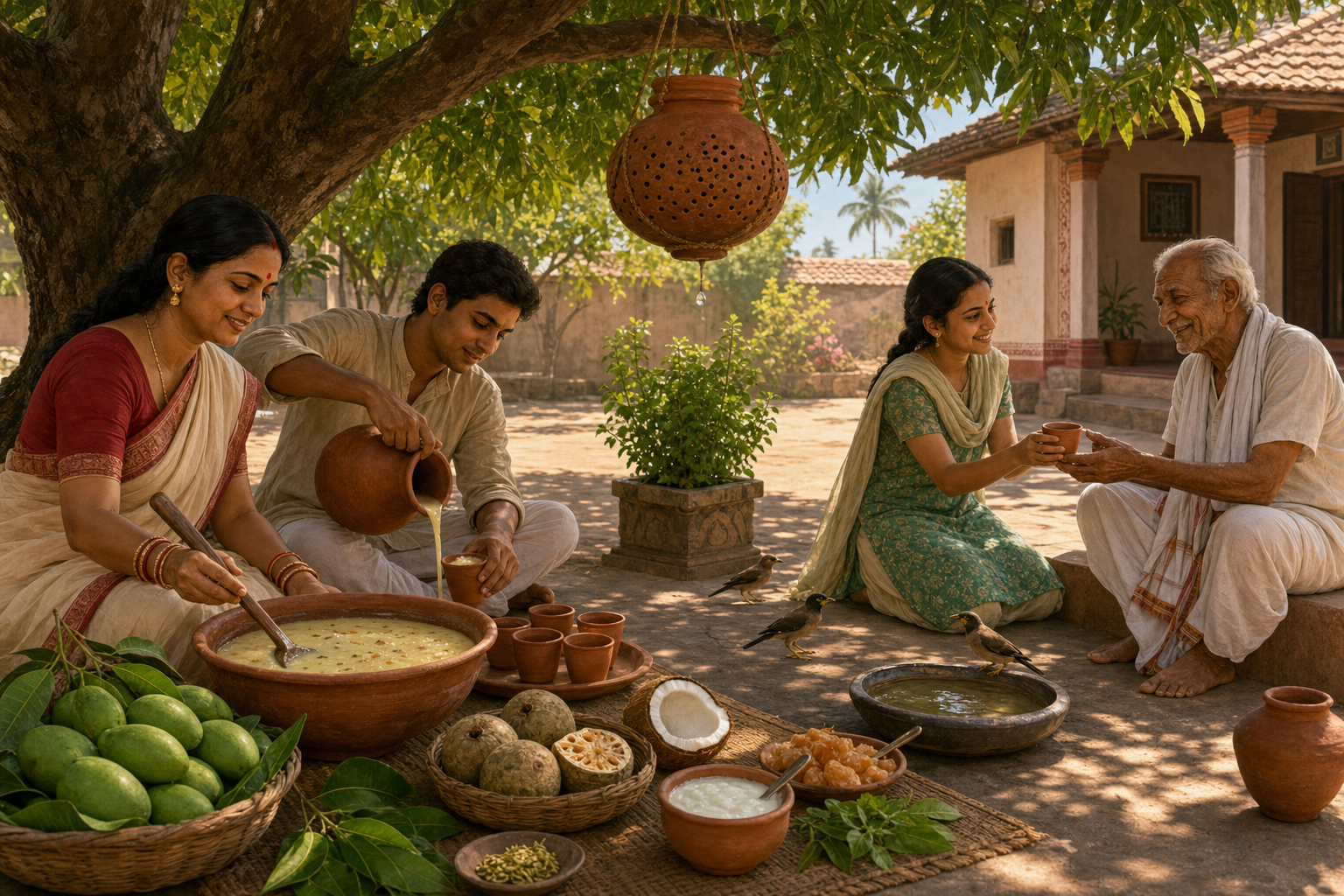
On 14 April, Odisha begins Baisakh through Pana Sankranti, also called Maha Visuva Sankranti, Jala Visuva Sankranti, Meru Sankranti, and the Odia New Year. The day joins Surya worship to a seasonal ethic: when heat intensifies, water, shade, nourishment, and care for living beings become forms of dharma.
Start by checking your local Odia panjika for the Sankranti moment and its Punya Kaal. If your tradition avoids launching major undertakings at the exact ingress, reserve that time for snana, japa, dana, or worship and place the new undertaking in the approved interval. If the ingress occurs at an inconvenient hour in your location, do not invent a time from an India-based clock; ask the temple or consult a location-specific panchang.
A practical household sequence can remain simple:
- Offer water to Surya and make a New Year sankalpa grounded in truthful conduct, service, and stewardship.
- Worship the household deity and Tulasi according to family custom.
- Prepare bela pana with ripe wood-apple pulp, safe water, jaggery, black pepper, grated coconut, cardamom, and the seasonal additions your family uses. Some Odia households add fruit or chenna.
- Where Basudhara is customary, suspend a consecrated earthen pot so a small, continuous stream falls over Tulasi or the chosen sacred symbol. Adjust the opening to produce a gentle drip rather than wasting water.
- Share pana with family, neighbours, visitors, travellers, or workers. Use clean vessels and potable water whenever the drink is intended for consumption.
- Extend jala dana beyond the ritual space by watering a tree or maintaining water for birds and animals. Keep containers clean and refill them responsibly.
Clay is especially fitting for Basudhara because it avoids disposable plastic and keeps the rite materially connected to the earth. Local bela, fruit, jaggery, and earthenware also place New Year spending in the hands of farmers and craftspeople rather than turning the observance into decorative waste.
Temple observances may include abhisheka, special naivedya, pana offerings, and darshan. In Odisha, the wider festival landscape also includes Meru yatra and the culmination of Danda Nata traditions honouring Shakti and Surya. You do not need to reproduce a public or ascetic tradition at home. Attend respectfully, support community service, and keep the household rite within the competence of your family.
Mesha Sankramana also sits within a wider civilizational season of renewal. Vishu in Kerala, Puthandu in Tamil Nadu, Pohela Boishakh in Bengal, Rongali Bihu in Assam, and Vaisakhi in Sikh tradition express related solar-year rhythms through distinct languages, histories, foods, and liturgies. When preparing a shared calendar, preserve those regional names instead of collapsing them into a generic “Indian New Year.” Unity is clearer when difference is named accurately.
Key takeaways
- Chaitra Purnima spans 1-2 April 2026 in Indian Standard Time. Many Indian communities will observe Hanuman Jayanti on 2 April, but 1 April remains possible under local and regional rules.
- Use the tithi prevailing at sunrise in the city of observance; do not copy an Indian civil date into a diaspora calendar without checking local panchang data.
- Pana Sankranti falls on 14 April 2026 across Odisha, while its exact Sankranti instant and Punya Kaal must be checked locally.
- Keep regional Hanuman traditions distinct. Chaitra Purnima, a later Vaishakha Vijayotsavam, and Margazhi Moola are not competing claims that must be forced onto one date.
- For Hanuman Jayanti, centre the day on focused recitation, seva, and disciplined conduct. For Pana Sankranti, centre it on Surya worship, pana, jala dana, and responsible care during the hot season.
Enter your city and time zone into one trusted panchang, confirm the chosen date with your family or temple, and put the intended practice beside the date now. A calendar becomes useful when it tells you not only when to observe, but what you have committed to do.
References
- DharmaRenaissance Blog — Pana Sankranti 2026 (Odia New Year): A Definitive Guide to Date, Meaning, Rituals, and Science
- DharmaRenaissance Blog — Hanuman Jayanti 2026: Chaitra Purnima Dates, Powerful Rituals, Regional Traditions, Timeless Insights