
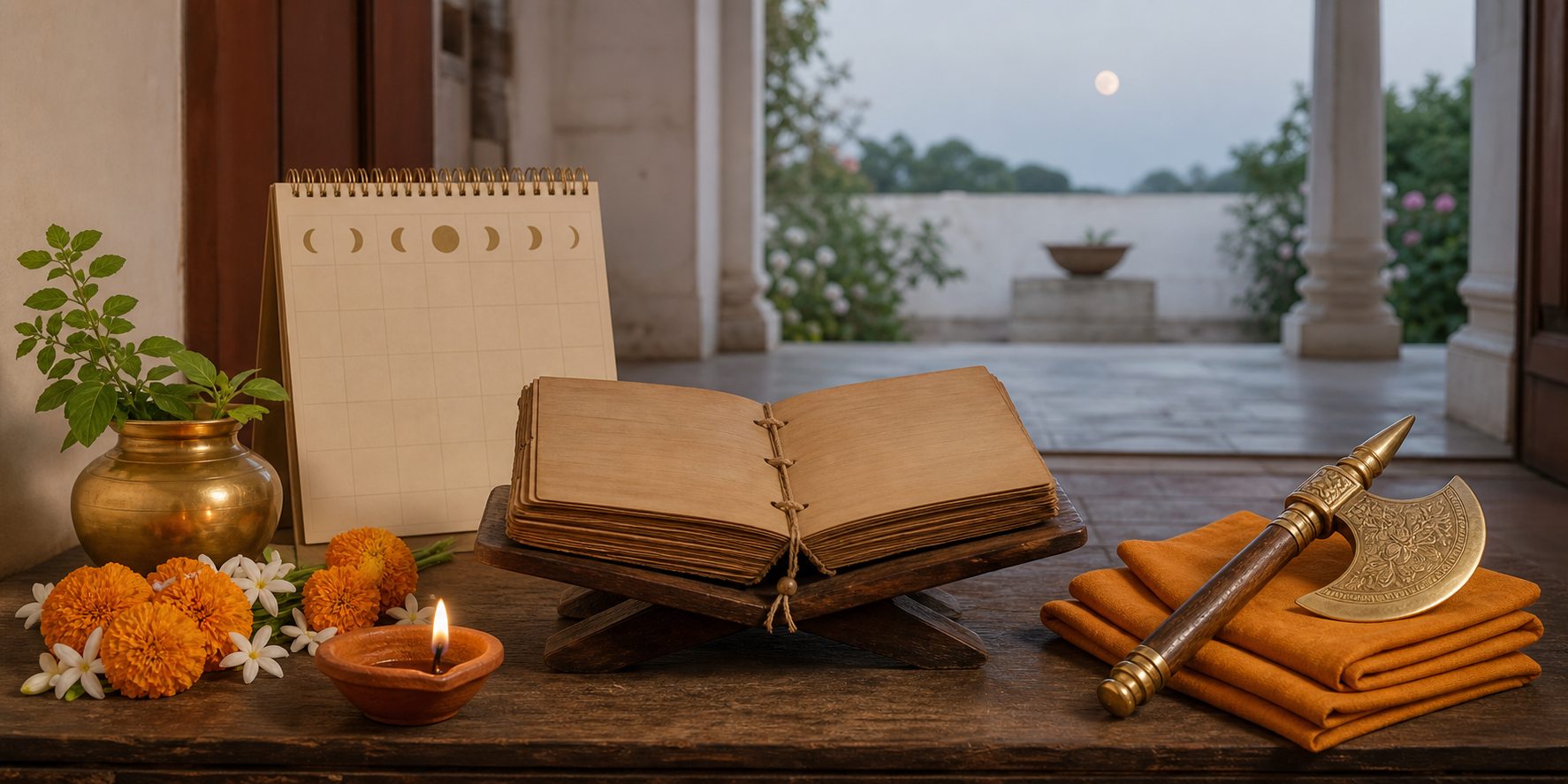
If you are trying to place the Vaishakha jayantis on your 2026 household calendar, the first task is not buying puja materials. It is identifying which jayanti you mean, which tithi governs it, and which local calendar rule your family follows.
Two important observances arrive near the beginning of the bright fortnight of Vaishakha. Maharishi Parashara Jayanti is tied to Shukla Pratipada, while Parashurama Jayanti is tied to Shukla Tritiya and coincides with Akshaya Tritiya. They are close on the lunar calendar, but they carry different ritual emphases: transmitted wisdom in the first case, and disciplined strength joined to service in the second.
Key takeaways for your 2026 observance
- Maharishi Parashara Jayanti falls on April 18, 2026, corresponding to Vaishakh Shukla Pratipada in the North Indian purnimanta calendar.
- Parashurama Jayanti is observed on Vaishakh Shukla Tritiya, alongside Akshaya Tritiya. Confirm the applicable 2026 civil date and puja period in a panchang calculated for your location.
- For Parashara Jayanti, give priority to guru-vandana, scriptural study, contemplation, and annadana. For Parashurama Jayanti, combine Vishnu or Parashurama puja with vrata, ethical reflection, and concrete seva.
- If two calendars disagree, check whether one is using the tithi at sunrise and the other is testing whether Tritiya prevails during Madhyahna. The difference may reflect a genuine rule of observance rather than an error.
Put the local tithi before the printed civil date

A lunar tithi does not begin neatly at midnight. It is determined by the changing angular separation of the Moon and Sun, with each tithi covering 12 degrees. Its beginning and ending times can therefore fall anywhere within a civil day. Sunrise, longitude, time zone, and the computational tradition used by the panchang can all affect which civil date receives the observance.
| Observance | 2026 calendar marker | Rule to verify | Main devotional emphasis |
|---|---|---|---|
| Maharishi Parashara Jayanti | April 18; Vaishakh Shukla Pratipada in the North Indian purnimanta system | Pratipada prevailing at local sunrise, or udaya tithi | Guru-vandana, study, japa, contemplation, and dana |
| Parashurama Jayanti | Vaishakh Shukla Tritiya; coincides with Akshaya Tritiya | Tritiya at local sunrise for Akshaya Tritiya; some Jayanti traditions also test Tritiya during Madhyahna | Vishnu or Parashurama puja, vrata, ethical courage, and service |
For Maharishi Parashara Jayanti, the practical rule is comparatively direct: use the tithi prevailing at local sunrise. This places the 2026 observance on April 18 in the North Indian reckoning described above. If you live outside India, do not assume that an Indian calendar graphic automatically applies to your sunrise. Check a panchang configured for your city.
Parashurama Jayanti requires one more question. Akshaya Tritiya observance generally privileges Tritiya at sunrise, while some Jayanti lineages give special weight to Madhyahna, the Hindu midday period. If Tritiya overlaps two civil dates, this distinction can produce different recommendations. Ask your temple or family priest a precise question: “Is this date being chosen by sunrise Tritiya, Madhyahna Tritiya, or our inherited parampara?” That will resolve more confusion than comparing several undifferentiated festival lists.
Do not be alarmed if a purnimanta calendar and an amanta calendar label the surrounding month differently. The two systems organize lunar months differently, but the festival remains anchored to the applicable tithi. Follow the calendar system used by your region or lineage, and record the tithi in your sankalpa rather than relying only on the English date.
Observe Parashara Jayanti as a day of transmitted wisdom
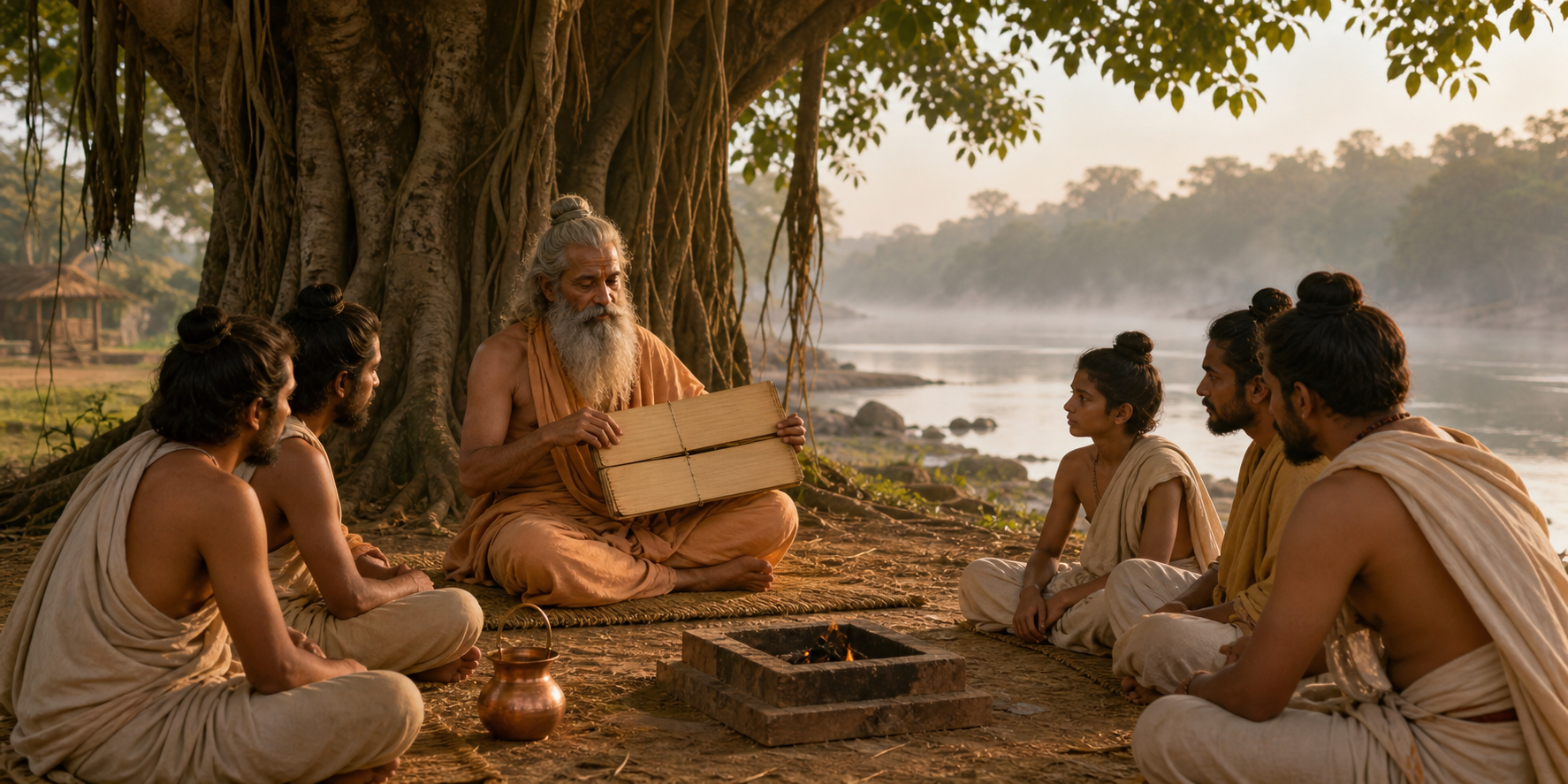
Maharishi Parashara stands in a distinguished Vedic lineage: grandson of Vasistha through Shakti, father of Krishna Dvaipayana Veda Vyasa, and teacher of Maitreya in the Puranic tradition. His name is associated with three major streams of learning: the theology and cosmology of Vishnu Purana, the dharma guidance of Parashara Smriti, and the classical Jyotisha system represented by Brihat Parashara Hora Shastra.
You do not need to compress all three traditions into one elaborate ceremony. Choose one doorway and enter it attentively. A family interested in bhakti can read from Vishnu Purana. Someone reflecting on conduct and responsibility can take a passage from Parashara Smriti. A student of Jyotisha can revisit a foundational topic such as the grahas, rashis, bhavas, vargas, functional lordships, or dasha sequencing.
- Begin after your morning bath and prepare a clean altar with an image of your chosen deity, guru lineage, or Maharishi Parashara where available.
- Light a ghee diya and make a sankalpa that names Vaishakh Shukla Pratipada, your location, and your intention to honor the rishi and the transmission of dharmic knowledge.
- Offer guru-vandana. Remember not only famous acharyas but also the parents, teachers, elders, and living instructors through whom disciplined learning reached you.
- Read one coherent selection from Vishnu Purana, Parashara Smriti, or Brihat Parashara Hora Shastra. A passage you can understand and discuss is better than a long recitation performed without attention.
- Continue with dhyana or the japa already given by your lineage. The point is continuity of sadhana, not collecting a new mantra for a single date.
- Offer seasonal fruit or another simple sattvic naivedya, then complete the observance with dana. Annadana is especially fitting because it turns gratitude for received knowledge into support for another person’s life.
If you study Jyotisha, resist the temptation to treat the day as an occasion for dramatic predictions. Parashara’s enduring methodological legacy is disciplined synthesis: begin with Lagna and the rashi chart, refine through relevant vargas and strength, and use dasha and transit for timing. Your practical observance can therefore be a return to first principles. Review one technique carefully, note where your practice has become mechanical, and renew a study commitment you can sustain after the jayanti.
For a family observance, tell the lineage in a simple chain: Vasistha, Shakti, Parashara, and Vyasa. Then explain why a rishi jayanti is more than a birthday commemoration. It asks whether wisdom is being received accurately, lived ethically, and passed onward without carelessness. That question gives children and adults something concrete to carry beyond the altar.
Observe Parashurama Jayanti as strength governed by dharma
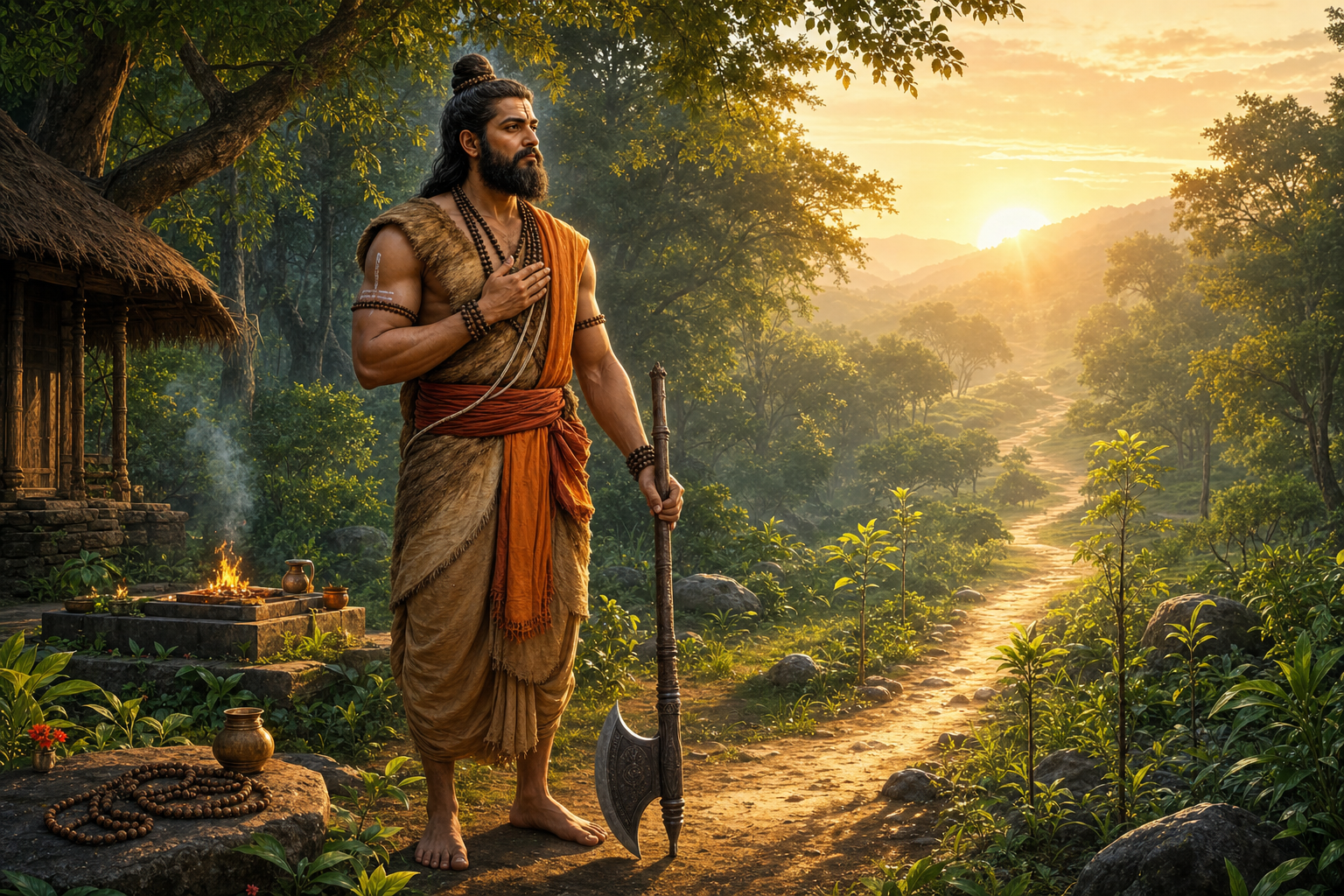
Parashurama, also known as Bhargava Rama, is revered as an avatara of Vishnu, the son of Rishi Jamadagni and Devi Renuka, and a warrior-sage whose learning and martial power meet in one demanding figure. His parashu, or axe, can be contemplated as the sharpness of viveka: the capacity to cut attachment to injustice without surrendering conscience, humility, or restraint.
This is why Parashurama Jayanti should not be reduced to an admiration of force. The useful question is whether your abilities are governed by dharma. Power without wisdom becomes destructive; learning without the courage to act becomes sterile. The observance asks you to bring study, discipline, protection of the vulnerable, and responsibility into the same frame.
- Take a dawn bath and make a sankalpa naming Vaishakh Shukla Tritiya, your location, and the vrata or service commitment you intend to undertake.
- Place an image or murti of Vishnu or Parashurama on a clean altar. If your household performs abhishekam and the murti is suitable for it, use the customary panchamrita of milk, yogurt, ghee, honey, and sugar. Otherwise, a simple Panchopachara puja is entirely coherent.
- Recite “Om Namo Narayanaya” or “Om Parashuramaya Namah.” You may also include Vishnu Sahasranama or Bhagavad Gita 4.7–4.8, which centers the divine restoration of dharma.
- Offer naivedya, perform arati and pradakshina according to your custom, and share prasada without turning the day into a display of ritual complexity.
- Complete a form of dana connected to an actual need: food, clean water, clothing, education, healthcare, or environmental stewardship. Choose the beneficiary before the day so that charity does not remain an intention.
- Write one durable sankalpa that joins strength to service. It might concern disciplined study, protection of someone vulnerable, support for a community institution, or correction of a harmful habit in your own conduct.
Akshaya Tritiya adds the ideal of “akshaya,” that which does not diminish. The most fitting response is to begin something whose merit can continue: regular svadhyaya, recurring annadana, support for education, restoration of a temple or community resource, tree planting, or a water initiative. Buying something is not the spiritual center of the day. A continuing act of learning or generosity expresses the tithi’s meaning more directly.
If you observe a vrata, decide its form before making the sankalpa. Some devotees fast; others keep a light sattvic diet. Do not measure devotion by another person’s austerity. Select a practice you can complete with steadiness, and give the saved time and attention to puja, study, or seva.
Parashurama’s sacred geography can also shape a regional observance. Kerala remembers him through the tradition that he created the land by casting his axe into the sea. The Konkan region, Goa, coastal Karnataka, and Maharashtra preserve strong Parashurama associations, including the temple near Chiplun. If these memories belong to your family, include the local account, place-name, or temple connection rather than replacing it with a generic internet ritual.
Build a household plan that survives the festival day
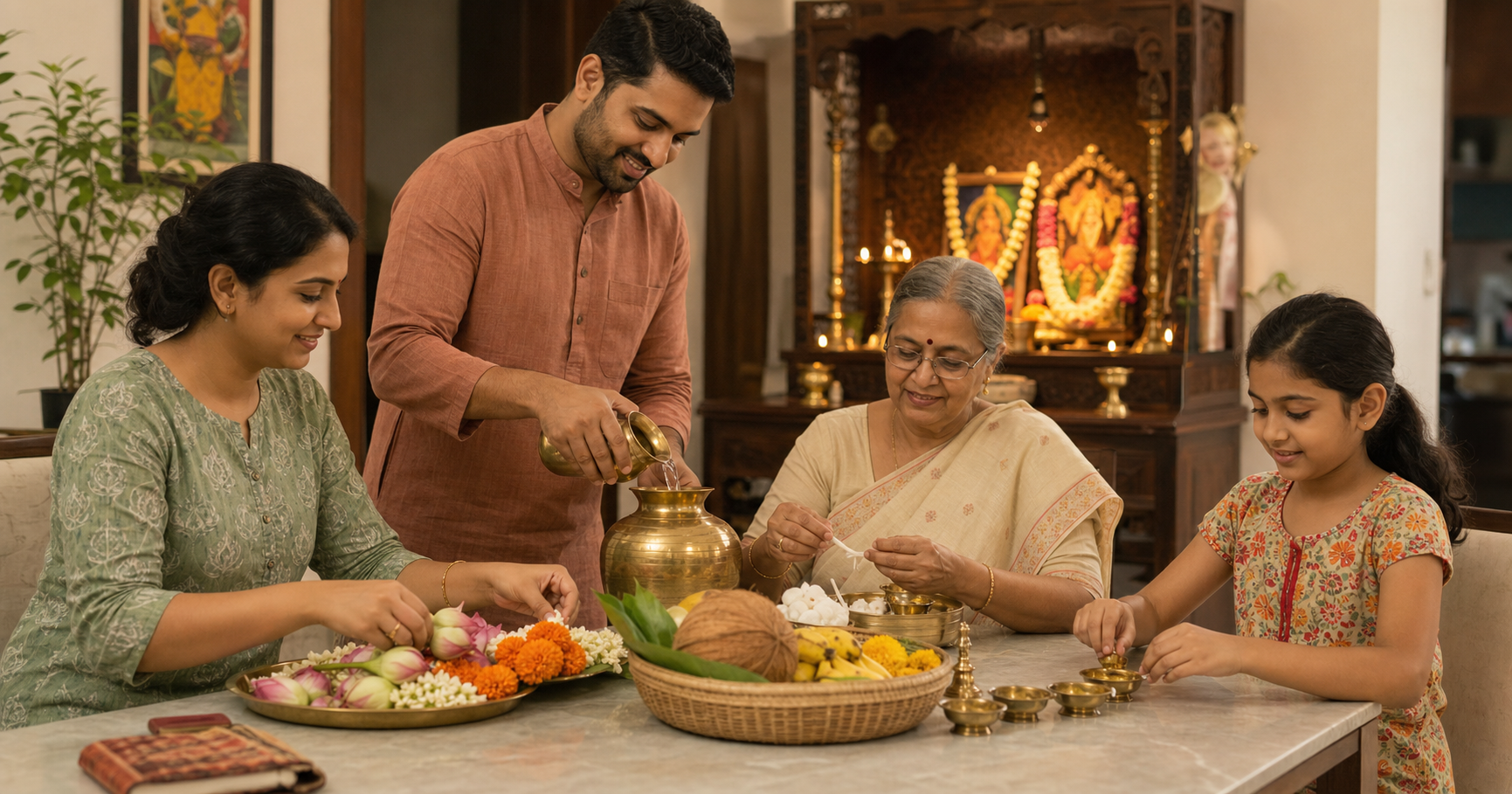
The strongest observance is not necessarily the longest one. It is the one in which the calendar, ritual, study, and service all point toward the same intention. Prepare each jayanti with four decisions: the locally valid day, the devotional emphasis, the text or mantra, and the act of dana.
- Save the Maharishi Parashara Jayanti entry for April 18, 2026, then verify Pratipada at your local sunrise.
- Find Vaishakh Shukla Tritiya in the panchang used by your region. Confirm whether your Parashurama Jayanti practice follows the sunrise rule, the Madhyahna rule, or a lineage-specific determination.
- On the previous evening, clean the altar and place the lamp, offerings, text, and puja items together. Decide the charity recipient at the same time.
- Keep each observance distinct. Let Parashara Jayanti renew your relationship with teachers and disciplined knowledge. Let Parashurama Jayanti test how courage, capability, and service are governed by dharma.
- After each jayanti, put the continuing sankalpa onto your ordinary calendar. A commitment without a next date is easily absorbed by the rest of the year.
In a household or sangha that includes more than one Dharmic tradition, you can build the shared portion around reverence for teachers, disciplined learning, ethical courage, restraint, and seva. Do not erase the theological identity of either Hindu jayanti in the name of unity. A clearer approach is to preserve the particular ritual while inviting everyone to reflect on values that Hindu, Buddhist, Jain, and Sikh communities each recognize in their own forms.
Also keep muhurta in proportion. Once the correct tithi is established, you may avoid Rahu Kalam and Yamaganda where that is customary, or use Abhijit Muhurta or a favorable Choghadiya for sankalpa, homa, or dana. But do not let the search for an ideal secondary window displace the governing tithi or the practice of your lineage.
Open your local 2026 panchang now and enter the two observances separately. Choose one text for April 18, one concrete act of service for Shukla Tritiya, and one continuing commitment after each. That is enough to turn Vaishakha from a cluster of calendar labels into lived dharma.
References
- DharmaRenaissance Blog — Maharishi Parashara Jayanti 2026: Sacred Date, Timeless Vedic Legacy, and Jyotisha Impact
- DharmaRenaissance Blog — Parashurama Jayanti 2026 on Akshaya Tritiya: Auspicious Date Rules, Muhurta, Puja, and Meaning