
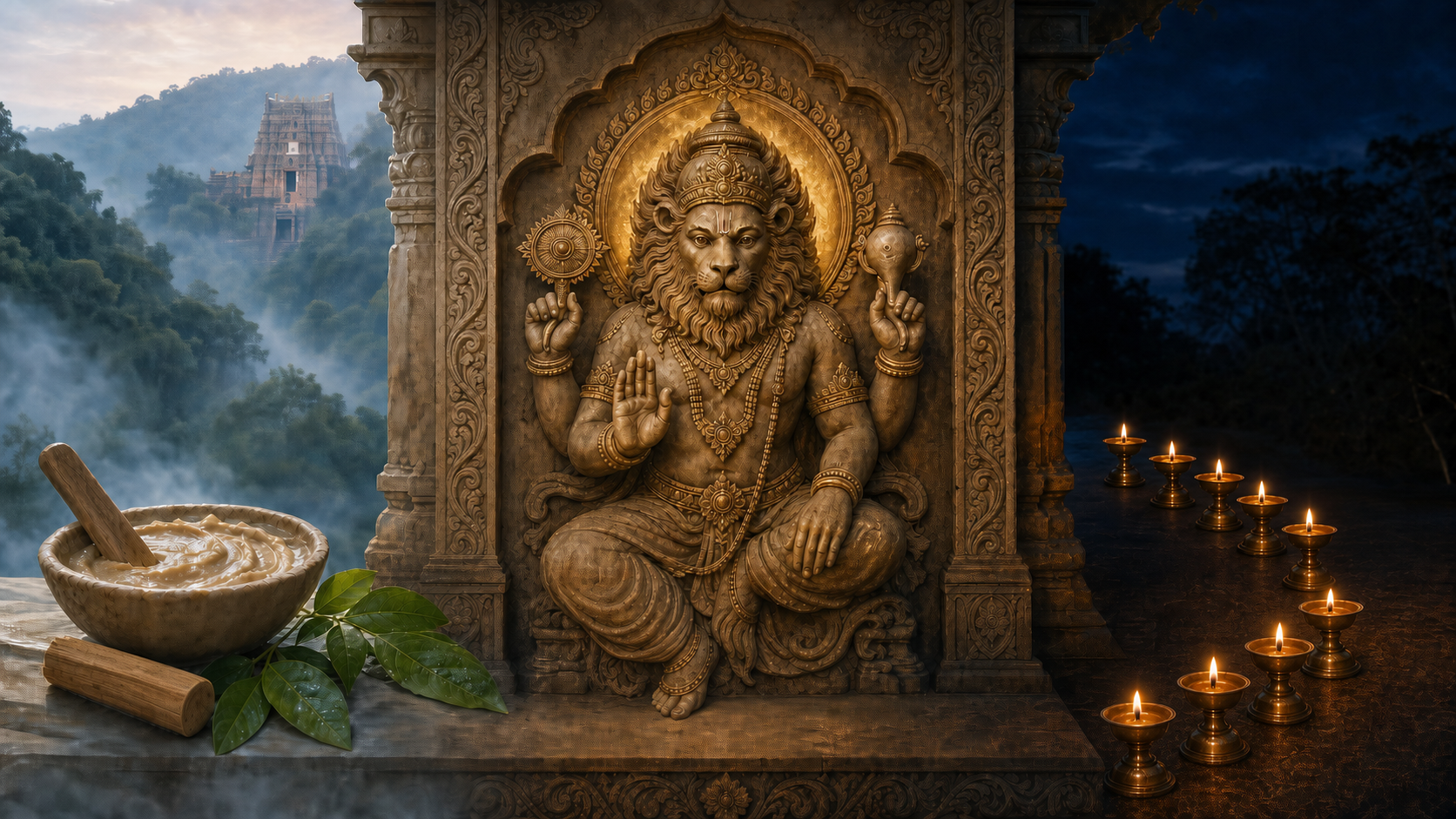
If you want to honour Narasimha through both the nine-night vrata and Simhachalam’s sandalwood festival, do not merge them into a single observance. They share a deity and a spiritual grammar, but they ask different things of you.
In the 2026 cycle, Gandham Amavasya fell on 17 April, followed three days later by Chandanotsavam on Akshaya Tritiya. Nrusimha Navaratri then ran from 22 to 30 April. Once you see that order, you can build a coherent practice: prepare and cool the mind, contemplate the Lord’s revealed form, and then sustain protective courage through nine nights toward Narasimha Jayanti.
Put the four observances in their correct order
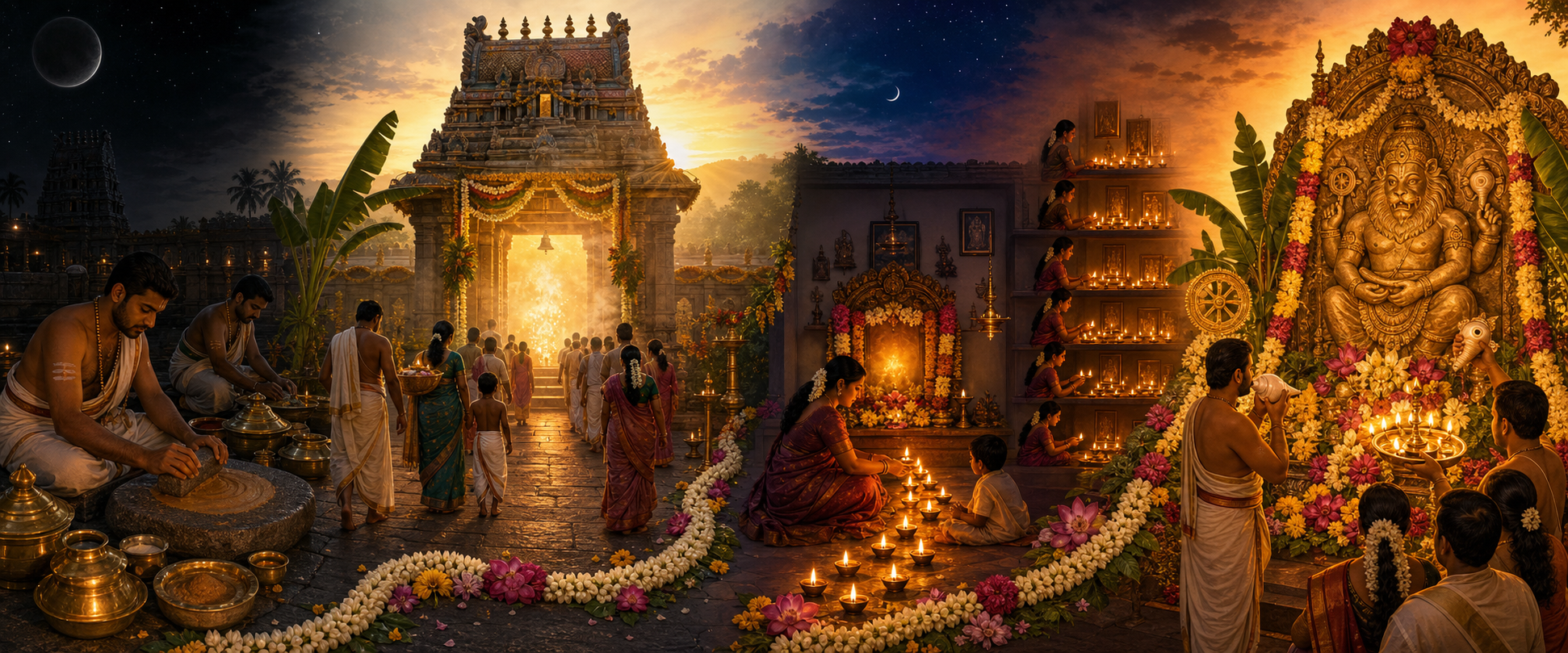
The phrase “Narasimha season” is useful devotionally, but it can obscure important calendrical distinctions. Gandham Amavasya initiates Simhachalam’s preparations. Chandanotsavam is the Akshaya Tritiya festival of revelation and renewed sandalwood anointment. Nrusimha Navaratri begins later, on Vaishakha Shukla Panchami, and reaches its culmination on Chaturdashi.
| 2026 date | Observance | What happens | What you should decide |
|---|---|---|---|
| 17 April | Gandham Amavasya, on Chaitra Amavasya | Simhachalam begins its formal preparation through sankalpa, purification, and readiness of sandalwood, vessels, sevas, and alankaras. | Confirm whether you are observing at home or travelling. At home, clean the altar and establish a restrained sankalpa. |
| 20 April | Akshaya Tritiya and Simhachalam Chandanotsavam | The established sandalwood covering is removed for the rare Nijaroopa Darshanam. The deity is bathed and covered again with freshly prepared sandal paste. | If travelling, check the temple’s official timings and queue instructions. If staying home, offer gandham according to your family practice rather than trying to reproduce the temple ceremony. |
| 22 April | Vaishakha Shukla Panchami | Nrusimha Navaratri begins. Households may establish a kalasha, light a deepam, and commence daily archana, japa, or stotra recitation. | Choose a daily rule you can maintain through Chaturdashi. Prepare the altar and texts before making the vow. |
| 30 April | Vaishakha Shukla Chaturdashi and Narasimha Jayanti | The nine-night observance culminates in special worship, sustained recitation, and, where customary and feasible, fasting or a vigil. | Use your local panchang for the prescribed worship period and for parana on the following day. |
These Gregorian dates belong to the 2026 cycle. For another year, carry forward the tithi anchors rather than copying the dates: Chaitra Amavasya, Akshaya Tritiya, Vaishakha Shukla Panchami, and Vaishakha Shukla Chaturdashi. A tithi can begin or end at different civil times by location. This matters especially outside India, where an Indian festival date may not match the correct local worship window.
Key takeaways
- Chandanotsavam was not the conclusion of Nrusimha Navaratri in 2026. It preceded the Navaratri by two days.
- Gandham Amavasya is the preparatory threshold; Akshaya Tritiya is the day of Nijaroopa Darshanam and renewed anointment.
- Nrusimha Navaratri is a nine-night discipline culminating in Narasimha Jayanti, not an extension of Simhachalam’s temple procedure.
- Your local panchang and the temple’s current instructions should govern exact timings. A generic festival date is not sufficient for a time-sensitive sankalpa, parana, or pilgrimage plan.
See the shared spiritual movement: heat, revelation, and restraint

Sandalwood at Simhachalam is not merely decorative. Simhachalam Appanna, worshipped as Varaha Lakshmi Narasimha Swamy, remains covered in an extensive layer of gandham for most of the year. Sandalwood’s cooling quality suits the heat of coastal Andhra, while its ritual meaning addresses the Ugra aspect of Narasimha: power is not denied, but pacified, contained, and placed in the service of grace.
Chandanotsavam briefly reveals the form beneath that cooling mantle. The fresh anointment that follows is just as important as the unveiling. Revelation is not treated as permanent exposure. The sacred intensity is covered again with fragrance, serenity, and ritual order.
Nrusimha Navaratri develops the same lesson inwardly. The Prahlada narrative is not a licence to imitate fury. It asks whether your courage remains anchored in truth, refuge in the Divine, and protection of the vulnerable. Narasimha’s intensity restores dharma because it is neither arbitrary nor self-serving.
When fear or anger is driving you, use three questions before acting:
- What actually requires protection? Name the person, duty, principle, or vulnerable part of your own character. Do not leave the threat as a vague feeling.
- What response is proportionate? Choose the action that protects without turning resentment into the goal.
- What will cool you after action? Return to japa, silence, wise counsel, seva, or another discipline that prevents righteous energy from becoming self-righteousness.
This is where Narasimha’s peaceful and fierce dimensions become one ethic. Ahimsa does not require passivity in the face of harm, and courage does not require hatred. Hindu Narasimha bhakti retains its own theology, yet this ethical balance resonates with Buddhist fearlessness joined to compassion, Jain ahimsa joined to disciplined self-restraint, and the Sikh ideals of nirbhau and nirvair – without fear and without enmity. The traditions should not be flattened into one another; the shared civilizational question is how to defend what is right without becoming captive to hostility.
Build one household rhythm across the sacred season
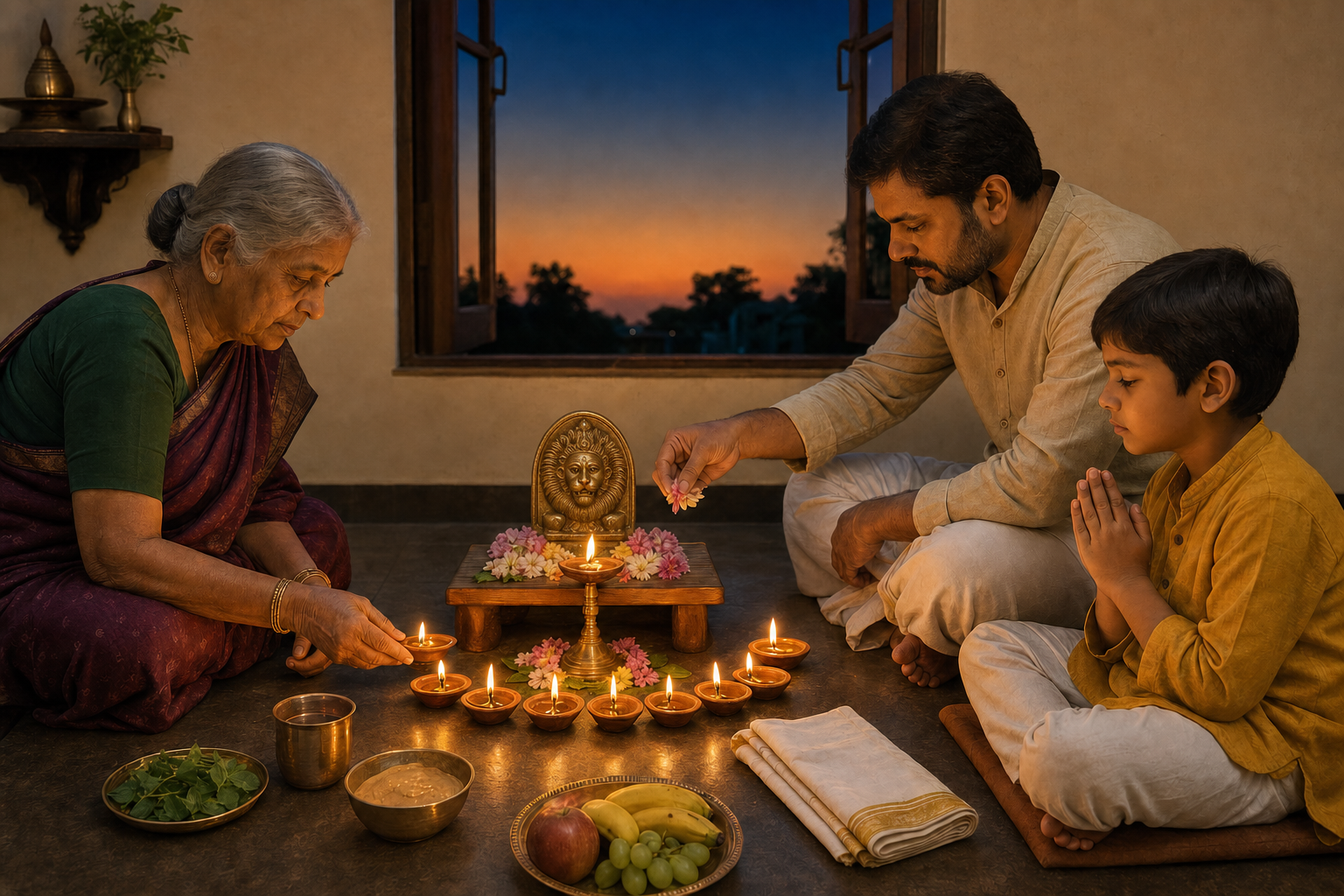
A demanding vrata that collapses after two days is less useful than a modest rule you can keep. Decide in advance what is fixed, what is optional, and what depends on health, work, family obligations, or your sampradaya.
Use the Simhachalam prelude without copying temple ritual
- On Gandham Amavasya, prepare. Clean the altar, arrange the lamp and worship materials, and reduce avoidable agitation. If sandal paste is part of your household practice, offer it to an image of Vishnu or Lakshmi-Narasimha, or to a saligrama according to the rules you have received. Add a small act of dana or maitri so that inward purification produces outward care.
- On Akshaya Tritiya, contemplate revelation and renewal. If you cannot attend Nijaroopa Darshanam, do not treat home worship as a theatrical reproduction of it. Offer fresh gandham where customary, perform japa, and ask what truth or duty you have kept covered through avoidance. The point is not to imitate the sanctum procedure; it is to let the temple’s rhythm sharpen your own sankalpa.
- On Vaishakha Shukla Panchami, begin the Navaratri rule. Install a kalasha if this belongs to your tradition, keep a deepam at the altar, and state the vow clearly. A concise traditional formulation is Mama upata samasta durita-ksaya-dvara Sri Lakshmi Nrusimha prityartham Nrusimha Navaratri vratam karishye.
Keep the daily puja simple enough to repeat
Prepare your text, flowers, tulasi, and naivedya before the first evening. Removing small daily decisions protects the continuity of the vow. A workable household sequence is:
- Clean the worship space and light the deepam.
- Offer flowers and tulasi to Lakshmi-Narasimha.
- Recite the name “Narasimha” or the widely used protective mantra: Ugram Viram Maha-Vishnum Jvalantam Sarvato Mukham Nrisimham Bhishanam Bhadram Mrityor Mrityum Namamy Aham.
- Select one stable recitation rather than accumulating more material each night. Suitable choices include the Sri Lakshmi-Nrusimha Karavalamba Stotram, Narasimha Kavacham, or Narasimha Ashtottara Shatanamavali.
- Offer a sattvic naivedya suited to the season, such as fruit or another light household preparation. Water or panakam can also be offered and then shared respectfully as prasad.
- Close with arati and one concrete intention for the following day. Families with children can add a short Prahlada narration or kirtan instead of making the puja longer and harder for them to follow.
If morning and evening worship are both possible, let one be the fuller observance and keep the other brief. If only one period is realistic, protect its regularity. The value of the Navaratri lies in returning each day, not in making every day elaborate.
Choose fasting by capacity, not comparison
Vrata practice can range from phalahara, based on fruit or other permitted light food, to ekabhukta, one meal, or a fuller upavasa. Follow your family, guru, or sampradaya where a rule has been given. If a food restriction conflicts with your health needs, scale it down rather than forcing it. A sattvic meal discipline and restraint from intoxicants, agitation, or distracting consumption can preserve the vrata’s purpose without treating physical strain as proof of devotion.
On Narasimha Jayanti, some devotees keep a daytime fast and night vigil. These are not identical obligations in every lineage. Chaturdashi must prevail during the prescribed period indicated by the local panchang; madhyahna may guide sankalpa timing, while dusk carries the memory of the Avatara’s liminal manifestation. Complete parana on the following day at the locally prescribed time, rather than ending the vow merely because the civil date has changed.
Give each Navaratri night a concrete moral focus
If your lineage already prescribes a liturgy, follow it. Otherwise, the Nava-Narasimha forms associated with Ahobilam can give each night a distinct contemplative purpose. This is a household framework for reflection, not a substitute for temple agama.
- Jwala Narasimha – face what burns. Name one difficulty you have been denying. Do not solve everything at once; bring the reality of it honestly into prayer.
- Ahobila or Ugra Narasimha – distinguish force from rage. Identify an instance of adharma that calls for a response. Decide on one protective, proportionate action that does not depend on humiliating another person.
- Malola Narasimha – let strength become reassuring. Worship Lakshmi-Narasimha and extend steadiness to someone in your household. Protection should make the vulnerable feel safer, not make the protector feel larger.
- Krodha or Varaha Narasimha – redirect anger. Do not discharge reactive energy through argument alone. Convert it into service, advocacy, correction of a neglected duty, or practical help for someone affected by the problem.
- Karanja Narasimha – become dependable. Return to the smallest element of the vrata that you can sustain without drama: the lamp, the mantra, the offering, or the daily act of restraint.
- Bhargava Narasimha – protect attention through tapas. Reduce unnecessary information and distraction for the day. Use the recovered attention for japa, study, or a duty you have postponed.
- Yogananda Narasimha – settle before acting. Join the mantra to calm breathing at dawn or dusk. Notice whether the mind becomes clearer, not merely quieter.
- Chatravata Narasimha – extend the protective canopy. Share prasad, support annadanam or a community kitchen, or perform another act that turns private devotion into collective care.
- Pavana Narasimha – purify and prepare. Clean the altar, seek or offer forgiveness where appropriate, and arrange everything required for Chaturdashi worship. Enter Jayanti without carrying avoidable disorder into it.
Watch the direction of the sequence. It begins by confronting affliction but ends in purification and readiness. If your practice makes you more fascinated by intensity but less capable of patient protection, return to Malola, Yogananda, or Pavana. The fruit to look for is not a fiercer mood. It is clearer action without hatred.
Approach Simhachalam as a pilgrimage, not a spectacle
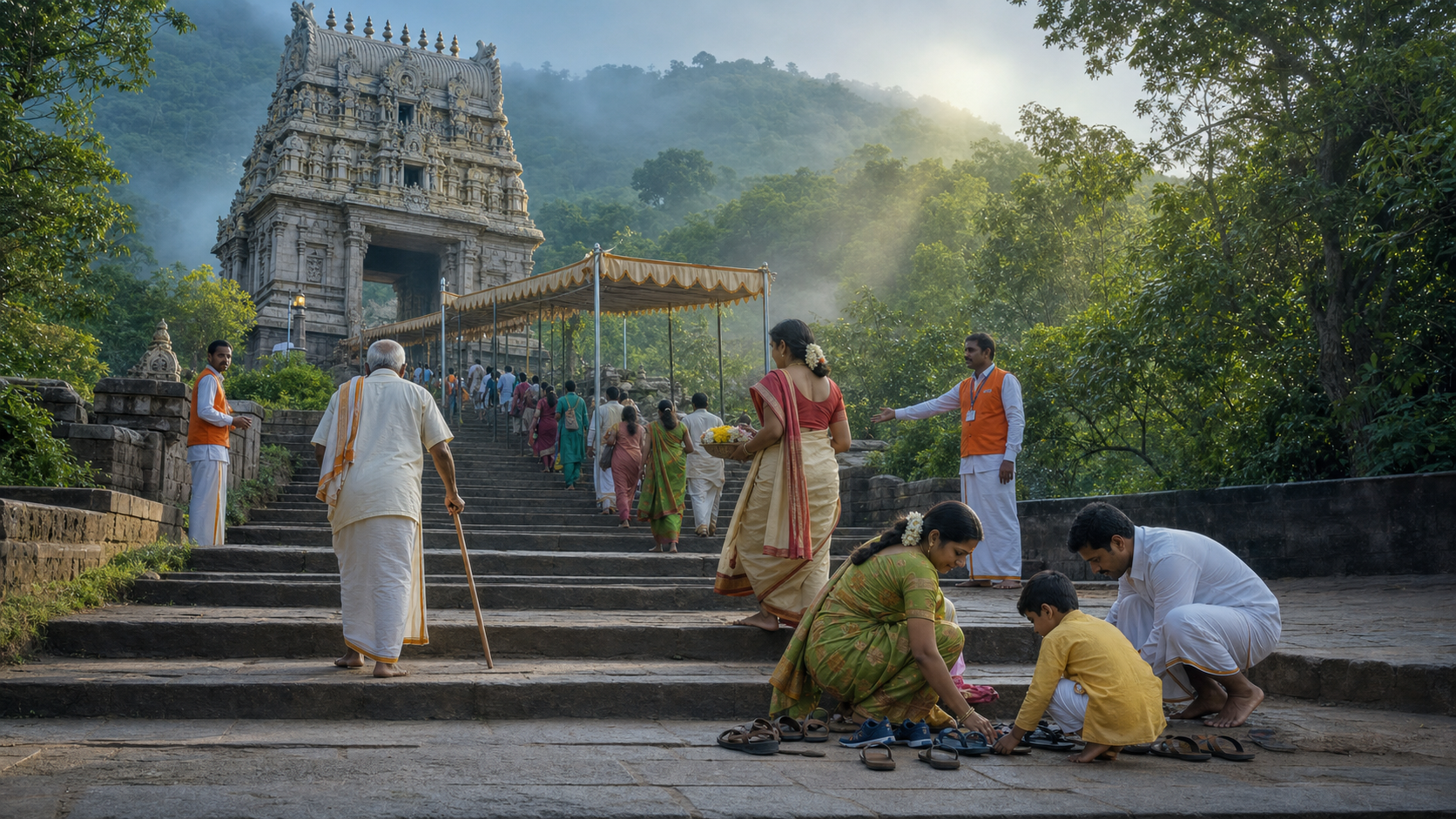
For most of the year, devotees see Simhachalam Appanna beneath the sacred sandalwood covering. On Akshaya Tritiya, the covering is removed for the annual Nijaroopa Darshanam, followed by abhishekam and a renewed application of sandal paste. The rarity of the uncovered darshan draws substantial crowds, so spiritual preparation and logistical preparation are part of the same pilgrimage.
- Before travelling: Consult current official temple communications for the actual darshan schedule, queue protocol, and any special-entry arrangements. Do this before committing to transport or accommodation. A festival date alone does not tell you when or how admission will operate.
- Know which day you are attending: Gandham Amavasya is the preparatory new moon observance, not another name for Chandanotsavam. Travel on that day only if its contemplative and preparatory character is what you intend to honour.
- At darshan: Expect the rare encounter to be brief in a crowded setting. Follow the temple’s movement and seva instructions rather than trying to prolong your place before the deity. Let your japa begin before you enter the queue so that devotion does not depend on the duration of the final glimpse.
- After darshan: Remember that the festival does not end with uncovering. The Lord is bathed and anointed again. Carry that act of cooling renewal into one personal restraint: soften a conflict, end a needless argument, or resume a neglected discipline.
- If you cannot travel: Offer sandal paste according to household custom, recite a Narasimha stotra, and join the temple’s spirit through dana or maitri. Distance need not be overcome by inventing a domestic version of the sanctum rite.
For the next cycle, enter the four tithi anchors in your calendar as soon as a reliable local panchang and the temple schedule are available. Then choose one daily practice small enough to survive from sankalpa through parana. Narasimha worship becomes actionable when the heat of fear and anger is governed by dharma and converted into protection, service, and steady grace.
References
- DharmaRenaissance Blog – Nrusimha Navaratri 2026: Auspicious Dates, Puja Vidhi, Vrat Rules, and Protective Grace
- DharmaRenaissance Blog – Simhachalam’s Gandham Amavasya: A Timeless, Sacred Prelude to Akshaya Tritiya Nijaroopa Darshanam