

You have a Bharatiya Bhasha novel, a translation proposal, or a classical-text edition in front of you. It has intellectual weight and a readership in its own language, yet the list meeting asks whether it is “accessible,” “universal,” or already validated abroad. An English manuscript with thinner cultural foundations may not be required to pass the same tests.
That asymmetry is the language hierarchy in Indian publishing. It cannot be corrected by adding a few translations to a catalogue while leaving acquisition, editing, publicity, distribution, and prestige untouched. If you make or influence publishing decisions, you need to examine the entire pathway by which a work becomes visible.
The hierarchy enters before a reader sees the book
Language often becomes a proxy for three different judgements: literary quality, commercial potential, and cultural modernity. Those judgements are not interchangeable. An English manuscript is not inherently better written, more marketable, or more contemporary than a Kannada, Tamil, Hindi, Bengali, Marathi, Malayalam, Odia, Telugu, Punjabi, Sanskrit, Pali, or Prakrit work.
English is valuable as a bridge across regions and into international markets. The problem begins when the bridge becomes a checkpoint – when a Bharatiya Bhasha work must enter English before institutions treat it as nationally significant. The hierarchy is therefore not simply English over another language. It is English recognition being treated as the event that converts regional achievement into Indian achievement.
This habit has a history. Macaulay’s 1835 Minute helped institutionalize English education, while later prestige systems made proficiency in English an informal credential for authority in publishing, academia, media, and policy. You do not need to accept every argument made under the label of mental colonialism to observe the operational effect: the language of presentation can acquire more weight than the learning contained in the work.
S. L. Bhyrappa’s Aavarana provides a useful acquisition test. It is recognized as a major Kannada novel, but an editor should ask whether an unknown debutant submitting a comparably civilizational manuscript in English would receive the same confidence. The answer cannot be assumed, but the question exposes whether familiarity with an Anglophone social world has quietly become a substitute for literary judgement.
The opposite mistake is to use one successful English novel as a scapegoat. The White Tiger is often invoked in a contested argument that international prestige rewards thin or instrumental depictions of Indian life. Its craft and the incentives surrounding its reception are separate questions. A serious editor examines repeated selection patterns rather than declaring that one book explains an entire industry.
- Would the same evidence of quality satisfy you if the manuscript had been written originally in English?
- Do you treat reviews, editions, and sustained readership in the original language as real market evidence?
- Does British approval carry more weight in the meeting than an Indian prize or an established Bharatiya Bhasha reputation?
- Are indigenous institutions, rituals, and philosophical terms being judged as obstacles while unfamiliar European references are accepted without explanation?
- Are you rejecting the work, or merely reacting to your own distance from its literary world?
Audit decisions, not just catalogue labels

A multilingual catalogue can still preserve an Anglophone hierarchy. The translations may receive smaller advances, weaker covers, shorter publicity cycles, less experienced editors, or limited retail placement. Counting titles alone will miss this. Audit a complete publishing season from proposal to backlist, and record what happens at each gate.
- Acquisition: Record the original language, who introduced the work, what evidence supported it, and which objections appeared in the decision. Separate objections about literary execution from discomfort with cultural context.
- Editorial treatment: Compare the time, seniority, and subject knowledge assigned to English originals and translations. Note whether the translated work is being flattened to resemble an already familiar Anglophone category.
- Packaging: Check whether the author and translator are visible, whether the original title appears, and whether the description presents the book as literature or as an ethnographic curiosity.
- Publicity: Examine which titles receive interviews, extracts, festival pitches, review copies, and sustained attention after launch. A translation that is technically published but scarcely introduced to readers has not received equal treatment.
- Distribution: Compare actual availability, not planned availability. A book absent from stores and difficult to discover online will later produce weak sales data that appear to justify the original neglect.
- Prestige: Track whether attention rises only after recognition in Britain or another external centre. This validation lag is a warning that domestic judgement has been outsourced.
The decision log matters because “there is no demand” is often the final sentence in a chain of institutional choices. Low acquisition, modest production, weak metadata, little publicity, and poor stocking create a small sales result. That result is then described as a natural expression of reader preference. Demand is real, but a publisher also shapes the conditions under which demand can become visible.
Do not respond by imposing a quota that treats every translation as equally good. Apply demanding literary standards, but make those standards explicit and language-neutral. A manuscript should fail because its structure, argument, evidence, prose, or translation fails – not because the editor lacks the context needed to recognize what it is doing.
Restore Bharat to the literary timeline
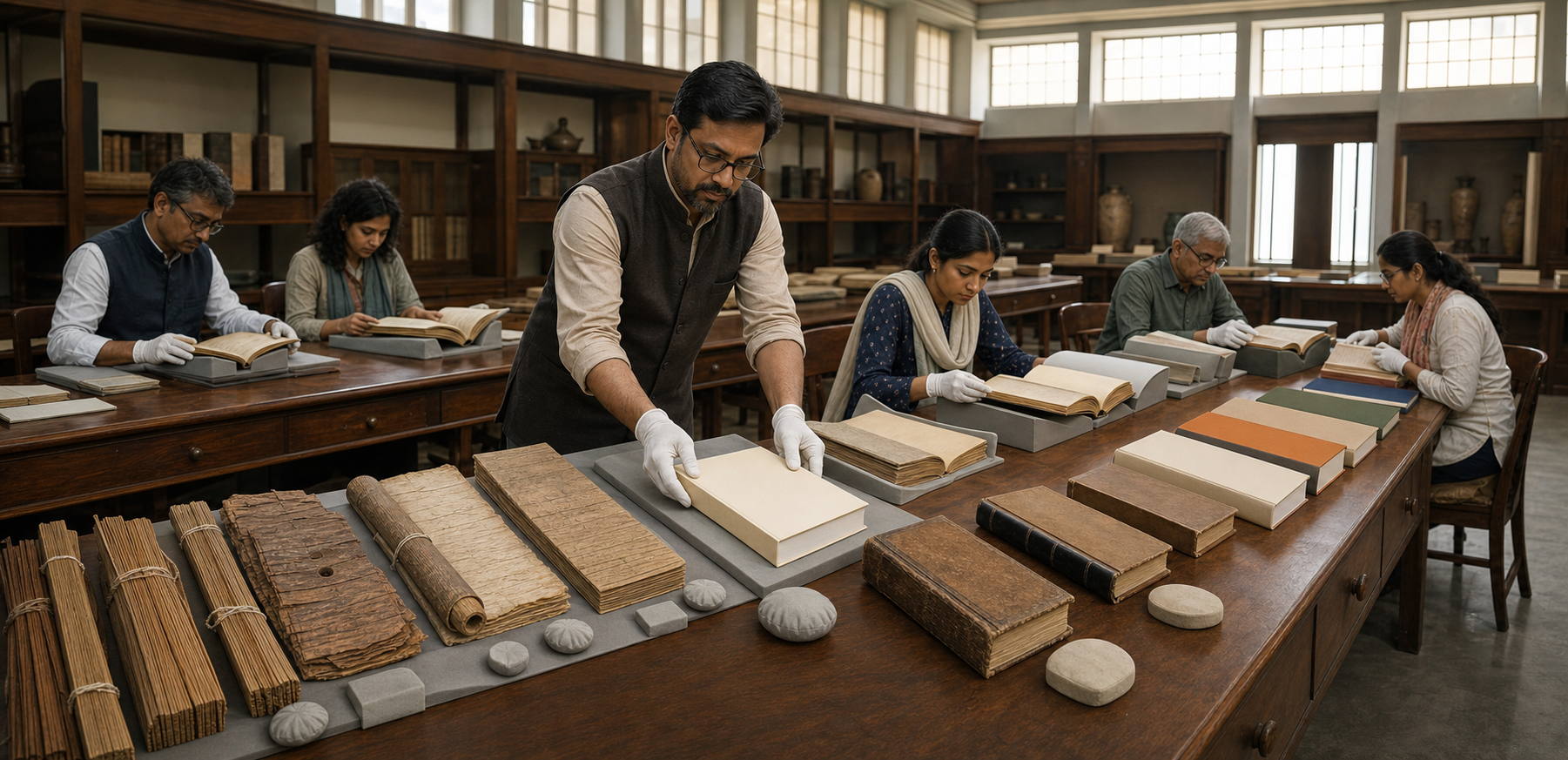
A widely circulated question asking who was writing in India while Shakespeare was writing revealed more than an individual’s knowledge gap. It exposed a literary timeline in which Europe supplies the main chronology and Indian writers appear, if at all, as detached regional additions.
The early modern Indian record includes Tulasidas, Eknath, Keshavdas, Surdas, Rahim, Ezhuthachan, and Appayya Dikshita, with Tukaram following slightly later. Tulasidas composed the Ramcharitmanas; Ezhuthachan wrote in Malayalam; Appayya Dikshita worked in Sanskrit. These writers do not need Shakespeare to make them important. Placing them on a parallel timeline simply prevents European literary history from masquerading as universal literary history.
The scale of the neglected archive makes casual absence difficult to defend. One conservative, back-of-the-envelope estimate places extant Sanskrit literature at roughly 70 lakh printed pages. It spans Vedas, Vedangas, Puranas, Itihasa, kavya, drama, biographies, digests, commentaries, and specialized treatises. That estimate does not include the full, millennia-spanning literature of the Bharatiya Bhashas.
Nor is the inheritance solely Sanskrit or solely Hindu. Pali Buddhist canons, Prakrit and Apabhramsha works, Jain Agamas and commentaries, and the Sikh Gurus’ Gurbani belong within the same civilizational field. The traditions disagree on substantial philosophical questions, but they also participate in shared vocabularies, ethical inquiry, debate, and literary exchange. A Dharmic publishing list should preserve that plurality rather than compress it into a decorative idea of “Indian wisdom.”
Turn this history into an editorial tool. Require proposals to identify a predecessor in the original language, a regional parallel, and an English-market comparison. Maintain a chronology with fields for period, region, language, genre, tradition, available editions, and translation status. The purpose is not to burden every book with a history lesson. It is to stop the English comparison title from being the only coordinate by which an Indian work can be understood.
Make translation a full publishing pathway

Translation is not the final conversion of a completed book into English words. It is a publishing pathway involving acquisition, rights, editorial interpretation, terminology, design, metadata, publicity, and distribution. If any of those stages treats the original language as secondary, the English edition will carry the hierarchy into the finished object.
- Begin with the original reception. Record editions, readership, critical discussion, and the work’s place within its own literary tradition. Do not wait for foreign recognition to establish that it matters.
- Bring the translator into editorial planning. The translator can identify layered terms, allusions, registers, and places where smooth English would erase the original argument.
- Credit translation visibly. The translator’s name should not disappear in metadata or publicity when the English edition depends on that person’s interpretive labour.
- Preserve important terms selectively. A glossary, note, or clear explanation can serve the reader better than a misleading one-word substitute. Retention should clarify the text, not turn every page into a display of untranslated vocabulary.
- Keep the work’s intellectual centre intact. Do not reframe a philosophical, devotional, historical, or literary work only as evidence of social pathology because that frame is easier to sell to an Anglophone audience.
- Market the book through its real question. Lead with the conflict, insight, argument, form, or devotional purpose that gives readers a reason to care. “Translated from” is production information, not a complete publishing proposition.
- Publish for parallel readerships. An English edition should extend access rather than replace or diminish the original-language edition.
Even a single word can reveal what is lost in this process. The English word “juggernaut” derives from Jagannath. An anglicized form may be commercially familiar, but the movement from Jagannath to a generic global brand-word also weakens the connection to its civilizational origin. The lesson is not that every title must retain every Indic term. It is that apparent familiarity can carry an unnoticed cultural cost.
Measure the readership that metropolitan shelves miss
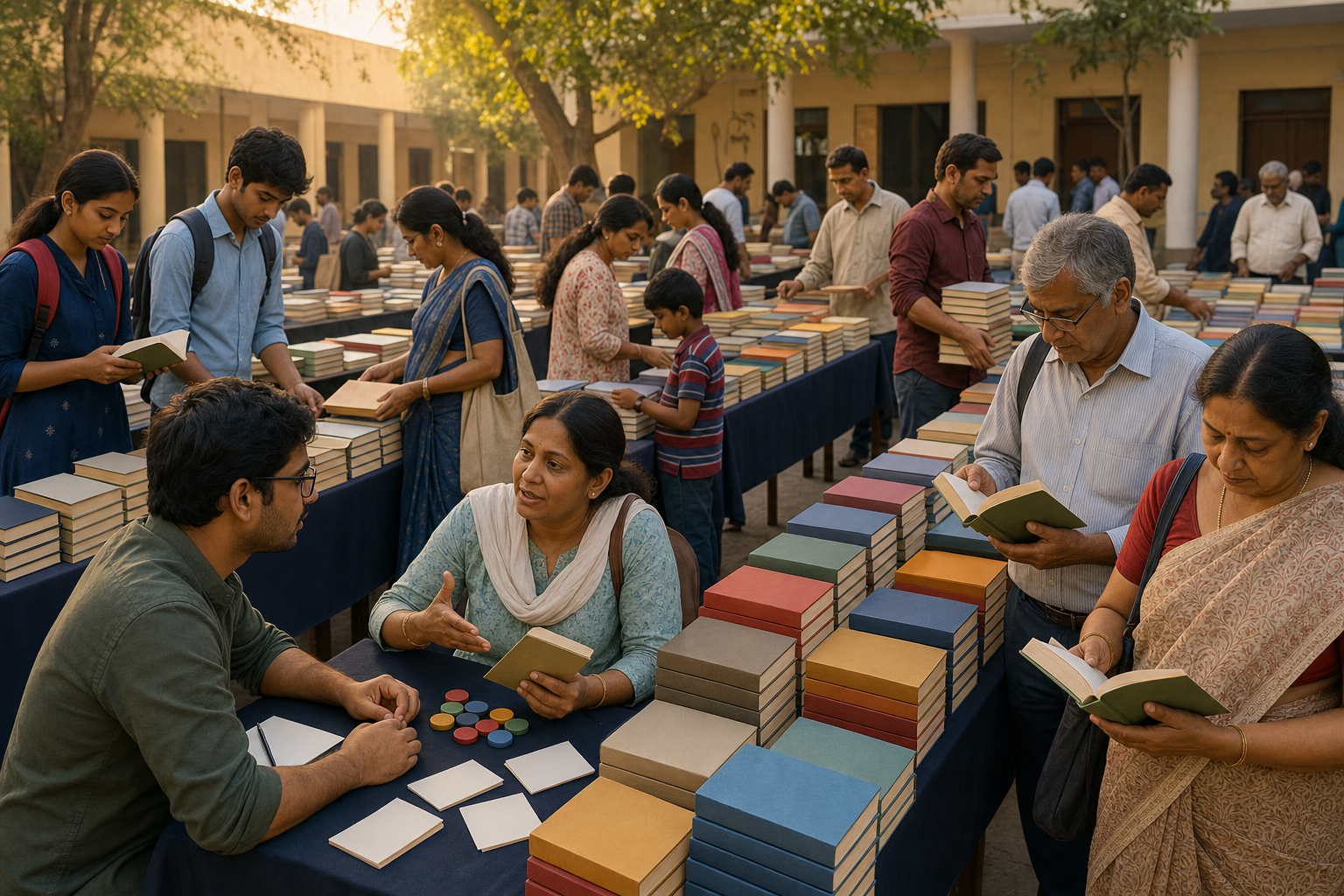
English-language retail visibility is not a reliable measure of India’s entire reading culture. By early 2014, Gita Press reported cumulative sales of approximately 410 million copies of the Bhagavad Gita, 70 million copies of the Ramcharitmanas, and nearly 20 million copies of the Puranas and Upanishads across its publishing activity. Its Hindi monthly Kalyan circulated around 200,000 copies, while the English Kalyan Kalpataru circulated around 100,000.
Its cultural infrastructure is as significant as its sales: the archives hold more than 3,500 manuscripts and over a hundred interpretations and commentaries on the Bhagavad Gita. Chaukhamba Sanskrit Pratishthan, established in 1892, likewise demonstrates the durability of a classical publishing pipeline outside the usual metropolitan account of literary importance.
These examples do not prove that every Dharmic title has a mass market, and they should not be used to predict sales for an unrelated manuscript. They prove something more basic: large and durable reading ecosystems can exist beyond the institutions that dominate English-language publicity. If your market model looks only at urban chains, Anglophone reviews, and internationally recognized prizes, it will misclassify cultural reach as cultural absence.
Map the channels through which the intended readers already obtain books. Preserve titles and author names in their original scripts alongside useful Roman-script metadata. Keep important works discoverable as a backlist rather than judging them only by a brief launch window. Compare direct, regional, institutional, and conventional retail availability before concluding that readers are uninterested. Most importantly, do not count an English edition as a substitute for distribution in the language in which the work lives.
Key takeaways
- English is a useful bridge; it becomes a hierarchy when English recognition is required before an Indian-language work is treated as nationally important.
- Audit acquisition, editing, packaging, publicity, distribution, and prestige. A translation count alone cannot reveal unequal treatment.
- Use source-language reception as evidence instead of waiting for British or other external validation.
- Place Indian writers on a parallel literary chronology so Western comparison titles do not become the only measure of relevance.
- Treat translators as editorial partners and preserve civilizational vocabulary where an easy English substitute would distort the meaning.
- Measure readership through the channels where it actually exists, including durable publishing ecosystems outside metropolitan English retail.
At your next list meeting, take the strongest Bharatiya Bhasha proposal and run it through the same evidentiary standard you would apply to an English original. Then follow the decision through editing, publicity, and distribution. Changing the acquisition answer matters; changing the pathway is what allows the reader to encounter the book.