
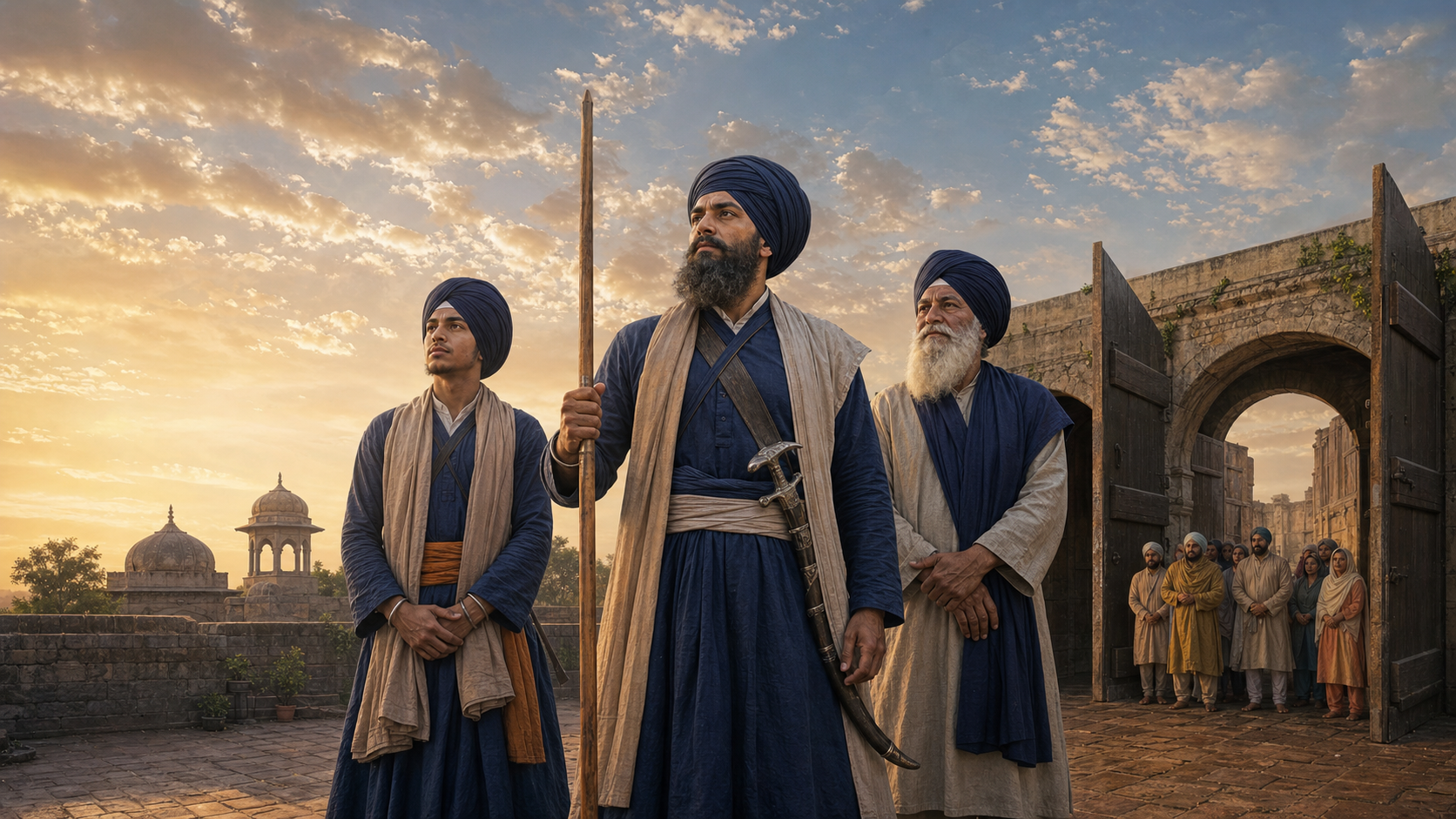
You may have met Sikh martial language through a slogan, a photograph of shastar, a Gatka display, or an argument about politics. Each can reveal something, but none by itself answers the question a serious reader is asking: what makes courage Dharmic rather than merely forceful?
Start with the authority that governs the warrior. In the Sikh tradition, martial capacity is not sovereign over morality, and the individual ego is not sovereign over either. Courage becomes meaningful when it answers to the Timeless, accepts discipline, protects dignity and refuses both cowardice and domination.
Sovereignty begins with the authority above the self
The invocation Akal Sahae places divine assistance at the beginning of action. That order matters. It reminds you that strength, office, popularity and even personal conviction remain limited. Akal Purakh does not become an ornament attached to a decision the ego has already made.
This reverses a common modern assumption. Freedom is not simply the absence of a master; it is freedom from lesser masters. Fear can master you. So can rage, prestige, group approval or the desire to humiliate an opponent. Sikh sovereignty asks whether any of these has quietly occupied the place that belongs to the Timeless.
That inward test does not make sovereignty private or politically inert. A person who can govern fear is harder to coerce. A community that locates its dignity beyond the permission of rulers can preserve worship, memory and mutual obligation under pressure. Yet this is not permission to call every political preference sacred. Divine sovereignty judges worldly power; it does not automatically endorse whoever speaks most loudly in its name.
When you hear a claim made in the language of Sikh sovereignty, apply three tests:
- Authority: Is the claim answerable to a moral and spiritual standard, or does it make the speaker’s will final?
- Purpose: Does it protect freedom, dignity and responsibility, or merely seek dominance over another group?
- Discipline: Does it demand restraint and sacrifice from its own side, or only obedience and sacrifice from others?
Key takeaways
- Sikh sovereignty begins with allegiance to Akal Purakh, not the unrestricted sovereignty of the individual ego.
- Courage is not aggression. It is disciplined action taken despite fear and within moral limits.
- Historical memory should sharpen judgement, not supply costumes for present anger.
- Gatka carries martial inheritance through supervised practice, control and repeated correction.
- Spiritual authority and temporal responsibility belong together, but neither turns every contemporary political demand into a religious command.
Courage follows a moral sequence
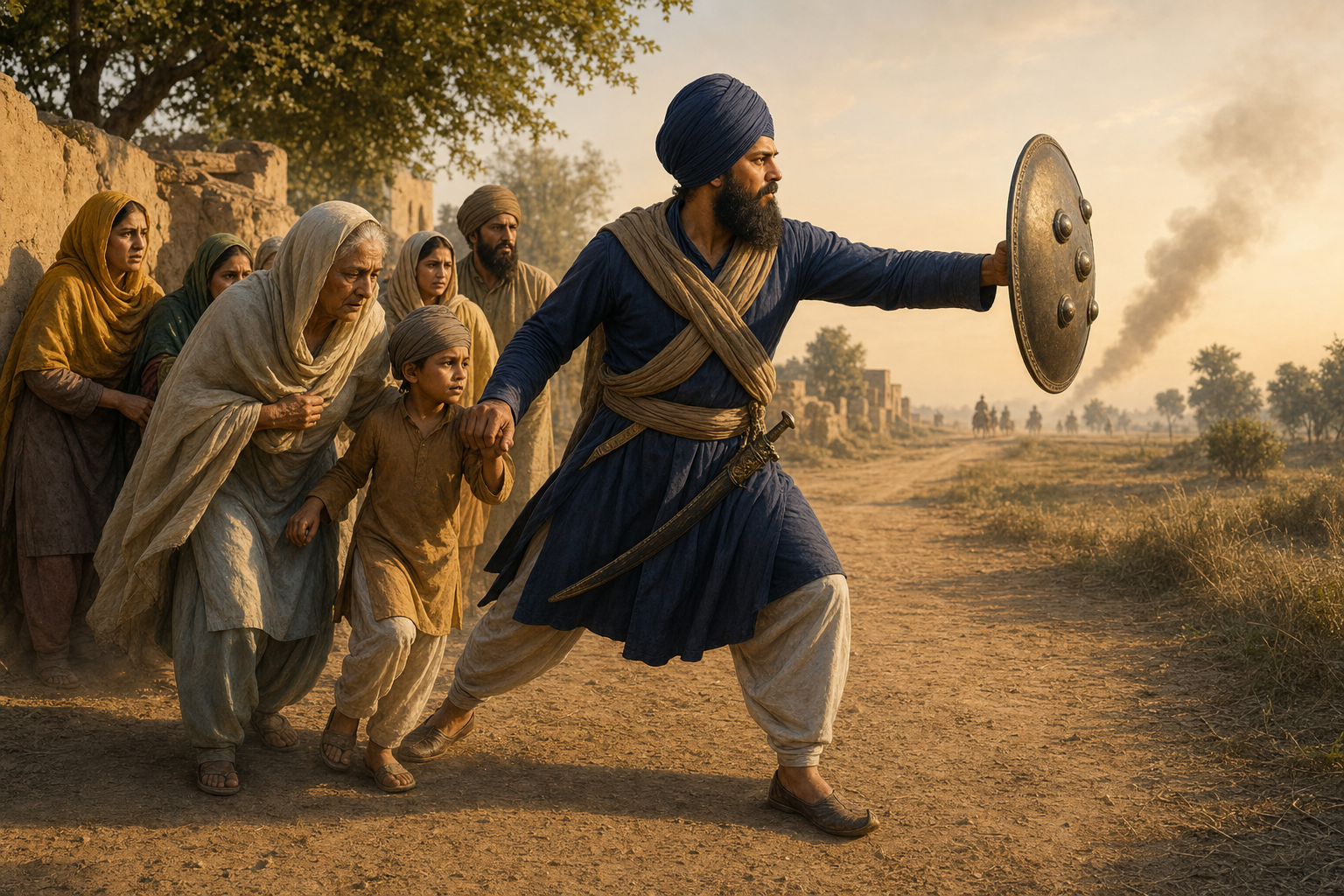
Anger is immediate; courage is ordered. Anger tells you that intensity proves sincerity. Courage asks what duty requires after the intensity passes. This distinction is especially important online, where the quickest denunciation can look braver than patient service, preparation or protection.
Before calling an action courageous, walk it through a moral sequence:
- Govern the first impulse. Do not let panic, insult or the excitement of belonging make the decision for you.
- Name the duty. State what must be protected: a person, freedom of worship, truthful memory, communal safety or another concrete good. If you cannot name the protected good, you may be defending pride.
- Choose proportion. Use no more force, pressure or public accusation than the duty actually requires. Capacity without proportion becomes intimidation.
- Accept responsibility. A courageous person does not disappear when consequences arrive. Ask who could be harmed, what repair may be necessary and whether you are prepared to answer for the decision.
Historical consciousness strengthens this sequence when memory is used as an examination rather than a costume. Before invoking a past struggle as an analogy for the present, ask what pressure people faced, what duty they were trying to preserve, what restraints shaped their response and what their choices cost. If you cannot answer those questions, you do not yet know enough to recruit that memory into today’s dispute.
This is how you distinguish remembrance from grievance collecting. Remembrance makes your own obligations heavier. Grievance collecting makes only the opponent’s guilt heavier. The first can form courage; the second usually feeds resentment.
Gatka keeps martial inheritance embodied
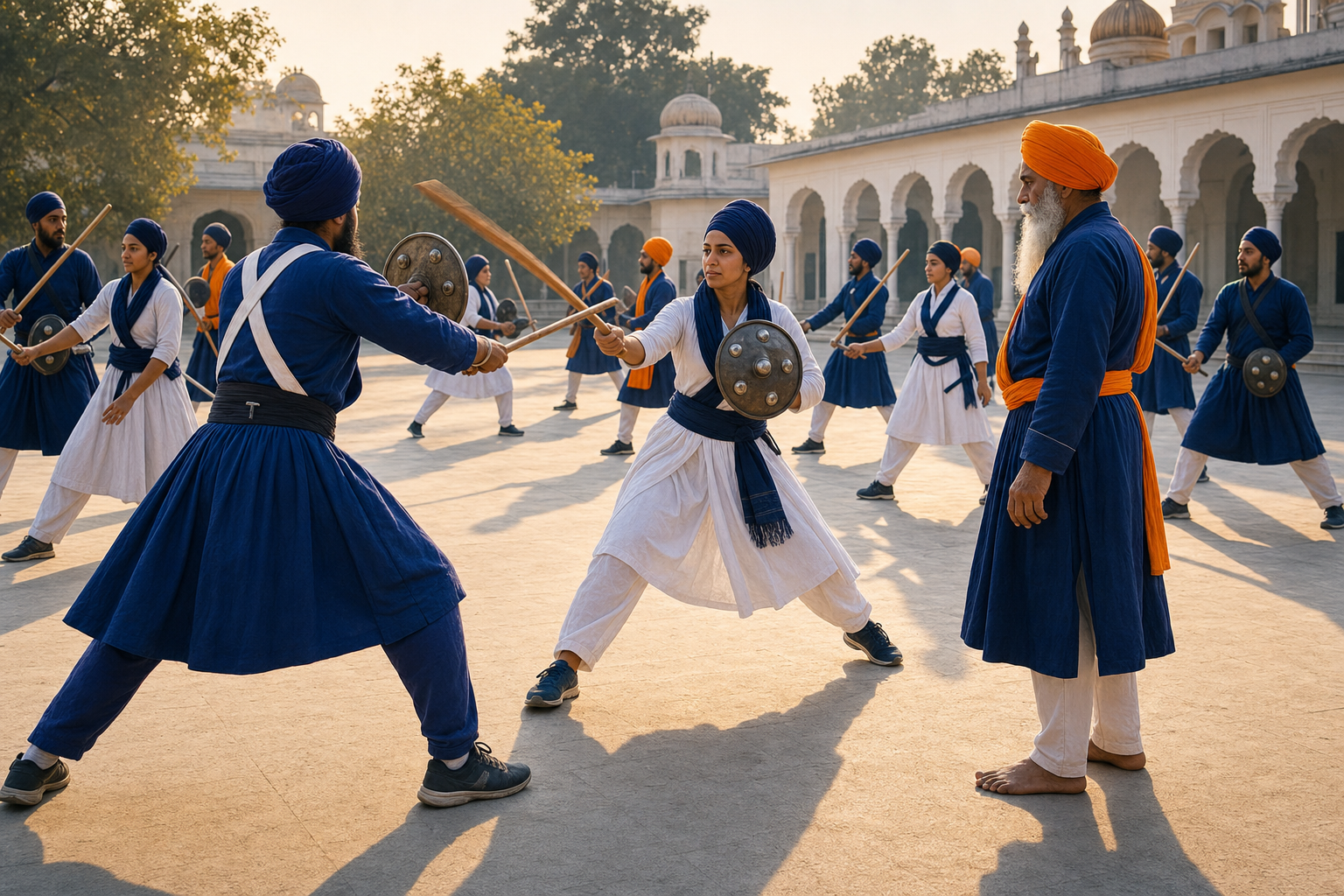
Martial ideals become easy to romanticise when they remain verbal. Gatka subjects posture, distance, timing, awareness and emotional control to practice. Your body exposes what a slogan can conceal: impatience, poor judgement, panic under pressure and the tendency to use more force than necessary.
The tradition also remains capable of organised public excellence. Zora Singh of Baba Fateh Singh Akhara in Woolwich won a title at the 12th UK Gatka Championship. A championship does not define Sikh sovereignty, but competition can make preparation, composure and technical control visible. An akhara gives inherited practice a living setting in which claims of skill must survive instruction and correction.
If you want to learn Gatka, do not choose a class solely because its demonstration looks dramatic. Observe a session and ask practical questions:
- Does the instructor distinguish demonstration, competition and preparation for real danger? These activities have different aims and should not be presented as interchangeable.
- Are footwork, distance and controlled movement taught before students are pushed toward speed or contact?
- Are training weapons inspected, protective requirements explained and contact rules enforced consistently?
- Does correction address temperament as well as technique, especially loss of control when a student feels embarrassed or pressured?
- Is there a clear conduct standard against bullying, communal hatred and reckless displays outside training?
- If children train there, are supervision and safeguarding rules visible rather than merely assumed?
Do not imitate weapon routines from short videos or begin with live blades and improvised equipment. Even a training weapon can injure the eyes, hands or head. Begin under competent supervision, use the equipment required by the akhara and tell the instructor about any limitation that affects safe participation.
Keep a simple practice record. After training, note where you lost balance, rushed distance, stopped observing or allowed frustration to change your technique. Add one ethical question: did practice make you more controlled outside the akhara? If technical confidence grows while restraint shrinks, the training is drifting away from its proper moral centre.
Read Sikh martial language without flattening it
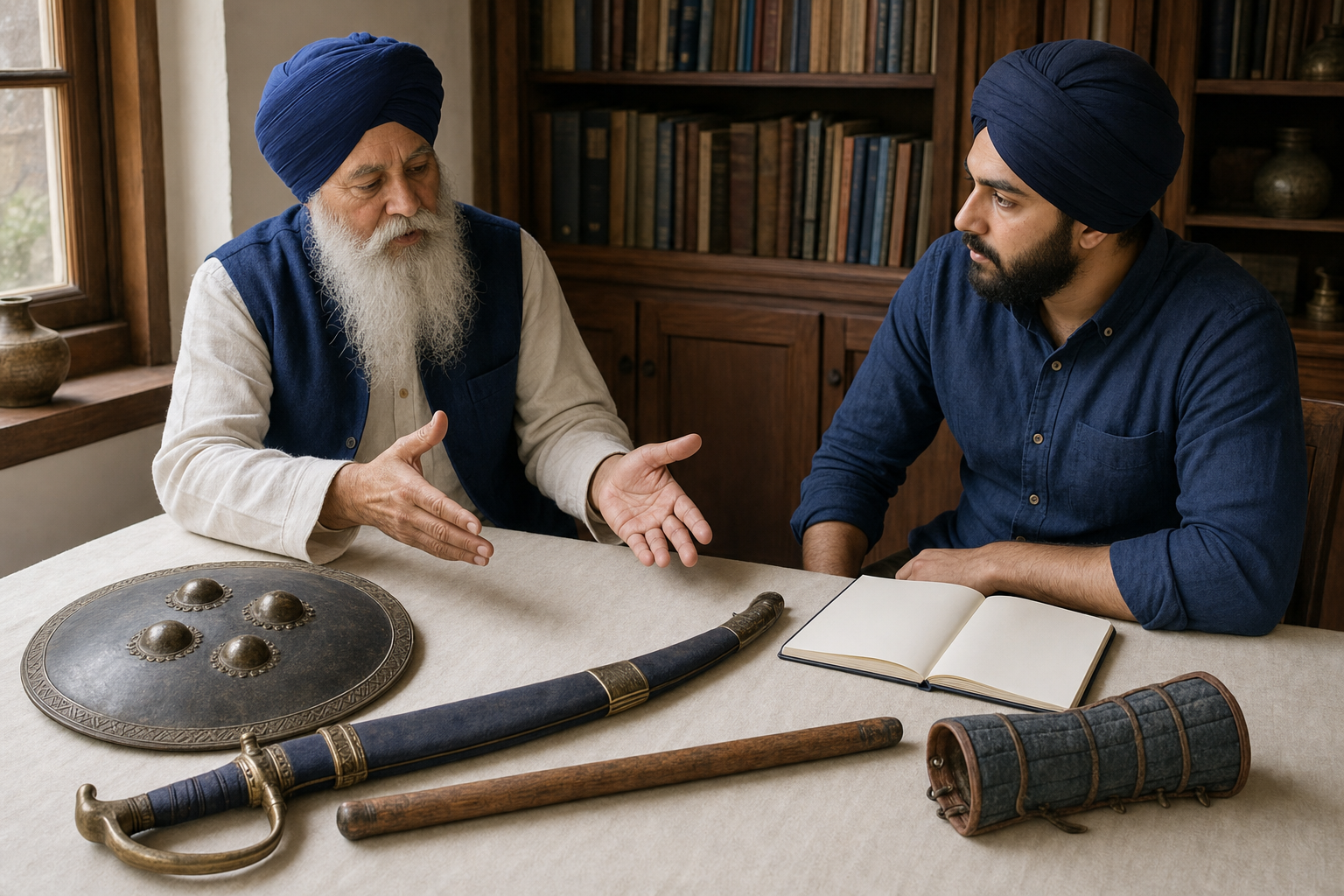
Readers formed by other Dharmic traditions will recognise several shared questions. When does restraint become abandonment of the vulnerable? How can power remain answerable to Dharma? How does a spiritual community resist coercion without imitating the coercer? Those common questions make serious conversation possible, but they do not make every tradition’s answer identical.
Terms such as Akal Takht, miri-piri and sant-sipahi belong to a Sikh grammar of authority and responsibility. Learn that grammar before replacing each expression with the nearest Hindu, Buddhist, Jain, secular or Western political equivalent. A rough translation can help you enter a subject; it should not be allowed to erase the subject.
Three interpretive errors appear repeatedly:
- Reducing the martial tradition to weapon imagery. Shastar without discipline becomes display, and display without service turns inherited symbols into accessories.
- Allowing current politics to swallow the religious meaning. If sovereignty means only a position on a modern territorial dispute, its demands upon conscience, conduct and communal responsibility disappear.
- Making sovereignty entirely inward. Personal self-control matters, but a tradition concerned with temporal responsibility cannot be reduced to private calm while injustice is imposed on others.
Do not force a false contest between ahimsa and courage either. Dharmic traditions do not all define or apply non-harm in precisely the same way. The useful question is not whether one slogan defeats another. Ask what forms of restraint, protection and accountability each tradition requires when innocent people face coercion. Precision produces understanding; borrowed labels usually produce caricature.
Turn the inheritance into a rule of conduct
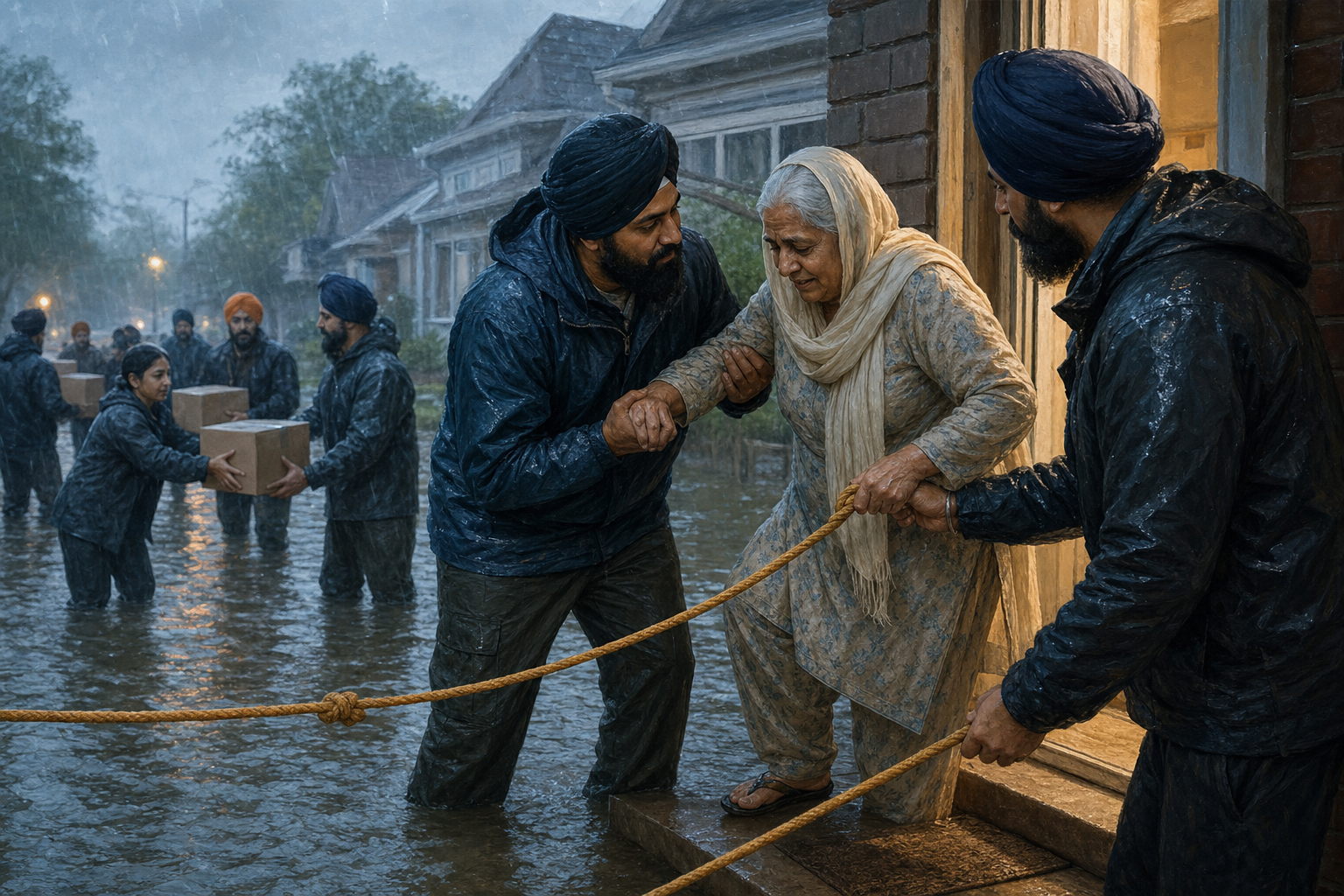
You do not need a crisis to practise sovereign courage. Choose one decision in which fear, anger or the need for approval is exerting too much control. Write down the duty involved, the limit you will not cross and the consequence you are prepared to accept. That small exercise reveals whether your principles can govern an actual choice.
Then connect conviction to an embodied discipline. That may mean entering a reputable Gatka akhara, improving physical readiness under safe instruction, maintaining a regular spiritual practice or doing seva that places your strength at another person’s disposal. The essential movement is from admiration to formation.
When you next encounter martial imagery or a political slogan presented as Sikh courage, pause before applauding or condemning it. Ask what authority governs it, whom it protects, what restraints it accepts and what responsibility its advocate will bear. Those questions will not settle every dispute, but they will keep sovereignty, courage and martial inheritance joined to the discipline that gives them meaning.
References
- SikhNet – The Sikh Invocation of Divine Sovereignty, Courage, and Historical Consciousness
- SikhNet – Zora Singh of Baba Fateh Singh Akhara