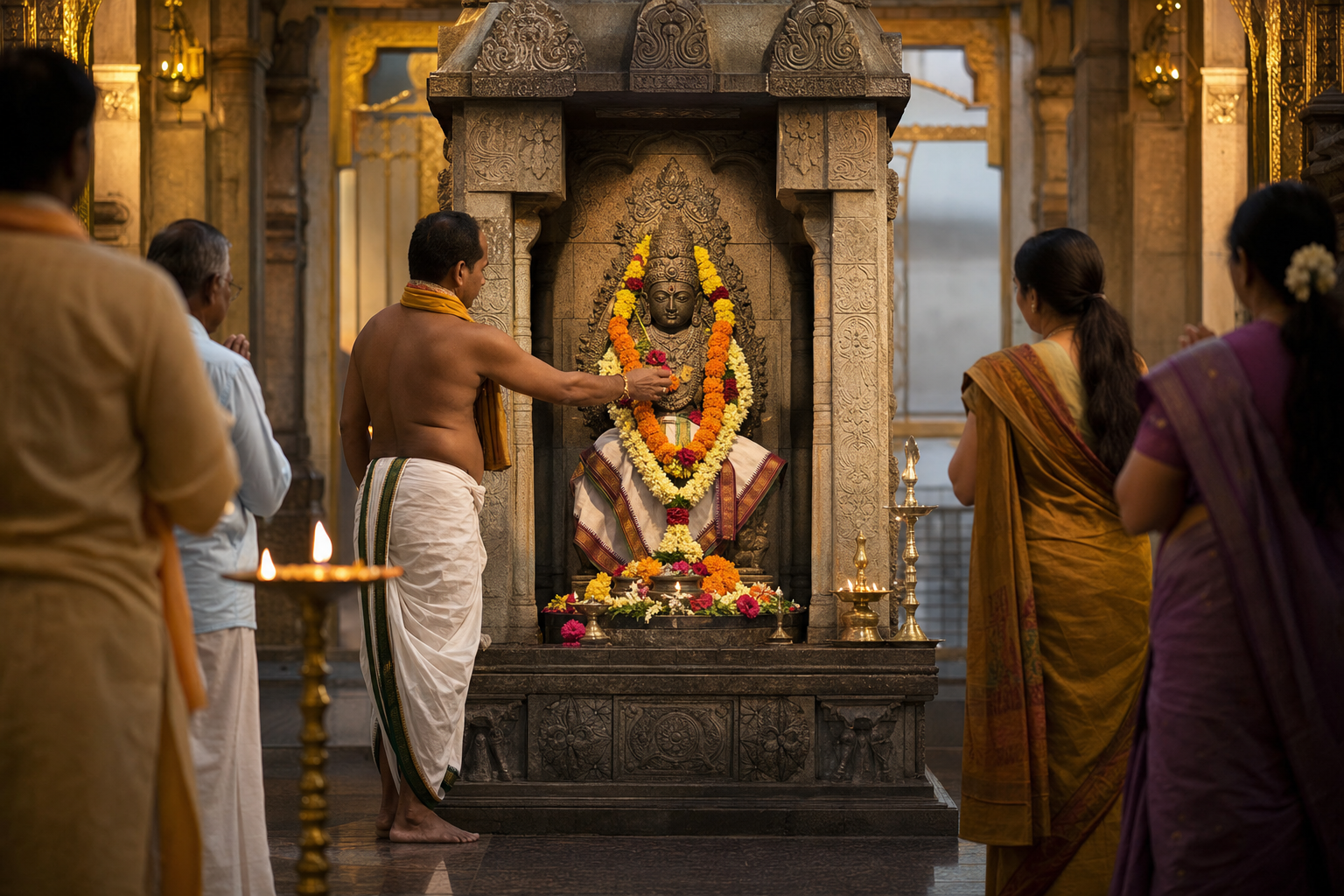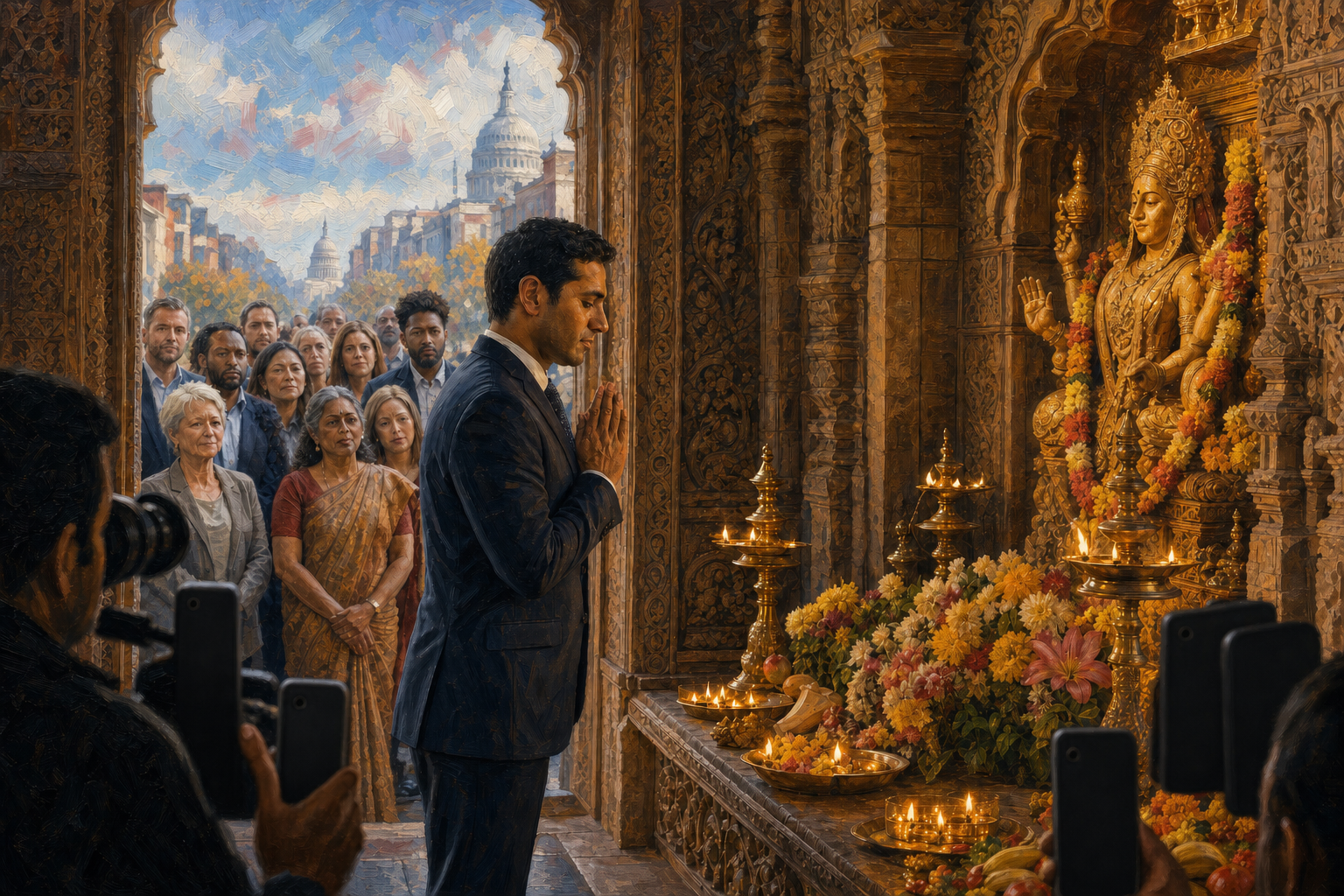
A campaign video shows a Hindu candidate praying in a temple. Within hours, people are talking about murtis, Sanskrit chants and whether the candidate is a “real American” instead of examining the candidate’s record. If you encounter that pattern, the question is not whether you should support the candidate. The question is whether political criticism has become a religious test.
You need a standard that works even when the candidate belongs to a party you oppose. That means separating legitimate scrutiny from religious prejudice, correcting false claims without turning every disagreement into an accusation, and keeping a viral outrage cycle from dictating your judgment.
Key takeaways
- A Hindu candidate’s policies, conduct and use of power deserve the same scrutiny as anyone else’s. Faith is neither a disqualification nor an exemption from accountability.
- Criticism crosses into Hinduphobia when Hindu worship, ancestry or symbols are used as evidence of moral inferiority, disloyalty or unfitness for office.
- Article VI and the First Amendment supply the civic baseline: public office cannot be conditioned on professing an approved religion, and religious exercise is constitutionally protected.
- Terms such as puja, murti and darshan should be explained accurately. Replacing one caricature with an oversimplified account of Hinduism will not help.
- A widely shared insult proves that content is circulating. It does not, by itself, establish what voters, a political party or an entire religious community believe.
- The strongest response documents the conduct, names the prejudice precisely, gives a short factual correction, invokes a universal principle and returns the discussion to public policy.
The decisive line is civic exclusion, not political disagreement
Not every criticism of Hinduism is Hinduphobia. People may disagree with Hindu metaphysics, question a religious institution, challenge a public statement made by a Hindu organization or investigate how a candidate’s convictions affect policy. A plural society protects those arguments too. Calling every uncomfortable question bigotry would weaken the term and make genuine discrimination harder to identify.
The line is crossed when the candidate’s Hindu identity is converted into a presumption of civic or moral inferiority. In the Ohio controversy involving Vivek Ramaswamy, a temple scene with his father was attacked through familiar labels about paganism, idols and supposedly authentic American identity. The implied argument was not that a particular policy was wrong. It was that visibly Hindu worship made the worshipper less fit to belong or govern.
You can evaluate a questionable statement with four tests:
<!– wp:list {