
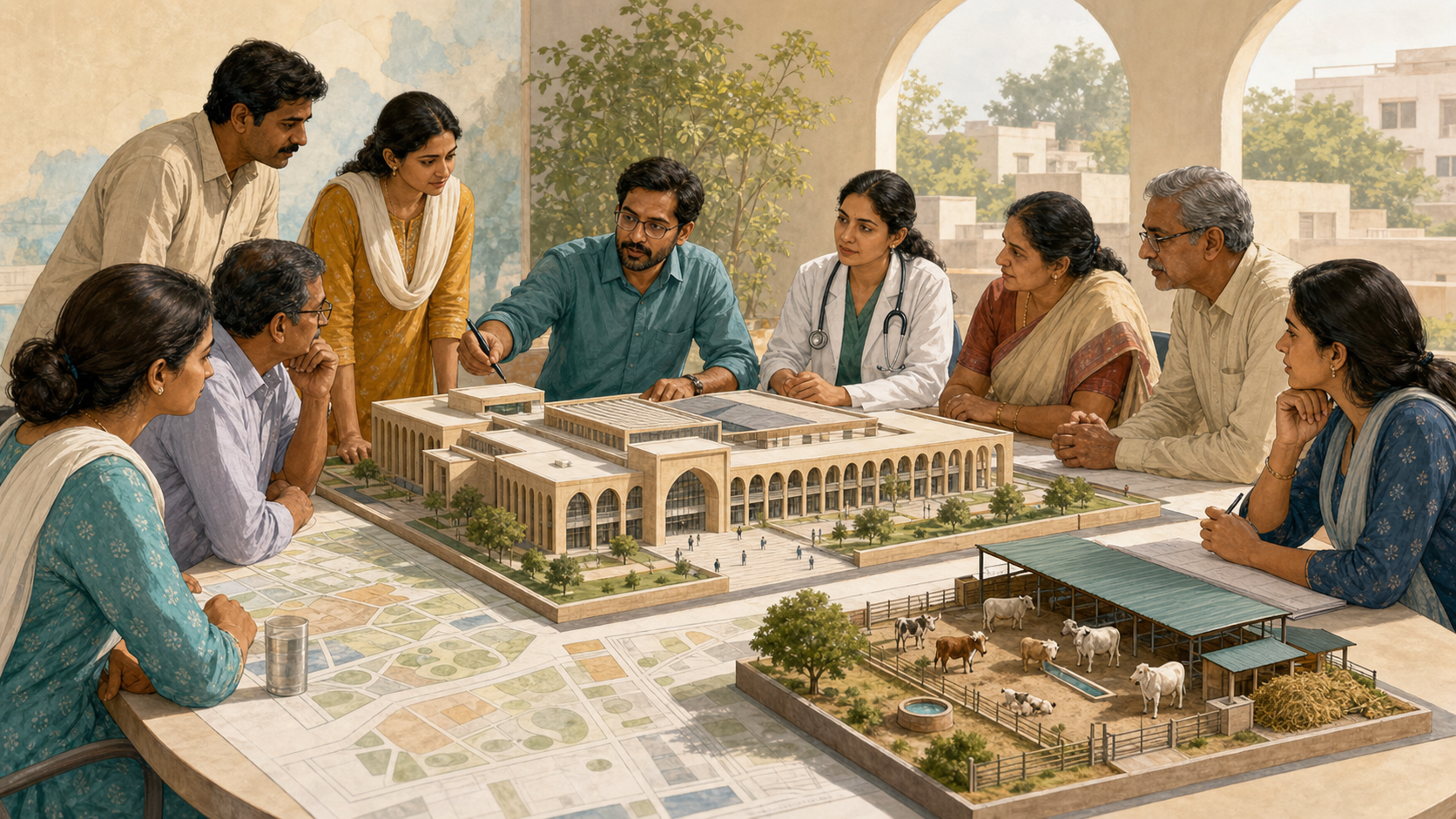
If you support gau seva, the demand to convert Ghaziabad’s Haj House into a gaushala may sound straightforward. But a slogan cannot tell you whether cattle would be safe there, whether the conversion would be lawful, or whether it would solve the district’s actual animal-welfare problem.
You do not have to choose between Hindu conviction and constitutional fairness. You can insist on compassionate cow protection while demanding evidence, equal treatment and responsible use of public property. Here is the standard by which the proposal should be judged.
Key takeaways
- No responsible decision is possible until the property’s ownership, endowment status and permitted land use are disclosed.
- A real gaushala plan must specify animal capacity, veterinary care, quarantine, fodder, water and waste management.
- Ghaziabad should compare conversion with a purpose-built peripheral shelter and expanded off-season civic use of the Haj House.
- Residents should ask for written assessments, public consultations and a reasoned decision rather than supporting or opposing a label.
Establish what the government can legally change
Although the Haj House has been described as a state-run facility, administration and ownership are not the same thing. The land could be held directly by the government, governed by a special endowment, or subject to conditions that limit how it may be used. That distinction must come before arguments about conversion.
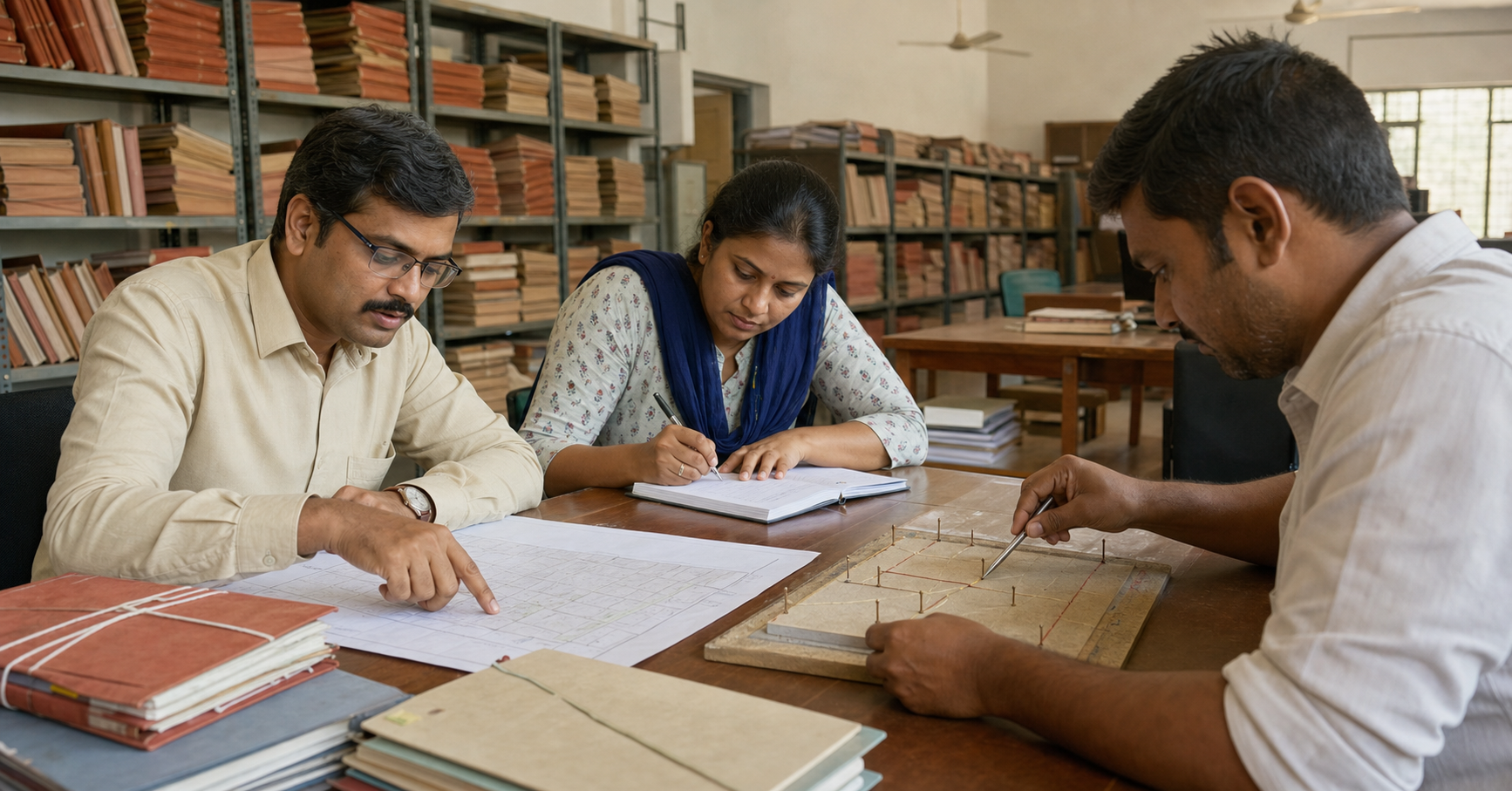
Ask the district administration and Ghaziabad Development Authority to publish four records:
- The title record showing who owns the land and building.
- Any deed, endowment condition or legal restriction attached to the property.
- The sanctioned land use, building approval and present occupancy permission.
- The formal conversion proposal, including the authority that would approve and fund it.
If the government owns the property outright, repurposing still has to meet Article 14 and the religious-freedom framework of Articles 25 to 28. The administration should identify a legitimate public purpose and apply a standard that would remain fair if the communities involved were reversed. Neutrality must govern both the existing pilgrimage function and the proposed cow-protection function.
If the property is waqf, changing its fundamental purpose is not an ordinary administrative adjustment. The Waqf Act, 1995 places controls on transfer and change of use, and the State Waqf Board may have a necessary role. Acquisition or diversion for a public purpose can introduce further safeguards under the 2013 land-acquisition law. The exact route depends on the title documents, so confident claims made before their disclosure deserve caution.
Property law is only the first gate. The GDA master plan, municipal health rules, fire requirements and environmental controls independently determine whether livestock use belongs at this site. A political resolution cannot substitute for those approvals.
Test the gaushala as an animal-welfare project
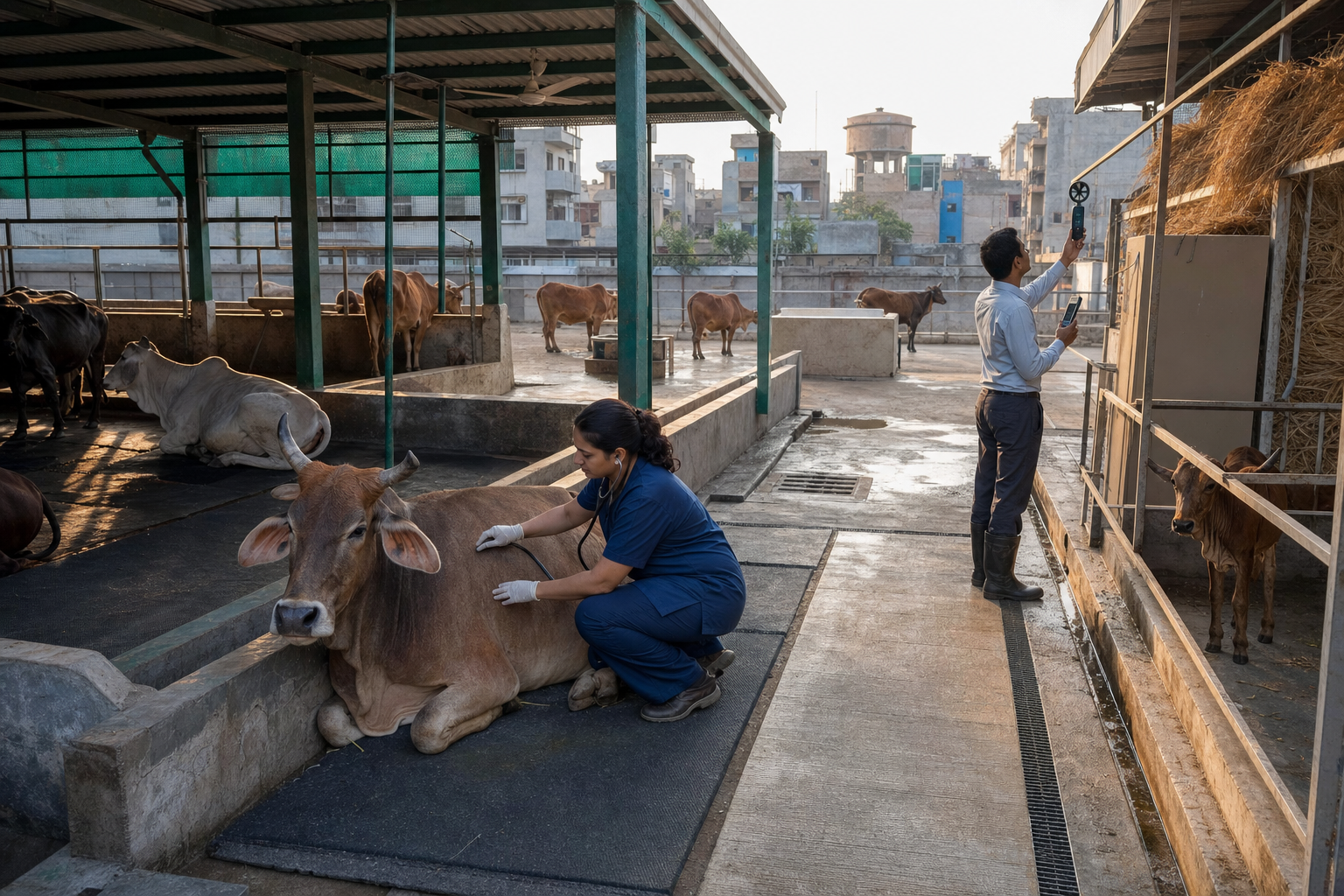
A gaushala is not simply a building in which cows can be kept. For a dharmic reader, ahimsa requires attention to the animals’ living conditions, not merely the symbolism of the address. A conversion plan should therefore answer each of these questions before anyone assigns it a capacity:
- Does the site provide adequate floor area and ventilation for the proposed number and condition of cattle?
- Where will new, sick or injured animals be quarantined and isolated?
- Who will provide round-the-clock veterinary coverage, and how will emergency access work?
- How will fodder and water reach the site without creating unsafe traffic or unreliable supply?
- Where will manure and urine go, and will the system use safe composting or biogas rather than shifting the burden to nearby residents?
- What provisions will protect aged and infirm cattle and control flies, mosquitoes and other disease vectors?
The Prevention of Cruelty to Animals framework and urban health safeguards make these operational questions central. A plan that lacks a veterinary roster, supply route and waste-flow design is not yet a cow shelter plan. It is an announcement.
The surrounding locality matters as much as the structure. Dense mixed-use areas can make feed delivery, cattle movement, sanitation and disease control harder. A purpose-built shelter on suitably zoned land near the urban periphery may allow better sheds, quarantine areas, fodder storage and manure processing. That alternative should not be presumed superior; it should be costed and inspected alongside the conversion proposal.
Supporters of conversion should welcome this test because it distinguishes lasting gau seva from symbolism. Opponents should accept the same discipline by acknowledging any documented shortage in humane shelter capacity and supporting a workable remedy elsewhere.
Compare public benefit instead of forcing a binary choice
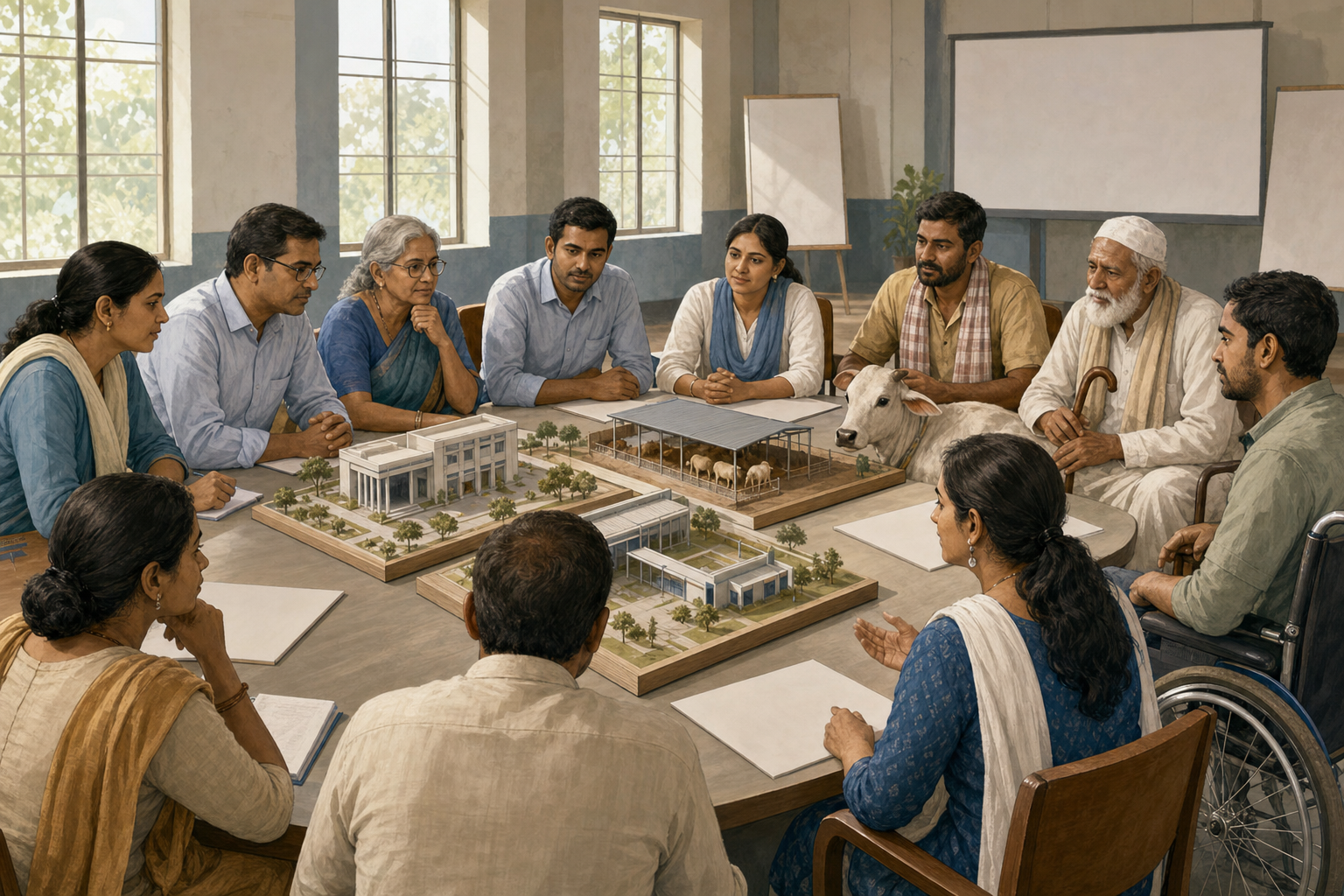
Ghaziabad needs two sets of facts that have not been established merely by making the demand: how intensively the Haj House is used, and how large the district’s shortfall in suitable cattle shelter actually is. If someone calls the building underused, ask for usage records covering a complete operating cycle. If someone says a new gaushala is urgently required, ask for current shelter capacity, occupancy, cattle condition and unmet demand.
A published needs assessment should compare at least four choices:
- Retain the present Haj-related function without additional uses.
- Retain that function while opening the facility during non-peak periods for services available to all residents.
- Convert the site into a gaushala if the legal and technical tests are satisfied.
- Develop a purpose-built gaushala on suitable peripheral land while improving the Haj House’s year-round civic value.
Each option should be assessed against the same criteria: people and animals served, capital and recurring costs, legal feasibility, public-health effects, traffic, sanitation, environmental impact and the ability to reverse the decision if needs change. Empty cells in that comparison should remain empty until evidence exists; speeches should not fill them.
The second and fourth options deserve serious examination because the objectives need not cancel each other. During non-peak periods, public facilities can support skill training, examinations, disaster-relief staging and short-duration lodging. Access rules, schedules and costs should be published so that such use is genuinely open rather than selectively promised.
At the same time, Hindu, Jain, Sikh and Buddhist seva organizations can help build a transparent district cattle-care network around a properly located shelter, veterinary services, fodder banks, composting and biogas. Their participation should supplement accountable municipal management, not relieve public authorities of measurable duties.
Turn your position into an auditable civic demand
If you live in Ghaziabad or belong to an organization engaging with the dispute, move the discussion from identity to records. Use this sequence:
- Submit a written request to the district administration and GDA for the title, sanctioned land use and complete proposal. If the records are not voluntarily released, seek them through applicable transparency procedures, including RTI.
- Request district-wide figures for existing gaushala capacity, occupancy, veterinary coverage and unmet cattle-shelter need, along with Haj House usage and operating costs.
- Ask for a joint feasibility note from planning, municipal health, animal husbandry, fire and pollution-control authorities.
- Seek a structured consultation with local residents, animal-welfare organizations, the relevant Haj authority and civic or interfaith groups. Ask that submissions and minutes be published.
- Demand a final order that answers the legal, financial and welfare evidence point by point, including why rejected alternatives were not chosen.
Keep four questions at the center of every discussion: Who owns the property? What public need is documented? How many people or animals will materially benefit? Who is accountable if the chosen use fails? Those questions make it harder for any side to replace governance with communal provocation.
A pro-dharmic position should be firm about cow protection and equally firm about truth, lawful conduct and non-injury. Support the option that can survive a title audit, veterinary inspection, public comparison and open scrutiny. That is how devotion becomes durable seva rather than a temporary controversy.