

You may know exactly how you want to behave: steady under pressure, restrained in speech, faithful to duty, and useful to others. Then fatigue, distraction, or anger arrives, and those values suddenly feel distant.
That gap isn’t closed by collecting more teachings. It closes when a remembered truth is joined to a chosen restraint and then tested in service. This is the practical relationship between tapas, remembrance, and character formation.
Tapas is not a contest in suffering
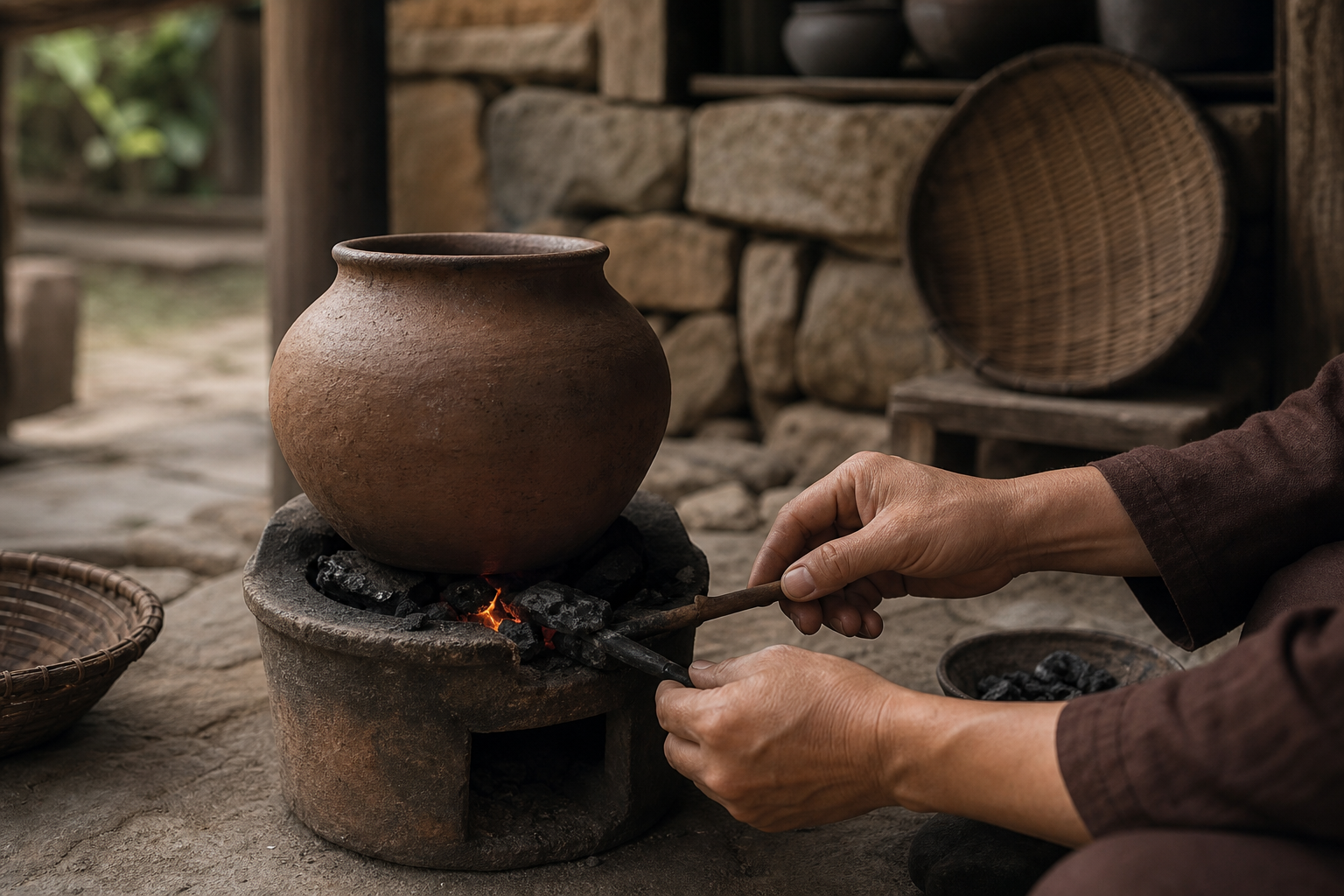
Tapas carries the sense of heat: the heat through which an undisciplined tendency is exposed and transformed. In daily life, it means disciplined self-regulation through measured habits, not dramatic hardship performed for admiration.
A useful tapas places a voluntary boundary around an appetite so that more attention becomes available for dharma. It may simplify your food, regularize sleep, limit idle speech, or reduce unnecessary sensory input. The boundary should make you more dependable. If it makes you injured, contemptuous, chronically irritable, or unable to perform your responsibilities, severity has displaced discernment.
This distinction matters across Dharmic paths. Sikh practice gives priority to inward alignment through naam-simran and an ethical life grounded in seva. The point isn’t deprivation for its own sake. Restraint must free you to remember clearly, accept responsibility, and serve without demanding recognition.
Before choosing an austerity, ask three questions:
- Which duty will this help me perform more faithfully?
- Which recurring impulse am I training: distraction, appetite, careless speech, or avoidance?
- What improvement should appear in my conduct toward another person?
For your first week, choose only one lever. Keep the same rise-and-sleep window, eat more simply, observe a defined period of silence, or put a boundary around distracting media. One modest rule kept honestly forms character better than several impressive rules abandoned in private.
Remembrance tells discipline what it is for
Self-control alone can make you efficient without making you wise. Remembrance supplies direction. It returns the mind to the sacred name, the Guru’s wisdom, a vow, or a truth that should govern the next choice.
Hindu japa, Sikh simran or naam-jap, Buddhist contemplative disciplines, and Jain samayik and dhyana aren’t interchangeable practices. Each belongs to its own path and carries its own doctrinal meaning. They nevertheless share a practical insight: attention acquires moral force when it is repeatedly returned to what is worthy.
You can establish that return with a simple daily sequence:
- Choose a prayer, mantra, sacred name, or contemplative practice that belongs authentically to your tradition.
- Attach it to a dependable cue, preferably before messages and demands begin arriving.
- Practice for 12 to 20 minutes. A mala of 108 beads can give japa a tactile rhythm and measurable count.
- When attention wanders, return without irritation. Speed is not progress; steadiness is.
- End by naming one conduct intention for the day, such as patient speech, honest study, or unadvertised service.
The final step keeps remembrance from remaining a pleasant interior experience. If you remember compassion in prayer and then speak cruelly at breakfast, the practice has shown you exactly where formation is still needed. That discovery is useful. It gives tomorrow’s tapas a concrete target.
Character appears at the handoff from prayer to duty

Character isn’t the feeling you have while sitting quietly. It is the response that appears when you are interrupted, contradicted, tempted, or asked to help at an inconvenient time. Your practice has to cross that threshold.
Remembrance also extends beyond mantra. A community remembers a Guru, sant, teacher, or ancestor truthfully when the person’s virtues become recurring habits. At Gurdwara Tapiana Sahib in Shalkote, the memory of Sant Bhai Rocha Singh Ji lives through kirtan, Ardas, langar, daily discipline, hospitality, and care for people in distress. Sacred memory is preserved by conduct, not merely by admiration.
You can apply the same principle at home. Choose one person whose Dharmic character you revere. Name the virtue precisely. Avoid a vague label such as greatness; choose courage, truthfulness, restraint, hospitality, or steadfast service. Then give that virtue a recurring form.
- If you remember generosity, set a regular time to serve rather than waiting to feel generous.
- If you remember disciplined learning, protect a study period before entertainment.
- If you remember gentle speech, stop one habitual form of ridicule or gossip.
- If you remember hospitality, take responsibility for an ordinary task that makes another person’s burden lighter.
Use a short evening examination to see whether the virtue survived contact with the day. Ask where you remembered, where you forgot, and what repair is now owed. Repair may mean an apology, finishing neglected work, restoring something you misused, or returning to a duty without excuses. This is how remembrance becomes accountable rather than sentimental.
A seven-day rule you can actually keep

Don’t redesign your entire life at once. Use the next seven days to test a small rule of practice:
- Write one sentence of sankalpa: For seven days, I will remember this sacred truth, keep this boundary, and express it through this duty.
- Complete 12 minutes of remembrance before checking nonessential messages.
- Keep one tapas boundary for the entire week. Don’t add another when enthusiasm rises.
- Perform one small act of seva each day. Choose work that is actually needed, including unnoticed work.
- Review the day each evening with the three questions: Where did I remember? Where did impulse rule me? What will I repair?
- If you miss a practice, resume at the next scheduled time. Don’t compensate with punishment or abandon the rule because the streak is broken.
Students can place a mala near the study space, use a brief remembrance reset between study blocks, and keep the phone outside the first focused block. Families can share a quiet period before breakfast and undertake weekly seva together. Parents should model the discipline instead of policing it; praising consistency and character rather than outcomes alone gives a young person something deeper than marks to work toward.
At the end of seven days, evaluate effects rather than pride. Did you keep promises more reliably? Did your speech become less impulsive? Did somebody else benefit? Did remembrance return during a difficult moment? Keep the rule if it improves conduct. Reduce or revise it if it mainly produces strain, vanity, or neglect of duty.
Key takeaways
- Choose tapas that protects a real duty and trains one identifiable impulse.
- Give remembrance a fixed daily cue and a modest, sustainable duration.
- Translate every spiritual intention into conduct toward another person.
- Remember exemplars by repeating their virtues through household and community habits.
- Measure progress through reliability, restraint, repair, and seva rather than intensity.
- When you miss the rule, resume it without self-punishment.
Before bed tonight, choose one boundary and one act of service for tomorrow. Place whatever supports your remembrance where you will see it in the morning. Then let the next inconvenient moment, not the next inspiring mood, become the first test of your practice.
References
- SikhNet – Gurdwara Tapiana Sahib, Shalkote: The Sacred Tap Asthan of Sant Bhai Rocha Singh Ji in Kashmir
- The Dharma Dispatch – Sri Sridhara Swami’s Student Austerities: A Powerful Dharmic Guide for Parents and Youth