
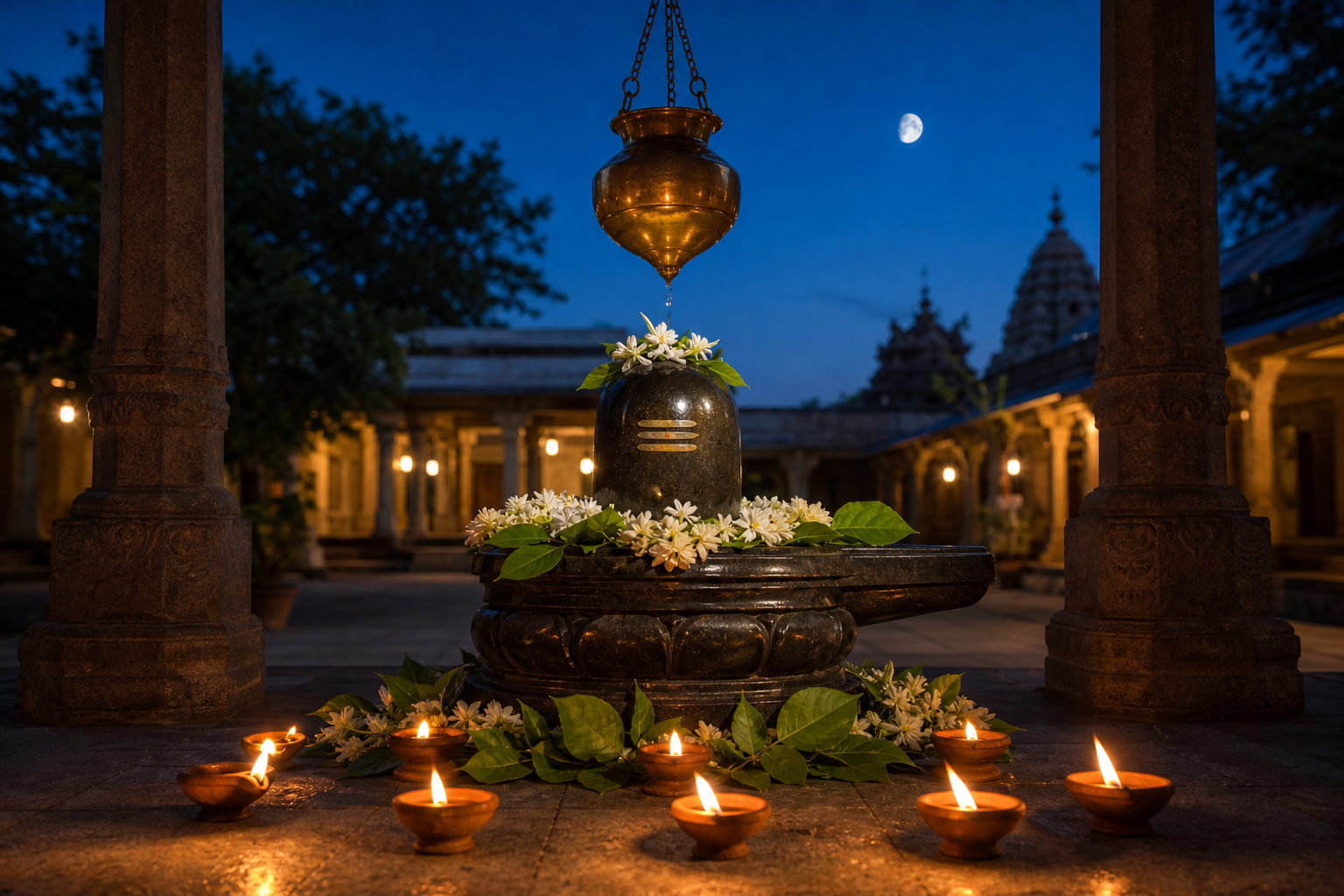
You may already know that June 27 is marked for Pradosh Vrat. The practical question is how to observe it when Panchang timings differ between cities. Keep one principle at the center: Trayodashi must be present during your local Pradosh period, so your city’s sunset matters more than a clock time copied from elsewhere.
On Saturday, June 27, 2026, Shukla Paksha Trayodashi lasts through the daylight hours in most regions and continues until 12:35 AM on June 28. It therefore remains active across local sunset, providing the essential alignment for evening Shiva worship.
Key takeaways
- June 27, 2026 is a Saturday and Shukla Paksha Trayodashi in most regional calculations.
- Trayodashi continues until 12:35 AM on June 28, placing local dusk within the tithi.
- Use your city’s sunset to determine the Pradosh window; it is approximately 72 minutes straddling sunset.
- Keep the vrata according to your capacity, with Shiva puja, a diya, bilva leaves, mantra or stotra recitation, and restraint in speech and conduct.
- Verify Nakshatra, Moon Rashi, Yoga and Karana in a reliable regional Panchang before making a formal sankalpa.
Why June 27 qualifies for Pradosh worship
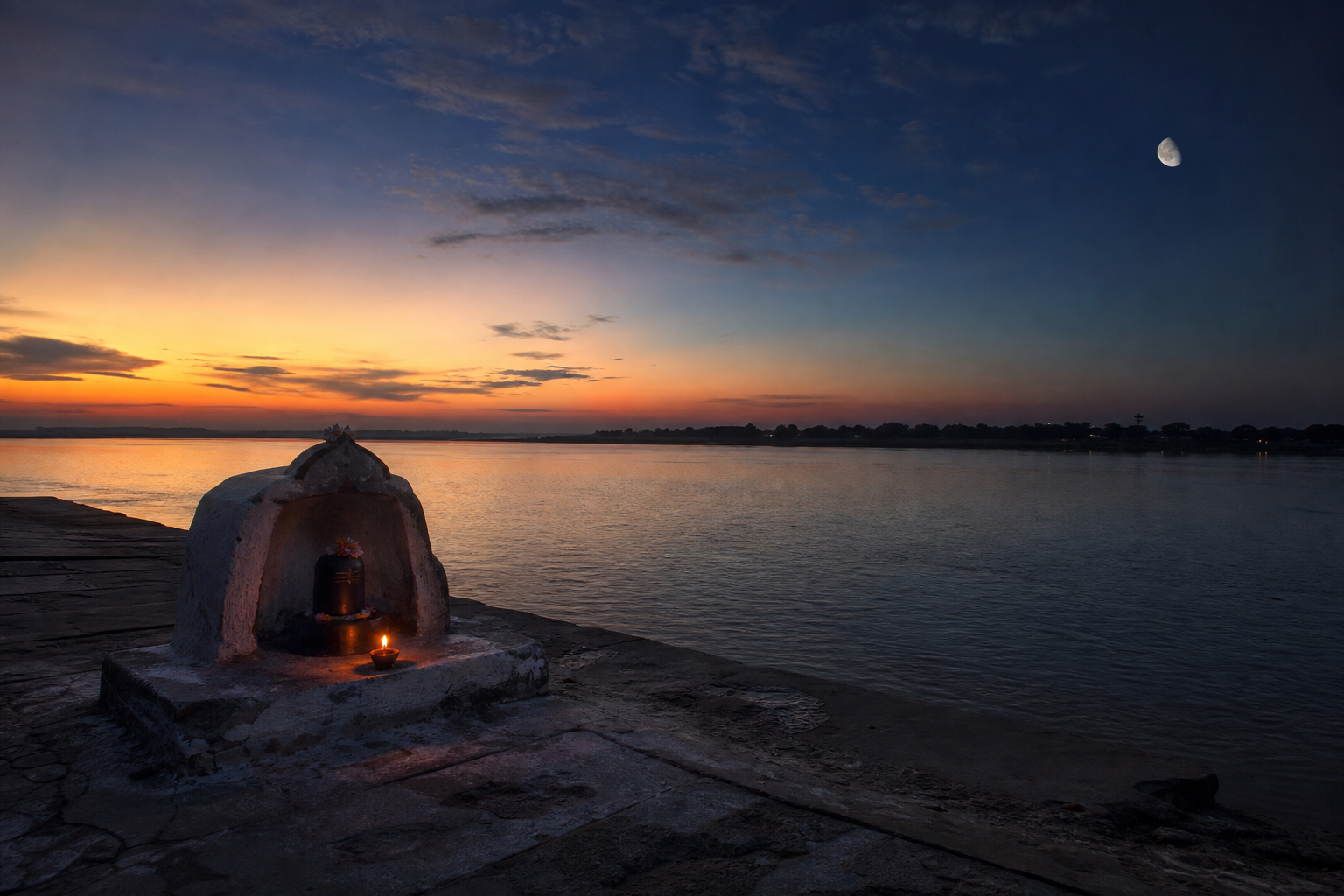
Pradosh Vrat is tied to Trayodashi at twilight, not merely to the civil date printed on a calendar. This distinction matters because a tithi does not begin automatically at midnight. It is determined by the changing angular separation of the Moon and Sun, with each tithi covering 12 degrees. Shukla Paksha Trayodashi corresponds to a separation from 156 degrees to 168 degrees.
That astronomical basis explains why the tithi can run across parts of two civil dates. It also explains small differences between Panchang systems. For June 27, the important devotional fact is that Trayodashi survives beyond sunset in most regions. Chaturdashi begins only after the reported 12:35 AM transition on June 28.
Shukla Paksha is the waxing half of the lunar cycle. It is traditionally associated with clarity, initiative and constructive activity. On its Trayodashi, that outward energy is balanced by Pradosh: a deliberate pause for Shiva worship, self-restraint and examination of your speech, thoughts and actions.
Plan the day around three useful anchor points
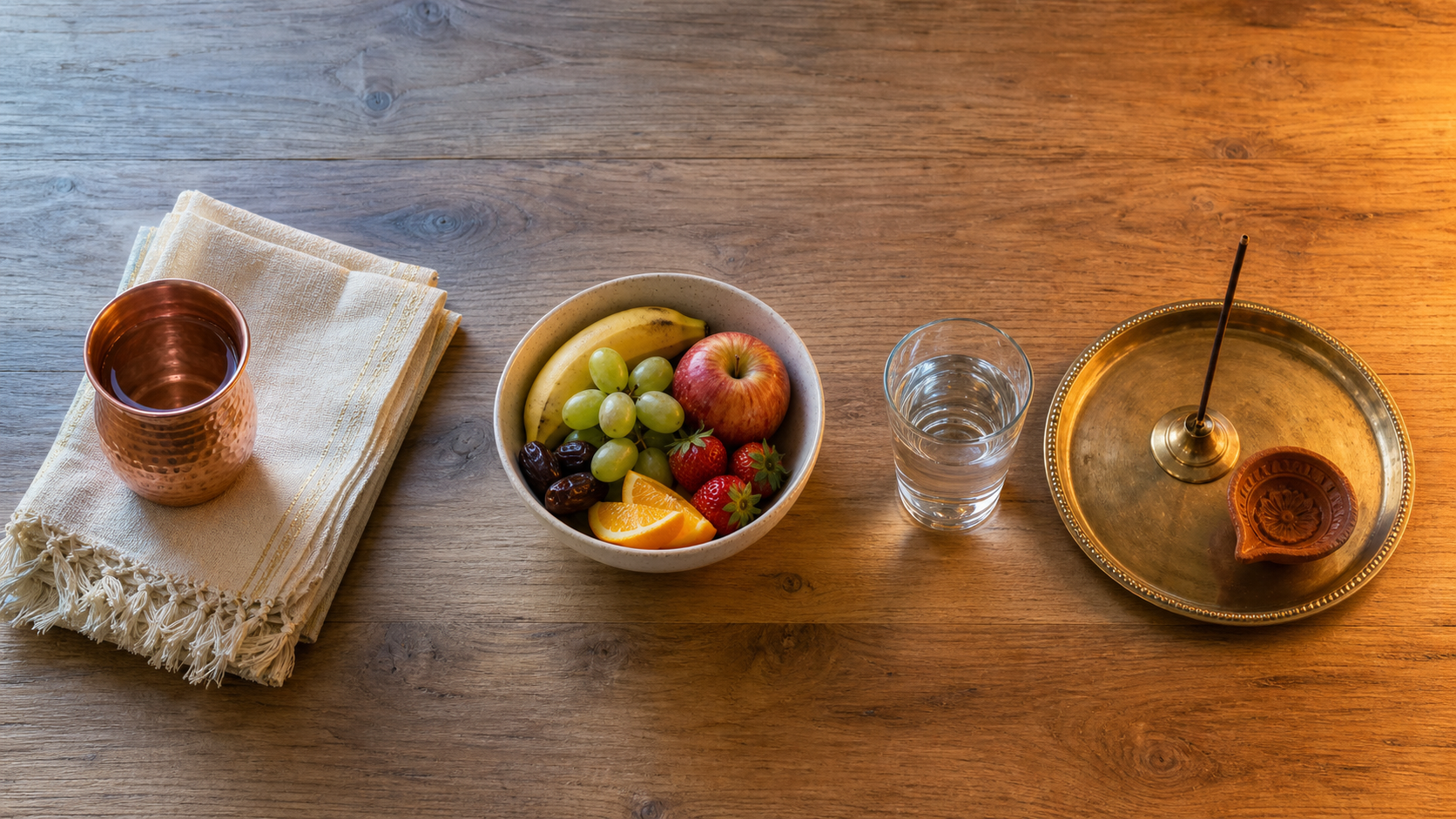
Begin with Brahma Muhurta if your routine allows it. This period falls roughly one and a half to two hours before local sunrise and suits silent meditation, study or japa. You do not need an elaborate ceremony. A settled place, a defined period of practice and a clear sankalpa for the vrata are enough to give the day direction.
Near midday, Abhijit Muhurta can support a focused decision or important task. Exact boundaries still depend on local daylight, so consult your regional calendar if timing is essential. Routine work, study, service and charity need not stop simply because the day contains caution periods.
Dusk is the devotional center. Pradosh is approximately the 72-minute period straddling sunset. Treat that as a description of the twilight span, not as a universal clock appointment. Check the locally published beginning and ending times, then have your worship materials ready before the window opens.
Calculate Saturday’s caution periods locally
Rahu Kaal, Yamaganda and Gulika Kaal are calculated from daylight rather than fixed clock hours. Take the interval from local sunrise to local sunset and divide it into eight equal segments. If one segment has length S, Saturday’s periods follow these boundaries:
| Period | Saturday segment | Local boundary | Practical use |
|---|---|---|---|
| Gulika Kaal | 1st | Sunrise to sunrise + S | Avoid launching a major new undertaking |
| Rahu Kaal | 3rd | Sunrise + 2S to sunrise + 3S | Postpone a new venture when practical |
| Yamaganda | 6th | Sunrise + 5S to sunrise + 6S | Do not choose it as an inaugural muhurta |
This calculation prevents a common mistake: using timings prepared for another city. These intervals are primarily safeguards for beginnings. They are not a reason to abandon necessary duties, ongoing work, learning or acts of seva.
Keep a simple Pradosh Vrat at home

Decide the form of your vrata in the morning. Upavasa should be kept according to your capacity and family tradition. If food restriction is unsuitable for your health, follow appropriate medical and family guidance and place the emphasis on satvik conduct, prayer and restraint. A vrata is not a test of endurance.
Before dusk, prepare a clean worship space, a diya and bilva leaves if they are available. Choose a mantra or stotra you can recite attentively. “Om Namah Shivaya” is sufficient for a quiet home observance; repetition with steadiness is more useful than rushing through a large number of practices.
During the local Pradosh window, light the diya, offer the bilva leaves and complete your chosen recitation. If your household worships together, agree on a short period when phones, errands and ordinary conversation will stop. That shared pause can make the observance workable even on a busy Saturday.
Give the inner vrata a concrete form as well. Avoid harsh speech, unnecessary argument and careless action for the day. After the evening worship, those whose practice permits it may take a simple satvik meal. The purpose is to carry the composure of puja into the way you speak and behave, not to treat the meal as the finish line.
Verify the parts of the Panchang that change by place
A complete Panchang considers Tithi, Vara, Nakshatra, Yoga and Karana. The Moon’s Rashi is also commonly consulted. Nakshatra and Rashi can change during a civil day, while Yoga and Karana may change more than once. A date-only calendar therefore cannot settle every timing question for every location.
Before a formal sankalpa, check your city and time zone, local sunrise and sunset, the exact Pradosh interval, and the Nakshatra, Moon Rashi, Yoga and Karana operating during your intended rite. Use one reliable regional Panchang for the full set rather than assembling individual values from calendars based on different locations.
Small discrepancies do not automatically mean that one calendar is defective. Drik and Vakya calculation traditions can produce different cutoffs, while Purnimanta and Amanta conventions can label the lunar month differently. For household worship, follow the established Panchang of your family, temple or lineage. For a precisely timed formal rite, confirm the local tithi and Pradosh boundaries before stating the sankalpa.
Once you have saved the correct local sunset and Pradosh window, set out the diya and bilva leaves before dusk and protect that time from other commitments. A modest observance kept attentively will serve you better than an elaborate plan begun late and performed in haste.