
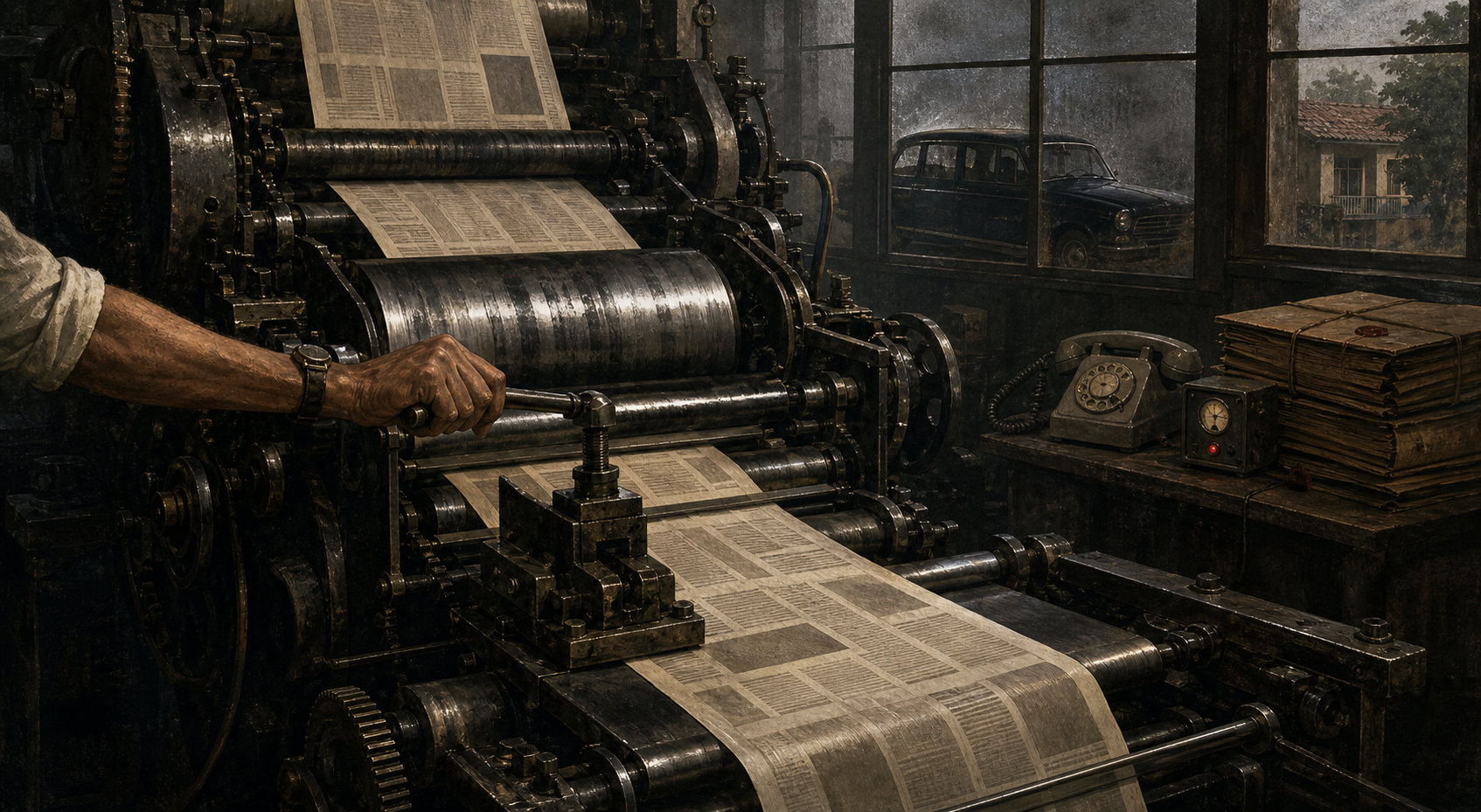
Press freedom during the 1975 Emergency cannot be understood solely as a dispute over what newspapers were allowed to print. The confrontation between Ramnath Goenka, the proprietor of The Indian Express, and Indira Gandhi’s government shows how censorship could operate through detention powers, surveillance, financial scrutiny, corporate interference and pressure on families as well as through direct control of publication.
This institutional perspective clarifies both the significance and the limits of individual courage. A newspaper may have determined journalists, but its independence remains vulnerable if the state can threaten its ownership, infrastructure or economic survival.
The Emergency changed the cost of publishing dissent
The supplied DharmaRenaissance Blog account identifies the proclamation of Emergency on 25 June 1975 as the beginning of a period marked by suspended civil liberties, detained opposition leaders, routine press censorship and extensive executive power. It reports that preventive detention under MISA contributed to an atmosphere in which liberty could be curtailed by executive action.
The democratic injury was therefore larger than the removal of particular reports or editorials. Criticism ordinarily helps expose errors, test official claims and make rulers answerable to the public. According to the source, the Emergency inverted that relationship: dissent was increasingly presented as a danger to order, while political loyalty became entangled with the meaning of order itself.
This distinction matters because formal censorship and self-censorship reinforce one another. Direct restrictions establish the boundary, but fear persuades institutions and individuals to remain well inside it. The source describes a wider culture in which officials, publishers, artists and other public figures could perceive conformity as safer or more rewarding than independence. Authoritarian control, in this reading, depended not only on state commands but also on anticipatory obedience.
The available material is a single interpretive account rather than a set of independently corroborating reports. Its allegations about particular methods of pressure should therefore be read as claims reported by that publication, while its broader value lies in showing how the different parts of a coercive system can work together.
Censorship reached beyond the printed page

The source reports that pressure on Goenka and Express Newspapers allegedly included surveillance, telephone tapping, disrupted communications, official raids, scrutiny by agencies such as the Income Tax Department and the Central Bureau of Investigation, and interference with the company’s management. It also describes power cuts, regulatory action and official notices as examples of the administrative instruments available to a government seeking compliance.
These methods illuminate a structural weakness in common accounts of press freedom. Editorial liberty depends on more than the absence of a censor at an editor’s desk. A publication must also retain access to communications, printing capacity, capital, management authority and legal recourse. If any of these can be selectively withdrawn, the state may shape editorial decisions without issuing an explicit instruction about a particular article.
Corporate governance was especially consequential. The source presents attempted changes to the board of Express Newspapers as a means of turning management influence into political and editorial leverage. Whether pressure begins with a tax inquiry, a regulatory decision or a proposed director, the underlying mechanism is similar: measures that appear administrative in isolation can collectively reduce the practical space for independent journalism.
This is why legality and legitimacy cannot be treated as interchangeable. Public agencies have legitimate functions, including taxation, investigation and regulation. The democratic question is whether those powers are applied impartially for their stated purposes or selectively to discipline criticism. Procedural language does not by itself prevent an administrative tool from becoming a political weapon.
Why Goenka and The Indian Express became a test case
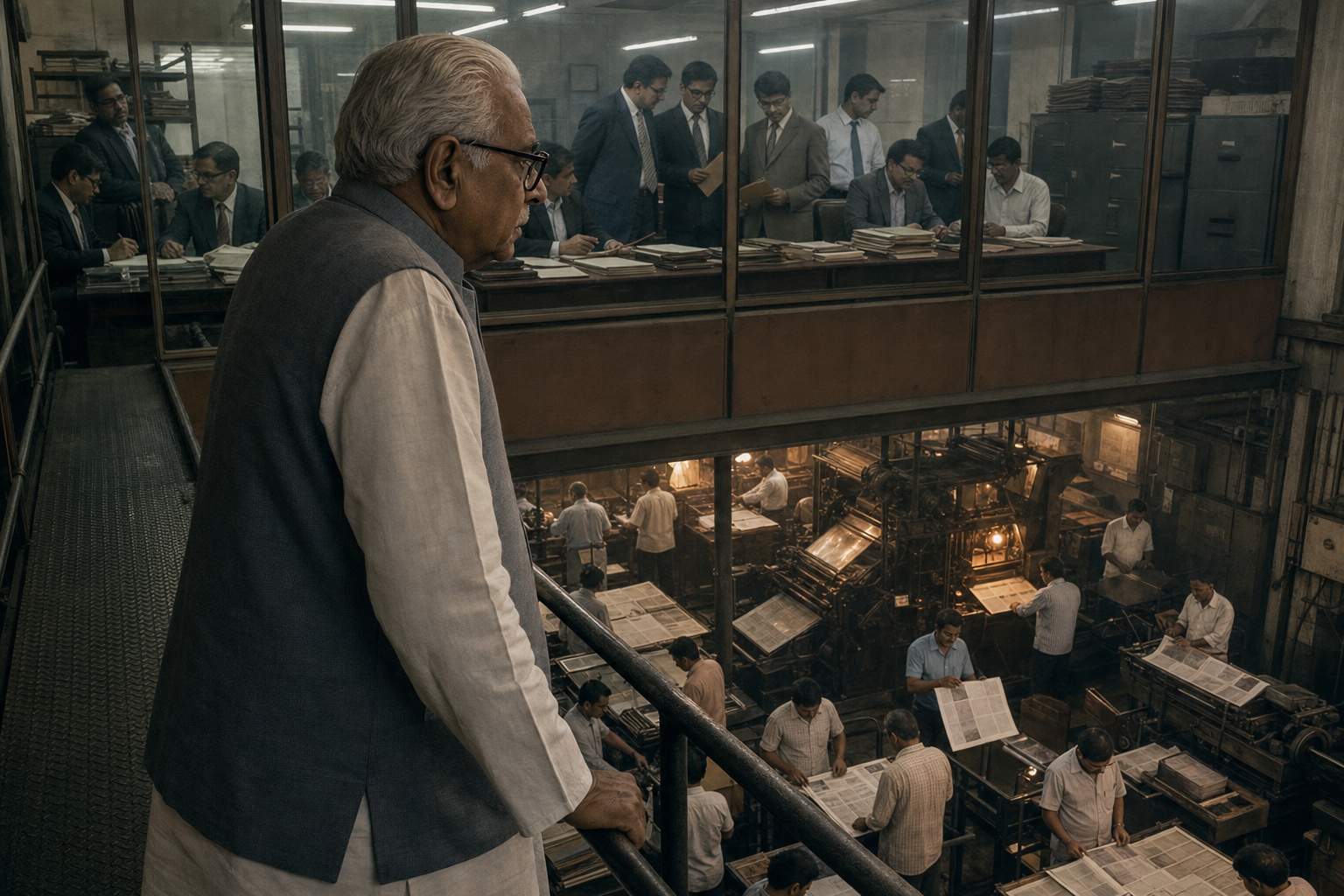
Goenka’s resistance drew force from an institutional history that predated the Emergency. The source reports that he took control of The Indian Express in 1936 and developed it with a nationalist orientation. It also links the newspaper to criticism of British rule and reporting associated with the Quit India Movement. That background encouraged readers to regard the paper as a public institution shaped by the freedom struggle, not merely as a commercial property.
The Emergency exposed an important post-independence paradox. Practices rejected when used by a colonial government could reappear under elected leadership. A press tradition formed in opposition to imperial authority now had to decide whether its commitment was to a particular political inheritance or to the continuing principle that power must remain open to scrutiny.
The conflict also developed over time rather than beginning abruptly with the Emergency. The source traces worsening tensions to political realignments following the Congress split of 1969. It portrays Goenka as moving away from the Congress establishment and supporting forces opposed to Indira Gandhi’s concentration of power. His newspaper’s independence consequently came to be viewed by the government as a political problem rather than a democratic safeguard.
There was a further irony. The account says Goenka had earlier supported Indira Gandhi’s rise after the death of Lal Bahadur Shastri, sharing an assessment among some political figures that she might be manageable. His later resistance demonstrates why press freedom should not depend on a proprietor’s confidence in any particular leader. Institutional safeguards matter precisely because political expectations can prove mistaken and former allies can become adversaries.
Resistance involved compromise, risk and institutional survival

Heroic narratives can obscure the human calculations made under coercion. The source reports threats involving Goenka’s family and associates, including the possibility that his son B.D. Goenka and his samdhi Shreyans Prasad Jain could be targeted. In an environment shaped by preventive detention, such pressure moved the dispute from corporate and editorial affairs into personal life.
The account describes an eventual tactical retreat by Goenka and cautions against treating it as uncomplicated surrender. A proprietor facing threats to relatives, employees and the newspaper itself had to weigh open defiance against the possibility of institutional destruction. Compromise in such circumstances may reveal the effectiveness of coercion, but it does not erase the resistance that preceded it or the effort to preserve a platform for the future.
This tension is central to any serious assessment of press courage. Resistance is rarely a single dramatic act. It may include publishing what remains possible, delaying a takeover, protecting staff, preserving records or keeping an institution alive until political conditions change. Conversely, survival cannot automatically justify every accommodation. The relevant questions are what pressure was applied, what alternatives remained and whether the institution retained the capacity to serve the public.
The lasting safeguard is an ecosystem of independence
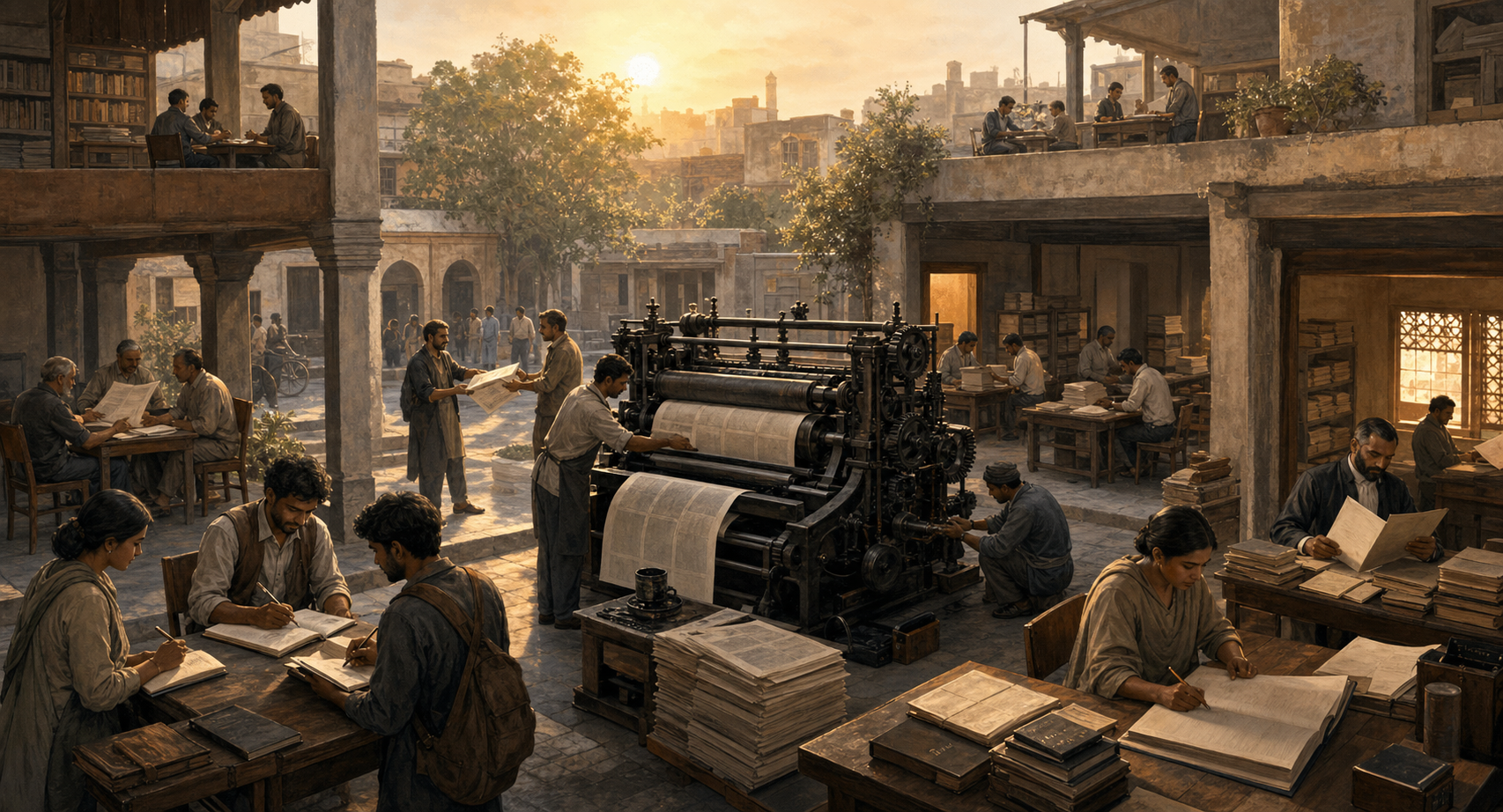
The Goenka episode suggests that press freedom is distributed across an ecosystem. Journalists and editors are visible participants, but proprietors, company boards, courts, regulators, civil servants, communications systems, advertisers and readers can all affect whether dissent reaches the public. Failure at several points can produce silence even when no single order closes a newspaper.
Key takeaways
- Press censorship should be assessed together with detention powers, surveillance, economic pressure and interference in media ownership.
- Administrative action becomes democratically suspect when public powers are selectively directed at critical institutions.
- Editorial independence requires financially and structurally resilient media organisations, not only courageous journalists.
- Personal and family pressure complicates simple judgments about resistance, compromise and institutional survival.
- Public support matters because authoritarian control grows easier when silence and conformity become socially acceptable.
The forward-looking lesson is to examine the conditions surrounding publication before a crisis becomes overt. Transparent regulation, due process, independent ownership, accountable public agencies and readers willing to defend principled disagreement make coercion harder to disguise as ordinary administration. The strongest protection for press freedom is a democratic culture that notices pressure early and refuses to equate criticism with disloyalty.