
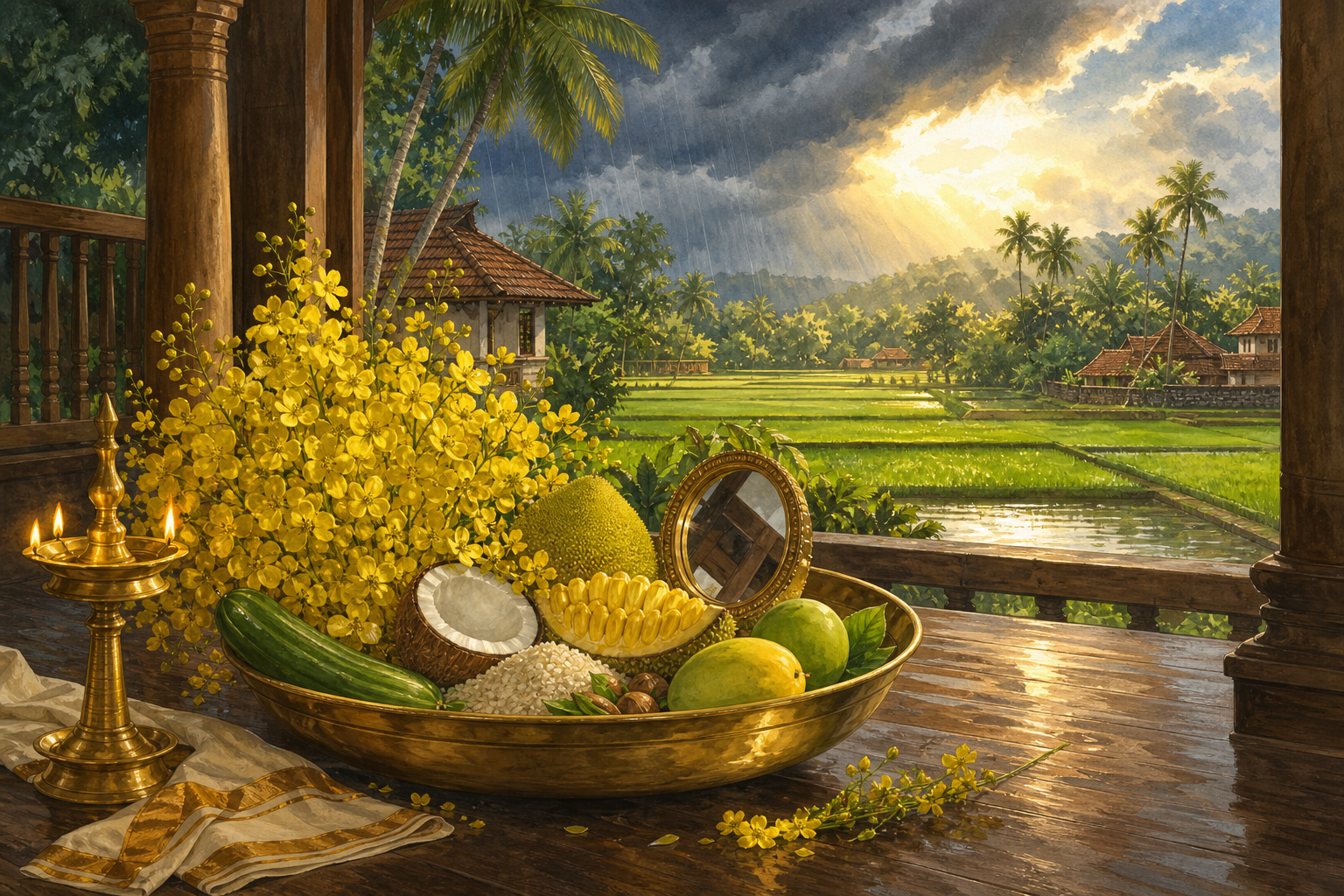
Malayalam New Year becomes easier to understand once it is treated as a question of calendrical purpose rather than a contest between two festivals. The supplied DharmaRenaissance report identifies Chingam 1 as the opening of the numbered Kollavarsham year, while describing Vishu as Kerala’s older and widely celebrated traditional New Year observance.
Together, these observances show how Kerala preserves more than one meaningful threshold in the annual cycle. One begins the Malayalam calendar year; the other expresses renewal through a major ritual and seasonal celebration.
Why both Chingam 1 and Vishu are called New Year
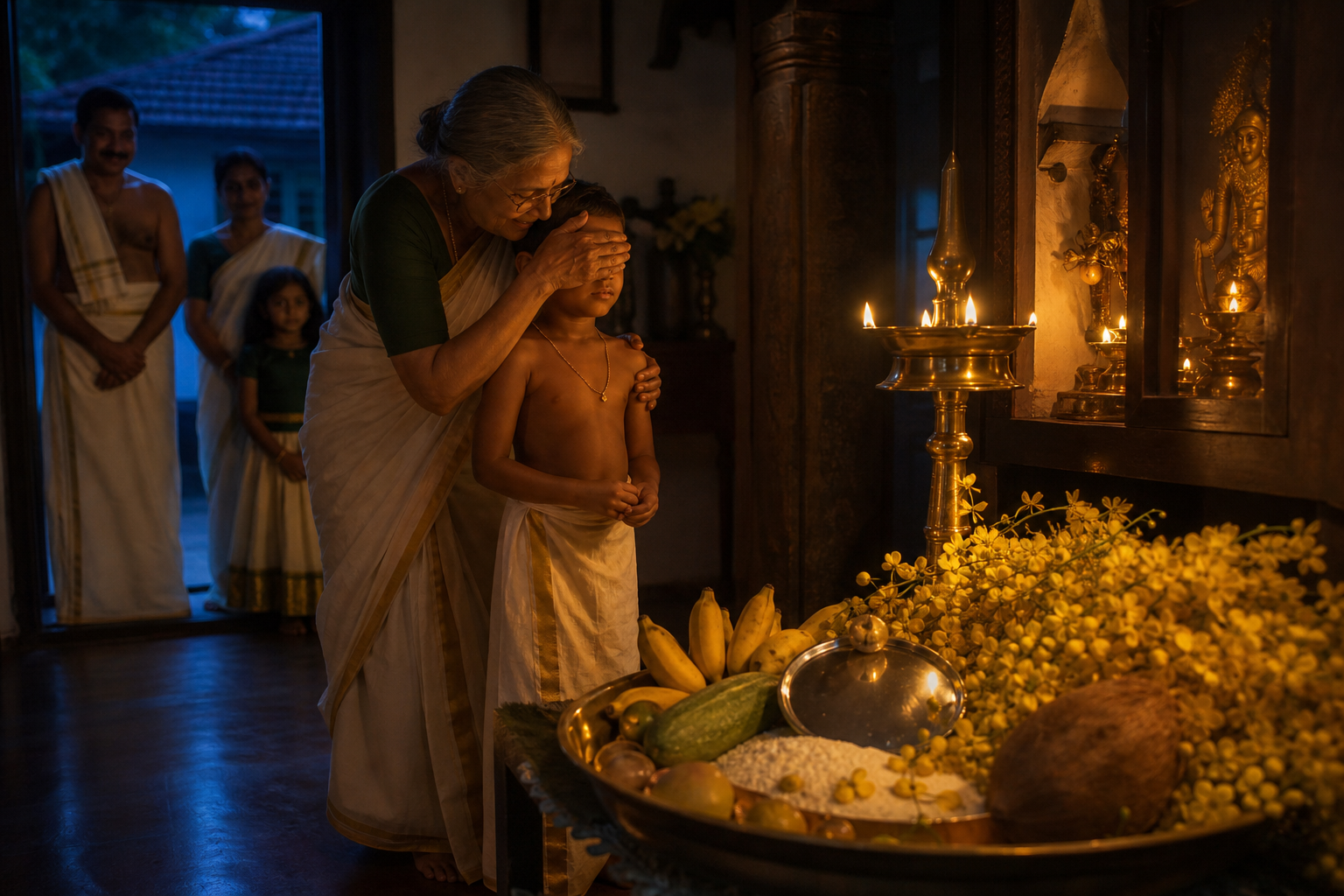
According to the report, Chingam 1, or Chingam Onnu, formally begins the Kollavarsham year. It is the first day of Chingam, the opening month of the Malayalam calendar, and therefore changes the calendar’s annual number. For the 2026-2027 cycle, the report places Chingam 1 on August 17, 2026, when Kollavarsham 1202 begins.
Vishu occupies a different but equally important position. The source describes it as a traditional New Year observance celebrated during Medam, around April 14 or 15, and connected with the Sun’s entry into Mesha. Its cultural language includes auspicious sight, seasonal balance and the hope of a favorable beginning.
The distinction is therefore functional. Chingam 1 opens the numbered year used by the Malayalam calendar, whereas Vishu preserves a prominent ritual idea of New Year. Calling one calendrical and the other traditional does not diminish either observance. It explains why both names can be correct within their respective frames.
What changes when the Kollavarsham year begins

The report characterizes Kollavarsham, also called the Kollam Era, as a sidereal solar calendar historically and culturally associated with Kerala. Its epoch is commonly linked to 825 CE, giving it a year count distinct from the Gregorian system. Chingam 1 consequently marks more than the beginning of a month: it advances the regional calendar into a new numbered year.
The transition is tied to the Sun’s movement from Karka, corresponding to Cancer, into Simha, corresponding to Leo. In wider Indic calendrical terminology, the same passage is called Simha Sankranti. Malayalam civil usage, Sanskritic astrological terminology and local temple practice can thus describe the same solar threshold in different ways.
After Chingam, the source gives the Malayalam sequence as Kanni, Thulam, Vrischikam, Dhanu, Makaram, Kumbham, Meenam, Medam, Edavam, Midhunam and Karkidakam. This annual framework helps organize almanacs, temple schedules, vows, family observances and festivals. The calendar is therefore both a system of solar reckoning and a practical structure for communal life.
The report also notes that exact solar-transition timings may be interpreted through regional panchangam rules and sunrise conventions. Its practical date for the forthcoming transition is nevertheless August 17, 2026. Readers planning a ritual observance may therefore distinguish the generally accepted civil date from any locally prescribed timing.
Chingam carries the memory of Kerala’s seasons

The meaning of Chingam is not exhausted by astronomy. It follows Karkidakam, which the report associates with heavy monsoon conditions, Ramayana recitation, austerity, healing and household discipline. Chingam consequently represents a change in emotional as well as calendrical atmosphere: from an inward-looking monsoon period toward renewal, festivity and expectations of prosperity.
This seasonal movement also gives the New Year an agricultural dimension. The source connects Kerala’s traditional calendar with rain, paddy cultivation, rivers, household economy and seasonal food practices. In that setting, the arrival of Chingam expresses relief after a demanding monsoon phase and hope for renewed abundance.
Such associations explain why a traditional calendar can remain meaningful even when it is not the principal tool for international or administrative dating. It retains relationships among weather, work, worship and collective memory that a numerical date alone cannot convey.
Chingam 1 opens the season but is not Onam
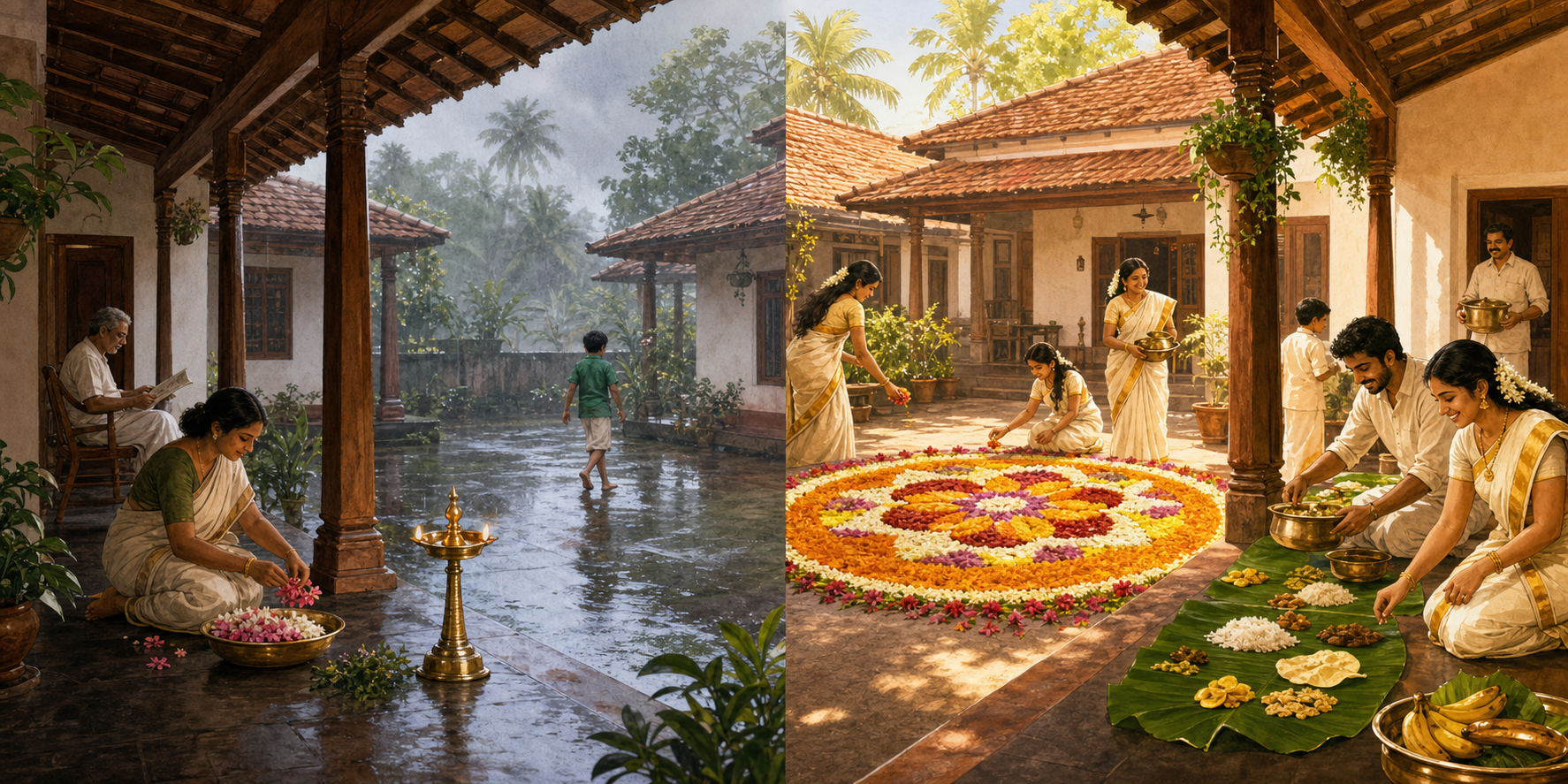
Chingam is closely associated with Onam, but the two should not be treated as interchangeable. As the report explains, Chingam 1 begins the month and the Kollavarsham year; Onam is the major festival celebrated later within the Chingam season.
The source connects Onam with King Mahabali, harvest symbolism, prosperity, ethical kingship and an enduring memory of social harmony. Family gatherings, floral arrangements, community meals, temple visits and cultural performances give the broader Chingam season a public and celebratory character. Chingam 1 establishes the calendar setting in which that festive period unfolds.
Temple observances add another layer. The report describes special prayers and renewed devotional activity on Chingam 1, framing the day as an opportunity for gratitude, disciplined living and recommitment to dharma. The New Year is consequently entered as a community, not merely recorded as a private change of date.
For Malayali communities living outside Kerala, the same calendar can connect identity with a homeland whose monsoon and agricultural rhythms may no longer be directly experienced. The source reports that temple visits, greetings, cultural programs and preparations for Onam help sustain that connection across North America, Europe, the Gulf and other regions.
Key takeaways
- The supplied report dates Chingam 1 in 2026 to August 17 and identifies it as the beginning of Kollavarsham 1202.
- Chingam 1 begins the numbered Malayalam calendar year, while Vishu remains a major traditional New Year observance associated with Medam.
- The calendar is solar in orientation, with Chingam beginning as the Sun enters Simha in the transition also known as Simha Sankranti.
- Chingam 1 is not Onam; it opens the month and seasonal setting in which Onam is celebrated.
- Its continuing significance joins astronomy with agriculture, worship, seasonal memory and Malayali identity.
As Kollavarsham 1202 approaches, the most useful approach is to preserve these distinctions while recognizing their shared cultural setting. Chingam 1 and Vishu need not compete for a single definition of New Year; together, they reveal how Kerala’s calendar accommodates civic continuity, sacred transition and lived tradition.
References
- DharmaRenaissance Blog – Chingam 1, 2026: Powerful Guide to Malayalam New Year and Kollavarsham 1202