
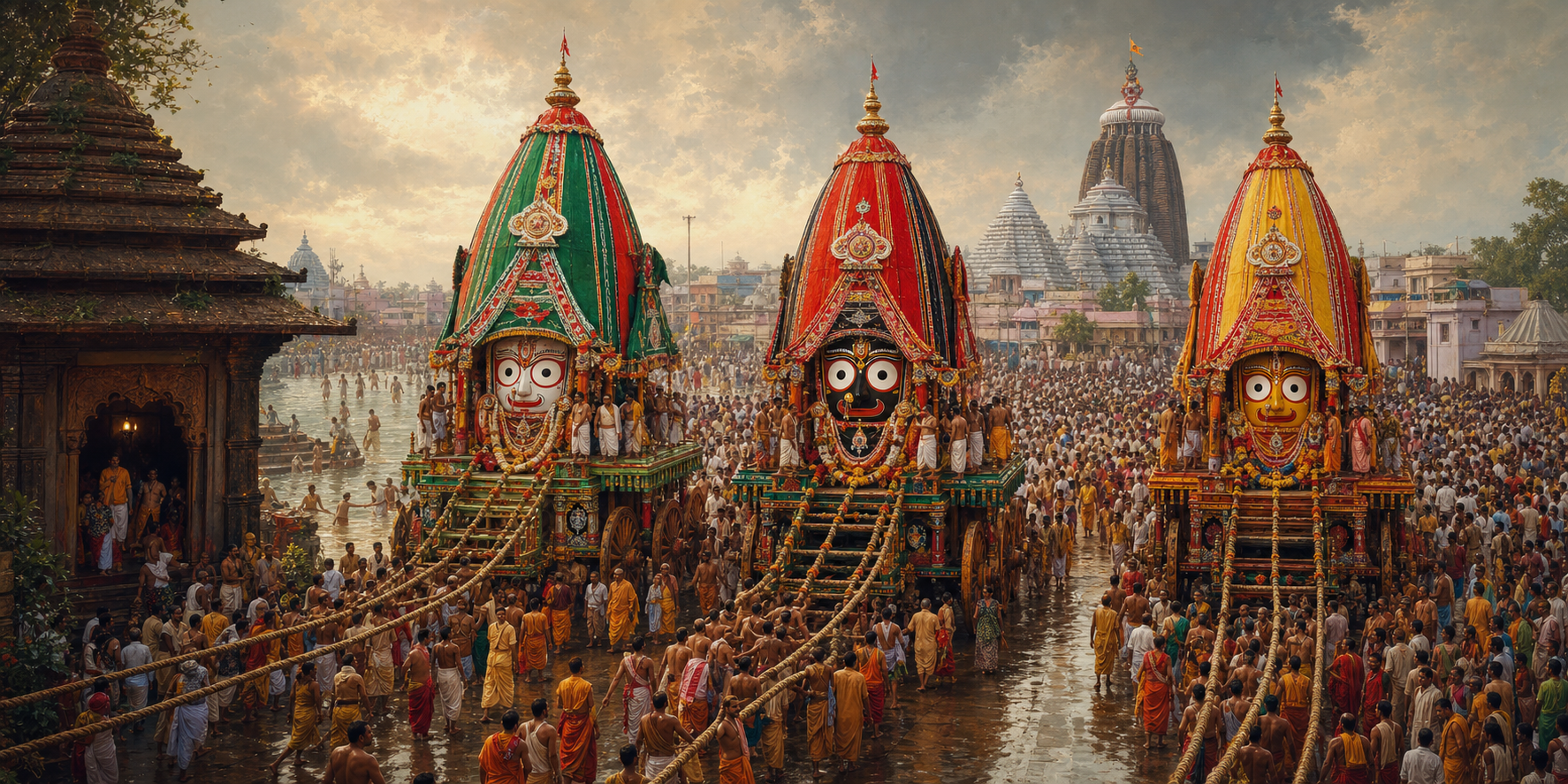
The Jagannath festival cycle is best understood not as a single chariot procession but as a sequence that repeatedly changes the relationship between deity, devotee and sacred space. The two source reports illuminate different ends of that sequence: Snana Yatra opens the season through ceremonial bathing and public darshan, while Bahuda Yatra completes the chariot journey through return and reunion.
Read together, the reports reveal a carefully ordered rhythm of care, visibility, absence, longing, movement, hospitality and homecoming. That rhythm explains why Ratha Yatra acquires much of its meaning from the observances that precede and follow its famous outward procession.
A calendar shaped by changing forms of access
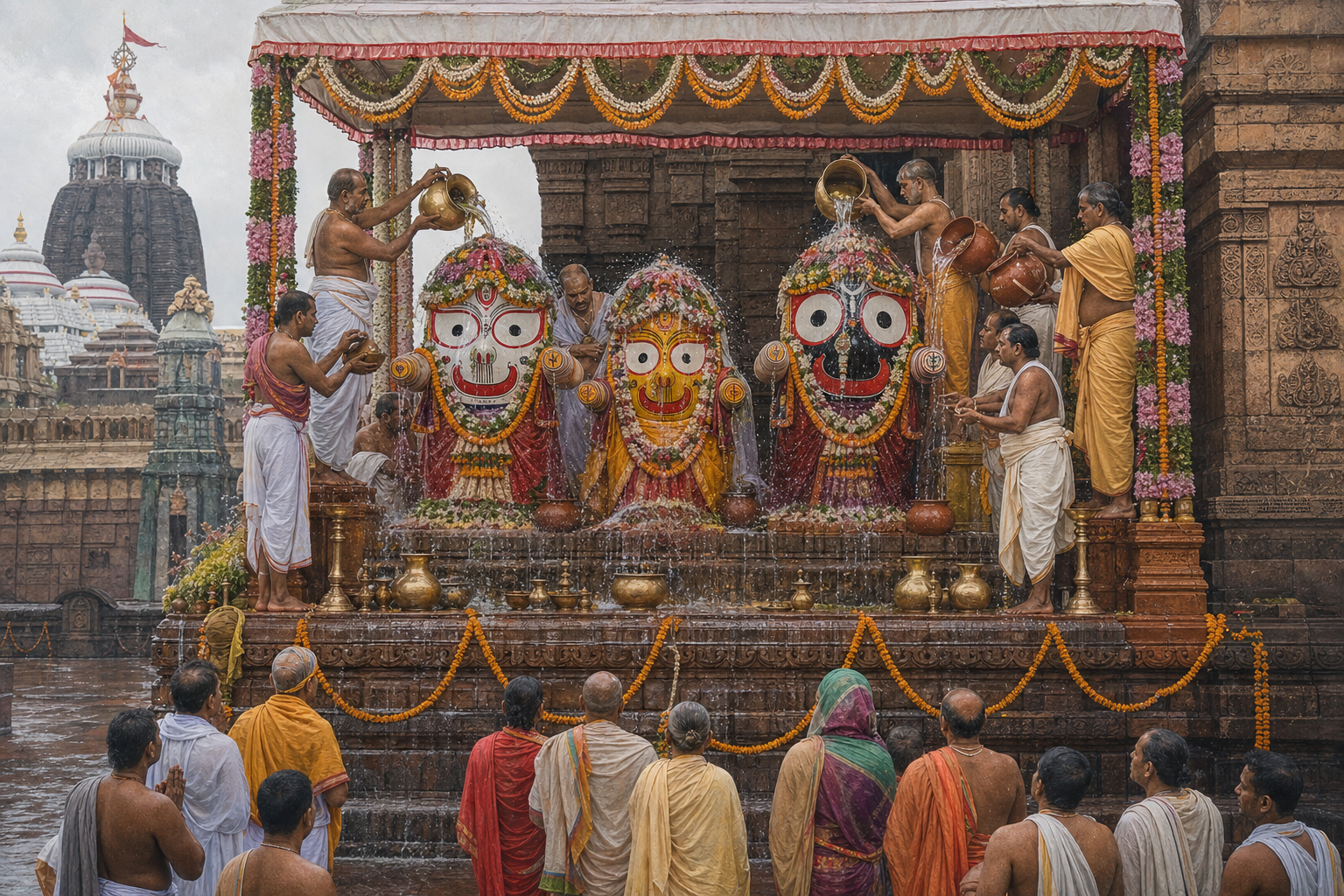
The Snana Yatra report places the 2026 bathing observance in the period of Jyeshtha Purnima and says that many panchang traditions associated the full-moon tithi with June 29. In the Puri tradition it describes, Lord Jagannath, Lord Balabhadra, Devi Subhadra and Sudarshana are brought to the Snana Bedi for ceremonial bathing and public darshan. The report also presents the festival as a devotional threshold: after the bath comes Anasara, a period of seclusion and restricted darshan that prepares devotees for the later chariot festival.
Both source articles place the 2026 Puri Ratha Yatra on July 16. The Bahuda Yatra report identifies the outward journey with Ashadha Shukla Dwitiya and says the return occurs on the ninth day of the Ratha Yatra sequence, July 24 in 2026. It further notes that Suna Besha, when the deities are adorned in golden attire on the chariots near Srimandir, is especially associated with the day following the return.
This chronology is more than a timetable. The deities first become publicly visible at the bathing platform, then withdraw, reappear for a journey from Srimandir to Gundicha Temple, remain at a temporary abode and finally travel home. Sacred access is therefore expanded, withheld and restored in distinct ritual forms. The cycle teaches devotees to encounter darshan as a relationship unfolding through time, rather than as an isolated sight.
Bathing, seclusion and the devotional meaning of waiting
The Snana Yatra source approaches the festival partly through an ISKCON Vrindavan visual highlight while also explaining practices associated with Puri. Keeping those settings distinct is important: Vrindavan supplies a congregational atmosphere shaped by Krishna devotion and sankirtana, whereas the account of the Snana Bedi, the use of 108 pots of sanctified water and Hati Besha refers specifically to the traditional Puri observance.
The report says that abhisheka offerings vary among temples and may include water, milk, yogurt, honey, ghee, juices, herbal preparations, sandalwood water and flowers. Their shared significance lies in service. Devotees do not approach the deity only to request grace; they first offer cooling, nourishment, fragrance, beauty and attention. Ritual meaning is communicated through substances, sound and embodied action rather than through doctrine alone.
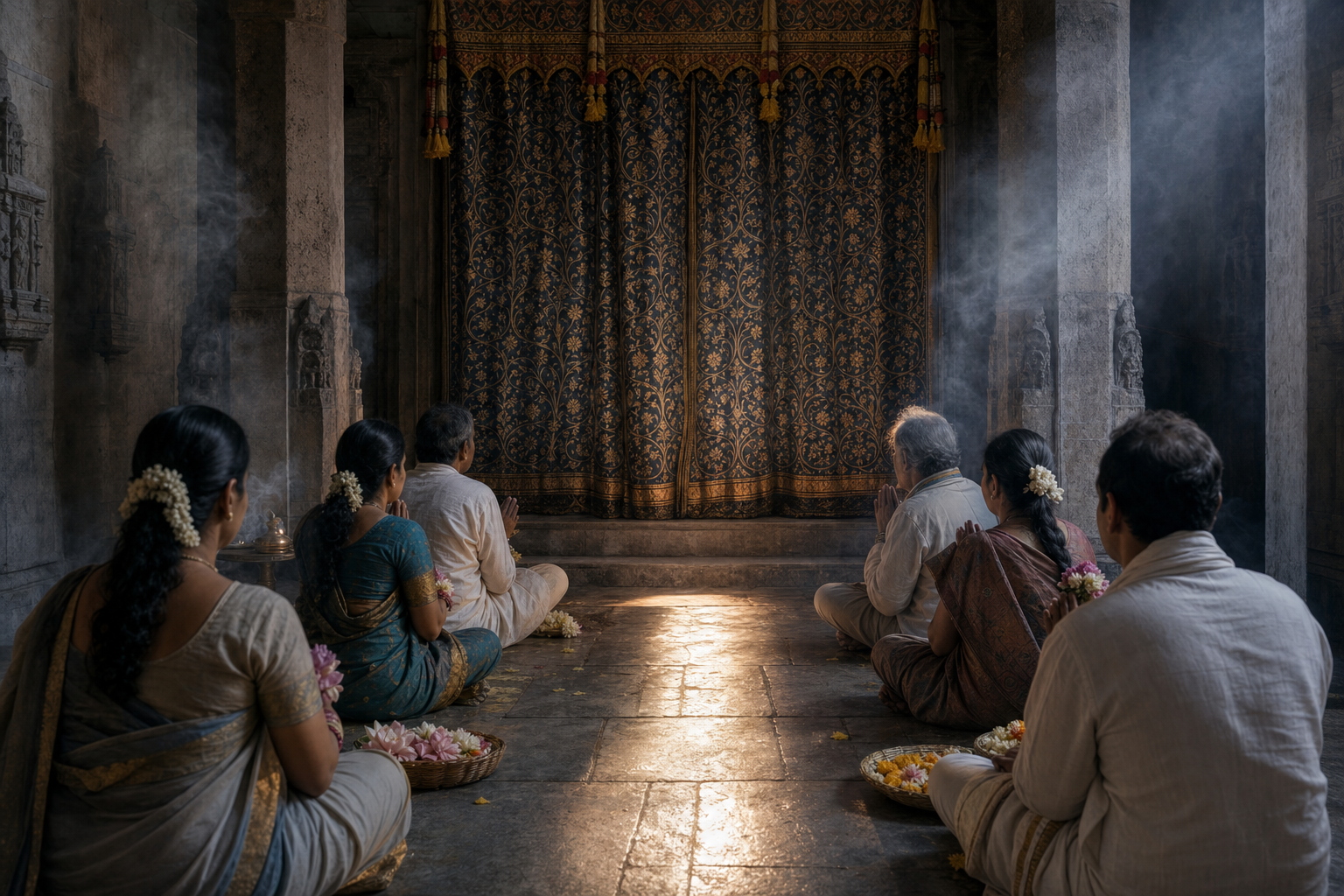
The subsequent Anasara period changes the emotional register. The source describes the deities as resting and recovering after the elaborate bath, a tender explanation that gives divine-human intimacy a central place in Jagannath devotion. Public celebration yields to limited darshan, and direct sight gives way to remembrance. Within the larger cycle, this temporary absence prevents Ratha Yatra from being merely spectacle: the later reappearance answers a period of cultivated longing.
The Vrindavan account adds another dimension without replacing the Puri setting. Kirtan, mridanga, kartal, conch sounds and congregational chanting allow participants to respond through sound. The festival can thus travel across regions while retaining a recognizable devotional grammar of deity service, collective remembrance and prasadam.
When temple geography opens onto the public road
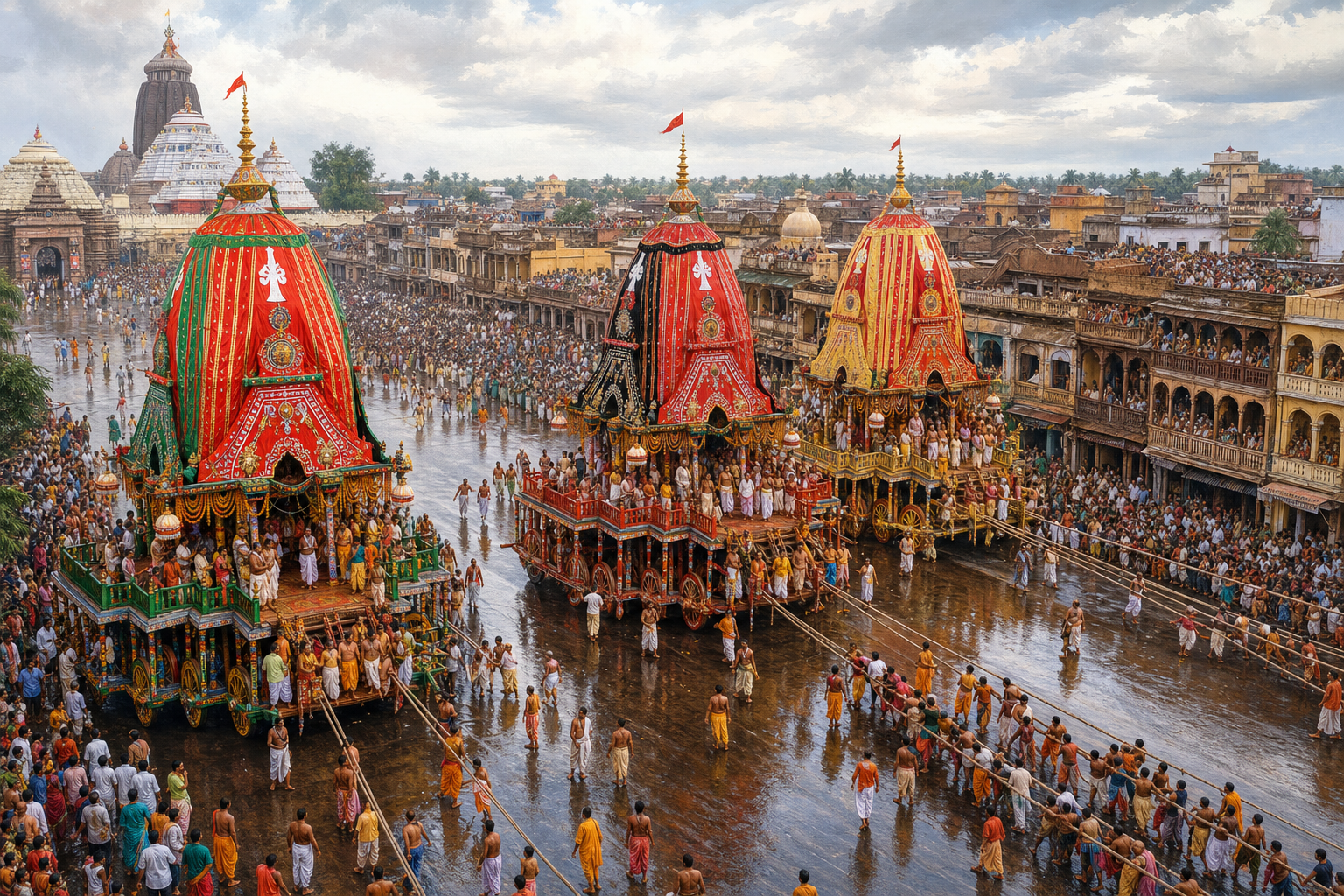
The Bahuda report shifts attention from bathing and seclusion to movement through Puri. It identifies Gundicha Temple as the temporary abode reached during the outward Ratha Yatra and describes Bahuda as the homeward procession along the Bada Danda toward Srimandir. Lord Jagannath travels on Nandighosha, Lord Balabhadra on Taladhwaja and Devi Subhadra on Darpadalana, also called Devadalana in some traditions.
This movement alters the social reach of darshan. Divine presence leaves the relative enclosure of the temple and occupies a public ceremonial corridor. According to the Bahuda source, devotees who may not enter the inner sanctum can see the deities on the chariots. The street does not displace the temple; for a limited period, it extends the field of sacred encounter before the deities return to their established abode.
The return is marked by more than direction. The report describes the ceremonial Pahandi movement, installation on the chariots, pulling, ritual halts and reception near Srimandir as parts of an inherited order. Bahuda is therefore not an afterthought attached to the better-known outward procession. Without the homeward movement, the narrative would stop at departure and temporary residence, leaving the ritual arc unresolved.
The halt near Mausi Maa Temple gives that resolution a domestic tenderness. The Bahuda account says the deities are traditionally offered Poda Pitha, a baked preparation closely associated with Odia devotional culture. Kinship language transforms the Lord of the Universe into a family member welcomed by an aunt. The episode connects pilgrimage to hospitality: cosmic sovereignty and ordinary affection are allowed to inhabit the same ritual moment.
Continuity depends on renewal, service and coordination
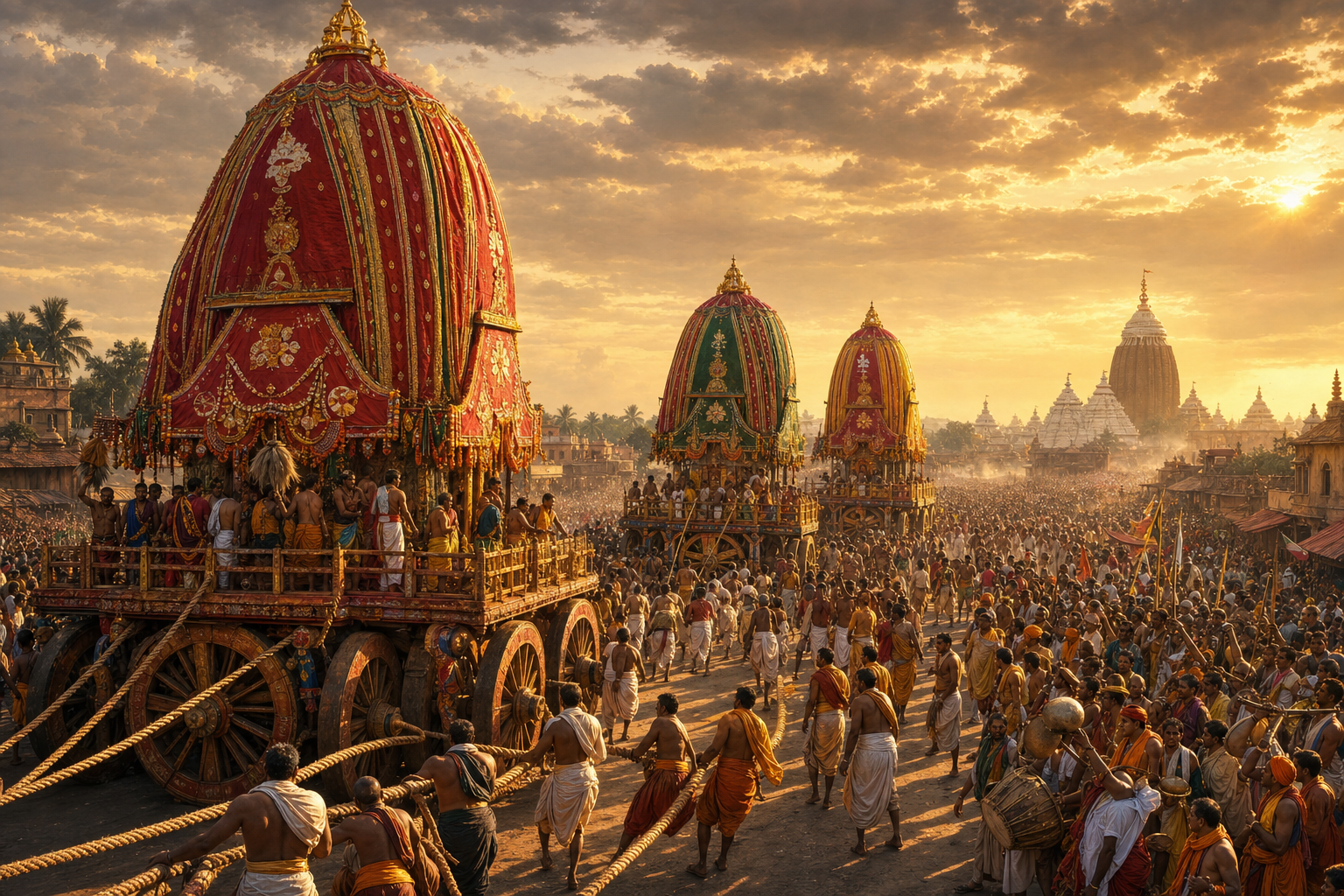
The sources converge most clearly around seva. In the Snana Yatra account, service takes the form of bathing, decorating, chanting, preparing offerings, maintaining the worship space and helping others receive darshan. In the Bahuda account, it includes the ordered work of temple servitors as well as chariot construction, procession management and public cooperation. Belief becomes visible through coordinated labor.
The annual reconstruction of the three chariots is especially revealing. The Bahuda report says they are newly made each year according to inherited measurements, colors, procedures and ritual conventions. Continuity here does not depend upon preserving one physical object indefinitely. It depends upon faithfully renewing form through transmitted knowledge and disciplined craftsmanship.
The same principle extends to contemporary administration. The Bahuda source highlights crowd movement, policing, medical access, water, sanitation, traffic planning and broadcasting as practical conditions supporting the event. These systems are not themselves the ritual, but the immense public ritual cannot unfold safely without them. The festival cycle joins inherited liturgy to changing capacities of civic organization.
Both reports also portray Jagannath worship as layered rather than narrowly sectarian. The Snana account emphasizes Vedic, Puranic, regional, tribal and Vaishnava inheritances, while the Bahuda article additionally points to Shakta and Shaiva associations within the culture surrounding the deities. Their shared emphasis is not that these strands are identical, but that a common sacred center can hold different memories, practices and devotional moods together.
Key takeaways
- Ratha Yatra gains meaning from a wider sequence beginning with public bathing, passing through seclusion and reappearance, and ending with return.
- Snana Yatra presents care for the deity as theology enacted through water, offerings, decoration, music and collective service.
- Anasara makes temporary absence part of devotion, allowing waiting and remembrance to prepare the emotional ground for renewed darshan.
- The journeys to and from Gundicha Temple turn Puri’s ceremonial road into an extension of sacred space while preserving Srimandir as the place of return.
- Annual chariot building and large-scale public coordination show that living continuity depends upon renewed craftsmanship, service and institutional discipline.
For those following the festival cycle, the most useful perspective is to attend to the transitions as carefully as the headline procession. Bathing, withdrawal, travel, hospitality and homecoming each reveal a different way in which Jagannath becomes present to devotees; future observances will remain most intelligible when encountered as parts of that connected movement.
References
- DharmaRenaissance Blog — Bahuda Yatra 2026: Sacred Return of Lord Jagannath’s Chariots in Puri
- DharmaRenaissance Blog — Jagannatha Snana Yatra 2026: Powerful Deva Snana Purnima Insights from Vrindavan