
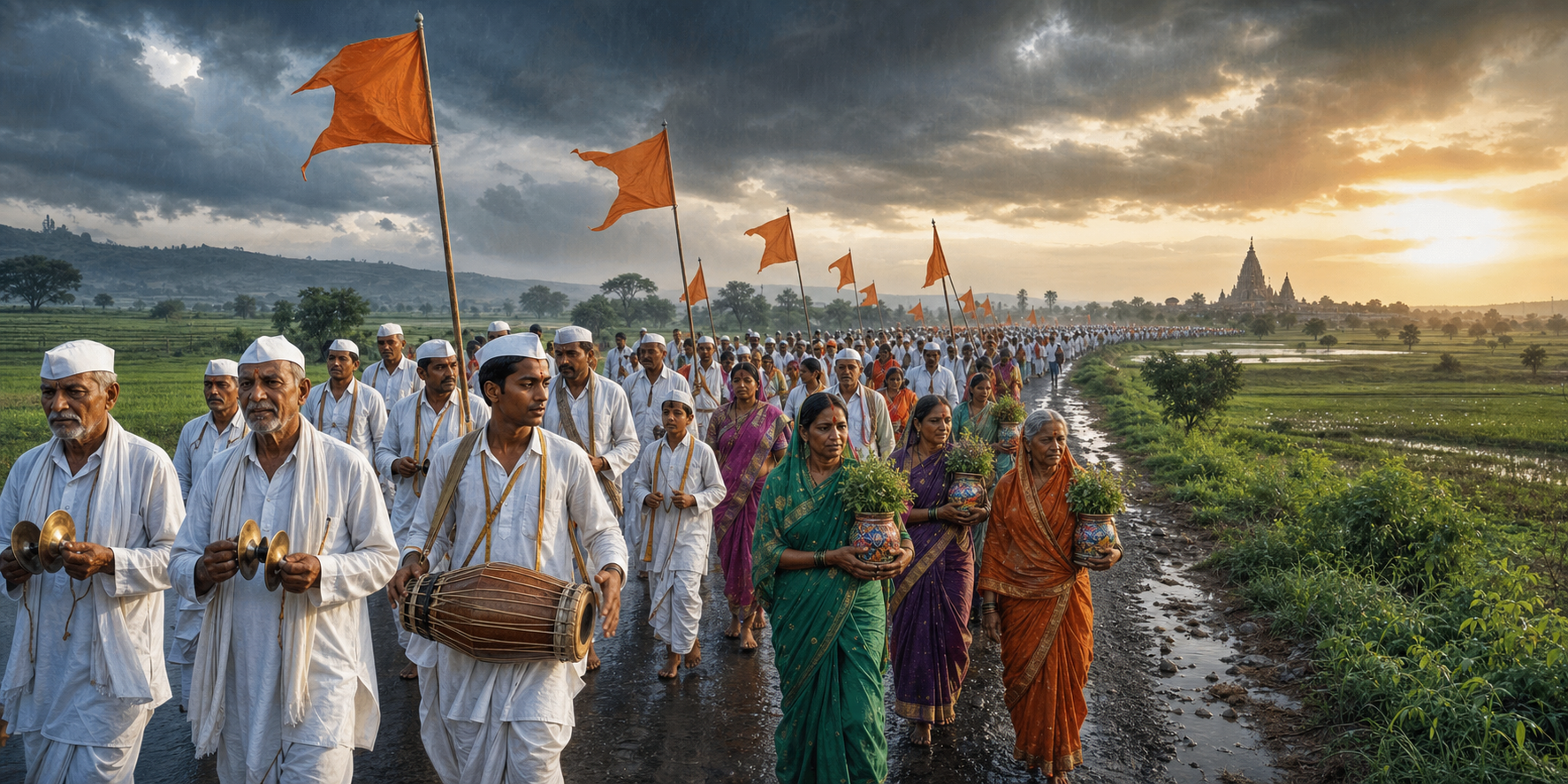
Maharashtra’s Varkari tradition is best understood as a devotional ecosystem rather than a collection of isolated festivals, texts or saint biographies. Devotion to Vithoba of Pandharpur supplies its sacred centre, while pilgrimage, Marathi poetry, communal singing, remembrance of the divine name and disciplined service make that devotion part of ordinary life.
The two supplied accounts approach this tradition from different directions. The article on Sant Dnyaneshwar examines the movement of spiritual knowledge into Marathi public culture, while the Vitthal Navratri guide describes the ritual and communal practices through which that inheritance remains active. Read together, they show how the Varkari tradition connects philosophy with affection, and personal faith with collective participation.
Vithoba is the centre, but relationship is the method
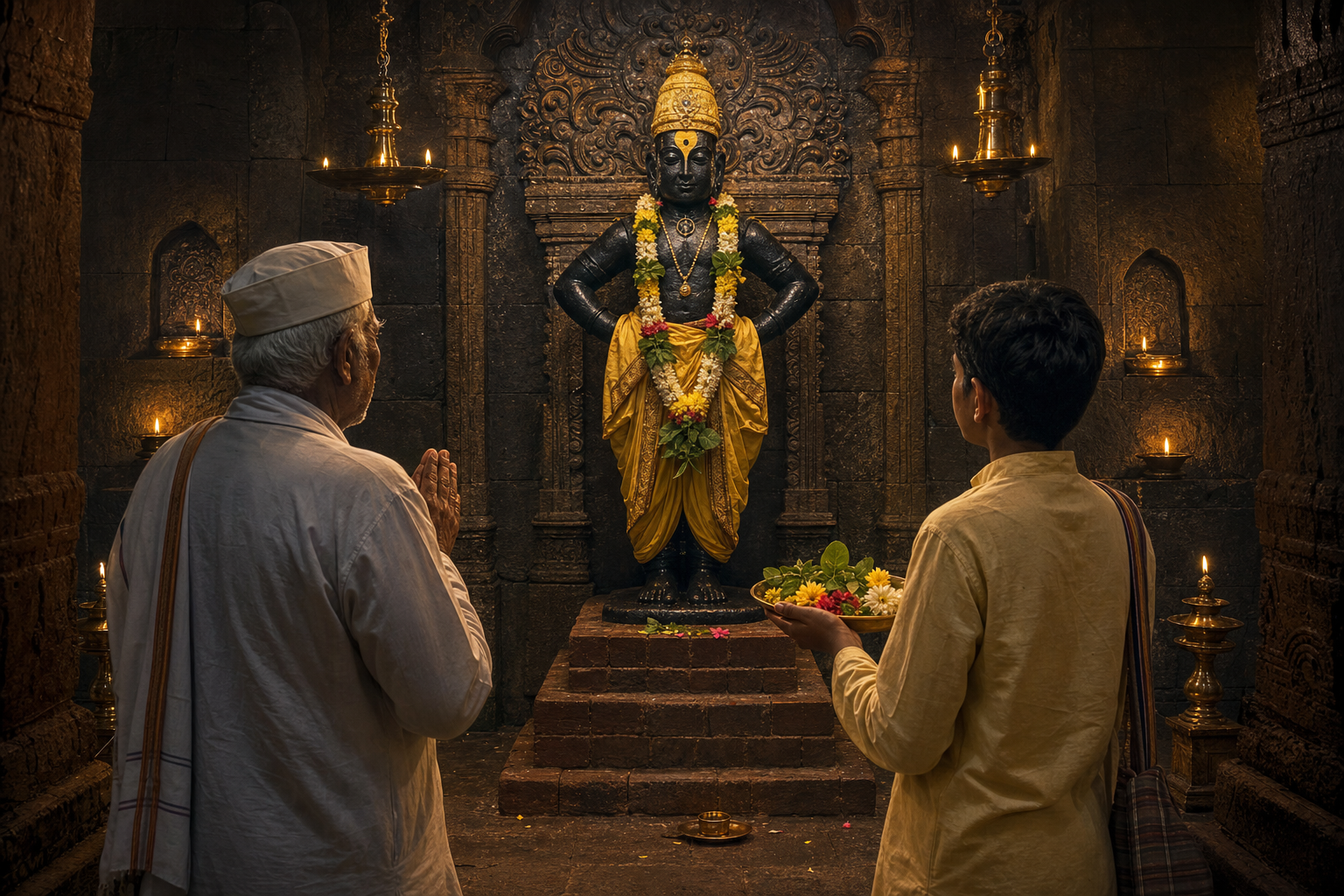
Both the Sant Dnyaneshwar Jayanti profile and the Vitthal Navratri guide identify devotion to Vithoba, also called Vitthal or Panduranga, as the tradition’s unifying centre. Pandharpur provides its principal sacred geography, but the relationship cultivated there extends into homes, pilgrim roads, songs and gatherings.
The festival guide describes Vithoba standing on a brick with his hands on his hips and presents this form as approachable to devotees from widely differing walks of life. It also places Rakhumai beside him in temple worship. This imagery helps explain the tradition’s emotional register: the divine is revered, yet encountered as a presence close enough to be awakened, bathed, adorned, offered food and addressed through song.
The Dnyaneshwar article adds another relational term: Mauli, meaning mother, as an affectionate name for the saint. Vithoba and Mauli therefore occupy different but complementary places in Varkari memory. One is the beloved deity toward whom devotion moves; the other represents wisdom experienced as nurturing guidance. The tradition’s accessibility arises partly from this language of intimacy.
Marathi poetry turns philosophy into shared practice
The Dnyaneshwar profile reports that historical tradition generally places the saint’s life between 1275 and 1296 CE. It associates his birth with Apegaon near Paithan, locates his revered samadhi at Alandi and treats the composition of the Dnyaneshwari in 1290 as a major historical marker. These details are presented by that source rather than independently verified here.
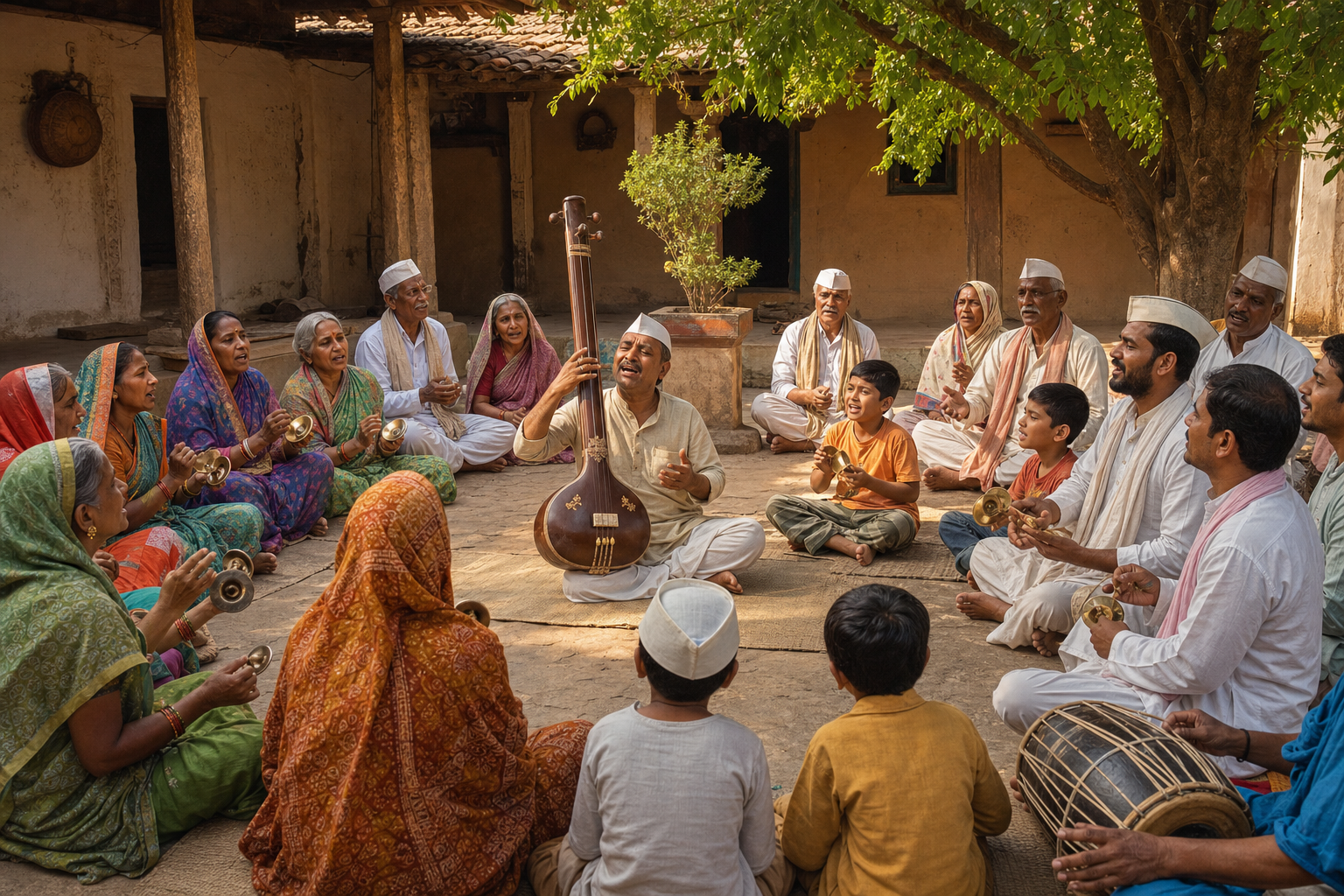
The work, also called the Bhavartha Deepika, is described as a Marathi commentary on the Bhagavad Gita composed in the ovi metre. Its importance within the tradition is not merely that it explains a Sanskrit scripture. By expressing philosophical reflection in Marathi and in a form suited to recitation, it allows teachings about knowledge, devotion, yoga, conduct and liberation to enter communal memory.
This choice of language links literature to religious participation. The source presents farmers, artisans, householders, women, pilgrims and village communities as beneficiaries of a sacred discourse no longer confined to scholastic settings. The reported role of the Dnyaneshwari consequently illuminates a broader Varkari principle: spiritual teaching becomes socially consequential when people can hear it, remember it and relate it to conduct.
The same source identifies the Amrutanubhava as Dnyaneshwar’s other major work and recounts a traditional pilgrimage with Sant Namdev and other saints. Its portrayal of Dnyaneshwar’s contemplative insight alongside Namdev’s devotional surrender suggests complementary paths rather than rival ones. The festival guide shows how that fellowship survives culturally, naming Dnyaneshwar, Namdev, Eknath, Tukaram, Janabai and Chokhamela among the saints remembered through abhangas, kirtan and pilgrimage.
Walking, singing and serving create a recurring discipline
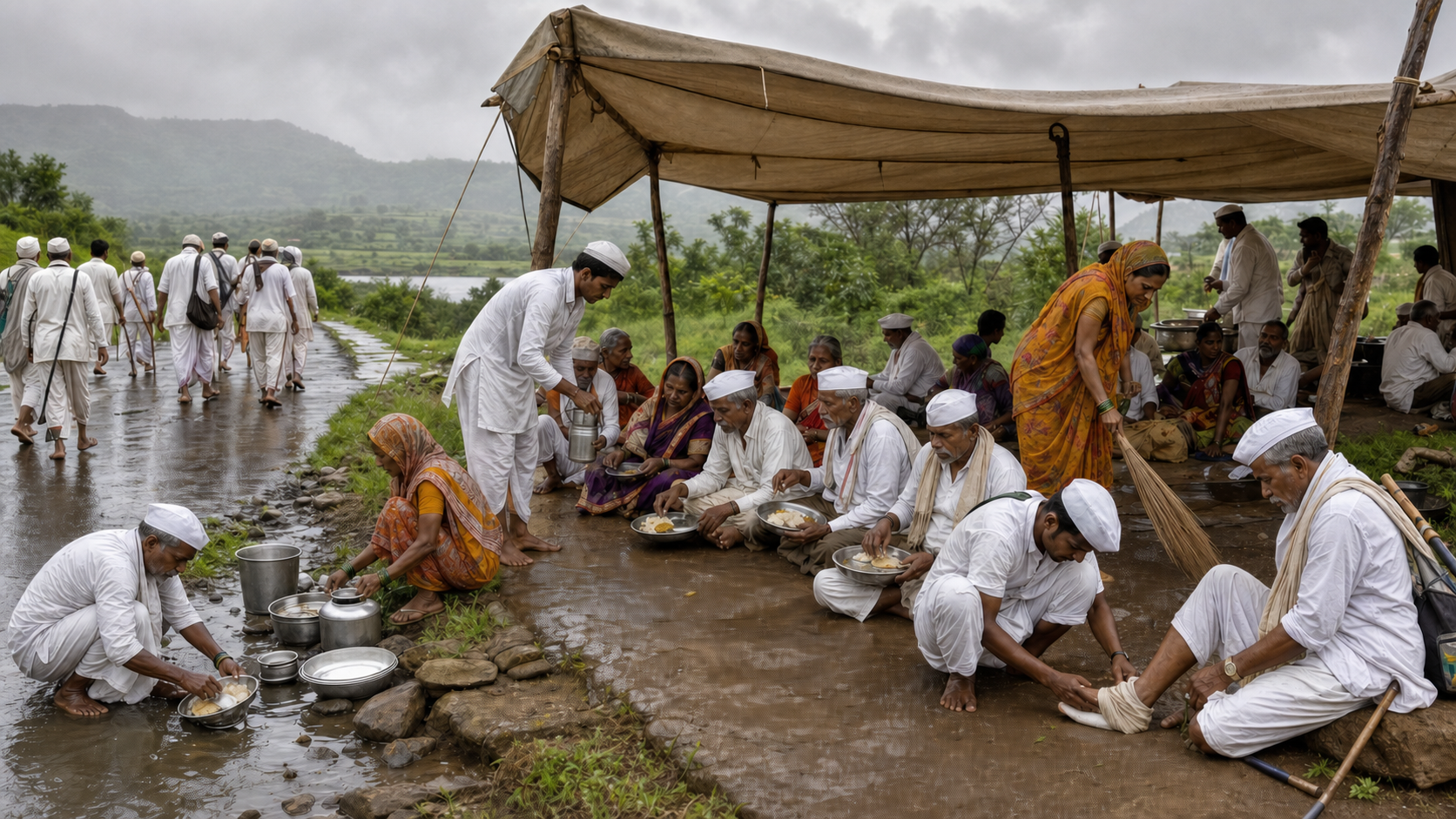
In the supplied accounts, Varkari devotion repeatedly moves between road, temple and household. The Wari to Pandharpur makes walking a communal religious act; abhang singing and naam-smarana make sound and memory into portable forms of worship; temple seva gives devotion an ordered physical expression. None of these practices stands alone. Together they create a rhythm in which the teaching heard in poetry is rehearsed through the body.
The Vitthal Navratri guide provides the most detailed view of temple time. It reports a sequence that includes the pre-dawn kakad arati, panchamrita worship, dressing and food offerings, midday and later rites, darshan, and the final sher arati associated with placing the deity at rest. The significance of this sequence lies in its sustained attention: light, food, fragrance, music, clothing and time become media of service rather than decorative additions.
The guide also describes simpler household observances, including cleaning a worship space, placing an image or murti of Vithoba-Rakhumai, offering tulasi, flowers, fruit, lamps or naivedya, and undertaking japa, scriptural recitation, charity or bhajan according to family and regional custom. It explicitly cautions against presenting one household pattern as universal. That qualification matters because the tradition combines a recognisable devotional vocabulary with practices shaped by temple instruction, sampradaya, family inheritance and local calendars.
The two source articles also locate Varkari life within more than one calendrical occasion. The Dnyaneshwar article connects his Jayanti with Shravan Krishna Paksha Ashtami, while the festival guide describes Vitthal Navratri as an Ashada observance extending from Shukla Paksha Dashami to Purnima. Both note that tithi calculations and local conventions require consultation of an appropriate panchang. In synthesis, these observances reveal a calendar of return: one occasion foregrounds the saint and transmission of wisdom, while another foregrounds sustained service to the deity.
Accessibility is an ideal joined to ethical discipline
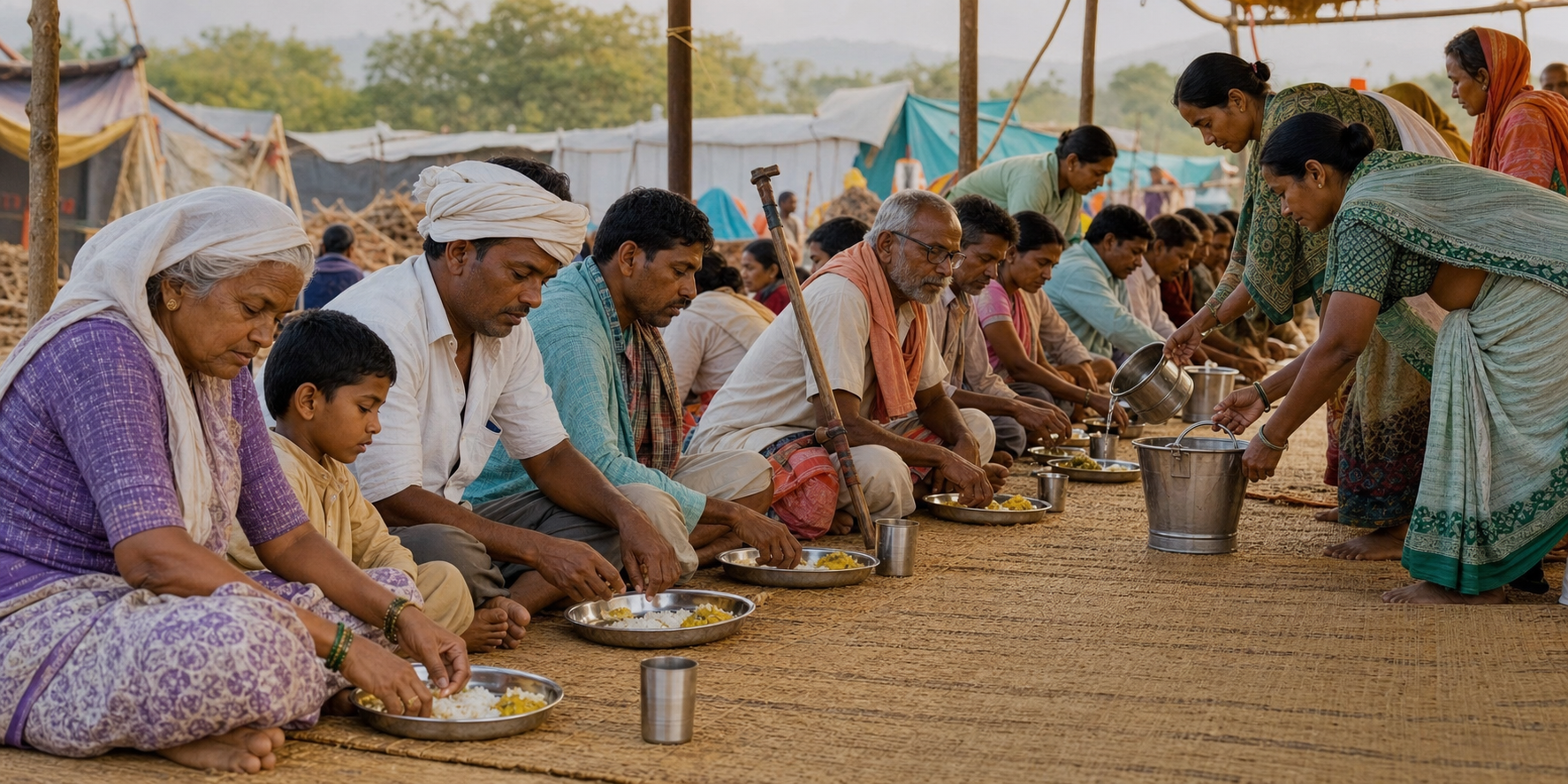
Both sources emphasise broad participation and equality before the divine. Yet accessibility should not be confused with the absence of discipline. The Vitthal Navratri account repeatedly associates devotion with timing, attention, humility, purity, ethical conduct and service. The Dnyaneshwar account similarly presents knowledge as something that must transform perception, behaviour and relationships rather than remain an abstract achievement.
The Dnyaneshwar profile also recounts traditional narratives of exclusion and humiliation faced by his family and identifies Nivruttinath, Sopan and Muktabai as integral to his spiritual story. Nivruttinath is remembered as his guru, while Muktabai is honoured as a saint in her own right. Within the source’s interpretation, this background gives Dnyaneshwar’s teaching on unity a connection to vulnerability and dignity.
Such accounts should not be turned into a simplistic assertion that devotional fellowship automatically erased social inequality. They instead show the ethical standard articulated by the tradition: status should not determine proximity to God, and devotion should produce humility, compassion and responsible conduct. The coexistence of non-dual reflection, personal love of Vithoba and communal service is therefore not a philosophical contradiction. It is the mechanism by which insight is tested in relationship.
Key takeaways
- Vithoba of Pandharpur gives the Varkari tradition its devotional centre, while affectionate forms of address make sacred authority feel relational and close.
- The Dnyaneshwari, as described by the Dnyaneshwar source, made Bhagavad Gita commentary available through Marathi language, ovi metre and communal recitation.
- Pilgrimage, abhang singing, naam-smarana, temple seva and household worship connect philosophical teaching with repeated embodied practice.
- Inclusiveness functions as an ethical aspiration joined to discipline, humility and conduct, not simply as a claim about participation.
The tradition’s continuing vitality will depend on preserving this integration: texts that remain intelligible, pilgrimage and song that remain participatory, ritual carried out with care, and devotion made credible through ethical life.
References
- DharmaRenaissance Blog — Sant Dnyaneshwar Jayanti 2026: Powerful Lessons from Maharashtra’s Bhakti Sage
- DharmaRenaissance Blog — Vitthal Navratri 2026: Powerful Dates, Rituals and Pandharpur Bhakti Guide