
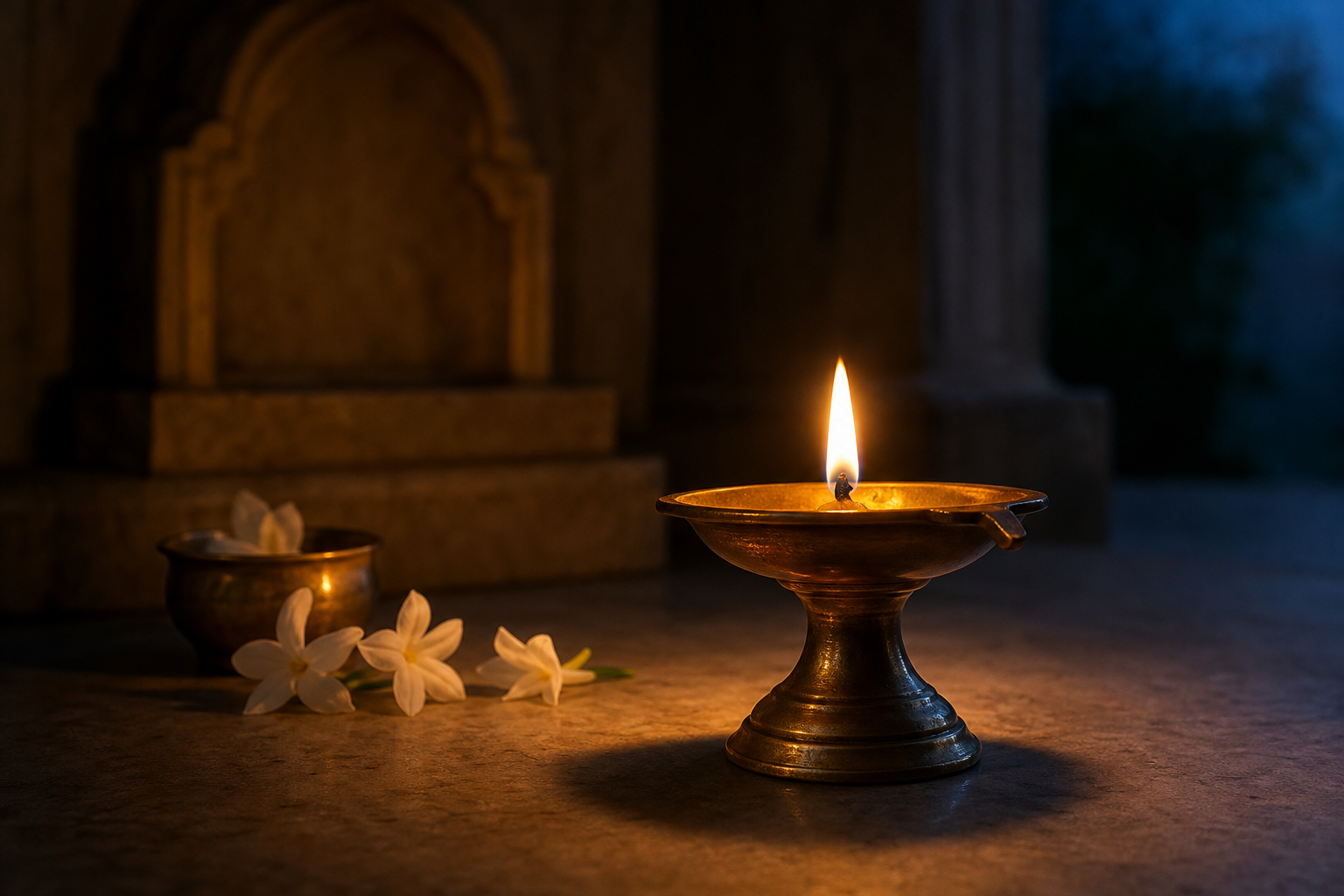
A diya is materially simple but ritually dense. Its vessel, fuel, wick, and flame can serve as illumination, an offering, a focus for attention, and a visible expression of knowledge or divine presence.
Understanding Deeparadhana therefore requires more than assigning a single meaning to the lamp. The historical evidence, scriptural imagery, combustion science, inherited customs, and demands of fire safety illuminate different aspects of the practice.
One flame can perform several ritual functions
Deeparadhana, also written as deepa aradhana or diparadhana, can be understood as worship or reverential attendance through light. Regional languages, sampradayas, and family traditions may use diya, deepam, deepa, and lamp with different shades of meaning, so vocabulary alone does not establish a universal ritual procedure.
A useful distinction concerns what the flame is doing. A stationary lamp may be kindled before a puja and kept burning as a continuing sacred presence. During arati, a flame is generally moved before a revered focus as an offering, often with prayer, song, or bells. The source article notes that some traditions use these terms broadly, while others distinguish more carefully among deepa, nirajana, and arati.
This distinction also explains why Deeparadhana is learned as much through participation as through definitions. Preparing a wick, protecting a new flame from a draft, and tending the lamp during worship transmit habits of attention. The theology is embodied in repeated care: the worshipper does not merely look at light but prepares, offers, and attends to it.
Ancient lamps do not prove an unchanged ancient ritual
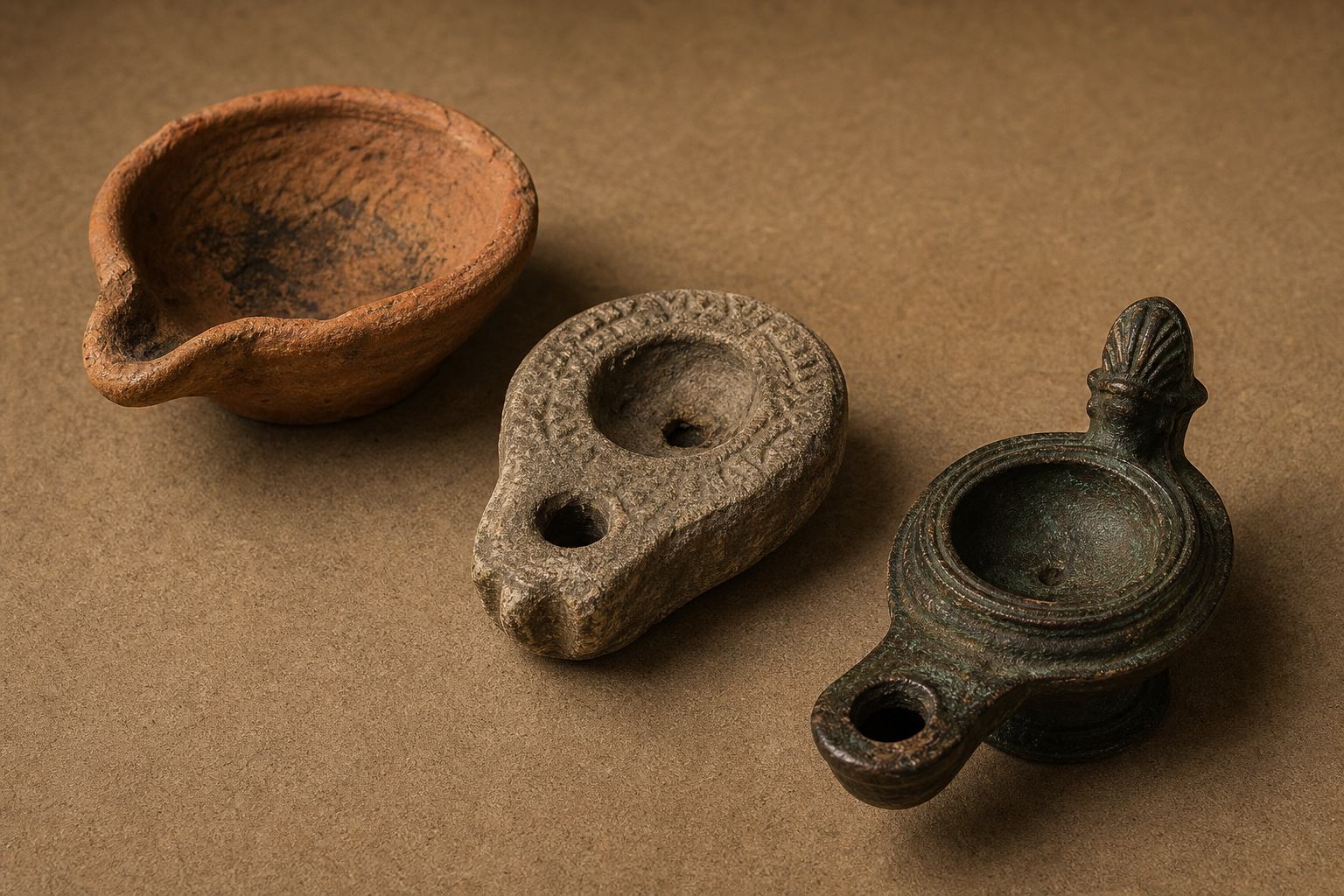
The historical depth of the diya should be described carefully. The source points to a National Museum catalogue record identifying a terracotta lamp from Nal as Harappan. Such an object demonstrates an ancient lighting technology, but its shape cannot by itself disclose the words, intentions, or doctrines associated with its use.
The same caution applies to prehistoric fire. Human use of fire for cooking, warmth, protection, or visibility does not establish that Deeparadhana already existed as a defined act of Hindu worship. Material continuity and ritual continuity are related questions, not interchangeable conclusions.
The Rigveda offers a clearer theological background by presenting Agni as the priestly and mediating power of sacrifice. According to the source, however, Agni should not simply be equated with a domestic diya, nor should an elaborate Vedic fire rite be collapsed into household lamp worship. The connection lies at a broader level: fire is luminous, transformative, and capable of bearing an offering.
Later ritual manuals, Puranic literature, temple traditions, inscriptions, and regional observances make lamp offerings and festival illumination increasingly visible. They do not preserve one uniform ceremony. Deeparadhana is better understood as part of a layered ritual culture in which Vedic fire theology, temple liturgy, domestic custom, and devotional practice interact while retaining distinctions.
Scriptural light links knowledge with steady attention

The philosophical force of the lamp comes partly from a familiar contrast: light enables discernment, while darkness can represent ignorance or confusion. The source connects this symbolism with the Brihadaranyaka Upanishad phrase tamaso ma jyotir gamaya, traditionally interpreted as a movement from darkness toward light. In its philosophical setting, the transition concerns knowledge and the imperishable rather than merely replacing nighttime with physical brightness.
Bhagavad Gita 6.19 adds another dimension. As the source reports, it compares a disciplined yogic mind with a lamp that remains steady in a place without wind. The image makes the diya a model of collected awareness: the flame is luminous, but its steadiness is equally important. This helps explain why a quiet lamp can accompany prayer, japa, or contemplative silence without functioning as a magical instrument.
Puranic praise of lamps contributes associations with auspicious observance, sacred time, and Lakshmi. The source nevertheless advises caution with a popular English sentence attributed to the Skanda Purana because that extensive work survives in multiple recensions and translations. Exact wording and numbering should be checked before a circulating translation is presented as a fixed scriptural quotation.
No single textual image exhausts the ritual. Depending on context, the flame may signify knowledge, welcome, protection, auspiciousness, disciplined awareness, divine presence, or the offering of human effort. These meanings can overlap without becoming a rigid code in which every component must always possess one prescribed interpretation. Night itself also has sacred meanings in Hindu traditions; the light-darkness analogy need not be turned into a condemnation of darkness in every setting.
Flame science supports attentive and safer practice
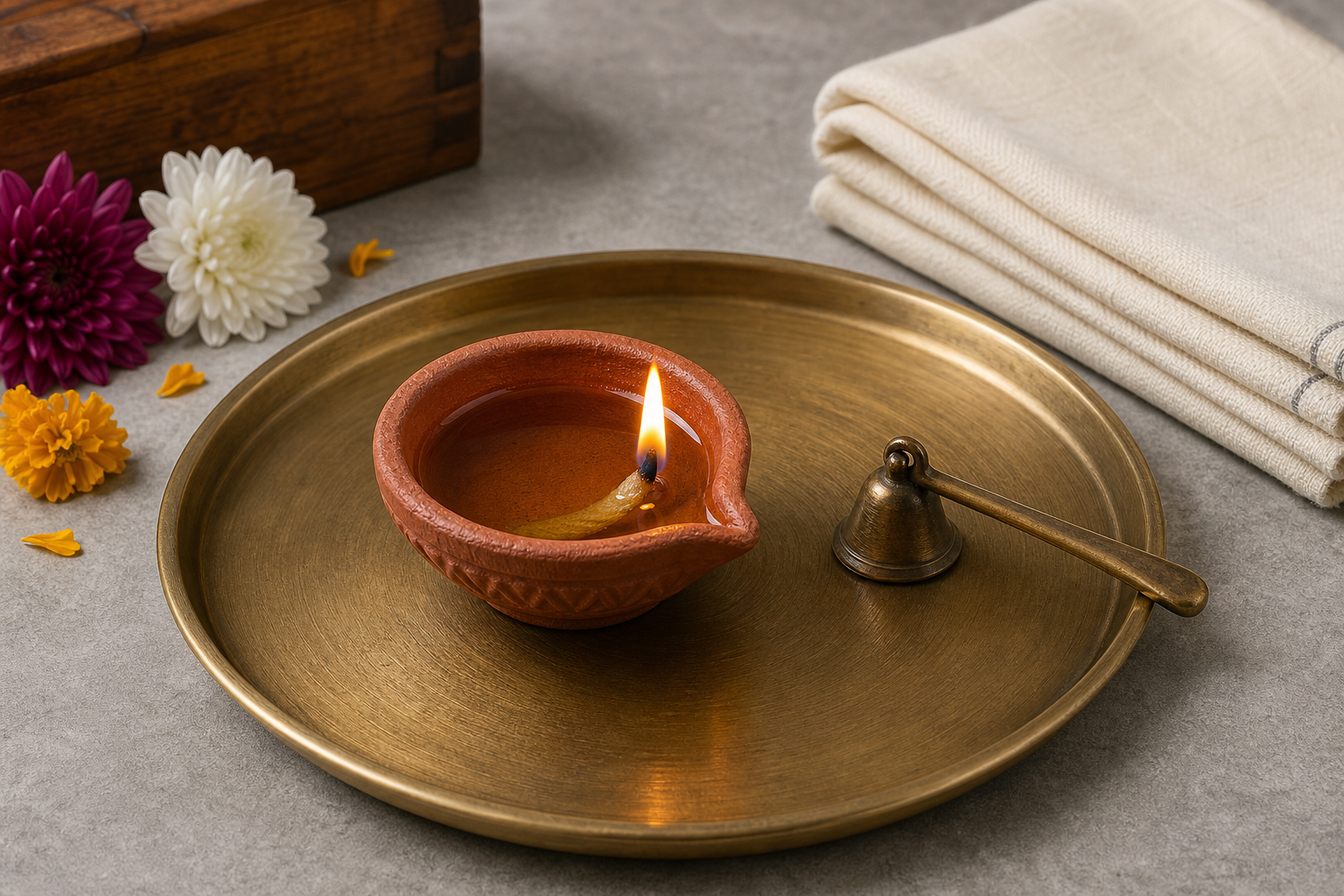
A diya works through the interaction of a heat-resistant reservoir, combustible fuel, and porous wick. As the source explains, cotton fibres lift liquid fuel through capillary action. Heat near the wick then vaporizes the fuel, and that vapour reacts with oxygen. The visible flame is therefore principally burning fuel vapour rather than behaving like a dry string set alight.
The flame is not chemically uniform. Its familiar yellow-orange glow largely comes from hot soot particles, while airflow, oxygen supply, fuel, temperature, and wick length influence its colour, size, and steadiness. More complete combustion mainly produces carbon dioxide and water; incomplete combustion can also create soot, carbon monoxide, and other compounds. These mechanics give practical significance to ventilation, wick control, and the avoidance of heavy smoke.
Before lighting
The lamp should stand level in a stable, heat-resistant holder, with space between the flame and cloth, paper, garlands, curtains, shelves, or other combustible material. Fuel should be added without overfilling, and the wick should be positioned so that it can draw fuel without producing an unnecessarily large flame. Tradition may determine the preferred oil, ghee, wick arrangement, direction, or time; those ritual choices should follow the relevant household, temple, or sampradaya guidance rather than an invented universal formula.
While the diya is burning
An open flame requires continuous responsible attention. Children and animals should not be able to reach it, and the lamp should not be carried after its vessel or fuel has become hot. A strong draft can make the flame unstable, but enclosing a burning diya can also affect oxygen and heat, so the surroundings should remain calm and adequately ventilated. Persistent smoke, an unusually high flame, fuel leakage, or an unstable vessel is a reason to extinguish the lamp safely and correct the condition before relighting it.
After worship
Unless a properly supervised tradition specifically maintains the lamp, it should be extinguished before the responsible person leaves or sleeps. The vessel and remaining fuel should be allowed to cool before handling or cleaning. Reverence for the diya is compatible with these precautions: tending the physical flame carefully is part of taking the ritual act seriously.
Science and devotion answer different questions here. Combustion science explains how fuel, oxygen, heat, and airflow produce the visible flame. Theology interprets jyoti as sacred presence, consciousness, or divine power. A devotional interpretation need not be presented as laboratory measurement, and a chemical explanation does not settle or invalidate the lamp’s religious meaning.
Key takeaways
- Deeparadhana is worship through light, while arati more specifically emphasizes the movement and offering of a flame in many traditions.
- Ancient lamp artefacts establish old lighting technologies but cannot, by themselves, prove an unchanged ritual or theology.
- Vedic Agni provides an important sacred background without being identical to a household diya.
- Upanishadic and Gita imagery connects light with knowledge, disciplined attention, and mental steadiness.
- Stable placement, adequate ventilation, active supervision, and careful wick and fuel management support both dignity and safety.
A living Deeparadhana practice can preserve inherited meanings while remaining historically careful and physically responsible. Its future strength lies in that integration: tradition guides the offering, knowledge clarifies its context, and attentive care protects the people and sacred spaces gathered around the flame.