
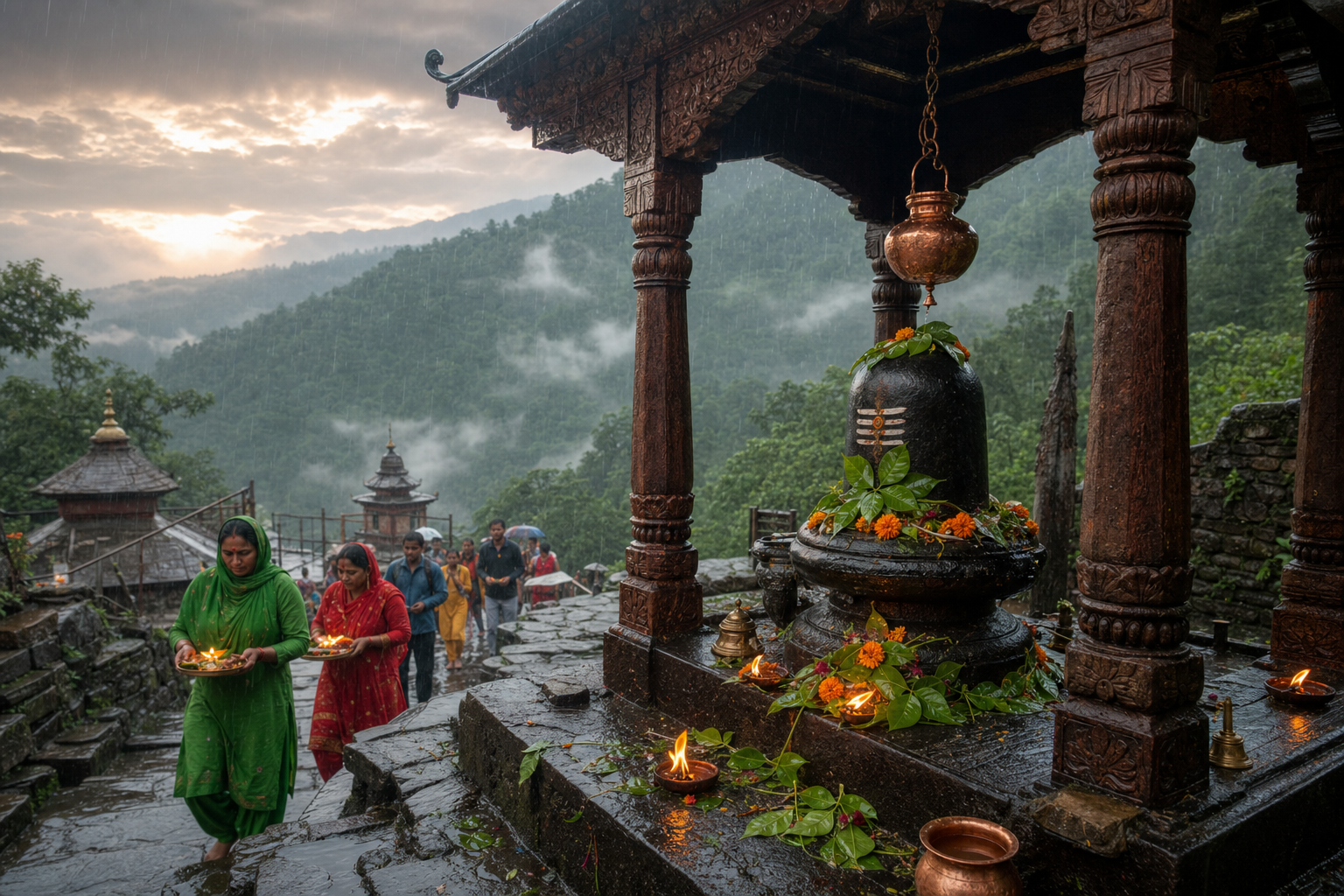
Shrawan 2026 in Nepal brings several calendars and forms of observance into the same month. The available source places the Nepali civil month from Friday, 17 July, through Sunday, 16 August 2026, while also stressing that lunar festivals and ritual timings require a separate panchang calculation.
The most useful approach is therefore layered: record the Bikram Sambat dates for civil and weekly planning, identify the four Shrawan Mondays, and verify tithi-based observances independently. This keeps household worship, pilgrimage, public schedules and inherited traditions aligned without treating every use of the name Shravan as the same calendar period.
Key takeaways
- According to the DharmaRenaissance source article, Shrawan 2083 lasts 31 civil days, from 17 July to 16 August 2026.
- The four Nepali Shrawan Somwar dates are 20 July, 27 July, 3 August and 10 August.
- Nepal’s solar Bikram Sambat month should not be assumed to match a lunar Shravan period used in another calendar or region.
- A vrata may combine prayer, restraint, ethical discipline, charity and service; the source does not present severe food restriction as its defining measure.
The civil month and its essential dates
DharmaRenaissance reports that Shrawan 1, 2083 BS falls on Friday, 17 July 2026, and Shrawan 31 falls on Sunday, 16 August. It identifies Shrawan as the fourth Bikram Sambat month, following Ashadh and preceding Bhadra. The year itself begins on Baisakh 1, so Shrawan is an important threshold rather than the Nepali New Year.
The source also connects Shrawan 1 with the opening of Nepal’s 2083/84 fiscal year. In 2026, the date therefore has both devotional and administrative relevance: it can affect household observance, pilgrimage preparation, institutional planning and the transition into a new public-finance cycle.
| Calendar checkpoint | Bikram Sambat date | Gregorian date |
|---|---|---|
| Beginning of Shrawan | Shrawan 1, 2083 | Friday, 17 July 2026 |
| First Shrawan Somwar | Shrawan 4 | Monday, 20 July 2026 |
| Second Shrawan Somwar | Shrawan 11 | Monday, 27 July 2026 |
| Third Shrawan Somwar | Shrawan 18 | Monday, 3 August 2026 |
| Fourth Shrawan Somwar | Shrawan 25 | Monday, 10 August 2026 |
| Aunsi reported in the source | Shrawan 27 | Wednesday, 12 August 2026 |
| End of Shrawan | Shrawan 31, 2083 | Sunday, 16 August 2026 |
Shrawan, Shravan, Saun, Saaun and Sawan are related names, but their use does not always identify an identical date range. The source describes Shrawan and Shravan as Sanskrit-derived romanizations, Saun or Saaun as familiar Nepali forms, and Sawan as common elsewhere in South Asia. For date-sensitive planning, the intended calendar matters more than the spelling.
Why solar and lunar calendars produce different answers
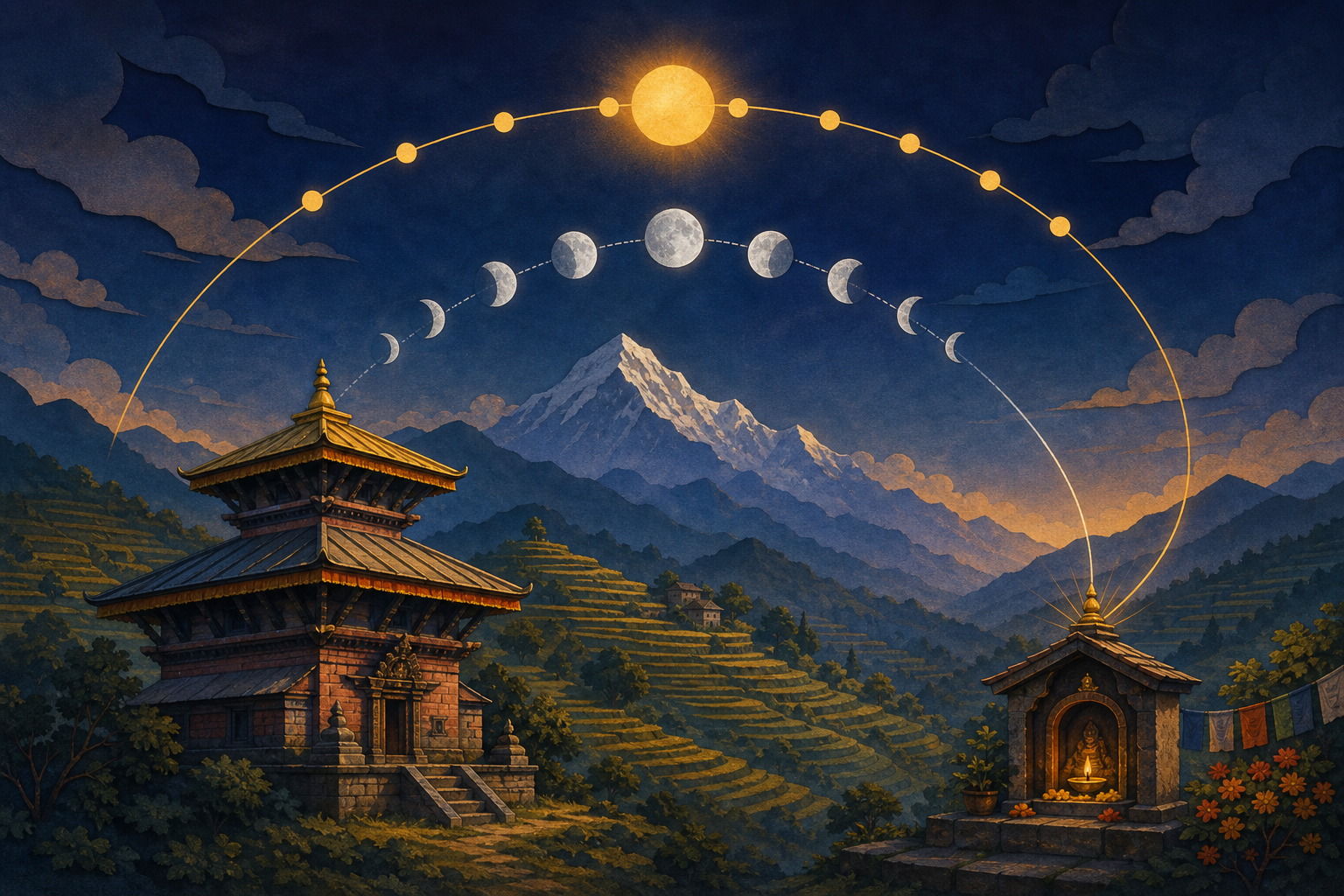
Nepal’s civil Shrawan follows the solar Bikram Sambat framework. The source associates its beginning with the Sun’s sidereal movement from Mithuna toward Karka, traditionally linked with Shrawan or Karka Sankranti. Because solar months do not contain an identical number of civil days every year, a remembered Gregorian start date should not be reused without checking the calendar for that year.
Many religious observances add a lunar layer. The source explains a tithi as a 12-degree increase in the angular separation of the Moon and Sun. Since a tithi is not fixed to a 24-hour civil day, a panchang may need to determine when it begins and ends and whether it prevails at sunrise, moonrise or another prescribed ritual time.
The 2083 calendar illustrates the distinction. DharmaRenaissance reports that Shrawan 1 occurs while Tritiya is listed, Aunsi falls on Shrawan 27, and the next bright fortnight begins around Shrawan 28. Consequently, only the closing part of the solar month overlaps that new lunar fortnight. Festivals popularly associated with Shravan, including Nag Panchami and Janai Purnima, should therefore not be assigned dates merely because of their seasonal association with the month.
A practical rule follows from this distinction: the Nepali Patro can anchor Shrawan’s civil dates and solar-month Mondays, while a locally applicable panchang, temple notice or family authority should guide tithi, parana, moonrise and muhurta questions. A regional lunar Shravan schedule should not be merged automatically with Nepal’s solar Shrawan 2083.
What a Shrawan Somwar vrata can include
The four Mondays reported for Shrawan 2083 provide a clear weekly rhythm for Shiva worship. The source treats a vrata as a deliberate vow broader than fasting alone. Depending on health, household practice and personal capacity, it may involve a full fast, fruit or other permitted foods, one simple vegetarian meal, or no dietary restriction. Prayer, recitation, pilgrimage, charity and disciplined speech or conduct can all form part of the commitment.
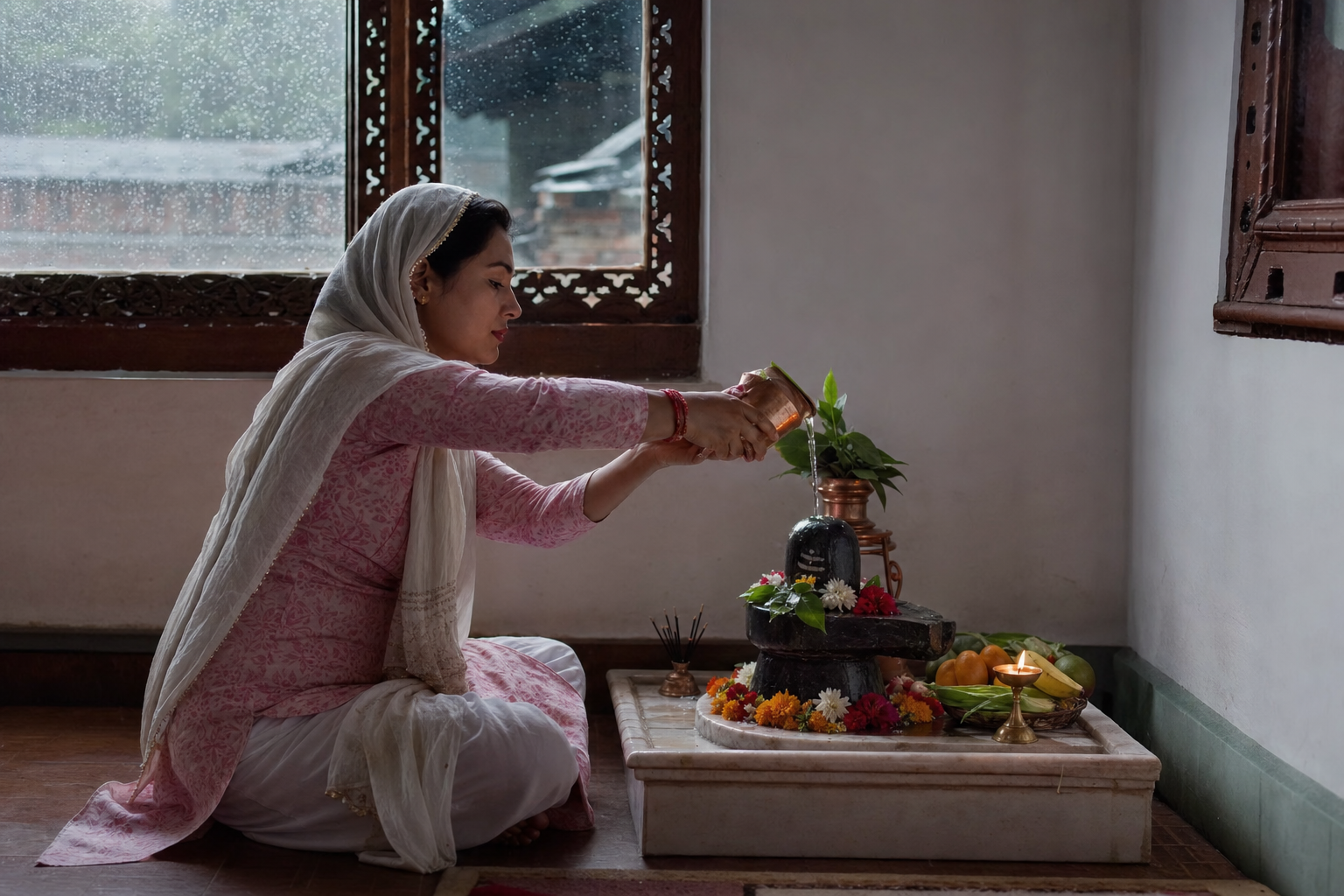
A modest home observance may begin with bathing, cleaning the worship area and forming a clear sankalpa. A lamp may be lit, followed by offerings such as water, flowers, fruit or bilva leaves to a Shiva linga or image. The source suggests practices including recitation of Om Namah Shivaya, japa, meditation, scripture reading or listening to a Shiva stotra, with gratitude, prasad and an act of dana or seva bringing the observance to a close.
The reporting deliberately leaves room for different Shaiva, Smarta, regional and family traditions. It also emphasizes that clean water is sufficient for a reverent home abhisheka. Milk, yogurt, honey, ghee, sugar and other substances belong to some customs but are optional; greater quantity is not presented as greater devotion. Sanitation, restrained use and respectful disposal remain important practical considerations.
Monsoon culture, Shiva devotion and public expression
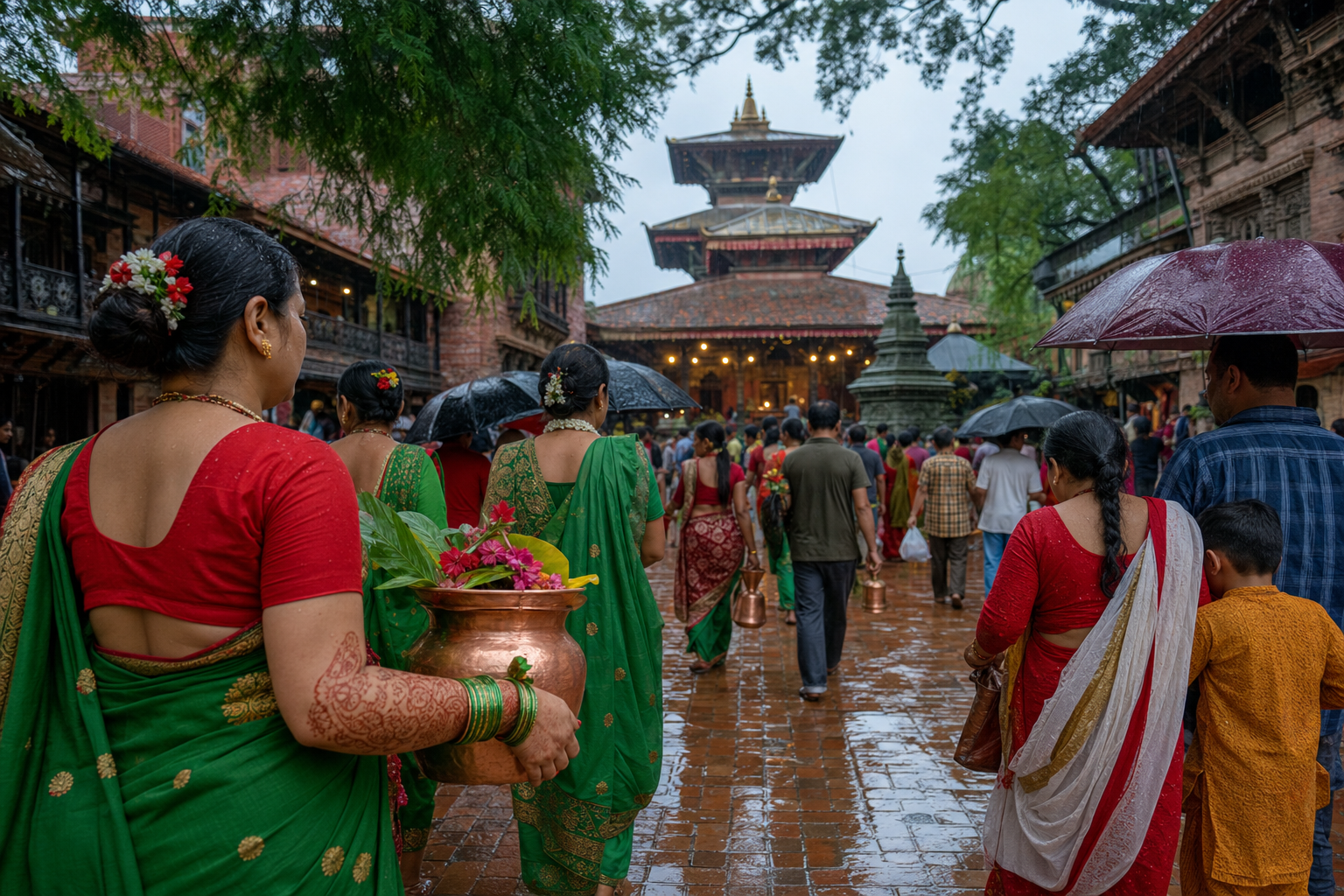
Shrawan’s meaning in Nepal extends beyond a sequence of dates. The source locates its observances within the monsoon landscape of renewed fields, green paddy, wet courtyards, active rivers and rain-darkened temple spaces. That setting gives visible context to themes of renewal, fertility, restraint and gratitude.
Green or multicolored bangles, pote, mehendi, and red or yellow clothing are described as cultural expressions found among women of different ages. Their meanings may include celebration, affection, auspiciousness or marital well-being, but the article cautions against treating them as universal requirements. Practice differs by family, region, generation and personal conviction, and participation remains voluntary.
The devotional association with Shiva is interpreted through the Samudra Manthan narrative, in which Shiva contains the destructive poison and becomes Neelkantha. The source presents this as sacred narrative and moral theology: spiritual power is expressed through disciplined responsibility for the welfare of others. It also identifies Pashupatinath as a major public setting for Shrawan devotion, complementing the quieter observances maintained in homes.
For 2026 planning, households can record the solar month and its four Mondays in advance, then confirm tithi-dependent festivals and ritual timings through the locally followed calendar. That pairing allows Nepal’s civil calendar and diverse devotional lineages to remain precise without being forced into a single schedule.