
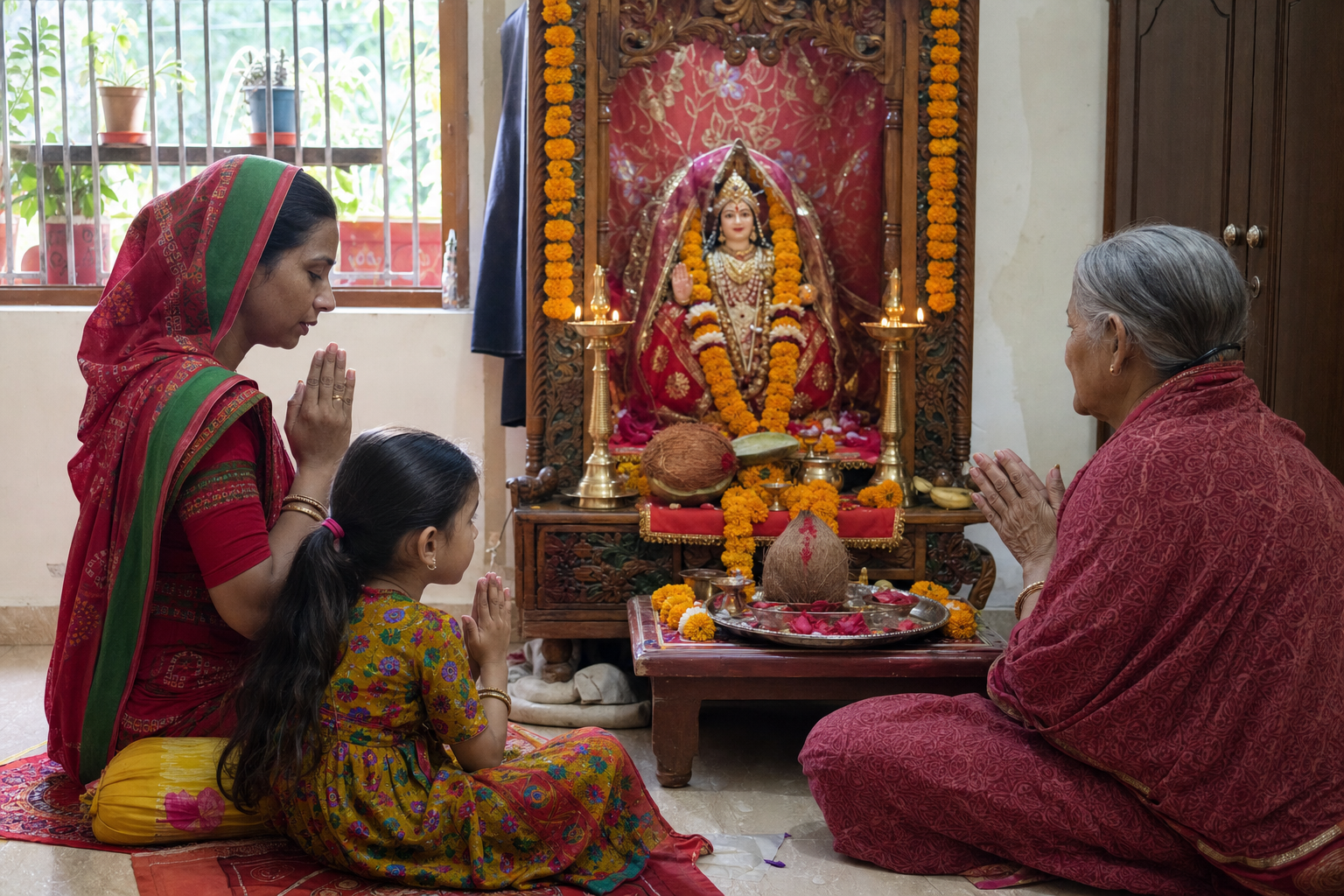
Dashama Vrat in Gujarat is reported for Thursday, August 13, through Saturday, August 22, 2026, with Wednesday, August 12, serving as a preparation or installation day in some households. The practical question is not simply when the observance begins: family custom, local lunar timings, fasting capacity and the chosen concluding rite all shape the ten-day discipline.
The two supplied guides agree on the central calendar and devotional framework while emphasizing that no single household procedure represents every Gujarati community. Read together, they offer a useful distinction between the observance’s common core and its legitimate regional variations.
The 2026 dates and the reason August 12 also appears
Both the DharmaRenaissance guide and the HinduPad-linked guide report that the formal ten-day sequence runs from Shravan Sud Padvo, or Shukla Pratipada, on August 13 to Shravan Sud Dasham, or Shukla Dashami, on August 22. Counting both dates produces ten civil days. The second guide additionally places the observance in Gujarati Vikram Samvat 2082.
| Ritual phase | Reported civil date | Lunar designation | How it is treated |
|---|---|---|---|
| Preparation or optional sthapana | Wednesday, August 12 | Ashadha Amavasya | Some families clean the altar and install the image; the first guide also associates the day with Divaso. |
| Opening of the ten-day count | Thursday, August 13 | Shravan Sud Padvo or Shukla Pratipada | The sankalpa and fasting discipline formally begin under the calendar convention used by both guides. |
| Customary concluding date | Saturday, August 22 | Shravan Sud Dasham or Shukla Dashami | The household completes the vow and follows its customary concluding worship, jagran or visarjan procedure. |
The apparent one-day difference is therefore usually a difference in ritual counting, not necessarily a calendar dispute. One lineage may emphasize installation on Amavasya, while another may identify the first day of waxing Shravan as the beginning of the vrata. The first supplied guide also notes that some local sequences conclude after a Navami-night jagaran. Family parampara remains important when choosing among these conventions.
Both reports explain that a tithi is determined by the changing angular relationship between the Sun and Moon rather than by a fixed midnight-to-midnight day. Its boundaries can fall at different civil times, and religious calendars often apply sunrise-based rules. The reported August 13-22 window establishes the Gujarat date sequence, but it does not provide one universal puja hour for every location.
Dasha Maa, difficult circumstances and the meaning of a vrata
The sources describe Dasha Maa as a regional manifestation of Goddess Shakti approached for protection, courage, health, household stability, prosperity and resilience during adversity. These are expressions of devotional hope, not assurances of a particular medical, financial or social result. The first guide explicitly separates religious aspiration from the practical work of obtaining treatment, pursuing education, managing finances or responding responsibly to hardship.
Popular images reportedly show the goddess with four arms and a camel mount, and temporary clay forms may emphasize the camel imagery through a Sandhani representation. Neither guide treats one commercial image as universally authoritative. They also report different community understandings of the relationship among Dasha Maa, Momai Maa, Ashapura Maa and Nagbai Maa: some traditions closely identify these divine forms, while others worship them as related but distinct. Preserving the names and relationships received through a household or temple is more faithful to this diversity than imposing a single formula.
The name is interpreted through more than one devotional association. The first guide notes that dasha can evoke a person’s state or circumstances and can also be associated with the number ten; the second discusses the popular connection with an adverse astrological dasha. The reports present these as meaningful interpretations within lived devotion, not as one settled etymology or a mechanical astrological remedy.
This context clarifies why the vrata cannot be reduced to a food restriction. The supplied accounts describe it as a chosen discipline combining sankalpa, worship, recitation or listening, ethical restraint, regulated food, family participation and a concluding rite. Truthfulness, patience, cleanliness, compassion and responsible conduct give the bodily fast its religious direction.
A practical household rhythm for the ten days
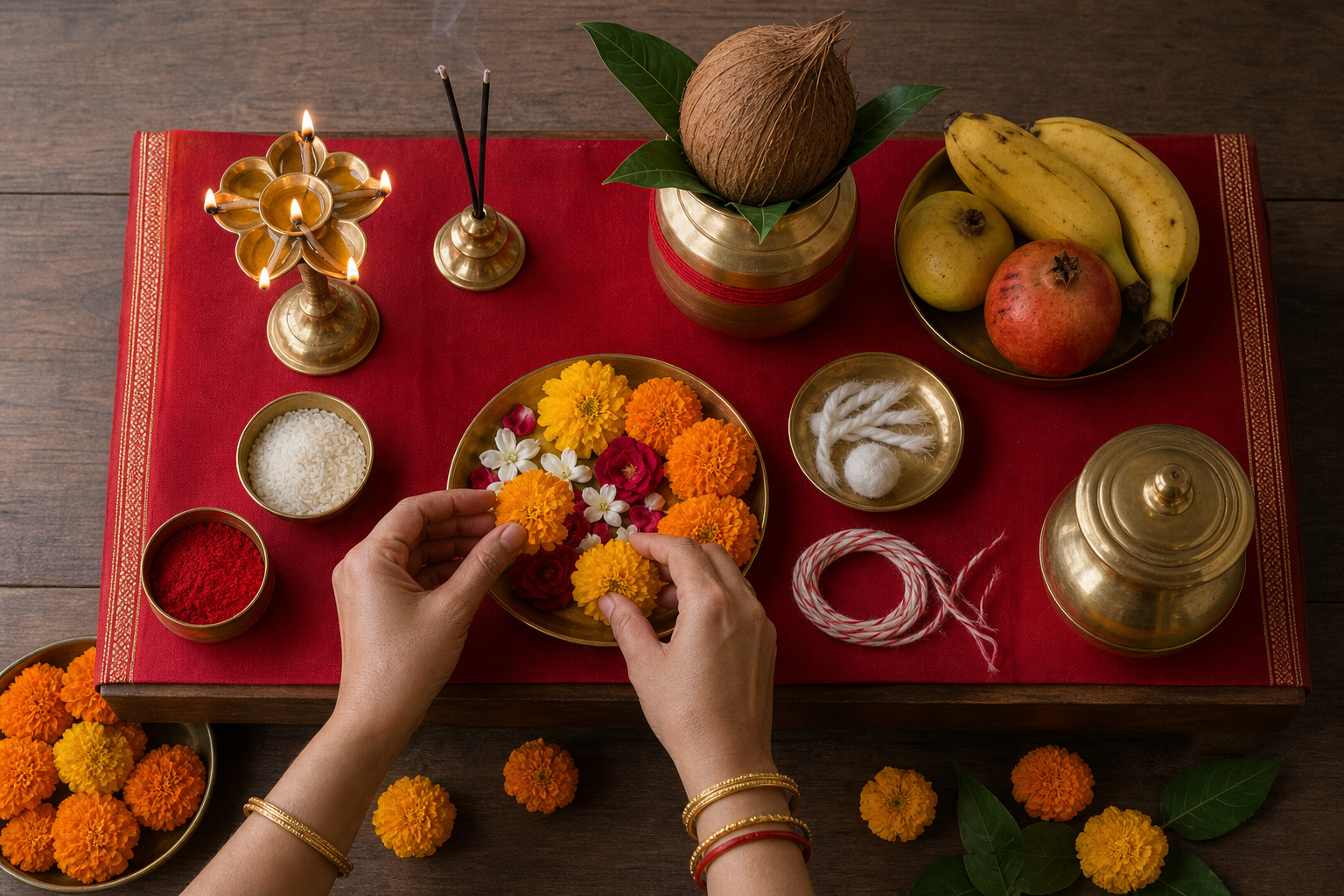
Preparation begins with the household’s established procedure. The second guide reports the use of a temporary clay murti, a Sandhani form or a framed image placed on a clean, stable altar. Commonly mentioned materials include a fresh cloth, lamp, incense, flowers, kumkum, unbroken rice, fruit, water, prasad ingredients and a text or recording of the Dashama Vrat Katha. Wheat, betel leaves and a red wrist thread with ten knots are also documented customs, but the report does not present them as compulsory in every lineage.
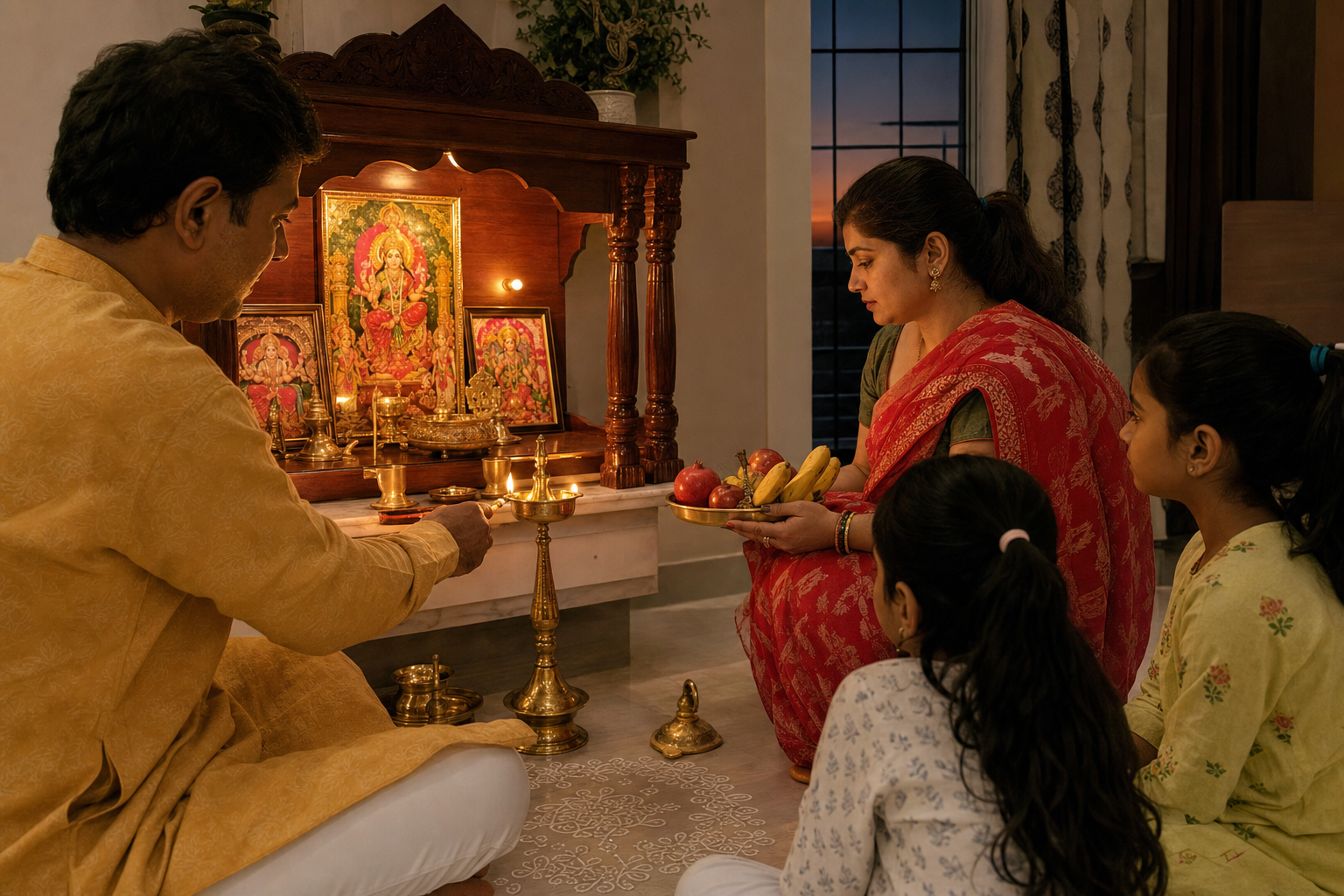
The daily pattern described across the two sources is deliberately manageable: bathing and altar care, lighting the lamp, making offerings, hearing or reading the katha, performing aarti and distributing prasad. Consistency gives the observance its shape. Family members who are not fasting may still participate by arranging flowers, preparing permitted food, reading the narrative or caring for the worship space.
The sources do not establish one universal fasting menu or level of austerity. A devotee should therefore retain the rule received through family or temple practice while accounting for genuine health needs. Altering a dietary restriction for safety does not erase the larger commitment to worship and ethical discipline. Religious fasting should not displace necessary food, medicine or professional care.
Lamp practice also varies. The second guide reports that some households maintain a ghee lamp throughout the vrata, while others light it for morning and evening worship. A continuous flame should not be kept where children, animals, loose fabric or an unattended room make it dangerous. The same principle of non-harm supports an unpainted or naturally colored clay image, reusable vessels, seasonal flowers and minimal plastic; glitter, synthetic foam, thermocol and toxic paint complicate immersion and may damage waterways.
How local custom and location should guide observance
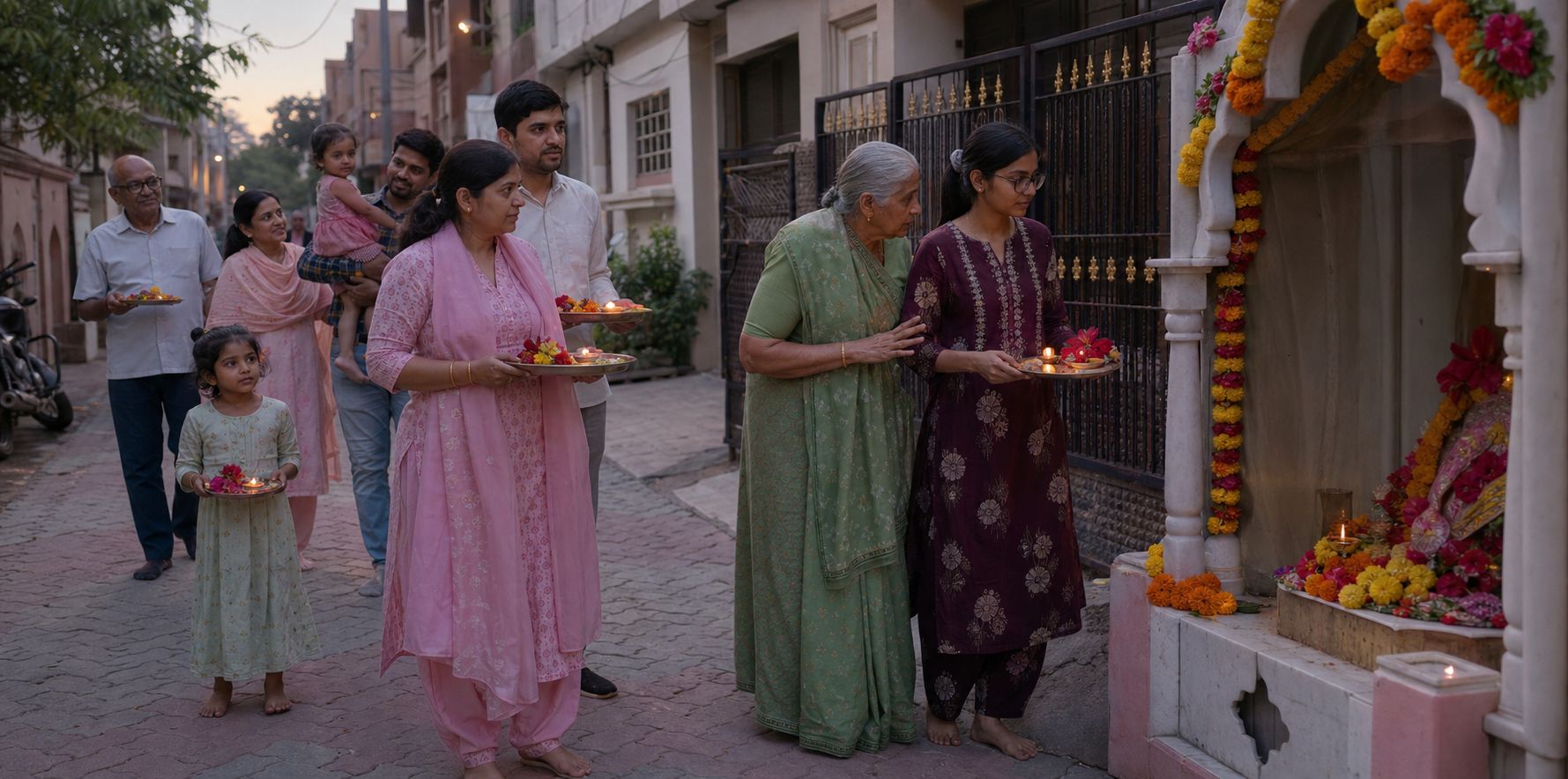
The strongest shared message in the two reports is that variation should be handled through informed continuity. Installation on August 12 or August 13, the form of the image, the offerings used, the duration of lamp-lighting and the choice between jagran and visarjan may differ without invalidating the common ten-day framework. A knowledgeable family elder, temple priest or community tradition is a better guide to such choices than an unsupported universal rule circulated online.
Location matters as well. Gujarat generally follows an amanta lunar convention, under which the month changes after Amavasya; this places Shravan Sud Padvo immediately after Ashadha Amavasya in the reported 2026 sequence. A household outside Gujarat should use a panchang calculated for its own city when exact tithi boundaries or sankalpa timings are required. A calendar prepared for Gujarat cannot automatically supply precise local timings for every diaspora community.
The first guide also cautions against merging this Shravan observance with the post-Holi Dasha Mata vrata reported in Rajasthan and parts of North and Central India. Both involve devotion to the Divine Mother, but their seasonal placement, narratives and ritual details belong to different regional settings unless a community’s own tradition connects them.
Key takeaways for planning Dashama Vrat 2026
- Use August 13-22 as the reported formal ten-day Gujarat sequence.
- Treat August 12 as a preparation or sthapana date only where family custom prescribes it.
- Confirm exact tithi and puja timings with a panchang calculated for the place of observance.
- Build the vrata around sankalpa, steady daily worship, katha and ethical conduct rather than fasting alone.
- Follow inherited custom for optional materials and concluding rites while prioritizing health, fire safety and environmentally responsible immersion.
Before August 2026, households can clarify their installation convention, obtain the appropriate local panchang and prepare a sustainable worship arrangement. That advance coordination leaves the ten days themselves focused on disciplined devotion rather than last-minute uncertainty.
References
- DharmaRenaissance Blog – Dashama Vrat 2026 in Gujarat: Complete Guide to Dates, Puja, Fasting and Katha
- HinduPad – Dashama Vrat 2026 in Gujarat: Complete 10-Day Guide to Dates, Puja and Katha