, , ,

Lashkar’s Reported ‘Water Jihad’: Mangla Dam and the Indus Treaty Crisis Explained

17 min read
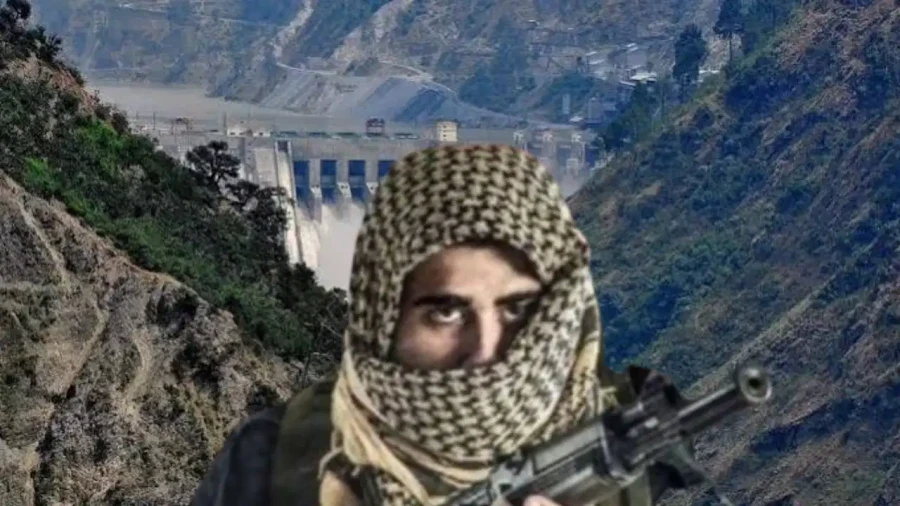
Representative image of a scarf-covered armed militant holding a rifle before a mountain dam, illustrating reports about Lashkar-e-Taiba activity in Pakistan.

A reported threat at the intersection of terrorism and water security

A July 2026 TV9 Hindi report, citing Bharatiya security inputs, alleges that Pakistan-based Lashkar-e-Taiba is preparing cadres for waterborne operations associated with Mangla Dam in Pakistan-occupied Jammu and Kashmir (PoJK). The report attributes statements to senior commander Haris Dar indicating that recruits had completed a 10-day basic course and would proceed to more advanced training. It further claims that Dar connected the programme to Pakistan’s dispute with Bharat over water and the Indus Waters Treaty.

The allegations are strategically significant, but their evidentiary status must be stated precisely. They originate in intelligence-based media reporting; publicly available material does not independently establish the size of the programme, the identities of all participants, the precise training sites or the existence of an approved attack plan. The responsible conclusion is therefore not that an operation has been conclusively demonstrated, but that a reported training development deserves careful investigation because it resembles capabilities Lashkar-e-Taiba has cultivated before.

The expression “water jihad” should also be treated as reported militant rhetoric rather than as a neutral analytical category. In this context, it describes the alleged use of violent extremist propaganda to frame rivers, reservoirs and treaty disputes as grounds for terrorism. It must not be projected onto Muslims generally or confused with the diverse theological meanings attached to the word “jihad.” Lashkar-e-Taiba is a specific terrorist organisation listed under the United Nations Security Council’s ISIL and Al-Qaida sanctions regime; responsibility belongs to the organisation, its operatives, facilitators and sponsors—not to an entire religious community.

Why Mangla Dam has exceptional strategic symbolism

Mangla Dam stands on the Jhelum River near Mirpur in territory administered by Pakistan and claimed by Bharat. It is one of Pakistan’s most important reservoirs and hydropower assets. Its vast water surface, shoreline and associated infrastructure make it relevant to navigation, reservoir safety, electricity generation and irrigation management. Those characteristics may also make the surrounding environment attractive for clandestine training, although suitability does not by itself prove that training is occurring.

Mangla is inseparable from the history of the Indus Waters Treaty. The dam was developed as a central component of the replacement works that enabled Pakistan to transfer and regulate supplies after the treaty allocated the Ravi, Beas and Sutlej to Bharat and the Indus, Jhelum and Chenab principally to Pakistan. A structure created to stabilise a negotiated river settlement has therefore become the setting for allegations that a terrorist organisation is exploiting the same water dispute. That reversal gives the reported training programme much of its political and psychological force.

Some reports have associated Mangla Reservoir with preparations for the November 2008 Mumbai attacks. The public judicial record, however, requires a more careful formulation. The Supreme Court record in the Ajmal Kasab case conclusively documents specialised marine instruction, navigation, sailing and the use of global positioning systems, but describes a final phase of marine training near Karachi. Claims that part of the preparation occurred specifically at Mangla appear in subsequent reporting, yet the location should not be presented as uniformly established by the court record. What is beyond serious dispute is that Lashkar developed a maritime capability and used it to send ten attackers by sea to Mumbai, where 166 people were killed.

That history explains why even an unverified report of renewed water training attracts attention. The relevant precedent is not merely the use of boats; it is the organisation’s demonstrated ability to combine reconnaissance, movement across water, communications, deception and attacks on civilians. A reservoir-based curriculum could support several capabilities without revealing which, if any, has been selected for an operation. Intelligence analysis must consequently distinguish capability, intent, planning and imminent execution rather than treating them as interchangeable stages.

The Pahalgam attack and the renewed security confrontation

The latest allegations emerged after the 22 April 2025 terrorist attack near Baisaran meadow in Pahalgam. Twenty-five tourists and one local civilian were killed in religion-based targeted violence, according to India’s National Investigation Agency (NIA). The attack generated national grief because ordinary families visiting a scenic destination became targets. For communities that depend on pilgrimage, tourism and seasonal trade, the consequences extended beyond the immediate loss of life to fear, lost income and damaged social trust.

Early reporting connected The Resistance Front (TRF), widely identified as a Lashkar proxy, to the attack. Subsequent NIA filings provide a more formal evidentiary record. The agency’s December 2025 chargesheet named a Pakistan-based handler, three attackers killed during Operation Mahadev and two arrested accused; a July 2026 supplementary chargesheet added Hafiz Saeed and described LeT and TRF as organisational participants in the conspiracy.

The TV9 account separately alleges that Saifullah Kasuri, also known in some reporting as Saifullah Khalid, was seen at the Mangla training facility. Other media reports have portrayed him as a senior Lashkar figure and alleged that he played a role in the Pahalgam conspiracy. Those claims should remain explicitly attributed. The publicly described NIA chargesheets do not establish Kasuri as the judicially proven mastermind of the attack. His alleged presence at Mangla may be an important intelligence lead, but it is not a substitute for corroborated evidence, an indictment or a court finding.

This distinction is not semantic caution for its own sake. Exaggerated attribution can obscure the actual command chain, encourage propaganda and weaken the credibility of legitimate counter-terrorism concerns. A rigorous assessment asks who authorised the training, who financed it, which instructors were involved, whether transport and communications networks were activated, and whether the activity can be corroborated through independent human, financial, geospatial and technical intelligence.

How the Indus Waters Treaty divided the river system

The Indus Waters Treaty was signed in 1960 after nine years of negotiations facilitated by the World Bank. It assigned the eastern rivers—Ravi, Beas and Sutlej—to Bharat, subject to limited exceptions, while giving Pakistan unrestricted use of the western rivers—Indus, Jhelum and Chenab—again subject to specified Bharatiya uses. The arrangement is often compressed into a simple division, but the actual instrument is an elaborate engineering and legal framework covering irrigation, hydropower, storage, data exchange, inspections and dispute settlement.

On the western rivers, Bharat retained rights for domestic and non-consumptive uses, limited agricultural use, prescribed storage and run-of-the-river hydropower generation subject to technical constraints. “Run-of-the-river” does not mean that a project has no reservoir function whatsoever. Such a plant may have limited pondage—the temporary storage required to regulate generation—but it is not designed to provide the multi-season storage associated with a large conventional reservoir.

Several technical expressions have therefore become geopolitical terms. “Pondage” concerns the volume temporarily held for power generation. “Dead storage” refers to water below the lowest operational outlet. “Freeboard” is the vertical distance between the maximum water level and the top of a dam. Spillway gates, turbine intakes and low-level outlets influence how a project can manage sediment, floods and generation. Pakistan has argued that some design choices could give Bharat excessive control over the timing of western-river flows; Bharat has maintained that its projects are legitimate and necessary uses permitted by the treaty.

The treaty established a Permanent Indus Commission with one commissioner from each country. It also created graduated procedures: ordinary “questions” are addressed through the commission, specified technical “differences” may go to a neutral expert, and legal “disputes” may be referred to an ad hoc Court of Arbitration. The World Bank’s role is mainly procedural. It does not govern the rivers, decide the merits of each disagreement or operate the arbitral bodies.

Bharat’s decision to place the treaty in abeyance

On 23 April 2025, one day after the Pahalgam attack, Bharat announced that the treaty would be held “in abeyance” until Pakistan credibly and irrevocably ended its support for cross-border terrorism. The decision linked water cooperation directly to national security. Bharatiya officials subsequently reiterated the maxim that “blood and water cannot flow together,” while statements about preventing “not a single drop” from reaching Pakistan conveyed a determination to maximise Bharatiya use of the river system.

Those statements must be separated into legal, political and physical dimensions. Politically, they communicate that treaty cooperation can no longer be insulated from terrorism. Legally, Pakistan disputes Bharat’s ability to suspend the instrument unilaterally. Article XII of the treaty text provides that it continues in force until terminated by a duly ratified treaty between the two governments. Bharat’s position invokes exceptional national-security circumstances rather than the treaty’s ordinary termination mechanism, leaving a dispute for which the parties currently recognise no common adjudicatory outcome.

Physically, abeyance does not create instant capacity to capture or divert the enormous flows of the Indus, Jhelum and Chenab. Much of Bharat’s existing western-river infrastructure consists of run-of-the-river projects with restricted pondage. Large diversion systems and multi-season storage require extensive engineering, environmental review, financing and construction. “Not a single drop” is therefore better understood as strategic rhetoric and a statement of long-term policy direction than as a description of present hydrological capability.

The parallel arbitration controversy

The treaty dispute is complicated by parallel proceedings concerning the Kishenganga and Ratle hydropower projects. Pakistan requested a Court of Arbitration, while Bharat sought a neutral expert. The World Bank ultimately facilitated both processes after efforts to secure a mutually agreed route failed. Bharat argues that the simultaneous processes are incompatible and that the arbitral body was improperly constituted; the Court of Arbitration has held that it possesses competence to proceed.

Precision is essential when describing the resulting decisions. The Permanent Court of Arbitration is serving as secretariat to the treaty-based ad hoc Court of Arbitration; it is not itself functioning as a standing international court deciding the dispute. In August 2025, the Court of Arbitration issued an award addressing general interpretation and design constraints for Bharatiya run-of-the-river projects. Bharat rejected that award and the body’s authority.

On 15 May 2026, the Court rendered a supplemental award on maximum pondage. According to the official summary, projections of installed capacity and anticipated load must be realistic, well founded and defensible rather than hypothesised to inflate permissible pondage. The decision also stated that pondage calculations must account for applicable minimum-flow obligations connected with inter-tributary diversion or the prevention of significant environmental harm. It did not impose one universal flow figure for every project; any obligation is tied to the design and operation of the specific plant.

Bharat categorically rejected the May 2026 decision as null and void, maintained that the Court was illegally constituted and reiterated that the treaty remained in abeyance. The Court, for its part, described its unanimous decision as binding and without appeal. The result is not simply a technical disagreement over dam calculations. It is a deeper contest over jurisdiction, treaty continuity and whether procedures created during an era of limited hydropower development can manage contemporary strategic distrust.

What “weaponisation of water” can—and cannot—mean

The phrase “water weaponisation” often creates an image of an upstream state turning an entire river on or off. That image is hydrologically misleading. The western rivers carry large, highly seasonal flows generated by snowmelt, glaciers and monsoon rainfall. Without enormous storage and diversion capacity, an upstream state cannot simply retain all of that water. Reservoir capacity, dam safety, sediment, power demand and downstream channel limits constrain operations.

The more credible concern involves timing rather than total annual volume. Temporary withholding during a low-flow period, abrupt operational releases, delayed hydrological information or changes that coincide with crop-sowing schedules can impose costs downstream even when the yearly quantity changes relatively little. Conversely, inaccurate claims about deliberate manipulation can inflame public fear when variations were caused principally by rainfall, snowmelt, sedimentation or ordinary dam operations. Reliable real-time data are therefore both an engineering requirement and a form of crisis prevention.

Pakistan’s sensitivity is structural. Its Indus Basin Irrigation System links reservoirs, barrages, canals and groundwater across a predominantly arid country. The Food and Agriculture Organization has noted that agriculture consumes roughly 90 per cent of Pakistan’s available freshwater, while the basin produces most of the country’s agricultural output. Surface-water variability also affects aquifer recharge and pumping costs, meaning a change in canal supply can be transmitted into groundwater stress.

For a cultivator near the tail of a canal, the treaty is not an abstract diplomatic document. A mistimed shortage may determine whether wheat is planted, livestock is watered or a household must borrow money for pumping. The same human dependence explains why reckless militant activity around dams and canals would harm civilians on both sides rather than advance any legitimate political cause.

How terrorism changes the water-security risk model

A terrorist organisation does not need to control a river to weaponise public anxiety about it. Propaganda can portray normal fluctuations as hostile acts, threaten critical infrastructure, provoke costly security deployments or attempt violence timed to periods of drought and political confrontation. The psychological effect may exceed the direct physical effect, particularly when audiences already fear water scarcity.

The reported Mangla programme could theoretically support movement across water, reconnaissance, infiltration or attacks against river-related infrastructure. These remain risk categories, not verified operational plans. Public analysis should avoid publishing detailed vulnerabilities or tactical instructions. From a defensive perspective, the important insight is that reservoirs, dams, barrages, hydropower stations, navigation routes and canal control systems form an interconnected network whose disruption can produce cascading consequences for electricity, irrigation, drinking water, transport and emergency response.

Critical-water infrastructure also has a cyber-physical character. Modern projects rely on sensors, communications, automated controls and remote data. Security must therefore cover personnel vetting, physical access, vessel management, cyber defence, communications resilience and continuity planning. A focus confined to armed guards at a dam would overlook the larger system through which operational information is collected and decisions are transmitted.

The most effective early-warning architecture would integrate counter-terrorism intelligence with hydrometeorological observation, satellite imagery, infrastructure monitoring, cyber-threat reporting and local community information. River-flow anomalies should first be tested against meteorological and operational explanations before being treated as hostile acts. Equally, suspicious movement near protected assets should be assessed alongside financing, communications and known militant networks rather than interpreted in isolation.

This approach helps prevent two opposite failures. Underreaction may allow a genuine threat to mature, while overreaction can transform uncorroborated propaganda into a diplomatic crisis. Structured confidence levels, independent corroboration and clear separation between warning intelligence and courtroom evidence are indispensable.

The dangerous loss of hydrological communication

The treaty’s abeyance has consequences beyond the allocation of water. Its procedures supported the exchange of hydrological information, project notifications, inspections and regular contact between technical officials. When those channels weaken, each country has less capacity to distinguish a flood warning, maintenance event or unexpected flow change from hostile manipulation.

This is a classic security dilemma. Bharat views unconditional cooperation as strategically untenable while cross-border terrorism persists. Pakistan argues that reduced data exchange magnifies the danger faced by a downstream population. Both propositions can be true at the same time. The policy challenge is to preserve narrowly defined life-saving communication—particularly flood, dam-safety and emergency notification—without pretending that the underlying terrorism and treaty disputes have been resolved.

Technical communication is not a concession to militancy. It can deny terrorist groups the ambiguity they exploit. Authenticated, time-stamped and independently reviewable flow information reduces the space for false claims, panic and retaliatory miscalculation. Neutral technical verification, if accepted by both governments, could serve the same protective purpose without deciding the broader political dispute.

Climate extremes multiply the human consequences

The Indus confrontation is unfolding amid worsening climate volatility. Pakistan’s 2025 monsoon produced flash floods, landslides and major river flooding. A subsequent International Federation of Red Cross and Red Crescent Societies update recorded a national death toll of 1,037 and millions of affected people. Punjab, Pakistan’s agricultural heartland, experienced extensive inundation and crop losses.

Flood and drought risks should not be reduced to a bilateral blame narrative. Extreme precipitation, glacial change, heat, land degradation, urban encroachment, sedimentation and inadequate drainage all shape the basin’s vulnerability. Dam operations can mitigate or aggravate particular events, but they do not create the basin’s entire hydro-climatic system. Sound analysis must examine each event through measured inflows, storage levels, release records and weather data.

Militant interference would make that already difficult environment more dangerous. An attack or credible threat could interrupt operations precisely when engineers need access, communication and public compliance. Disinformation during a flood could also trigger chaotic evacuation or distrust of genuine warnings. Community preparedness, multilingual alerts, redundant communications and transparent post-event review are consequently part of counter-terrorism as well as disaster management.

A proportionate security and policy response

Bharat’s immediate priority is to verify whether the reported programme represents routine militant training, a propaganda exercise, capability development or preparation for a specific operation. Surveillance should concentrate on organisations and individuals supported by corroborated intelligence, with lawful coordination among border forces, intelligence agencies, police, dam authorities, hydrologists and cyber-security teams.

Infrastructure protection should be risk based rather than theatrical. Authorities need updated threat assessments, layered access controls, tested incident-command arrangements, secure communications and continuity plans for essential water and power services. Exercises should involve technical operators and civilian administrations because a successful response would depend as much on maintaining public services and credible information as on neutralising attackers.

Diplomatically, evidence concerning any Lashkar training should be documented to standards capable of supporting sanctions, prosecutions and international cooperation. Public claims that run ahead of verifiable evidence may generate temporary attention but make sustained accountability harder. Financial trails, travel records, communications, command relationships and imagery can create a more durable case than rhetoric alone.

Pakistan bears a corresponding responsibility to prevent its territory and territory under its control from being used for terrorist training. Protecting Mangla Dam and the communities dependent upon it is also a Pakistani national interest. Any tolerance of armed groups near strategic water infrastructure would expose Pakistan’s own population, economy and international standing to severe risk.

Social cohesion is part of national resilience

Lashkar’s reported effort appears designed not only to build capability but also to frame water as a civilisational and religious battlefield. That framing should be rejected. Terrorism attempts to replace lawful political disagreement with collective fear and communal suspicion. A resilient response protects citizens of every tradition while refusing to blur the distinction between a terrorist organisation and wider religious populations.

For Hindu, Buddhist, Jain and Sikh communities—and for all other communities sharing the subcontinent—water carries ethical, cultural and practical meaning beyond state rivalry. Rivers support worship, agriculture, trade and everyday life. Protecting them from terrorism, reckless propaganda and ecological damage reinforces social unity rather than diminishing legitimate national-security concerns.

The larger regional danger

The Indus basin now contains three mutually reinforcing risks: persistent cross-border terrorism, an unresolved legal conflict over treaty obligations and accelerating climate stress. Each can magnify the others. A terrorist threat can harden treaty policy; reduced cooperation can intensify water anxiety; and climate extremes can make propaganda about deliberate manipulation more believable.

The greatest danger is therefore not a simplistic scenario in which one state suddenly switches off a river. It is cumulative escalation: disputed flow data, inflammatory declarations, militant threats, infrastructure alarms and rapid political decisions unfolding between nuclear-armed neighbours. Preventing that chain requires credible deterrence against terrorism, technically literate water policy and protected channels for emergency communication.

The reported Mangla training should neither be dismissed nor sensationalised. It is a serious intelligence allegation that fits Lashkar-e-Taiba’s historical interest in specialised infiltration, yet its details remain incompletely verified in public. The prudent conclusion is that shared rivers must be treated simultaneously as critical infrastructure, ecological systems and sources of human life. Allowing a terrorist organisation to redefine them as instruments of ideological war would be a strategic failure for the entire Bharatiya subcontinent.


Inspired by this post on Hindu Post.


Graphic with an orange DONATE button and heart icons on a dark mandala background. Overlay text asks to support dharma-renaissance.org in reviving and sharing dharmic wisdom. Cultural Insights, Personal Reflections.

FAQs

What does the reported ‘water jihad’ claim mean, and has it been proven?

In the article, ‘water jihad’ is treated as militant propaganda framing rivers, reservoirs and the treaty dispute as grounds for terrorism, not as a neutral term or a description of Muslims generally. A July 2026 intelligence-based media report alleges waterborne training linked to Mangla Dam, but public material does not independently establish the programme’s size, precise sites, participants or an approved attack plan.

Why is Mangla Dam strategically important in this dispute?

Mangla Dam stands on the Jhelum near Mirpur and is a major reservoir and hydropower asset connected to navigation, electricity and irrigation management. It was also central to the treaty’s replacement works, while its large reservoir environment gives reported waterborne-training allegations strategic and psychological significance without proving that such training occurred.

What is established about Lashkar-e-Taiba and the 2025 Pahalgam attack?

The article reports that NIA filings described LeT and TRF as organisational participants in the Pahalgam conspiracy and that a July 2026 supplementary chargesheet added Hafiz Saeed. It cautions that media allegations about Saifullah Kasuri’s role or presence at Mangla are not equivalent to corroborated evidence, an indictment or a court finding.

How does the Indus Waters Treaty allocate rivers and handle disagreements?

The treaty assigned the Ravi, Beas and Sutlej to Bharat subject to limited exceptions, while the Indus, Jhelum and Chenab went principally to Pakistan subject to specified Bharatiya uses. Ordinary questions go through the Permanent Indus Commission, specified technical differences may go to a neutral expert, and legal disputes may be referred to an ad hoc Court of Arbitration.

What do ‘run-of-the-river’ and ‘pondage’ mean?

A run-of-the-river hydropower project uses river flow and may have limited pondage—temporary storage used to regulate generation—but it is not designed for the multi-season storage of a large conventional reservoir. The amount and operation of pondage matter because they can affect the timing of downstream flows even when annual water volume changes relatively little.

Can Bharat immediately stop all western-river water after placing the treaty in abeyance?

No. Much of Bharat’s existing western-river infrastructure is run-of-the-river with restricted pondage, while large storage or diversion systems require extensive engineering, environmental review, financing and construction; Pakistan also contests the legality of unilateral abeyance.

How can terrorism and reduced hydrological data exchange increase water-security risks?

Militants can exploit public fear, threaten interconnected cyber-physical infrastructure or time activity around drought and political tension, while weaker data exchange makes ordinary flow changes harder to distinguish from hostile manipulation. The article favours evidence-led counter-terrorism, protected infrastructure, reliable emergency hydrological communication and social cohesion.

Leave a Reply