
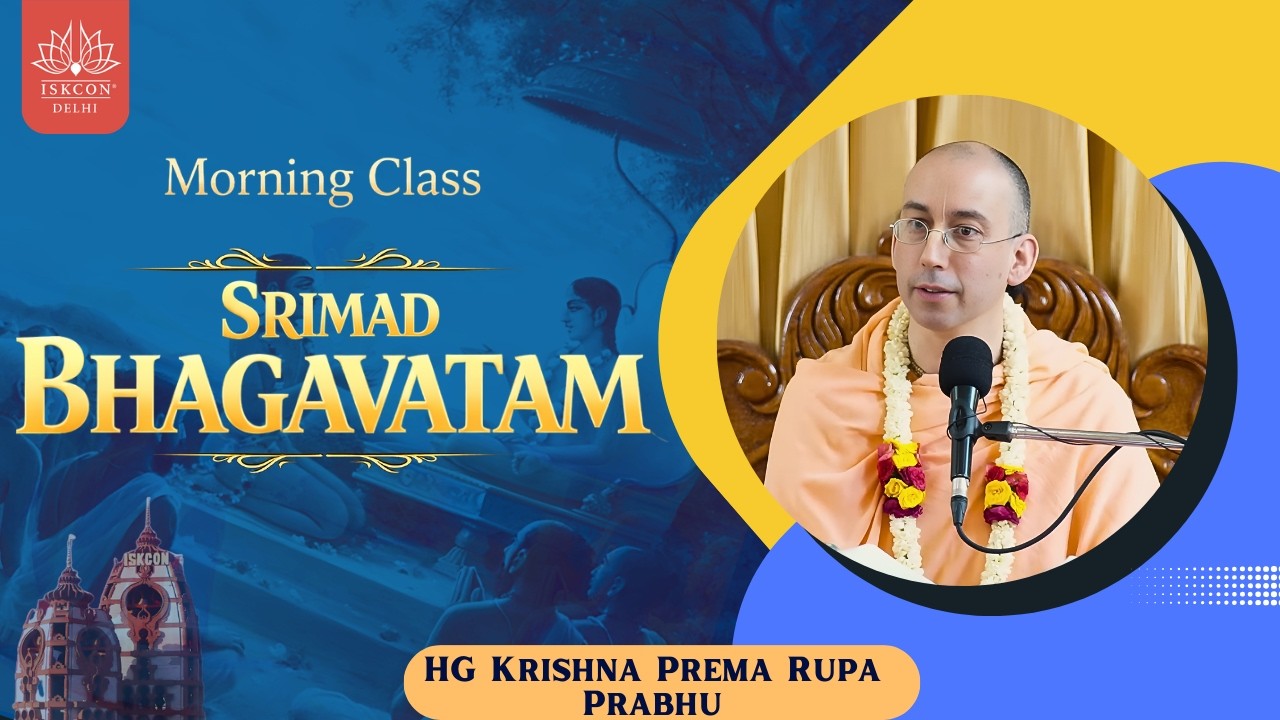
A morning class by HG Krishna Prema Rupa Prabhu, reflecting on CC Madhya-līlā 2.6.179, invites a careful look at a pivotal literary decision in the Caitanya-caritāmṛta: within the Second Chapter of the Madhya-līlā, pastimes from the Lord’s last twelve years appear, thereby gesturing toward the antya-līlā. Many readers instinctively ask why such a preview is embedded here. The question is not merely editorial; it opens a window into how Gauḍīya Vaiṣṇava texts choreograph devotion (bhakti), aesthetics (rasa), and memory to help readers experience, rather than only observe, the progressive deepening of Sri Chaitanya Mahaprabhu’s inner states.
Situated in the broader architecture of Hindu scriptures and devotional storytelling, the Caitanya-caritāmṛta is arranged in three movementsĀdi-līlā, Madhya-līlā, and Antya-līlāmapping origins, expansion, and culmination. The Second Chapter of the Madhya-līlā occupies a unique threshold: it orients the reader to the Lord’s ecstatic intensifications that will define the final period at Jagannātha Purī. Introducing antya-līlā elements at this juncture is consistent with a classical Indian literary practice in which the heart of the work is foreshadowed early so that subsequent episodes are read with the right aesthetic and theological expectancy.
Theologically, the antya-līlā represents the apex of Gaura’s embodiment of Rādhā-bhāvalove for Krishna fully saturated with vipralambha (the mood of separation). To grasp this apex responsibly, readers benefit from a calibrated preparation. By adumbrating antya-līlā within Madhya-līlā 2, the text establishes a rasa-krama (progression of devotional taste) and primes attention to the ālambana (the loci of love in viṣaya and āśraya), uddīpana (stimulants), anubhāva (expressive acts), and sāttvika-vikāras (involuntary ecstasies). What looks like a chronological detour is thus a methodological guidepost.
This strategy also addresses a practical hermeneutic challenge acknowledged in the tradition: why such mixing has been done “is very difficult for an ordinary person to understand.” The implied pathway is experiential literacy rather than mere conceptual grasp. Repeated hearing (śravaṇa), chanting (kīrtana), and remembering (smaraṇa) gradually refine one’s adhikāra (capacity), enabling the antya-līlā’s intensities to be received without confusion. In this sense, the chapter’s anticipatory glimpses are pastoral as much as they are poeticguiding readers into deeper devotional vision.
Historically, the last twelve years unfold in Jagannātha Purī, where Sri Chaitanya’s nights in the Gambhīrāoften accompanied by Svarūpa Dāmodara and Rāmānanda Rāyaexhibit an ever-tightening spiral of bhakti-rasa. The Ratha-yātrā, the darśana of Lord Jagannātha, and the secluded nocturnal kīrtanas refract the same singular love through public procession and private absorption. The Madhya-līlā’s anticipations equip the reader to connect these seemingly disparate settings as facets of one devotional diamond.
From the standpoint of Indian aesthetic theory (alaṅkāra-śāstra and rasa-śāstra), positioning the zenith of emotion in viewbefore the narrative fully arrives thereshapes reception. The reader enters the middle episodes already attuned to the climax’s frequency. That heightened expectancy, in turn, transforms later descriptions of the antya-līlā from episodic reports into a coherent field of meanings sustained by bhāva. In technical terms, the selective preview establishes a stable rasa-dhārā (stream of aesthetic relish) across volumes.
For practitioners within the Bhakti Tradition, this editorial choice feels familiar. Spiritual life seldom advances linearly; moments of unexpected grace arrive well before one feels “ready.” The text mirrors that experiential truth: by allowing antya-līlā rays to fall into the Madhya-līlā, it authorizes readers to acknowledge and honor their own early glimpses of deep devotion, while still committing to disciplined practice and scriptural grounding.
In Jagannātha Purī, the Gambhīrā nights become a living laboratory of Gauḍīya theology: maha-bhāva as lived reality. Svarūpa Dāmodara’s careful companionship and Rāmānanda Rāya’s refined insights act as hermeneutic anchors, ensuring that ecstatic manifestation remains scripturally aligned and communally accountable. The anticipations in Madhya-līlā prepare the reader to understand why their presence in the antya-līlā is indispensablenot ornamental, but constitutive of the Lord’s mission.
Liturgically, the chapter’s design also forges a strong bond between public devotion and inward absorption. The Ratha-yātrā’s collective jubilation and the Gambhīrā’s intimate depth are not two different religions of the heart; they are a single rhythm expressed at two scales. Recognizing this complementarity has proven crucial for communities such as ISKCON (International Society For Krishna Consciousness), which seek to integrate congregational kīrtana and personal sādhana in balanced measure.
Methodologically, early synopsis (saṅgraha) is a traditional device used across Sanskrit and vernacular literature to signal what matters most. By sketching antya-līlā ahead of time, Madhya-līlā 2 functions as a key or legend for the entire map. Readers are alerted: the forthcoming culmination is not an optional appendix but the interpretive horizon against which all earlier movements must be read.
Practically, three applications often emerge for readers of Hindu scriptures navigating this chapter. First, cultivate rasika-readinglinger over terms, moods, and settings until the inner grammar of devotion becomes intuitive. Second, synchronize practice with textlet daily japa and kīrtana be informed by the moods the chapter foregrounds. Third, adopt humble pacingaccept that “not fully understanding at first” is anticipated within the tradition and is resolved through repeated, reverential engagement rather than hurried analysis.
This approach resonates with a broader dharmic ethos that honors disciplined compassion and self-transformation. The attentiveness cultivated here harmonizes with Buddhist smṛti (mindfulness) and karuṇā (compassion), Jain ahiṃsā (nonviolence) and aparigraha (non-possessiveness), and Sikh nām-simran (remembrance of the Divine Name) and sevā (service). Each path, while distinct, values inner refinement and communal uplift. Read in that spirit, the chapter nourishes unity across dharmic traditions by emphasizing shared commitments to truth, love, and responsible practice.
Reception history further illuminates the chapter’s role. Commentarial streams such as Amṛta-pravāha-bhāṣya and Anubhāṣya emphasize how these anticipations safeguard theological clarity while protecting devotional intimacy from misinterpretation. In contemporary settingswhether in temple congregations, academic seminars, or community study circlesthe same structure helps readers move from curiosity to comprehension to contemplative assimilation.
For Gaudiya Brahmanas and wider practitioners alike, the chapter’s design underscores accountability to guru, sādhu, and śāstra. The intertwining of narrative and theology is not a literary flourish; it is a pedagogy of the heart, guiding the devotee to integrate learning, worship, and service. When understood this way, the early appearance of antya-līlā is experienced less as a puzzle and more as an act of compassionate guidance.
Ultimately, the presence of antya-līlā themes in Madhya-līlā 2 reveals the work’s core intuition: love educates. By letting the summit softly illumine the middle path, the text trains perception, steadies emotion, and sanctifies intention. Readers are invited to carry that light into practiceinto kīrtana, study, seva, and daily lifeso that the majesty of Sri Chaitanya’s final years is not only admired historically but also embodied ethically and devotionally in the present.
Inspired by this post on Dandavats.
