
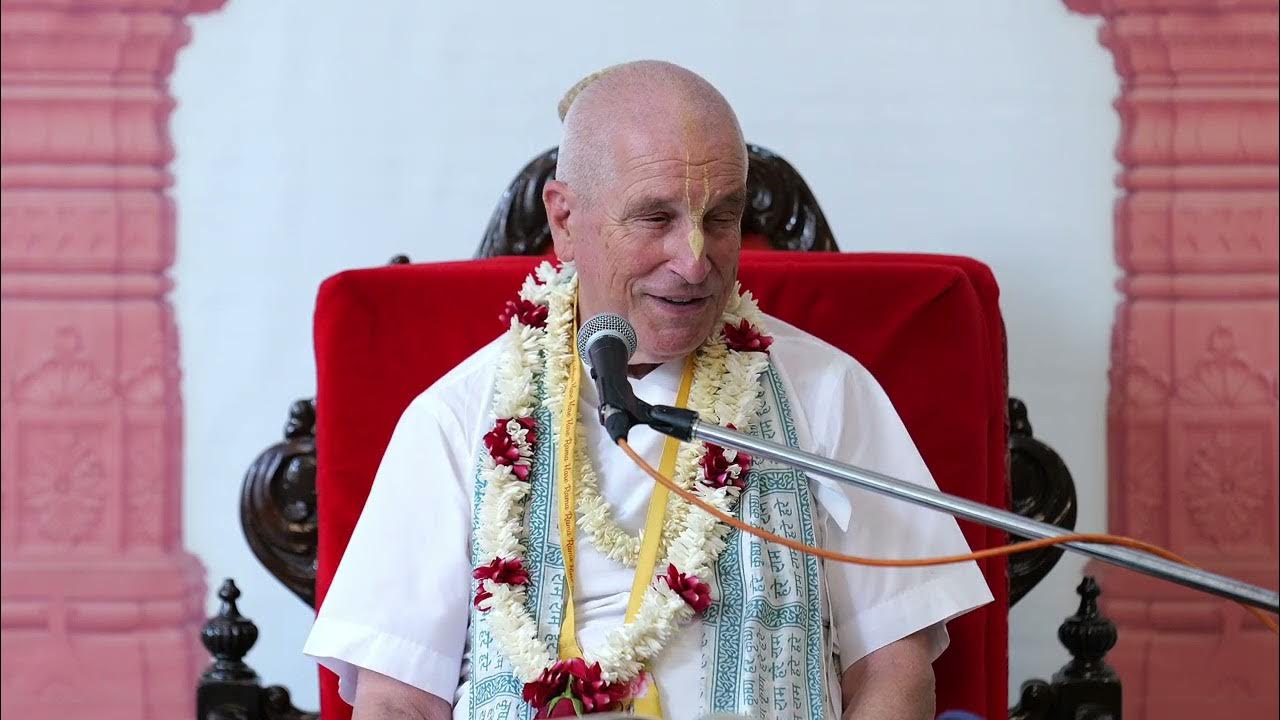
In a detailed exposition on 22 February 2026, H.G. Dinabandhu Prabhu examined Srimad-Bhagavatam 11.2.50 to explain how material desire (kama) and ego (ahamkara) reorganize the mind around a self-centric axis. Within this configuration, the conditioned soul (baddha-jiva) comes to view personal enjoyment as the ultimate objective and instinctively resists anyone or anything perceived as an obstacle. The result is a cycle of pursuit and opposition that entrenches illusion (maya) and perpetuates conflict, both internal and interpersonal.
Anchored in Vedic philosophy and the bhakti tradition, the lecture emphasized that material desires are not surface-level whims but deep vasanā and samskara patterns that condition the citta. When these impressions intensify, the mind habitually oscillates between attraction (raga) and aversion (dvesha), producing a worldview governed by “I” and “mine” (aham mama). In this state, discernment (viveka) dims, and the possibility of lasting peace recedes, even as short-term excitements multiply.
Srimad-Bhagavatam situates this psychology within a larger soteriological map of bondage and liberation. Closely related teachings in the same chapter (11.2) explain that fear and disorientation arise when consciousness turns away from the Supreme and becomes absorbed in secondary realities. That inversion of memory and meaning (often glossed as viparyaya-smriti) makes the temporary appear ultimate and the ultimate appear distant. The lecture observed that contemporary behavioral science converges with this insight: chronic self-referential thinking predicts heightened stress reactivity, status anxiety, and interpersonal contention.
To clarify what is lost under the spell of unchecked desire, the talk employed the classical pan-Indic comparison: when life orients primarily around eating, sleeping, mating, and defending, it mirrors animal patterns. The point is not to denigrate other beings, but to recognize that the human endowment includes dharma, moral imagination, and reflective capacity. Where animal impulse suffices for survival, human flourishing calls for self-restraint, meaning-making, and a conscious alignment with higher values.
The social and ethical costs of desire-centered living were also mapped. Goal frustration, entitlement, and zero-sum competition predict oppositional behavior; the mind seeks control and resents interference. Over time, this trains perception toward rivalry, scarcity, and distrust. The conditioned soul then doubles down on acquisition and image-management, mistaking escalating complexity for progress, while inner disquiet persists.
Against this backdrop, Srimad-Bhagavatam 11.2.50 was presented as a precise remedy: stabilize attention in devotion (bhakti) so consciousness is reoriented from self-absorption to service. When devotion matures, the sense of identity recalibratesnot as the sole claimant of outcomes but as an instrument of the Divine. Related verses in the chapter instruct that devotion should be exclusive in determination yet capacious in compassion, integrating reverence for guru, Deity, and the indwelling Self. This shift does not erase individuality; it purifies intention and harmonizes agency.
Practically, the tradition lays out a multi-faceted method. The nine processes of bhaktisravana, kirtana, smarana, pada-sevana, arcana, vandana, dasya, sakhya, atma-nivedanasystematically re-pattern attention and affection. Yoga philosophy contributes complementary disciplines (yama, niyama, pratyahara, dhyana) to stabilize conduct and cultivate interior quiet. Mindfulness of consumption, speech, and digital engagement reduces triggers that feed raga-dvesha. Over time, the mind learns to dwell in clarity rather than compulsion.
For those seeking measurable waypoints, a well-known Gaudiya Vaishnava roadmap describes progressive refinement: sraddha (initial faith), sadhu-sanga (holy association), bhajana-kriya (regulated practice), anartha-nivritti (clearing of unwanted habits), nistha (steadiness), ruci (taste), asakti (deep attachment to the Divine), bhava (spiritual emotion), and prema (pure love). This sequence is not a rigid staircase but a diagnostic lens: setbacks signal where renewed association, study of Hindu scriptures, and service might be fruitfully intensified.
Significantly, the lecture highlighted the unity of Dharmic traditions on these themes. Buddhism identifies tanha (craving) and the kleshas as root causes of dukkha and prescribes the Noble Eightfold Path to cultivate sila, samadhi, and panna. Jainism names the kashayas (anger, pride, deceit, greed) and prescribes aparigraha and samayika to disarm compulsions. Sikhism diagnoses the five thieveskam, krodh, lobh, moh, ahankarand prescribes nam-simran and seva to restore inner sovereignty. While metaphysical vocabularies differ, all converge on de-centering ego, regulating desire, and stabilizing compassion; this shared vision advances interfaith harmony within the Dharmic family.
Listeners frequently recognize these patterns in contemporary life. A professional facing tight deadlines may notice how the mind coils around outcomes, projecting satisfaction onto future achievements while resenting anyone who “slows things down.” As practice maturesthrough daily hearing (sravana) of wisdom texts, a short session of kirtana, silent japa, or meditative breathreactivity softens. The same workload persists, yet perception shifts: colleagues become collaborators rather than competitors, and success is reconceived as collective well-being grounded in dharma.
Householder-compatible sadhana can be structured with modest but steady commitments: morning study of Srimad-Bhagavatam passages alongside the Bhagavad Gita; a set time for kirtana or japa to calm the nervous system; conscious limits on digital inputs that inflame comparison; and weekly satsanga to refresh perspective. Integrating sevaoffering time, skills, or resources for the uplift of othersfurther dissolves self-absorption. Each element targets the same mechanism: replacing compulsion with conscious choice, and anxiety with clarity.
Interpersonally, the text’s insight reframes obstacles as invitations to purify intention. Instead of escalating opposition, the devotional response asks: what lesson about humility, patience, or non-attachment does this moment hold? This stance mirrors the Bhagavad Gita’s ethic of loka-sangrahaacting responsibly for the cohesion of society. It is a pragmatic spirituality: less about private perfection and more about reliable presence, fairness, and care in everyday roles.
Over time, the felt scarcity that powers consumerism and rivalrous status games begins to recede. The center of gravity moves from acquisition to contribution. Emotional steadiness grows as the mind internalizes that worth does not fluctuate with praise or blame, gain or loss. What replaces the earlier turbulence is not apathy but confident engagementa readiness to serve grounded in inner quiet.
Srimad-Bhagavatam 11.2.50 thus offers both diagnosis and cure. It identifies the rootmaterial desire crowned by egoand prescribes a robust program of bhakti, self-regulation, and community alignment to unwind illusion. Read alongside Buddhism, Jainism, and Sikhism, the verse underscores a shared civilizational wisdom: mastery of desire and ego does not diminish life; it liberates intelligence, deepens love, and fortifies social harmony. In that integrated vision, personal peace and collective well-being are not competing ends but mutually reinforcing outcomes.
Inspired by this post on Dandavats.
