
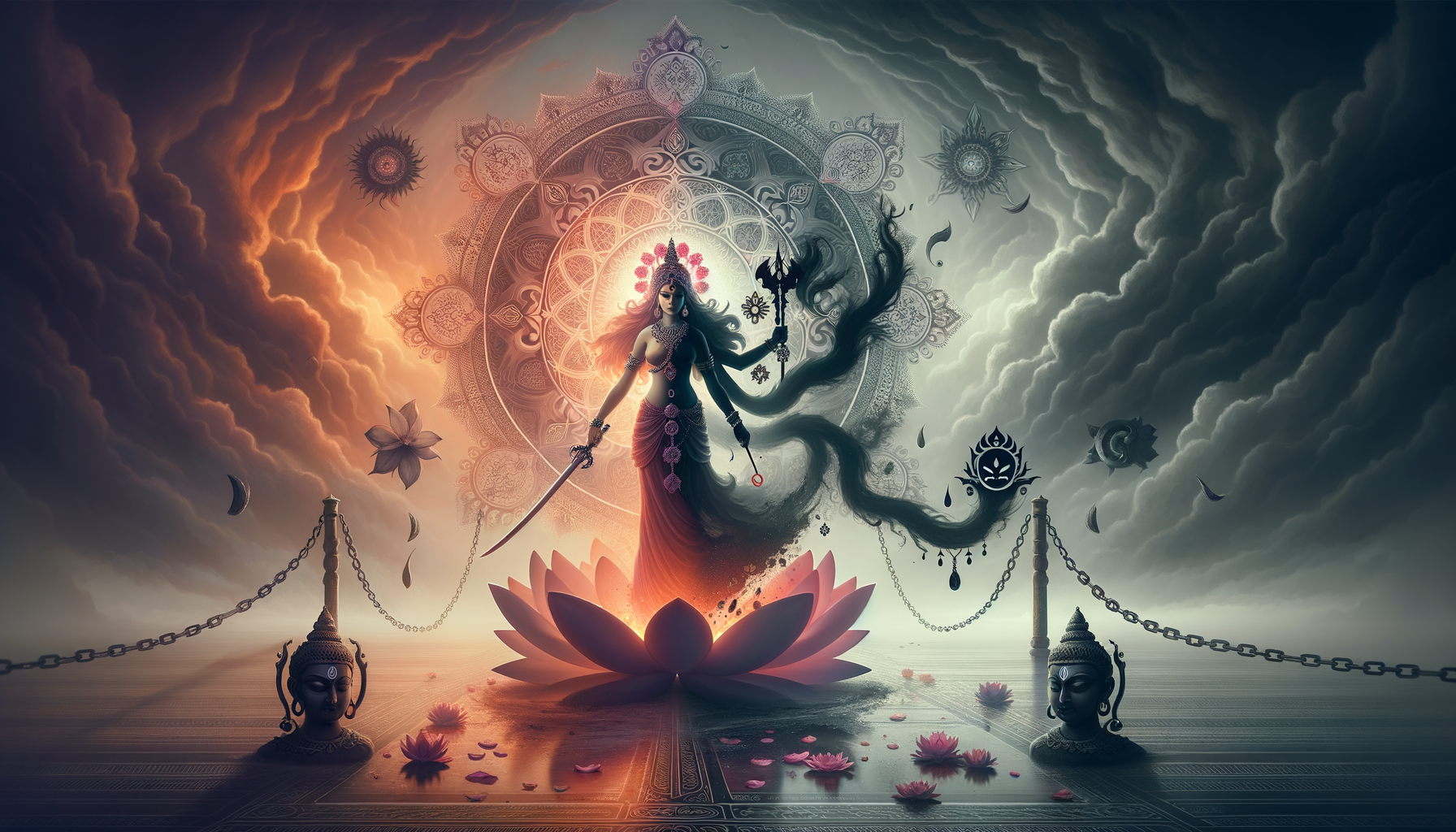
The seventh chapter of the Devi Mahatmya (Durga Saptashati, also called Shri Shri Chandi) presents a defining moment in sacred literature: the slaying of Chanda and Munda. Commanded by the demon king Shumbha to seize the Goddess, the two generals advanced with overwhelming confidence. What followed is remembered as a revelation of Shakti’s raudra (fierce) aspectcompassionate wrath directed at the destruction of adharma.
In the narrative, as the asura forces closed in, Ambika (also known as Kausiki) manifested a terrifyingly protective power. From her furrowed brow emerged a dark, awe-inspiring formKaliwho stormed the battlefield. With unerring precision, Kali annihilated the armies, beheaded Chanda and Munda, and laid their heads before Ambika. In that instant, Ambika bestowed a name that endures in living tradition: Chamunda. The episode is not merely martial spectacle; it encodes a map of ethical vision and spiritual resolve within the Devi Mahatmya.
Read symbolically, Shumbha and Nishumbha personify inflated ego and possessiveness, while Chanda and Munda represent untethered rage and blind crueltythe restless and inert extremes of mind that destabilize discernment. The emergence of Kali from Ambika’s brow signifies uncompromising insight (viveka) arising from luminous awareness (Devi). The sword marks cutting knowledge; the noose signals restraint; and the grisly adornments remind that suppressed vices, once exposed, lose their hold. Chamunda, therefore, is not alien violence but fierce compassionShakti’s refusal to let falsehood reign.
The life lesson is direct: destructive tendencies must be faced, named, and resolved. Many readers find the story relatable when seen as a call to confront habits that harm self and societyanger without purpose, pride without merit, and attachments that cloud judgment. In this light, Durga Saptashati offers a psychology of Dharma: courage with clarity, power with responsibility, and boundaries set in protection of the good. The slaying of Chanda and Munda becomes a recurring inner practicechoosing truth over impulse, steadiness over reactivity.
Practical reflection deepens this symbolism. Contemplative reading of the Devi Mahatmya, brief daily pauses for mindful breathing, and the remembrance of verses such as “Ya Devi sarva bhuteshu shakti rupena samsthita, namas_tasyai, namas_tasyai, namas_tasyai, namo namah” can steady attention when agitation rises. Ethical action follows: speak firmly without hostility, defend the vulnerable without cruelty, and let conviction be guided by viveka rather than by wounded pride. In this way, inner and outer battles align with Dharma and Adharma as framed in Hindu scriptures.
This teaching resonates across Dharmic traditions. Buddhism speaks of subduing Mara’s armies through mindful awareness; Jainism guides aspirants to conquer the kashayas (anger, pride, deceit, greed); Sikh teachings cultivate the saint-soldier ideal, defending righteousness with humility. The Devi Mahatmya’s episode, therefore, supports unity in diversityaffirming that courage, compassion, and self-mastery are shared civilizational values.
Emotionally, the scene of Chamunda’s victory often evokes a sense of relief: when truth awakens, confusion retreats. Intellectually, it clarifies that “divine wrath” in Hindu symbolism is not vindictive; it is the fierce face of protection, restoring balance where chaos prevails. For seekers today, the story functions as a steadying mirror: identify the inner Chanda and Munda, summon disciplined awareness, and act so that justice is served without hatred. In this way, the Devi Mahatmya remains living guidancetext, practice, and moral compassacross times and temperaments.
Inspired by this post on Hindu Blog.
