
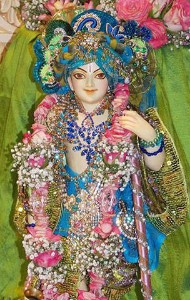
Chaitanya Bhagavata presents a nuanced portrait of Nityananda Prabhu’s transcendental psychology, revealing compassion fused with purposeful resolve. When confronted with the fallen condition of Jagai–Madhai, the response was not merely empathetic; it was visionary. The prospect of transforming those deemed irredeemable was approached as a profound opportunity to demonstrate the power of bhakti and to magnify Lord Chaitanya’s glory across the three worlds.
The intent was clear: if individuals so degraded that others felt compelled to bathe in the Ganges after seeing them could become so purified that others felt spiritually cleansed by their presence, then the renown of Lord Chaitanya would naturally expand everywhere. This insight reframes compassion as both moral imperative and spiritual strategy, aligning personal mercy with the wider mission of uplift and redemption within Gaudiya Vaishnavism.
The episode reaches its ethical apex in the forbearance shown during a brutal assault, culminating in the unforgettable words that continue to resonate among Gaudiya Vaishnavas: "merechhish kolshir kana, tai bole ki prem debona". This statement converts violence into a moment of sanctified generosity, offering love where retaliation might have seemed justified. Such restraint is not passivity; it is transformative strength directed toward the highest good.
Read in an academic light, the narrative illuminates the magnitude, motivation, and efficacy of mercy. The magnitude lies in its universality; the motivation lies in glorifying Lord Chaitanya through the uplift of the most marginalized; and the efficacythe perceived "magic"lies in mercy’s capacity to convert stigma into sanctity. Chaitanya Bhagavata thus offers a rigorous template for spiritual ethics within Hindu spirituality and the Bhakti Tradition.
For contemporary practitioners, this account offers practical guidance: compassion can be cultivated as disciplined resolve, turning hostility into an opening for reconciliation and growth. In community life, such an ethic stabilizes conflicts and helps reorient relationships toward shared dignity, a principle that aligns with the broader goals of social harmony and spiritual progress.
Importantly, the values embodied here harmonize with the core virtues of other dharmic traditions. The redemptive compassion seen in Nityananda Prabhu resonates with karuna in Buddhism, ahiṁsā in Jainism, and seva in Sikhism. Together, these traditions affirm unity in spiritual diversity and demonstrate that mercy, when courageously practiced, is a unifying force rather than a sectarian claim.
In sum, the transformation of Jagai–Madhai in Chaitanya Bhagavata is not merely a historical or hagiographic episode; it is a living paradigm for those seeking spiritual integrity today. It shows how mercy, rightly understood, magnifies the divine, stabilizes communities, and builds bridges across dharmic pathwaysfulfilling the enduring ideal of unity through compassion.
Inspired by this post on Dandavats.
