
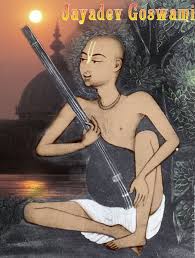
Sri Jayadeva Goswami is commemorated as a seminal figure of Sanskrit literature and the Bhakti tradition, with most scholars placing his life in the eleventh or twelfth century of the Shaka era. This timeframe aligns him with a vibrant period in Indian history when devotional currents transformed poetry, music, and temple culture across regions.
There is a long-standing scholarly discussion regarding his place of birth. The prevailing view associates him with the village of Kendubilva, located in present-day Birbhum, Bengal. Other traditions attribute his origins to Orissa (Odisha) or to South India. Rather than diminishing his historical presence, this plurality of claims highlights the breadth of his reception and the way diverse regions of the subcontinent have embraced his legacy.
As a historical figure within the Bhakti tradition, Sri Jayadeva Goswami is remembered for refined lyrical compositions that shaped the aesthetics of devotion in Sanskrit literature. His poetry, characterized by emotional depth and theological nuance, influenced temple performance traditions and regional arts, notably in the devotional culture surrounding Lord Jagannath and the classical dance form of Odissi. Such artistic lineages underscore the enduring interplay between scripture, song, and sacred space in Indian cultural heritage.
The multiplicity of regional memories about his birthplace invites a broader, unifying perspective. It illustrates how Indian historyacross Bengal, Odisha, and the Southhas woven shared threads of devotion into a common fabric. Appreciating these interconnections affirms a spirit of unity among dharmic traditions, where devotion, compassion, and disciplined practice resonate across Hinduism, Buddhism, Jainism, and Sikhism without privileging a single path.
Commemorating Sri Jayadeva Goswami’s disappearance fosters both historical understanding and reflective engagement. It offers readers an opportunity to situate a Shaka-era luminary within the wider currents of Indian history and to recognize how devotional literature continues to bridge communities. In honoring his memory, the focus remains on the harmonizing power of art, scholarship, and spiritual practice to uphold a shared civilizational heritage.
Inspired by this post on Dandavats.
