
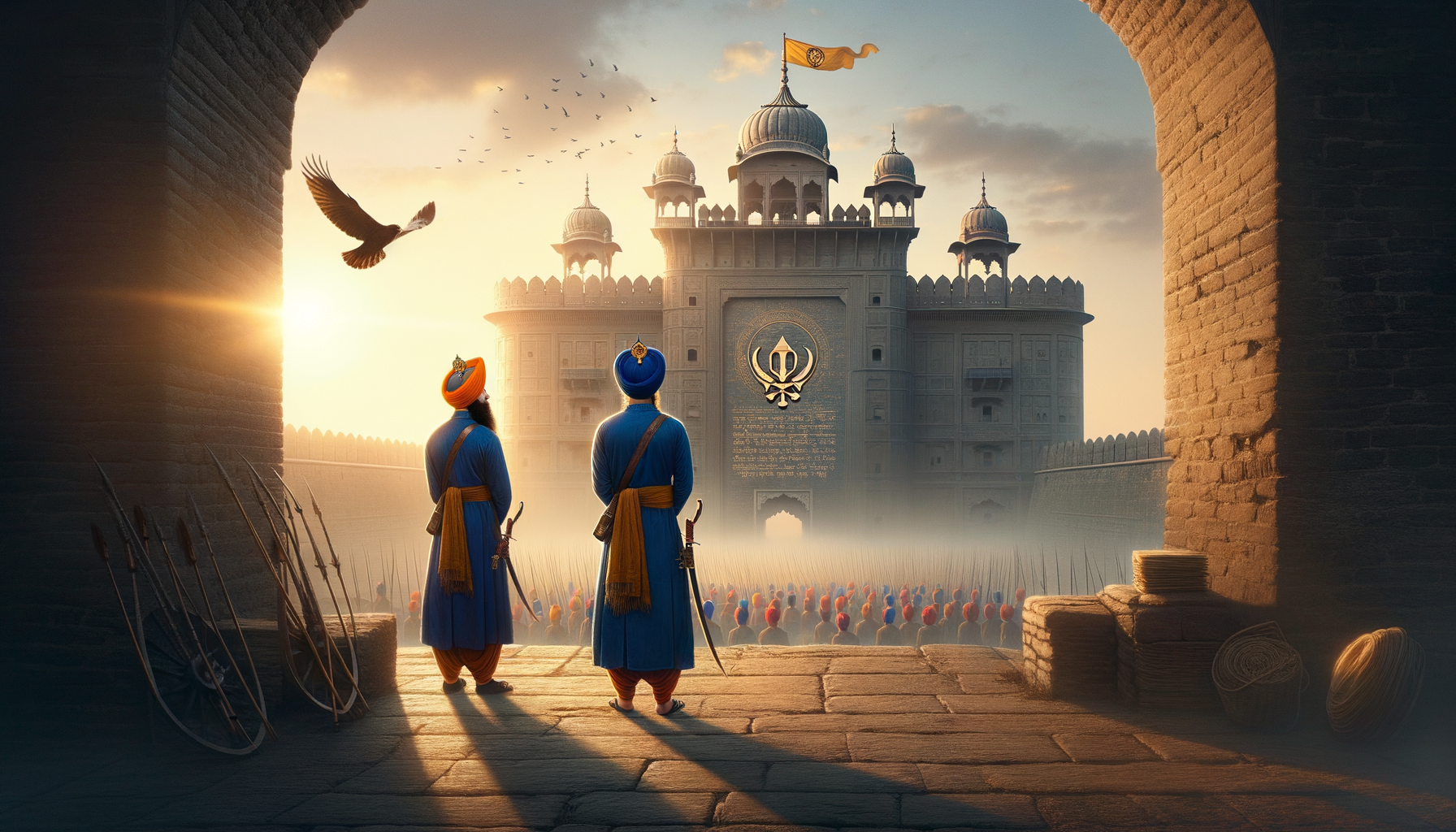
Saka Chamkaur stands as a defining moment in Sikh history, remembered for the extraordinary courage and martyrdom of the Vadde SahibzaadeBaba Ajit Singh and Baba Jujhar Singh, the elder sons of Guru Gobind Singh. Their steadfast resolve under overwhelming odds offers a lens into Khalsa ideals of duty, resilience, and ethical bravery, while also resonating with shared dharmic values across Hinduism, Buddhism, Jainism, and Sikhism.
Historically situated in the aftermath of the evacuation from Anandpur Sahib (1704 CE), the conflict at Chamkaur unfolded in a fortified garhi where a small Sikh contingent faced a vastly larger force. Within this crucible, strategic judgment and spiritual conviction worked in tandem: the Sikhs held their ground to protect the sanctity of life and conscience, while Guru Gobind Singh, urged by the Panj Piare, departed to ensure the continuity of the Khalsa mission.
Within this theater of duty, Baba Ajit Singh and Baba Jujhar Singh embraced martyrdom with disciplined composure and clarity of purpose. Their actions exemplified a mature understanding of dharma disproportionate to their youth, transforming an otherwise tactical episode into a timeless study in principled leadership. The Vadde Sahibzaade are thus remembered not merely as warriors, but as luminous exemplars of sacrifice anchored in spiritual responsibility.
For many families and communities, recollections of Saka Chamkaur evoke a deep emotional connectionstories of steadfastness shared in homes and gurdwaras become touchstones for character formation. Educators and youth leaders often draw on this narrative to cultivate moral courage, service (seva), and compassion, aligning with broader dharmic ideals that honor truth, restraint, and reverence for life.
Across the dharmic spectrum, the ethical arc of this episode underscores shared principles: courage grounded in compassion, duty tempered by wisdom, and unity rooted in respect for diverse spiritual paths. Situated within India’s cultural heritage, the memory of the Vadde Sahibzaade contributes to a cohesive civilizational narrative that uplifts interfaith harmony and mutual regard.
Contemporary readers frequently interpret this history as a guide to civic virtue: leadership under pressure, moral clarity amid uncertainty, and the ability to balance personal sacrifice with collective well-being. Such insights offer relevance for parents, mentors, and community builders seeking to nurture resilient, ethically grounded citizens.
Read more about Saka Chamkaur and the Vadde Sahibzaade
Inspired by this post on SikhNet – Children Stories.
