

India’s constitutional architecture sets a high bar for removing judges. As Nani Palkhivala cautioned, “… a Judge’s…impeachment under arts. 218 and 124(4) can only be “on the ground of proved misbehaviour or incapacity”… [T]o invite politicians to use the weapon of impeachment of Judges is hardly desirable or far-sighted. Let us not forget that as many as 198 signatures of M.P.s were procured on a scandalous petition to the Speaker of the Lok Sabha to impeach Justice J. C. Shah, only because he had passed a wholly justified order against a corrupt government servant.” His warning arose in 1970 during an abortive attempt to impeach Justice J. C. Shah, and it framed a vital norm: the judiciary must be insulated from political expedience.
That early episode reaffirmed a broader truth Palkhivala emphasizedthat constitutional morality is indispensable to constitutional legality. Dharma, as understood in the Sanatana tradition, is not merely religious sentiment; it is the underpinning of ethics, jurisprudence, order, and the temporal expression of the cosmic law known as Rta. When Dharma recedes from public life, institutions lose their moral ballast. In 1970, a unified legal fraternity helped defend judicial integrity, but a precedent had surfaced: politics could seek to penetrate judicial space.
Five and a half decades later, a similar debate has resurfaced around the impeachment motion against Madras High Court Judge G.R. Swaminathan. The motionsupported by 107 MPswas unlikely to succeed numerically, yet it sparked an essential national conversation on judicial independence. The response was swift: 56 retired judges from various High Courts and the Supreme Court publicly termed the move “a brazen attempt to browbeat judges” which “would cut at the very roots of our democracy and the independence of the judiciary.”
The immediate controversy centers on Justice Swaminathan’s decision permitting the lighting of the Karthika-Deepam atop the sacred hill of Thirupparankundram, one of the six Murugan Kshetras in Tamil Nadu. The allegations advanced against him include expressing reverence for Sanatana Dharma, acknowledging Vedic culture, and upholding ritual practices such as Angapradakshinam. The critique also invokes the idea of a judiciary that must function “secularly” in a way reminiscent of earlier demands for a “committed judiciary.” At issue is not a ritual alone, but the principle of how courts balance plural traditions, constitutional guarantees, and public order without privileging political rhetoric over jurisprudential standards.
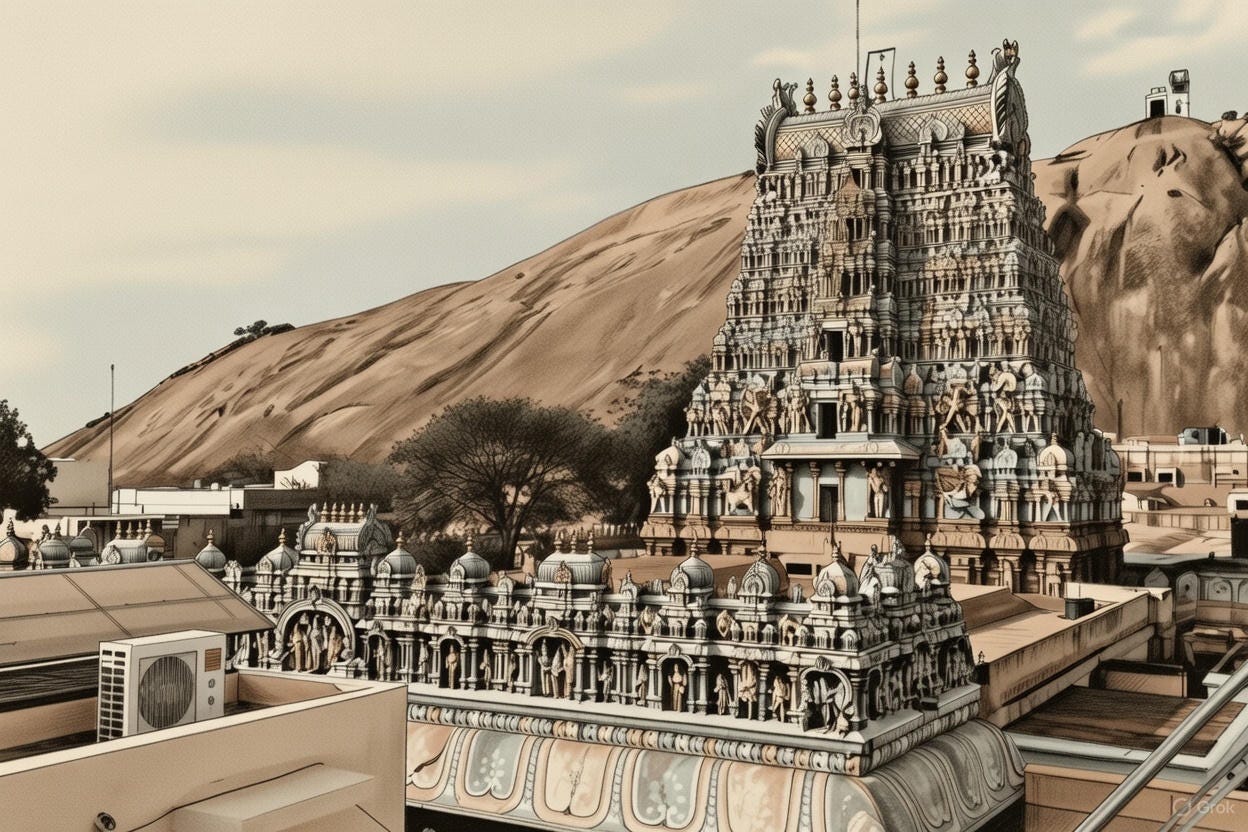
Seen in a wider political frame, the timing of the impeachment bid aligns with a heated electoral climate in Tamil Nadu. Public discontent over corruption, law-and-order challenges, and narratives critical of Sanatana Dharma have complicated the political landscape. Meanwhile, there has been a visible resurgence of devotion in the statefrom the Athi-Vardar festival in 2019 to a series of High Court judgments affirming that the HR&CE department cannot interfere with rituals integral to temple tradition. These developments resonate with many dharmic communitiesHindu, Buddhist, Jain, and Sikhwho recognize that safeguarding sacred practices, when consistent with law and order, reinforces India’s civilizational pluralism.
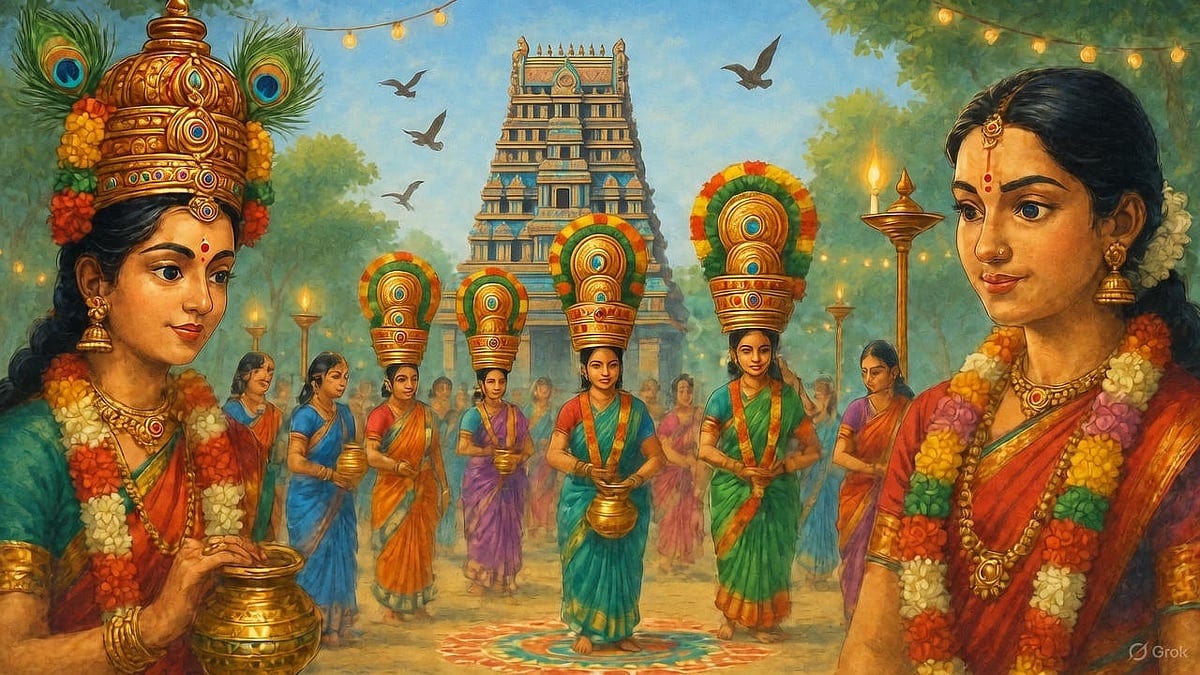
Understanding why Thirupparankundram matters requires recalling the living heritage of the Kaumāra tradition. Kaumāracentered on Kumāra, Skanda, Subrahmanya, Kartikeya, or Shanmukha; Murugan or Arumugan or Kandan in Tamilhas been preserved in Tamil Nadu with a fervor unmatched elsewhere in India since the Gupta era. The grandest public outpouring of piety unfolds during the Karthika Māsam, culminating in the barefoot Kāvadi Yatra across the six Skanda KshetrasThiruparankundram, Tiruchendur, Palani, Swamimalai, Tiruttani, and Pazhamudircholai. The Kāvadi carried on the head symbolically expresses surrender, discipline, and devotion; the Karthika lamp lit at festival end is a tradition of deep antiquity at Murugan and Shiva temples, including Thirupparankundram.
Justice Swaminathan’s order upholds a litigation history dating back to 1920, aligning with earlier court pronouncements, including by the Privy Council, and allows lighting the Karthika lamp on the Deepathoon atop the hill. The judgment also noted concerns about encroachments and land-use conflicts in the sacred townan observation linked to contemporary debates that intensified after highly publicized Waqf property disputes emerged in Tamil Nadu’s Tiruchendurai in 2022 and then echoed across states. In an environment where temple lands and public spaces are contested, any judicial directive touching sacred precincts inevitably attracts heightened scrutiny.
One striking dimension is institutional alignment. In this matter, the Tamil Nadu HR&CE departmentwhich is tasked with the protection and administration of Hindu templesappeared on the same side as the Managing Trustee of the Sikandar Badushah Dargah located on Thirupparankundram hill. This juxtaposition underscores the complexity of layered claims, living traditions, and historical narratives that must be weighed with care.
Historical context adds needed clarity. The figure venerated as Sikandar “Badushah” is presented in later narratives as a Sufi saint; primary histories identify him as Sikandar Shah, the last ruler of the Madurai Sultanatea regime that devastated the Meenakshi Temple and the temple-town’s fabric for decades before its defeat by Vijayanagara Prince Kumara Kampana, remembered in Tamil chronicles as the liberator of Madurai. The Dargah is believed to mark Sikandar Shah’s burial, and the surrounding area has since accreted more tombs, forming an unambiguous Muslim enclave. Evaluating contemporary rights and practices at such sites requires a jurisprudence that recognizes plural memory while maintaining rule-of-law clarity.
Within this broader frame, the court’s directive to permit a long-standing Murugan riteand the expectation that state agencies facilitate rather than impede peaceful observanceappears consistent with constitutional guarantees of religious freedom and equality. Reports that police action impeded court-mandated accompaniment of devotees by CISF personnel only compounded public concern. Even among those who differ on the precise boundary of practice and protection, there is wide agreement that lawful court orders must be executed and that state agencies must uphold neutrality.

Tamil Nadu’s role in safeguarding the Kaumāra tradition has enriched India’s unity in diversity. From the Pallava-Gupta era cultural exchanges that helped the Murugan Sampradāya attain full bloom to the present, the region’s devotion has preserved artistic, ritual, and sacred geographies that might otherwise have faded into obscurity. Far from supporting divisive myths of Aryan–Dravidian antagonism, these lived links testify to an interwoven civilizational continuum connecting Uttarāpatha and Dakshināpatha.
In moments of intense debate, rhetoric can eclipse the shared values that bind India’s dharmic traditionsHinduism, Buddhism, Jainism, and Sikhism. Sustainable solutions lie not in polarizing language but in reaffirming the rule of law, the independence of the judiciary, and the equal dignity of all traditions. The impeachment motion was ultimately disallowed, and strong voices across the legal fraternity condemned attempts that could chill judicial independence. That outcome signals institutional resilience and offers a constructive path forward.
The way ahead is clear and practical. First, constitutional thresholds for impeachment must remain sacrosanct and free from transient political pressures. Second, the state’s role in sacred precinctsespecially via departments such as HR&CEmust reflect a restrained, law-bound approach that protects temple autonomy in rituals while respecting legitimate claims and heritage concerns. Third, complex historical sites with overlapping memoriessuch as Thirupparankundramrequire sensitive administration, transparent processes, and dialogue that prioritizes harmony.
Viewed through the lens of dharmic unity, the Thirupparankundram episode is not a flashpoint but a stress testand an opportunity. When courts protect a lawful, ancient rite, when administration executes judicial directions faithfully, and when communities engage each other with empathy, the result is not a sectarian victory but a civilizational affirmation. Judicial independence and dharmic harmony are not competing goods; together, they sustain India’s constitutional spirit and its timeless capacity to hold many truths in one nation.
Inspired by this post on Dharma Dispatch.
