
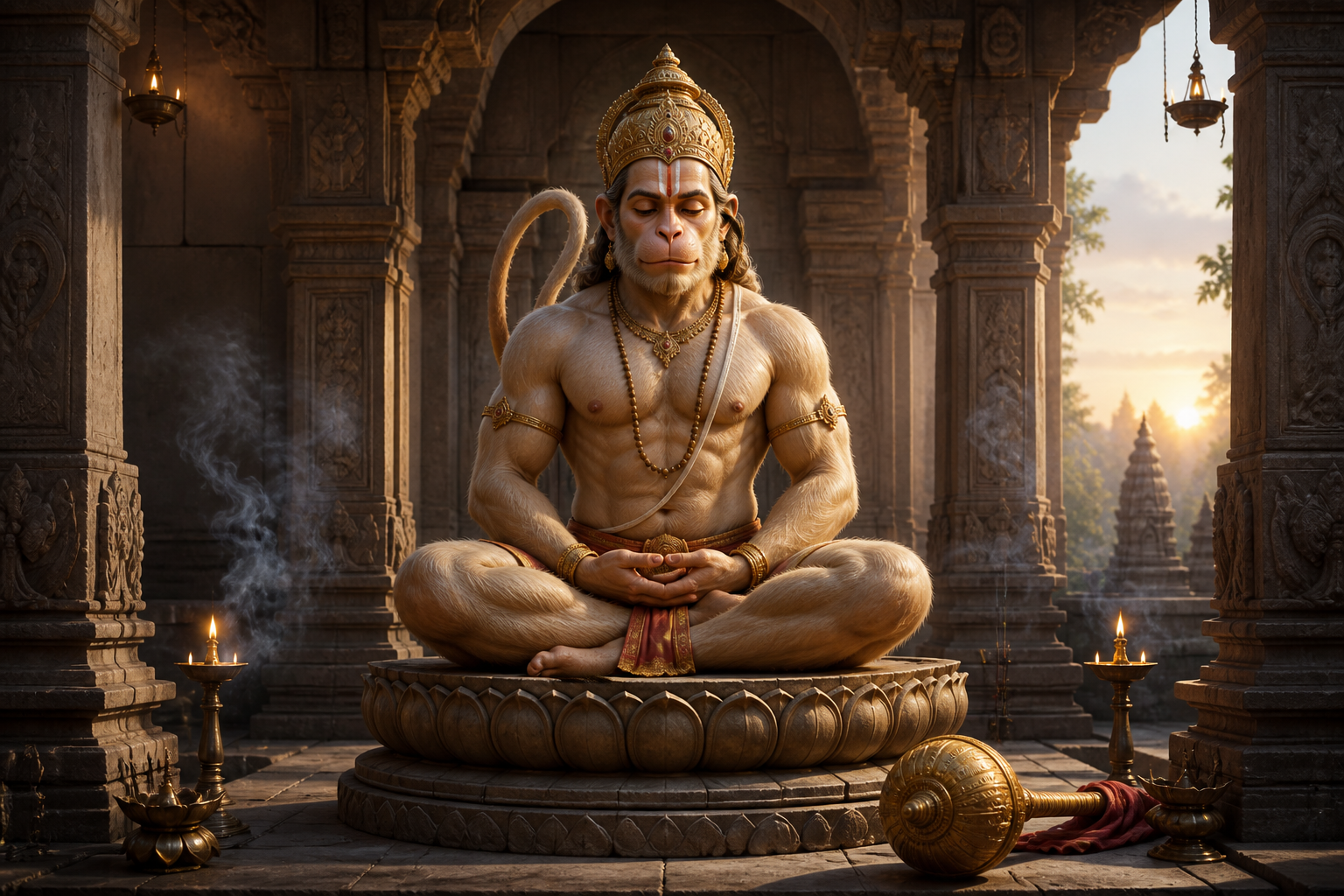
You may have encountered a seated Hanuman murti in a temple, a photograph, or a shop and wondered whether it represents a particular episode. The absence of flight, battle, or visible service can make the image seem unfamiliar.
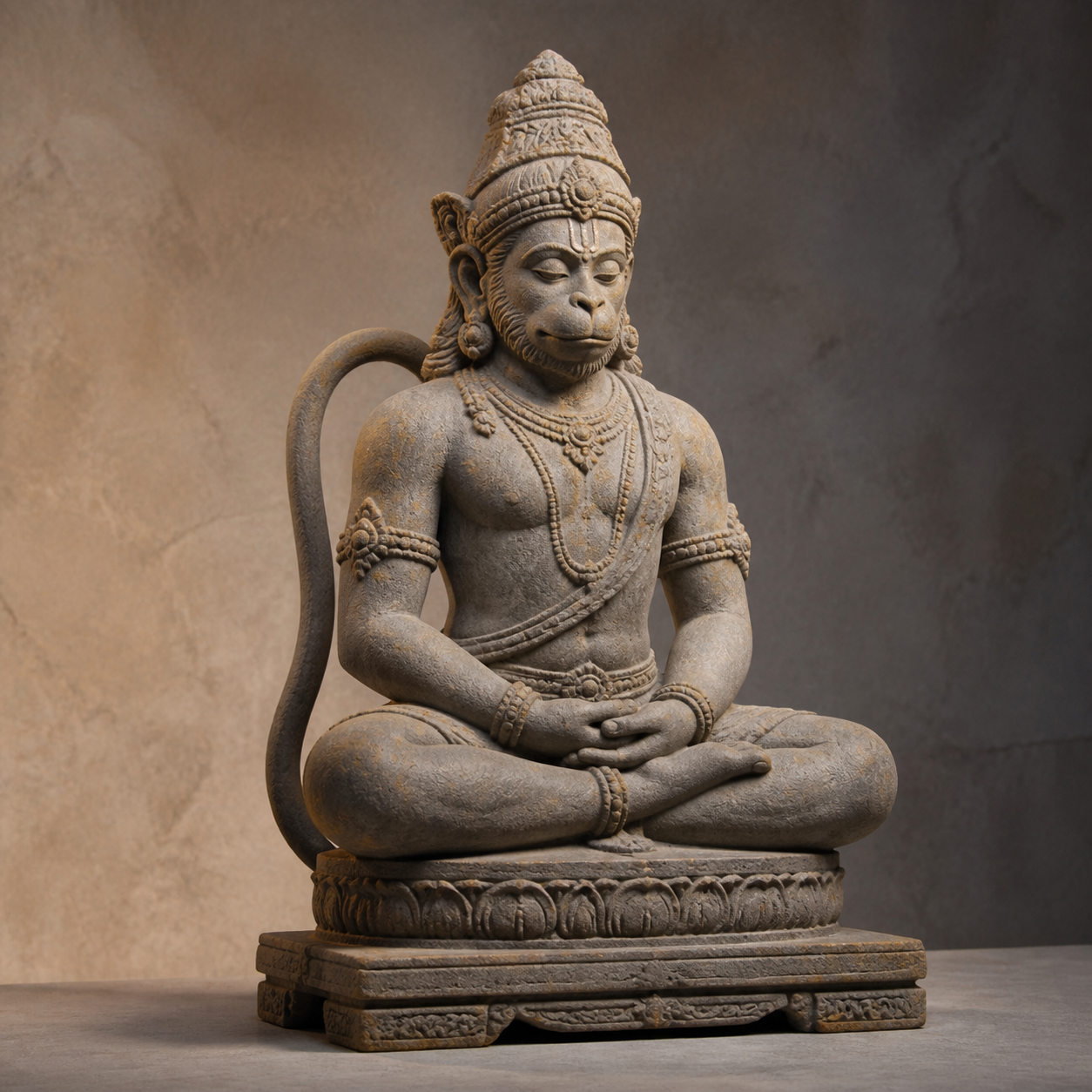
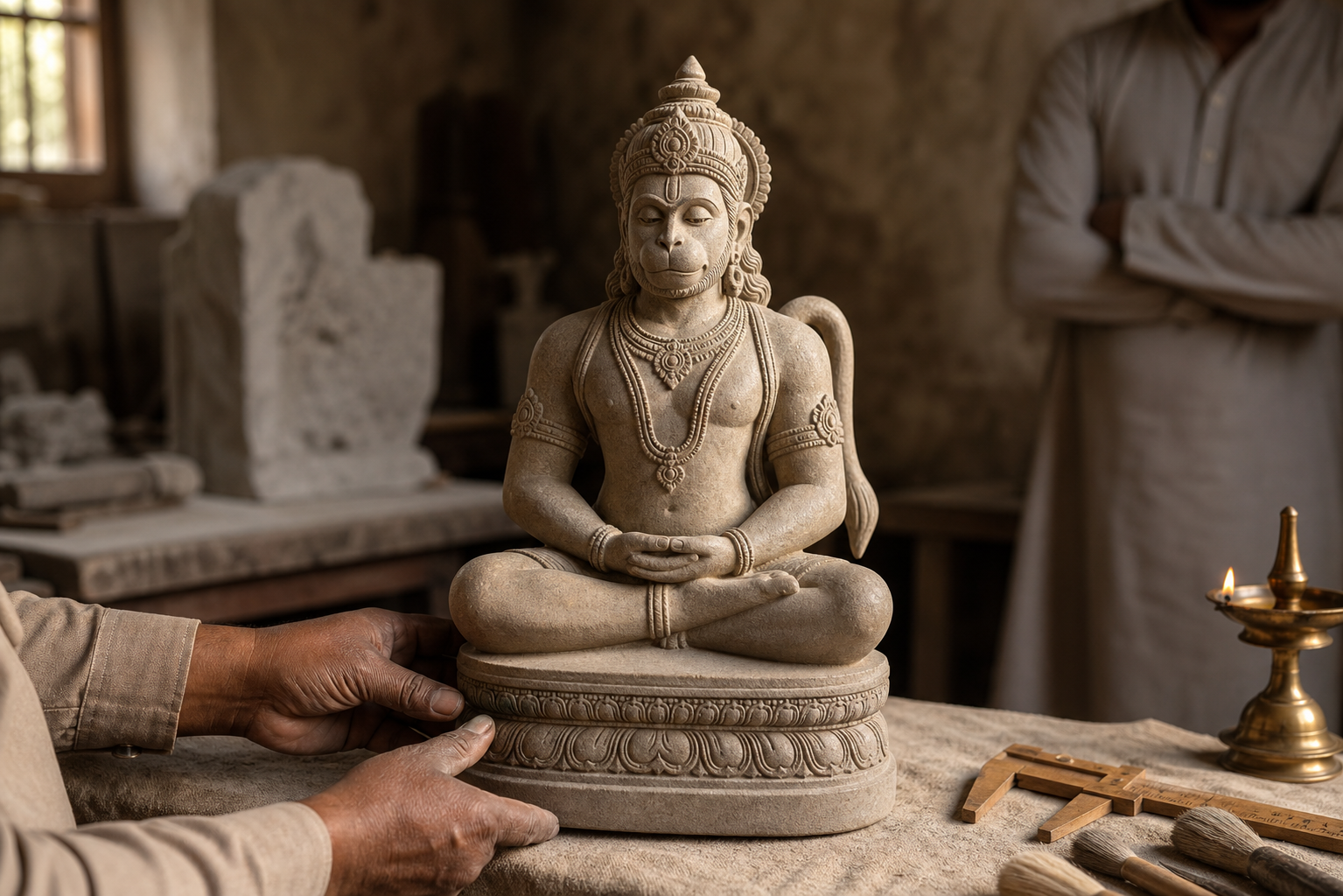
The central clue is the posture itself. Yoga Hanuman is seated in meditation, with a quiet and contemplative character. Once you recognize that emphasis, the form becomes easier to identify, interpret, and place within your own practice.
Recognize Yoga Hanuman by the action he is not performing
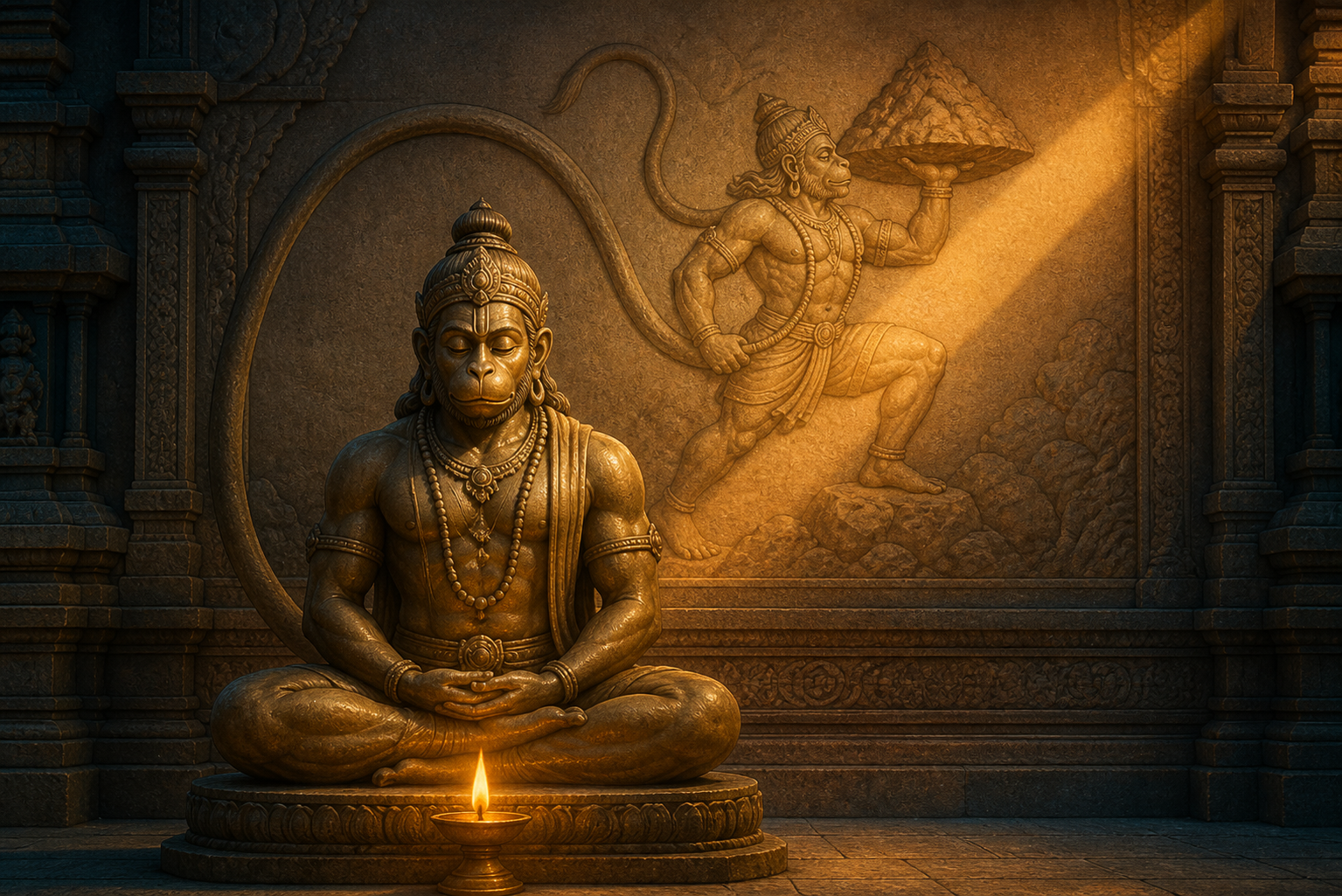
Hanuman is often shown through movement. He may be flying while carrying the Sanjeevani mountain, or standing before Rama in devoted service. These images communicate through an identifiable action: a journey, a task, or service offered to the Lord.
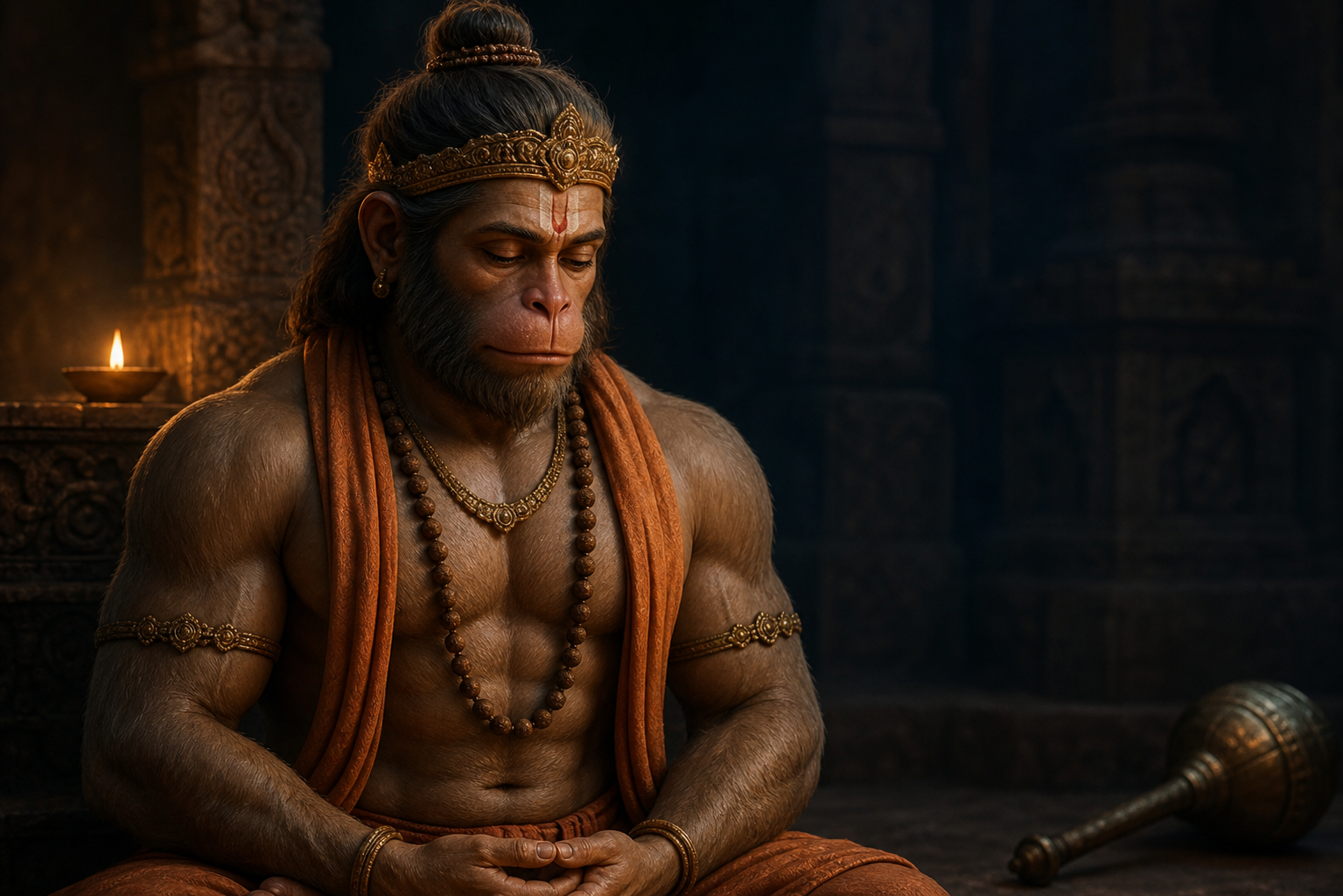
Yoga Hanuman communicates differently. He is seated, composed, and meditative. The image asks you to notice concentration rather than speed. Its defining subject is not an outward deed but a condition of disciplined stillness.
When an image is unlabeled, begin with its dominant action:
- If Hanuman is flying with a mountain, the visual emphasis is urgent action and service.
- If he stands before Rama, the emphasis is devotion expressed through personal attendance.
- If he sits in meditation, the image belongs to the contemplative vocabulary associated with Yoga Hanuman.
This first distinction is more reliable than guessing from decoration alone. Crowns, ornaments, materials, and regional sculptural styles may vary. Posture tells you what the image is principally asking you to contemplate.
Stillness does not cancel Hanuman’s strength
The common mistake is to read the seated form as a softened or less powerful Hanuman. That interpretation assumes strength must always be visible as motion. Yoga Hanuman presents another possibility: strength can be gathered, governed, and held without needing immediate display.
His identity has not changed. The change is one of emphasis. The dynamic forms foreground what Hanuman does; the yogic form foregrounds the inner command from which right action can arise. Silence here is not incapacity. It is power free from restlessness.
This is an important Dharmic correction to the modern habit of equating power with constant activity. Action has value, but activity without mastery can become agitation. Yoga Hanuman places self-command before display. He reminds you that readiness is also a form of strength.
Nor should meditation be treated as a retreat from devotion. The familiar standing form shows devotion through service before Rama. The seated form turns your attention toward the concentration that sustains such service. One image expresses devotion through action; the other lets you contemplate its inward discipline.
Use a four-step method to read the iconography carefully
Sacred art can carry several meanings at once, but that does not make every interpretation equally secure. If you are studying a murti, explaining it to a child, or writing a temple caption, use this order:
- Describe what is visible. Begin with the seated and meditative posture. Do not start with a symbolic theory that the image itself cannot support.
- Identify the contrast. Ask how this posture differs from Hanuman in flight or Hanuman standing in service before Rama. The contrast reveals the shift from outward action to inward composure.
- State the meaning as an emphasis. Say that the form emphasizes meditation, stillness, and disciplined strength. Avoid claiming that contemplation replaces courage, service, or devotion.
- Verify local details locally. If a temple assigns a particular name, story, ritual use, or theological explanation to its murti, consult that temple or its tradition before presenting the detail as universal.
The fourth step matters because iconography and living worship meet within particular communities. The central seated form may be recognizable, while the full significance of a specific installation can depend on its temple setting and inherited practice. A careful viewer distinguishes the broad visual meaning from a local explanation.
This method also prevents over-reading. You do not need to turn every small feature into a secret code. First establish the posture, the action, and the devotional context. Treat additional meanings as possibilities until a reliable tradition attached to that particular image confirms them.
Choose this form when you need a reminder of governed energy
If you are choosing an image for a prayer or meditation space, decide what quality you want its presence to recall. A dynamic Hanuman can direct the mind toward courage in action and immediate service. Hanuman before Rama can foreground devoted attendance. Yoga Hanuman is especially apt when you want the space to recall concentration, restraint, and strength brought into stillness.
You can make that meaning practical without inventing a new ritual. Before beginning japa, study, prayer, or a demanding duty, pause before the image and ask three plain questions:
- Is my energy collected, or merely restless?
- Am I preparing to serve the right purpose, or only reacting?
- Can I hold my strength quietly until dharma requires action?
These questions use the icon as a discipline of attention. They are not a substitute for the worship procedures of your family, temple, or sampradaya. If you intend to establish a murti for formal worship, seek the appropriate guidance from the tradition you follow rather than deriving ritual rules from the image alone.
The form can also shape how you speak about Hanuman with younger members of the family. Do not present him only as someone who performs extraordinary feats. Point to the seated figure and ask what kind of strength can remain calm. That question connects courage with self-mastery instead of leaving children with the idea that power is simply the ability to act forcefully.
Key takeaways
- Yoga Hanuman is identified principally by his seated, meditative presentation.
- The form differs in emphasis from Hanuman flying with the Sanjeevani mountain or standing in service before Rama.
- Its stillness should be read as disciplined strength, not weakness or withdrawal.
- The most responsible interpretation begins with visible posture and verifies temple-specific meanings with the relevant tradition.
- In personal practice, the image can remind you to collect your energy before turning it into action.
The next time you meet this form, resist the urge to search first for a dramatic episode. Look at the seated body and the absence of outward urgency. Then let the image put one demanding idea before you: strength reaches its Dharmic purpose when it is steady enough to serve.
References
