
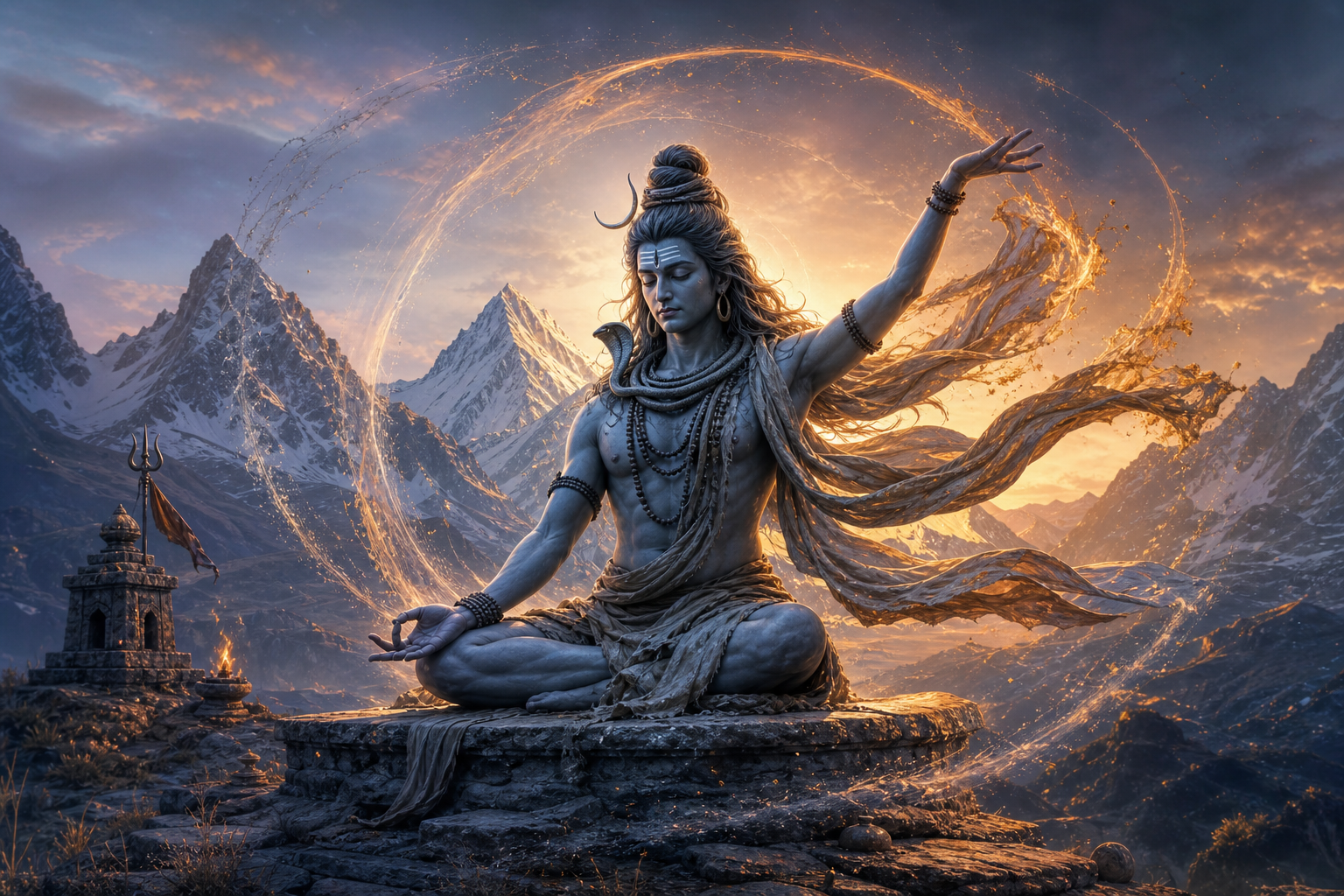
Mudra is often pictured as a fixed arrangement of the fingers. In the Shaiva and yogic vision presented by DharmaRenaissance, however, it belongs to a much larger field: posture, breath, attention, energy, ritual, artistic expression, and ethical conduct all participate in making spiritual knowledge bodily.
Seen through Shiva as Adiyogi, silent teacher, meditating yogi, and cosmic dancer, mudra becomes a way to understand how stillness can guide movement and how outward form can support inward discipline. This perspective also clarifies why the traditional claim of 84,000 mudras is more useful as a statement about spiritual possibility than as a catalogue to be counted.
Mudra is a relationship, not merely a hand position
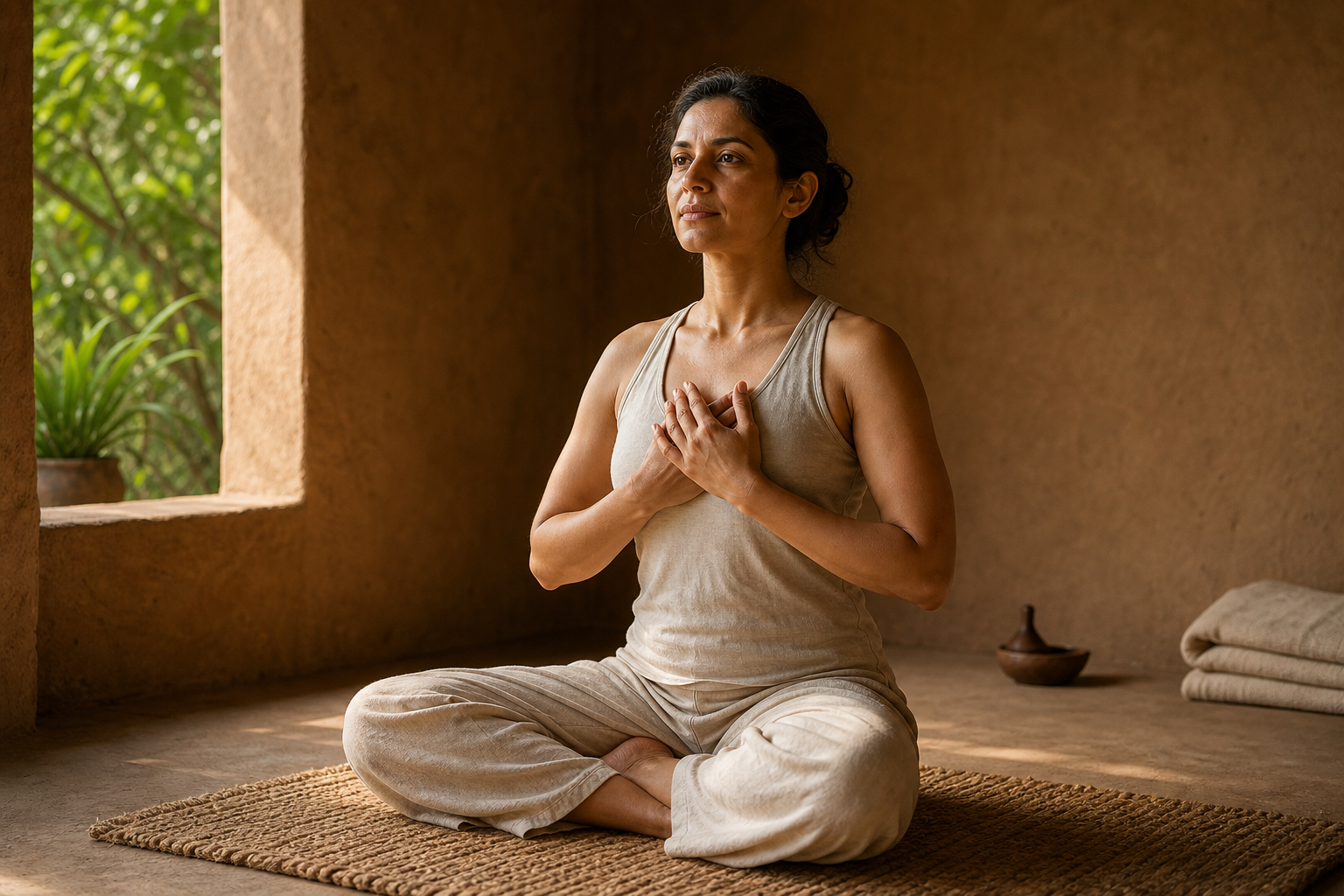
The source article explains that mudra may be translated as a seal, gesture, or symbolic configuration. None of these terms is sufficient by itself. A mudra can give physical form to intention, focus attention, participate in the direction of prana, and connect the visible body with the subtle dimensions described in yogic traditions. Its significance therefore lies less in the appearance of a pose than in the relationships established through it.
This distinction matters when considering the reported tradition that Shiva gave humanity 84,000 mudras. DharmaRenaissance cautions against treating that number as evidence of a single surviving manual containing 84,000 individually documented techniques. Large sacred numbers in Indic traditions can communicate plenitude, breadth, or an immeasurable range of methods. On that reading, the claim expresses a principle: many configurations of movement, breath, posture, and awareness can become spiritually meaningful when joined to discipline and dharma.
The number consequently shifts attention away from accumulation. The aim is not to possess the largest repertoire of gestures. It is to discover how physical form can steady attention and help align inner intention with outward action. A simple gesture performed with sustained awareness may embody the principle more fully than an elaborate form treated as ornament.
Shiva unites the still teacher, yogi, and dancer
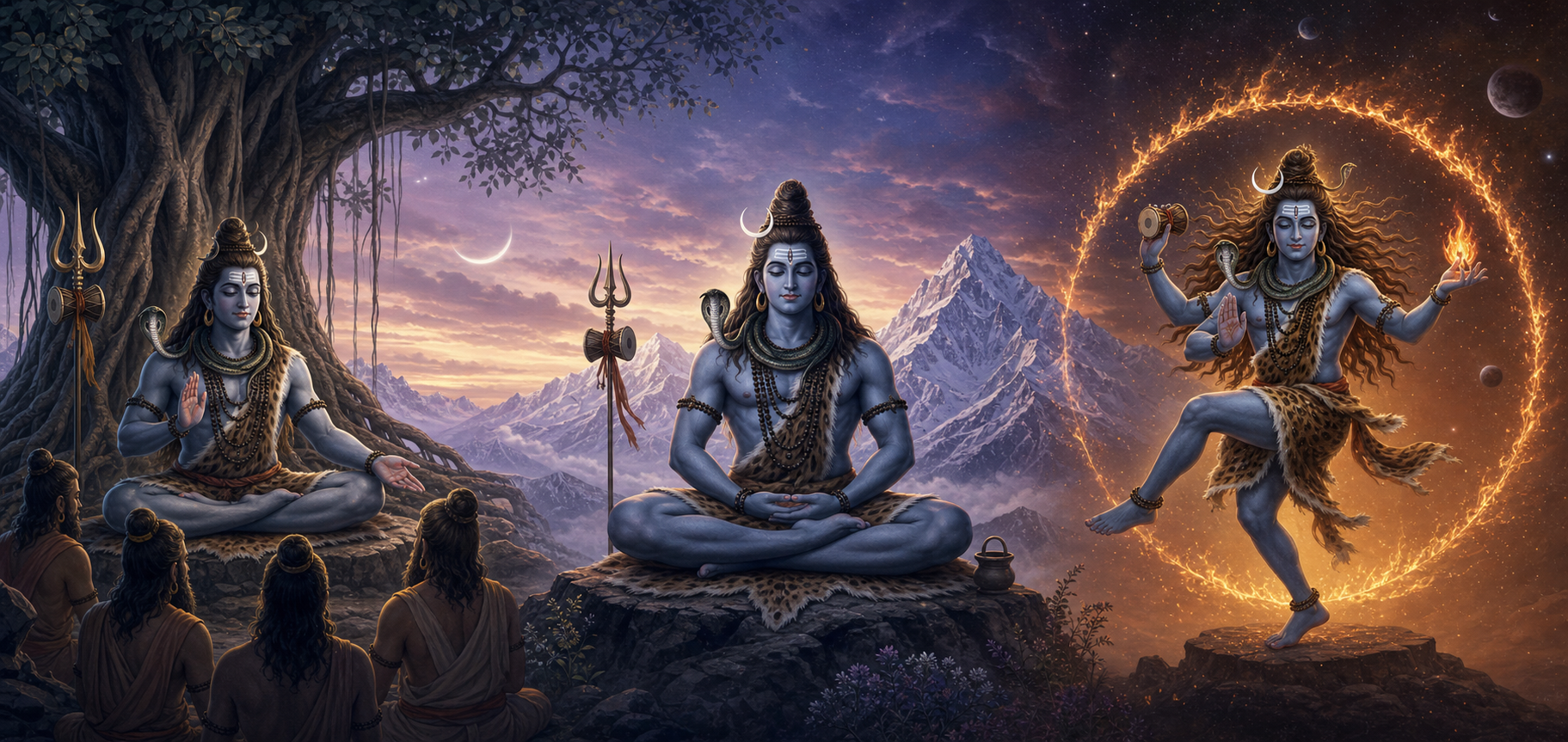
Several forms of Shiva illuminate different dimensions of embodied practice. As Dakshinamurti, Shiva teaches through silence, placing realization beyond ordinary verbal explanation. As the meditating yogi, he represents equilibrium and concentrated awareness. As Nataraja, he reveals a cosmos expressed through ordered movement rather than through motion without meaning.
These images are best read together. Silence is not the rejection of expression, and dance is not the abandonment of stillness. The poised center of movement makes meaningful action possible, while movement gives perceptible form to what stillness contains. Mudra occupies the meeting point: it is an outward configuration whose value depends on inward steadiness.
The source describes Shiva more broadly as ascetic, householder, lord of beings, master of mantra, and witness-consciousness. That range helps explain why the mudra tradition cannot be confined to one technique or setting. The body may be seated in contemplation, organized through a demanding yogic procedure, engaged in worship, or transformed into a vehicle for sacred storytelling. In each case, Shiva functions as an archetype of consciousness expressed through disciplined form.
Embodied practice joins form, breath, attention, and prana
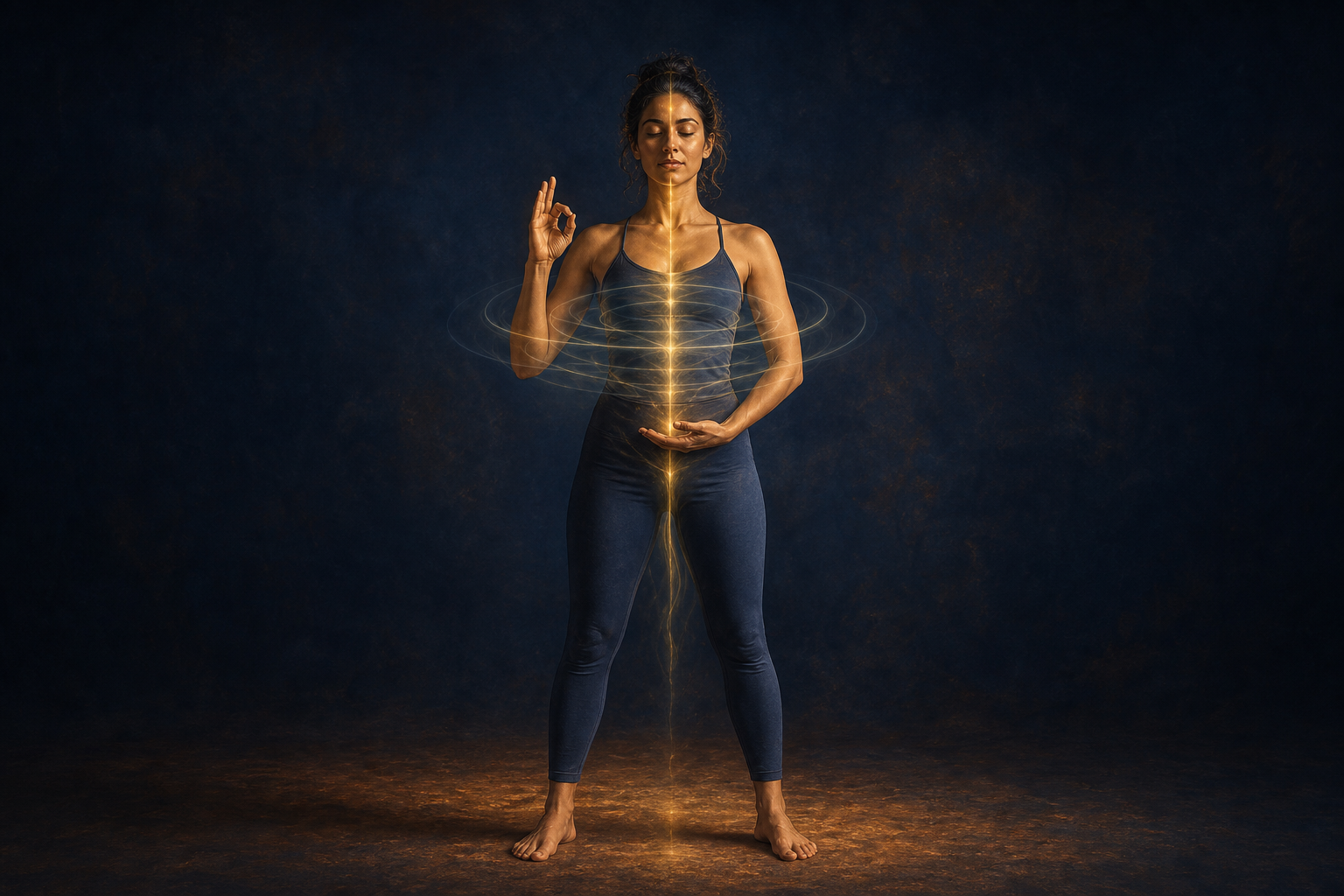
The source distinguishes several dimensions of mudra. Hasta mudras principally involve the hands and fingers; kaya mudras use the whole body; mana mudras concern inner attention and mental orientation; bandha-linked mudras incorporate locks such as mula bandha, uddiyana bandha, and jalandhara bandha; and some classifications include adhar mudras associated with lower-body energetic processes. The categories show why reducing every mudra to finger symbolism creates an incomplete picture.
The reported yogic logic is sequential but interconnected. Bodily steadiness can help refine breathing; refined breathing can reduce mental scattering; quieter attention can then turn inward. Mudra supplies a deliberate form within which this process may be sustained. Prana is not presented as identical to respiration, although breath is described as one of its accessible vehicles.
DharmaRenaissance places that account within the traditional subtle anatomy of ida, pingala, and sushumna nadis and the energy centers named muladhara, swadishtana, manipura, anahata, visudha, ajna, and sahasra. Mudra works in conjunction with disciplines such as asana, pranayama, mantra, meditation, and bandha rather than standing apart as an isolated device. A modern psychophysical interpretation may use a different explanatory vocabulary, but it can still recognize the underlying insight that bodily organization and mental experience continually influence one another.
Hand gestures offer an especially accessible example. The article reports a symbolic system in which the fingers can correspond to elemental or psychological principles, while emphasizing that interpretations vary by lineage. It gives the joining of thumb and index finger in jnana mudra and chin mudra as a commonly interpreted meeting of individual identity and higher consciousness. The physical contact serves as a contemplative reminder; it does not make knowledge automatic or replace the work of stabilizing it in life.
Key takeaways
- Mudra includes hand gestures, whole-body forms, inner orientations, and practices linked with energetic locks.
- The reported 84,000 mudras are best approached as an image of vast spiritual possibility, not an independently verified numerical catalogue.
- Shiva’s stillness and Nataraja’s movement express complementary aspects of one disciplined consciousness.
- A gesture gains spiritual meaning through the integration of form, breath, attention, intention, and ethical conduct.
- Lineage and context matter because the same-looking configuration can carry different interpretations or serve different purposes.
From yogic discipline to a shared cultural language
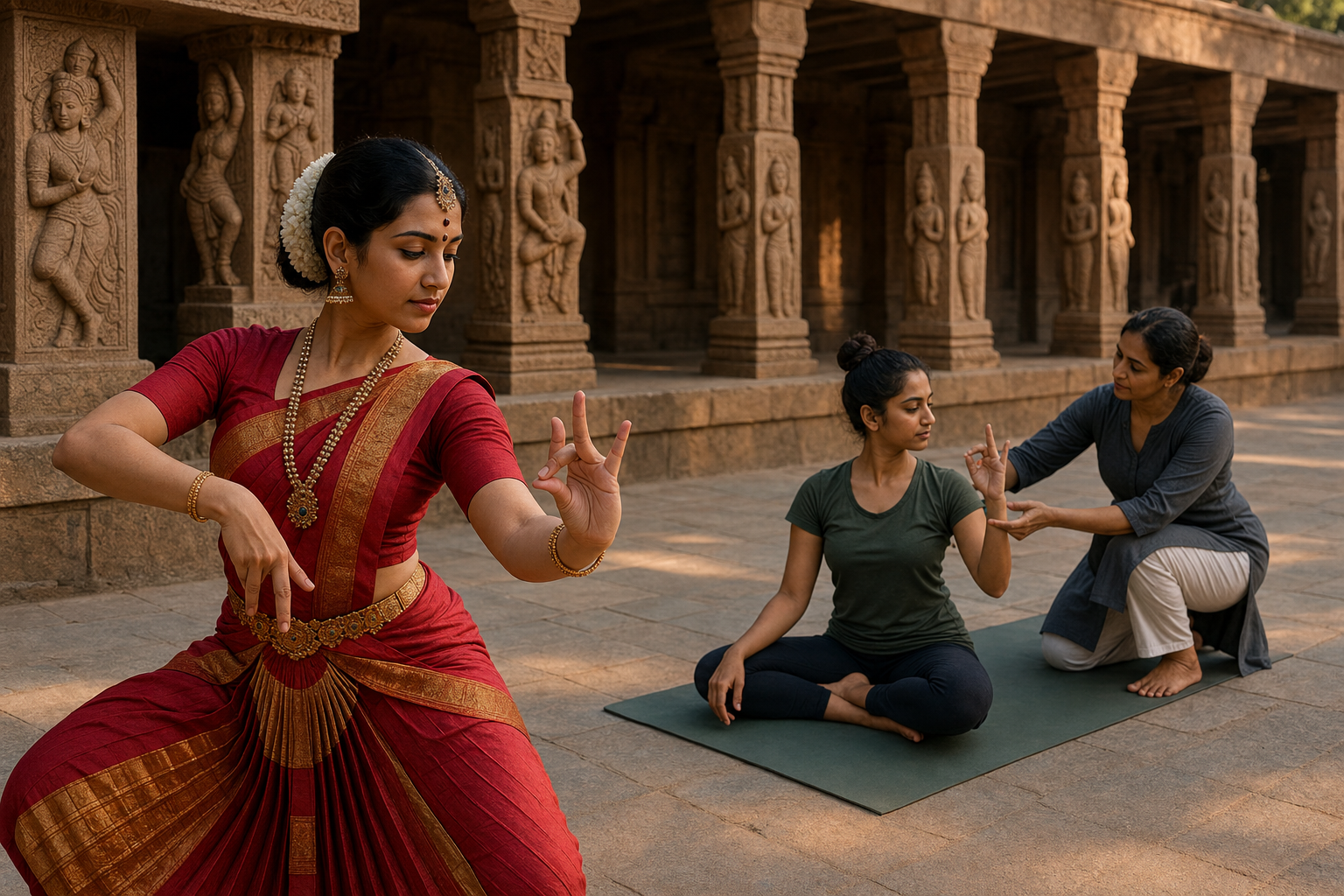
Mudra moves across several domains without becoming identical in all of them. The source names maha mudra, khechari mudra, viparita karani, vajroli, and yoga mudra in connection with hatha yoga. In ritual, gestures can accompany mantra, visualization, offerings, and worship. These uses may share an embodied principle, but a contemplative hand gesture should not be confused with a whole-body or bandha-linked yogic procedure merely because both are called mudra.
Classical Indian dance makes the communicative dimension particularly visible. DharmaRenaissance points to Bharatanatyam, Kuchipudi, Odissi, and Kathakali as traditions in which hasta mudras can communicate divine narratives, emotions, natural forms, and philosophical ideas. A hand may signify a lotus, river, mountain, bird, blessing, weapon, or divine presence according to the grammar and dramatic context of the performance. The dancer’s body thus becomes a bearer of theology, memory, and rasa rather than a decorative addition to spoken teaching.
The same embodied vocabulary also reaches beyond a narrowly sectarian frame. The article notes Buddhist images using bhumisparsha, dharmachakra, dhyana, and abhaya mudras to express awakening, teaching, meditation, and fearlessness. It identifies contemplative stillness and restraint in Jain imagery and connects Sikh practice with remembrance, humility, seva, and embodied devotion in daily life. These traditions remain distinct, yet the comparison highlights a broader dharmic conviction: transformation involves the disciplined coordination of body, mind, intention, and conduct.
This comparison also supplies an important test of authenticity. A gesture cannot compensate for conduct that contradicts its stated meaning. Fearlessness without compassion, contemplation without restraint, or ritual precision without ethical responsibility leaves embodiment incomplete. The source’s most consequential claim is therefore not that every movement is already sacred, but that movement can become a doorway to transformation when awareness and character support it.
A responsible engagement with mudra begins by identifying the kind of practice involved, respecting differences among lineages, and refusing to mistake symbolic explanation for technical instruction. The living future of the tradition will depend less on proving an exact total of forms than on preserving the integration that gives any form depth: a steady body, attentive mind, meaningful intention, and conduct consistent with dharma.