
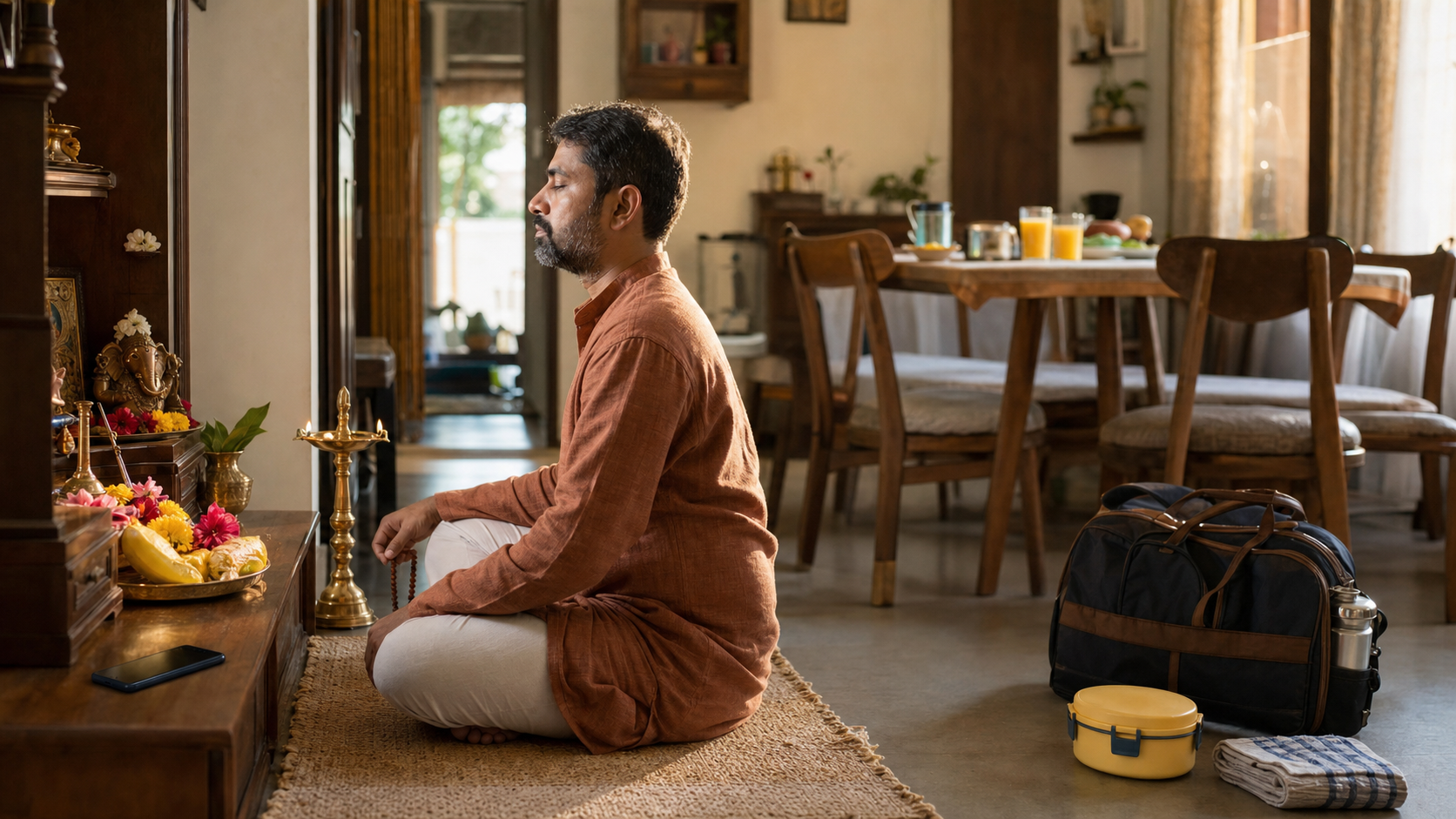
You keep the mala nearby, intend to speak calmly, and know exactly which digital habit scatters your attention. Then the familiar trigger arrives and intention gives way to impulse. If that cycle keeps repeating, you probably don’t need a harsher vow. You need a structure that places discernment between stimulus and action.
Dharmic self-mastery should make you more dependable in family, work, worship, and service. It should not make you brittle, self-absorbed, or hostile toward the body. The aim is simple: let the senses supply information without giving them authority over your next choice.
Put discernment back in command

An appetite, image, notification, memory, or insult can produce a real sensation without issuing a binding order. Self-mastery begins when you can notice the impulse, identify what it is asking you to do, and consult dharma before obeying it. That small interval is where freedom becomes practical.
The Bhagavad Gita 3.42 presents a hierarchy in which the mind stands above the senses, the intellect above the mind, and the Self above the intellect. The Katha Upanishad gives the same problem a memorable form: the senses are horses, the mind is the reins, the intellect is the charioteer, and the Self is the passenger. A charioteer does not injure the horses or pretend they do not exist. The task is to train their movement toward the proper destination.
This language must not be used to erase the real differences among Dharmic traditions. Vedanta distinguishes atman from the senses, mind, intellect, and ahankara. Buddhist analysis examines experience through conditioned aggregates and sense bases without positing a permanent self. Jain thought distinguishes jiva from ajiva and connects bondage with karmic accretion intensified by attachment and aversion. Sikh teaching confronts kama, krodha, lobha, moha, and ahankar through remembrance, truthful living, and seva under Hukam.
| Dharmic framework | What captures agency | What retrains it | What progress looks like |
|---|---|---|---|
| Hindu traditions | Identification with indriyas, manas, and ahankara | Viveka, pratyahara, japa, dhyana, bhakti, and karma-yoga | Desire is noticed without automatically becoming action |
| Buddhist traditions | Craving, aversion, and mistaken ownership of conditioned experience | Sila, mindfulness, right effort, prajna, and compassion | Sensations and thoughts are observed as changing events |
| Jain traditions | Attachment, aversion, grasping, and conduct that deepens karmic bondage | Ahimsa, samyama, aparigraha, samayik, and pratikraman | Consumption, reaction, and possessiveness become more restrained |
| Sikh tradition | The five thieves and ego-centered resistance to Hukam | Naam simran, bani, honest labor, sharing, and seva | Remembrance becomes visible in duty, courage, and care for others |
The metaphysics differ, but the practical overlap is substantial: ethical restraint reduces agitation, trained attention reveals the movement of craving and aversion, and service prevents inward discipline from becoming self-absorption. You do not have to blur the traditions to learn from that common architecture.
Judge self-mastery by conduct, not by unusual experiences. Are you interrupted without becoming immediately hostile? Can you leave a desire unfulfilled without turning resentful? Do you keep your word when enthusiasm has faded? Are people who depend on you receiving more patience and reliability? Those are harder tests than feeling peaceful during an undisturbed sitting.
Build an outer boundary before demanding inner stillness
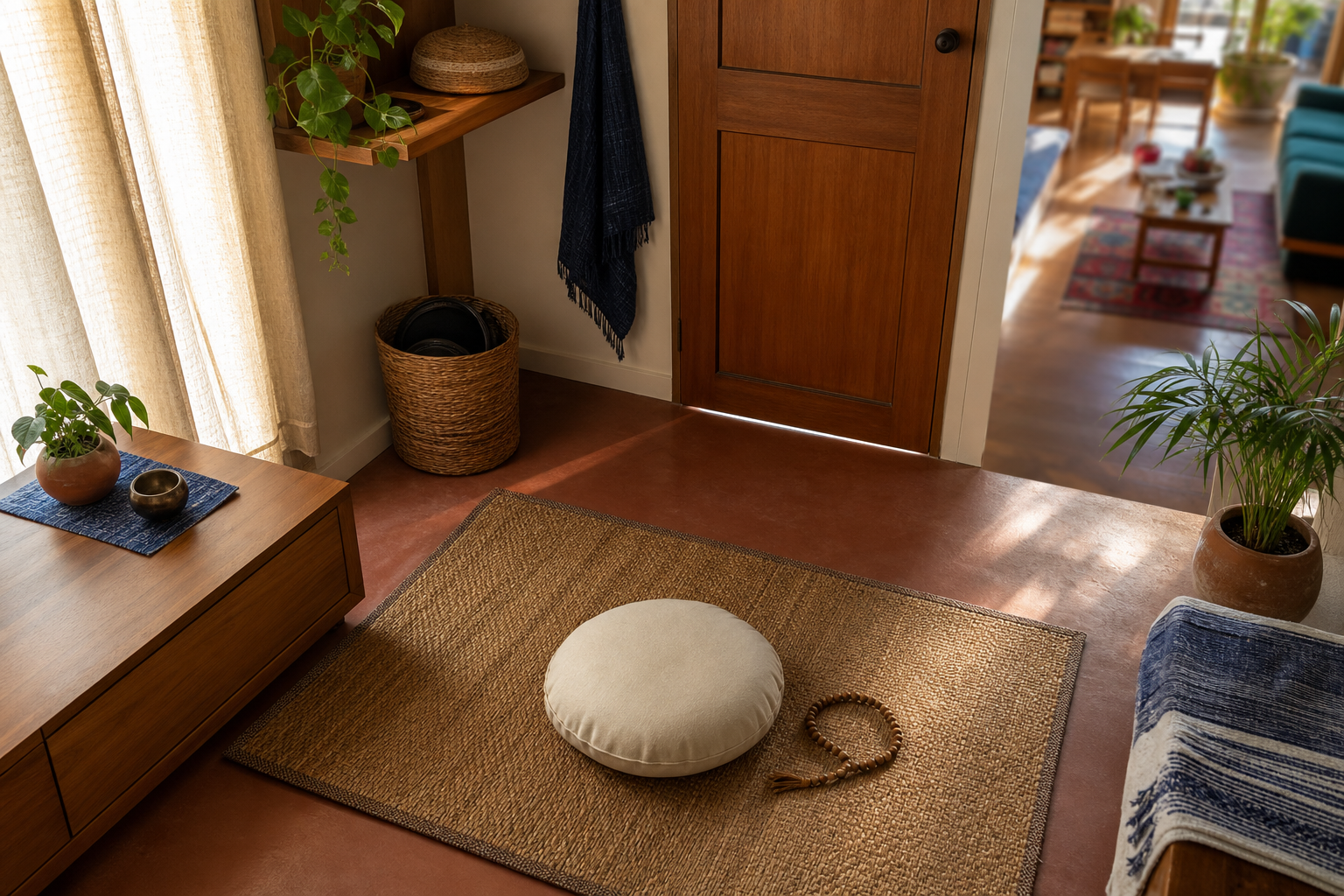
Trying to meditate while leaving every source of stimulation open is like trying to protect a sanctum without a perimeter. The Devi Bhagavatam’s Manidwipa offers a useful Shakta image for this stage. Its outer iron enclosure can be read as the threshold where scattered desire meets deliberate choice. Iron matters because the first discipline must be firm enough to survive an ordinary mood.
Your modern enclosure is a set of boundaries established before temptation begins. It may be a phone kept outside the place of japa, a refusal to participate in gossip, a defined limit on needless consumption, or a regular period in which incoming media is closed. This is not withdrawal from family or civic responsibility. It is protection against the inputs that repeatedly prevent you from fulfilling those responsibilities well.
A useful sankalpa has four parts:
- A visible trigger: name the situation in which the discipline begins, such as completing your morning washing or sitting down for a meal.
- An observable boundary: specify what you will or will not do. Replace a vague intention such as being less distracted with a rule you can honestly record.
- A Dharmic replacement: give redirected energy somewhere to go: japa instead of scrolling, listening instead of gossip, dana instead of needless acquisition, or a calm pause instead of an angry reply.
- A repair: decide in advance how you will respond to a lapse. Correct the harm where possible, record the trigger, and resume at the next opportunity without theatrical punishment.
For example: after your morning washing, the phone remains outside the practice space until simran, japa, samayik, or mindfulness is complete. This works better than promising to use the phone less because the trigger, boundary, and replacement are all clear. It also places the decision before the feed is open and attention has already been dispersed.
The yamas and niyamas give this perimeter moral substance: ahimsa, satya, asteya, brahmacharya, and aparigraha; followed by shaucha, santosha, tapas, svadhyaya, and Ishvara-pranidhana. Treat them as living constraints on speech, consumption, sexuality, ownership, cleanliness, study, and intention. They are not decorative preliminaries to a supposedly higher meditation. They reduce the disturbances that meditation would otherwise have to confront repeatedly.
Pratyahara is also frequently misunderstood at this point. Bhagavad Gita 2.58 uses the image of a turtle withdrawing its limbs, while Yoga Sutras 2.54-55 place pratyahara before concentration and meditation. The point is intelligent modulation, not permanent sensory shutdown. You close an input when it compromises discernment and reopen it when it serves duty, beauty, learning, relationship, or worship.
A boundary has become escapism if it makes you neglect a child, evade honest work, avoid a necessary apology, or refuse the suffering of another person. A Dharmic boundary returns attention to rightful use. It does not provide sacred language for indifference.
Train body, speech, and mind without turning harsh

Bhagavad Gita 17.14-16 distinguishes tapas of body, speech, and mind. That threefold structure is especially useful for householders because it exposes an easy mistake: a long meditation cannot compensate for destructive speech, and dietary strictness cannot purify an intention built around pride. The whole instrument has to be trained.
Body: make steadiness physically possible
Sharira-tapas begins with ordinary regularity. Choose a stable sleep-wake pattern, eat with attention, maintain cleanliness, and use movement or asana to keep the body serviceable. If food is your chosen field of restraint, regulate one recurring excess rather than inventing a punishing regime. The body is the instrument through which you perform seva, earn honestly, care for family, and sit in practice.
Upavasa can be a meaningful discipline when it fits your health, tradition, and responsibilities. It is not automatically safe for every person or life stage. If fasting may conflict with a medical condition, medication, pregnancy, recovery from disordered eating, or demanding physical work, seek qualified medical guidance and choose a non-food austerity instead. Hararming the body to prove seriousness is not sattvika tapas.
Speech: stop spending attention through the tongue
Vak-tapas is one of the most demanding disciplines available in ordinary life. Practice truth without cruelty, refuse gossip and slander, keep commitments, and use deliberate silence when speech would only feed anger or vanity. Digital expression belongs here too. A post, forwarded accusation, or contemptuous reply is still speech in the moral sense.
Use a precise repair when you fail. Stop adding words. Correct any false claim with the people who received it. Apologize to the person harmed without defending your intention. Then identify the opening through which the lapse entered: anger, desire for approval, group pressure, or pleasure in another person’s humiliation. That review turns remorse into training.
Mauna should improve listening, not punish the people around you. Tell family members when you will be unavailable for casual conversation, remain reachable for genuine needs, and do not use silence to control a conflict. A vow loses its purity when someone else is forced to bear its hidden cost.
Mind: choose one doorway and stay with it
Manas-tapas trains attention through a method coherent with your path. That may be breath awareness in anapanasati, mantra-japa, Gurbani-centered simran, samayik, contemplative study, or another received practice. Choose one primary method for the full discipline rather than changing techniques whenever the mind becomes restless. Restlessness is often the material being trained, not evidence that the method has failed.
Use the same cue and place when your duties permit. At the beginning, recollect why you are sitting. During practice, notice sensation, image, emotion, and thought without treating each event as identity or instruction. At the end, dedicate the clarified attention to your next duty. This keeps contemplation connected to conduct.
Gentle breath regulation may help collect attention if you already know an appropriate method. Nadi-shodhana and bhramari are traditionally used as calming supports, but forceful breathing and breath retention should not be added merely to make a discipline feel advanced. Learn stronger pranayama from a competent teacher, particularly when health concerns are present.
The Gita’s distinction among sattvika, rajasika, and tamasika tapas supplies a decisive audit. Sattvika discipline is measured, steady, and free from display. Rajasika discipline seeks admiration, status, or power. Tamasika discipline proceeds through delusion and injures oneself or another. If your practice makes you vain, deceptive, medically reckless, or cruel to those who cannot follow it, intensity is not the remedy. The design itself needs correction.
Use service to test whether your discipline is real

Private restraint can create a convincing spiritual self-image. Seva tests it. The person who appears composed in solitude may still become possessive over credit, impatient with inconvenience, or resentful when gratitude does not arrive. Service exposes those movements while giving purified attention a worthy direction.
Choose a recurring act that meets an actual need: preparing food, tutoring, caregiving, supporting a community kitchen, cleaning a shared place, protecting living beings, or helping someone navigate a burden you understand. Do not choose only for symbolic appeal. Ask what the recipient needs, what you can sustain, and whether your involvement preserves dignity.
Different traditions provide distinct ways to frame this action. Karma-yoga offers the work to Ishvara and releases possessive ownership of the result. The bodhisattva orientation joins compassion with prajna and skillful means. Jain seva remains governed by ahimsa and aparigraha. Sikh practice binds simran to seva, kirat karo, and vand chhako so remembrance becomes honest labor and sharing. In each case, service is more than generosity added after meditation; it is a discipline that weakens the habit of arranging the world around the ego.
Releasing the fruits of action does not mean becoming careless about consequences. You still prepare, listen to criticism, correct mistakes, and measure whether the work helps. What you release is the claim that the result exists to confirm your importance. That distinction protects both karma-yoga and seva from becoming excuses for poor work.
Service also requires a perimeter. Define the responsibility you can reliably carry, coordinate with others, and rest before resentment turns care into hostility. Burnout driven by rajas does not become holy because the activity was charitable. Sustainable seva should deepen fidelity to dharma rather than destroy your capacity to fulfill it.
Follow one discipline for 40 days and measure conduct
A 40-day tapasya structure is long enough to demand consistency but simple enough to place around household duties when the commitments are modest. The aim is not to collect an impressive streak. It is to discover where your agency is repeatedly surrendered and train a better response.
Write the covenant before the first day
Put the following commitments on one page. If a commitment cannot be recorded honestly at the end of the day, make it more concrete before you begin.
- Purpose: one sentence naming the quality you intend to make available for dharma, such as steadier attention for worship, kinder speech at home, or freedom from a recurring compulsion.
- Body: one sustainable discipline involving sleep, food, cleanliness, movement, or another embodied habit.
- Speech: one restraint involving truthfulness, gossip, anger, unnecessary online expression, or intentional silence.
- Mind: one primary contemplative practice performed at a fixed cue and for a duration you can maintain on a difficult weekday.
- Service: one recurring act with a real beneficiary and a realistic place in your week.
- Release: a short dedication through which you offer the effort and loosen your demand for recognition or a particular result.
Use the same daily sequence
- Cross the boundary. Close the inputs covered by your sankalpa before beginning practice.
- Recollect the highest. Invoke Ishvara, Dharma, the Jina’s ideal, Akal Purakh and Hukam, or the sacred orientation proper to your lineage.
- Train attention. Perform the one contemplative method you selected without evaluating every sitting as a success or failure.
- Carry one vow into contact. Decide where that day’s body or speech discipline is most likely to be tested.
- Review before sleep. Record what happened, repair any harm you can repair, and release both pride and discouragement.
Keep the record plain: body discipline kept or missed; speech discipline kept or missed; contemplative practice completed or missed; seva completed when scheduled; repair required or completed. Add one short note naming the strongest trigger. A diary full of spiritual interpretation can hide the very behavior you need to see. A simple record makes patterns harder to evade.
At the end of each week, ask whether attention is steadier, speech is kinder, reactions are less immediate, consumption is cleaner, and duties are being completed more reliably. These are better indicators than visions, emotional intensity, or the number of people who know about your vow. If the discipline is damaging a legitimate responsibility, correct its design. If it merely feels inconvenient, observe the discomfort before changing anything.
If you miss a day, do not double the next practice, punish the body, or restart the calendar to preserve a perfect story. Mark the lapse, identify the condition that preceded it, make any necessary repair, and continue. Abhyasa gains strength through return; vairagya keeps a broken streak from becoming a new object of ego and despair.
Correct the common failure modes
- You alternate between indulgence and severity. The vow is probably too broad or punitive. Narrow it to one behavior while preserving daily continuity.
- You want other people to notice. Reduce public narration of the practice and track the quality of your conduct instead. Recognition-seeking turns tapas toward rajas.
- You meditate instead of making a necessary repair. Apologize, correct the falsehood, return what is not yours, or complete the neglected duty. Inner calm cannot erase an outer obligation.
- Seva produces resentment. Clarify the need, scope, and shared responsibility. Serve within your capacity rather than promising from enthusiasm and withdrawing under pressure.
- Difficult emotions become more visible. Do not use spiritual language to deny them. Examine them honestly, and seek qualified medical or psychological care when distress is persistent, severe, or unsafe; sadhana is not a substitute for needed treatment.
Key takeaways
- Self-mastery governs the senses; it neither worships nor attacks them.
- Establish a concrete ethical and sensory boundary before asking the mind for concentration.
- Train body, speech, and mind together so progress in one area does not conceal disorder in another.
- Prefer sattvika consistency to rajasika display or tamasika self-harm.
- Use recurring seva and fulfilled duties as tests of whether contemplation is reducing ego-centered behavior.
- Measure progress through attention, truthful speech, reduced reactivity, restrained consumption, reliable action, and prompt repair.
Before your next habitual distraction opens, write one observable boundary and the sacred action that will replace it. Then choose the body, speech, mind, and seva commitments you can carry for 40 days. The first victory is not a dramatic state of consciousness. It is the next moment in which an impulse arrives and dharma, rather than habit, decides what you do.
References
- Dandavats – From Sensory Illusion to Self-Realization: A Dharmic Guide to Serving the Supreme
- DharmaRenaissance Blog – At the Goddess’s Gate: Manidwipa’s Iron Enclosure and the Discipline of Sacred Choice
- HinduPad – Tapasya in Kali Yuga: Powerful, Scripture-Sourced and Science-Backed Austerities for Modern Life