

You have time for one class, but the devotional feed offers scripture lectures, remembrance sessions, parikrama, discussions of devotional character, and service initiatives. Sampling all of them can leave you with many impressions and no instruction you can recall the next morning.
The better question is not, “Which recording should I finish?” It is, “What do I need to carry into practice after I listen?” The range available on 7-8 November 2026 shows why this matters: Srimad Bhagavatam classes appeared beside Radha Kunda parikrama, teachings on devotional character, Govardhana-related service, and Srila Prabhupada remembrance. Each can serve you well, but not if every recording becomes background audio.
Choose the lecture by the need in front of you
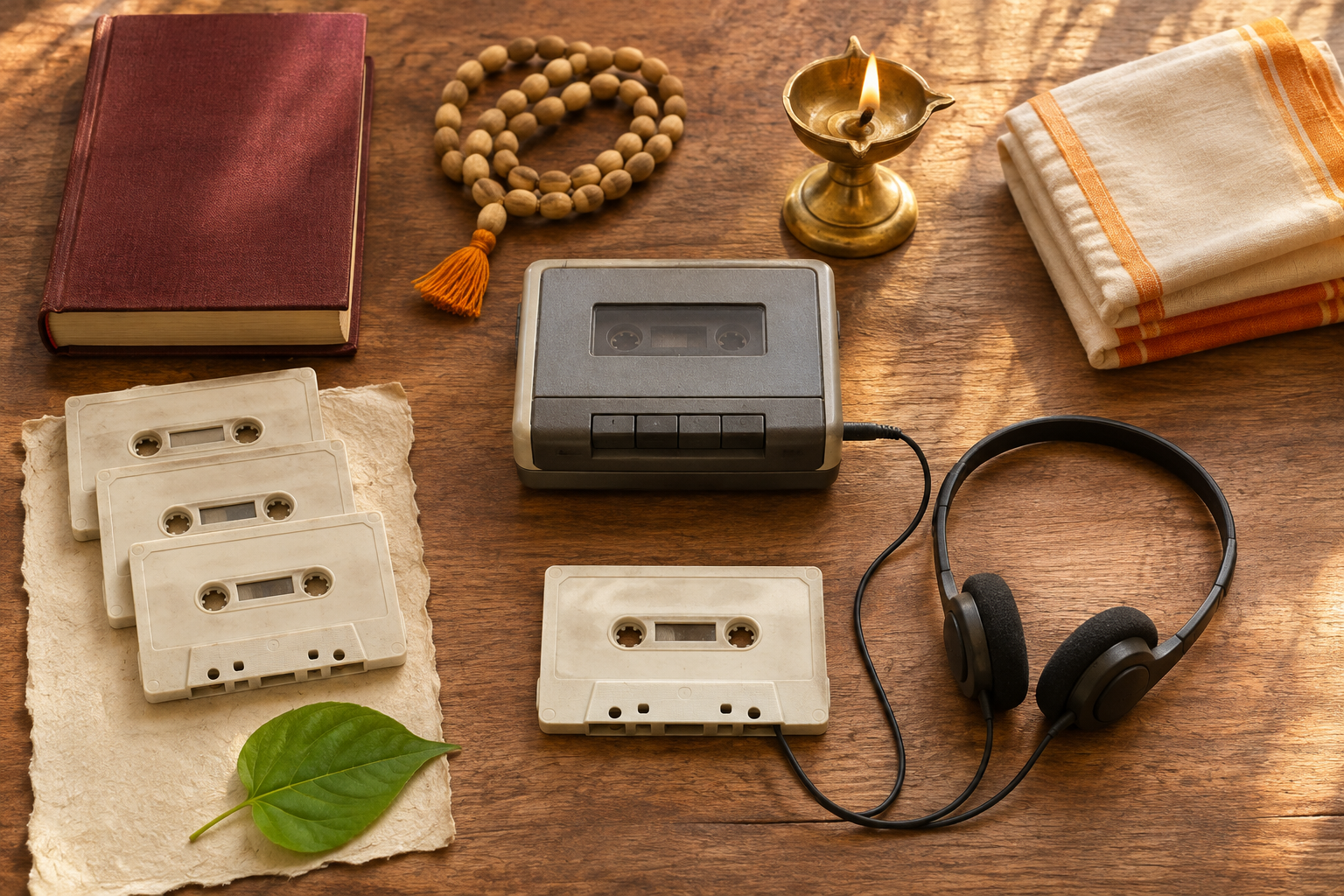
Do not begin by asking which speaker is most prominent. First identify the work your devotional life needs today. That choice determines how you should listen.
- Choose a verse-based class when you need scriptural grounding. The November selection included discussions of Srimad Bhagavatam 3.26.44, 3.19.36, 10.81.38-39, 3.29.28, 4.11.24, and 3.31.35. A verse number gives your attention a fixed centre and makes the teaching easier to revisit.
- Choose Prabhupada remembrance when your practice feels detached from the acharya who carried the teaching. Begin with H.G. Daivi Shakti Mataji’s Srila Prabhupada Lilamrita session from 8 November 2026, and listen for an instruction or standard you can honour through service.
- Choose a discussion of devotional character when you can name a specific inner obstacle. Sessions framed around the test of devotion, bodily identification, truth-telling, fault-finding, or the fearlessness of Sri Radha should lead you to examine conduct, not merely admire an idea.
- Choose parikrama or dham-centred content when you need to restore sacred orientation. A Radha Kunda parikrama or Govardhana-focused session should deepen attentiveness to the dham rather than become spiritual sightseeing on a screen.
- Choose a service initiative when hearing has become passive. A nama-yajna or Bhagavatam-distribution effort gives you a concrete setting in which remembrance can become contribution.
A lecture does not need to meet every devotional need at once. Giving it one clear purpose protects you from judging it only by novelty, eloquence, or emotional intensity.
Listen for a change, not for completion
Finishing a recording is an activity metric. It does not tell you whether you heard attentively. Before pressing play, open a notebook and prepare four fields: passage, central teaching, personal correction, and service.
- Passage: Copy the scripture reference exactly when it appears in the title. Do not rely on remembering it later.
- Central teaching: State the main point in one complete sentence. If you cannot do that, your note is still a collection of fragments.
- Personal correction: Name the assumption, habit, or reaction that the teaching challenges in you. Avoid vague lines such as “be more devotional.”
- Service: Write an observable response that belongs in your actual life: prepare properly for the next class, complete a promised duty, read the cited passage, repair careless speech, or verify a quotation before sharing it.
During the lecture, resist the urge to transcribe everything. Record the argument that connects the passage to practice. A page of disconnected sentences can look substantial while hiding the fact that you have not identified the teaching.
After listening, close the recording and write your central sentence from memory. Then complete this prompt: “If I have understood this teaching, the next visible change should be…” The answer is your test. If nothing in your attention, speech, study, or service can change, listen again to the relevant portion rather than immediately starting another class.
Return to the note before your next listening session. Recall first and replay second. That small delay reveals what actually stayed with you and what merely felt persuasive while the speaker was present.
Make Prabhupada remembrance active and accurate
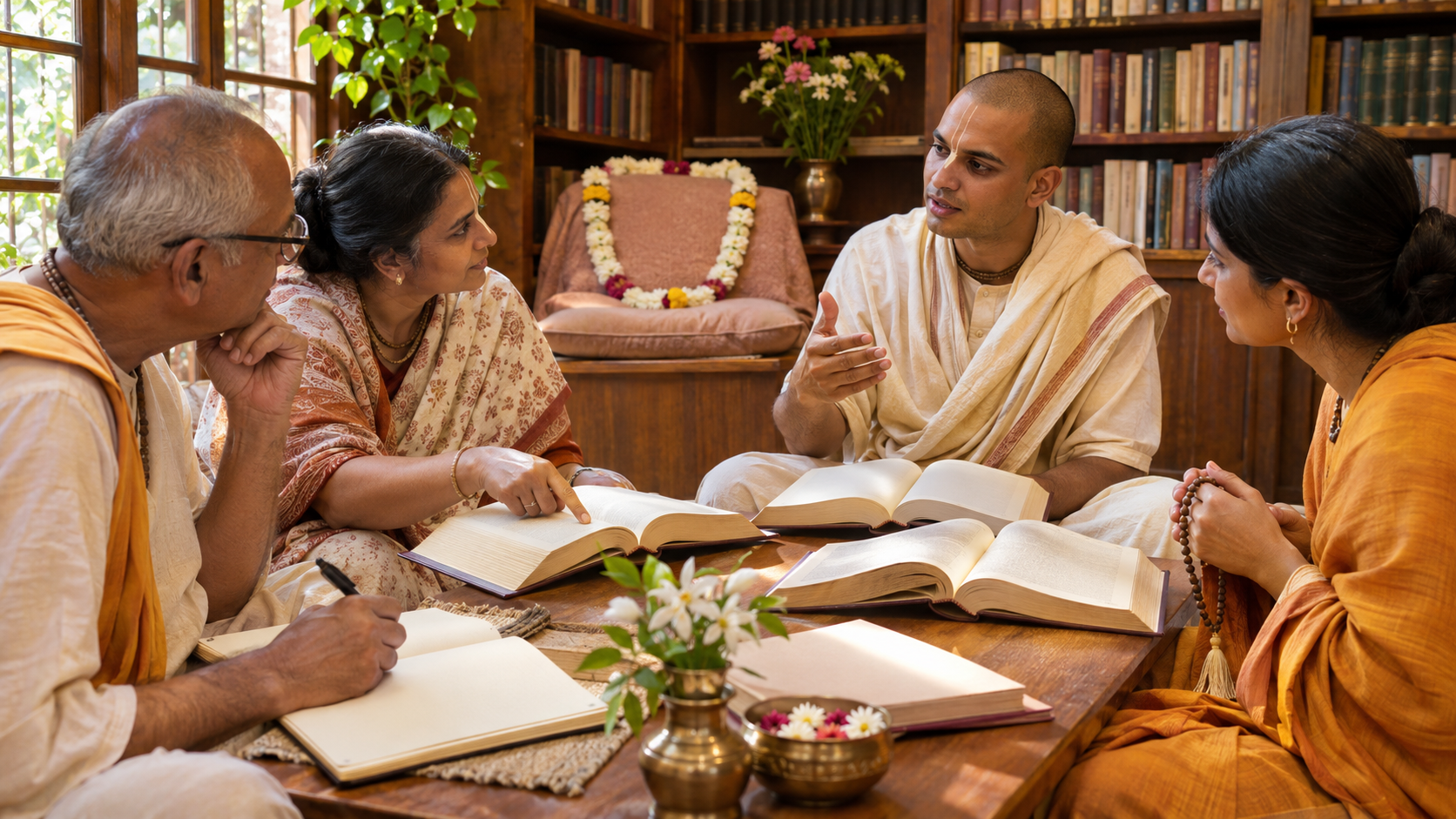
Srila Prabhupada remembrance can become sentimental if it stops at admiration. It can also become dry if you reduce his life to information. Keep remembrance joined to instruction, character, and service.
While hearing a Lilamrita session, use these questions:
- What instruction, standard, or devotional priority becomes clear?
- What quality made that teaching visible in Srila Prabhupada’s conduct?
- Where does my present routine resist that standard?
- What modest act of service would honour it without pretending to imitate what is beyond my position?
The final question is essential. Remembrance is not proved by the warmth of the moment. It bears fruit when it changes how you receive teachings, treat devotees, fulfil responsibilities, or speak about the acharya.
Accuracy is also part of honour. Mark clearly whether your note contains a direct quotation, a speaker’s paraphrase, or your own understanding. Never add quotation marks from memory. If you plan to publish or forward a saying, return to the recording and verify the exact words. A devotional message does not become safer to circulate merely because it sounds plausible.
Keep personality disputes out of the exercise. Ask whether the remembrance brings you closer to Prabhupada’s teaching and to responsible service. Using his name as a weapon in an unrelated disagreement reverses the purpose of remembrance: the acharya becomes a badge for the ego instead of a guide for its correction.
Build a weekly rhythm that joins scripture and lineage

A sustainable routine needs selection, hearing, recall, and application. It does not need a large queue.
- At the start of the week, select deliberately. Pair a verse-centred Bhagavatam class with a remembrance, dham, or service-oriented session. Keep the rest in reserve.
- Before hearing, write your question. It might concern bodily identification, fault-finding, truthfulness, fearlessness, service, or your connection to Srila Prabhupada. A real question gives the lecture somewhere to land.
- After hearing, reduce the class to a usable note. Preserve the passage, teaching, correction, and service response. Do not reward yourself for producing volume.
- The next morning, practise recall. Without opening the recording, write the point you remember and why it matters. Check your note only afterward.
- Before moving on, review the attempted application. Record what you actually did, what you avoided, and what needs another attempt. Honest incompletion is more useful than a decorative spiritual journal.
If you listen with family members or a devotional group, keep the discussion equally disciplined. Each person can identify the passage, one central teaching, and one possible application. Nobody needs to retell the entire lecture. This format makes room for different insights while keeping everyone accountable to what was actually heard.
Missing a session does not require abandoning the routine or building a punishing backlog. Resume with the note already in progress. Continuity in applying one instruction matters more than maintaining the appearance of uninterrupted consumption.
Key takeaways
- Choose a lecture for a named devotional need, not merely because it is new.
- Anchor verse-based listening to the exact Srimad Bhagavatam reference.
- Keep four fields in your notes: passage, teaching, correction, and service.
- Test understanding by recalling the teaching before replaying the recording.
- Turn Prabhupada remembrance into a concrete act rather than stopping at admiration.
- Separate verified quotations, paraphrases, and your own reflections.
- Do not begin another class until you have identified what the previous one asks you to notice or do.
Open the Prabhupada remembrance session or choose one verse-based class from the November selection. Before you press play, write the question you are bringing and leave space for the service that will follow. That is enough to turn a crowded lecture feed into a steady practice of hearing, remembrance, and response.
References
- Dandavats – Weekly Feed Archive – November 8, 2026
- Dandavats – Today’s Featured Video: HG Daivi Shakti Mataji || Srila Prabhupada Lilamrita || 08-11-2026

Leave a Reply
You must be logged in to post a comment.