
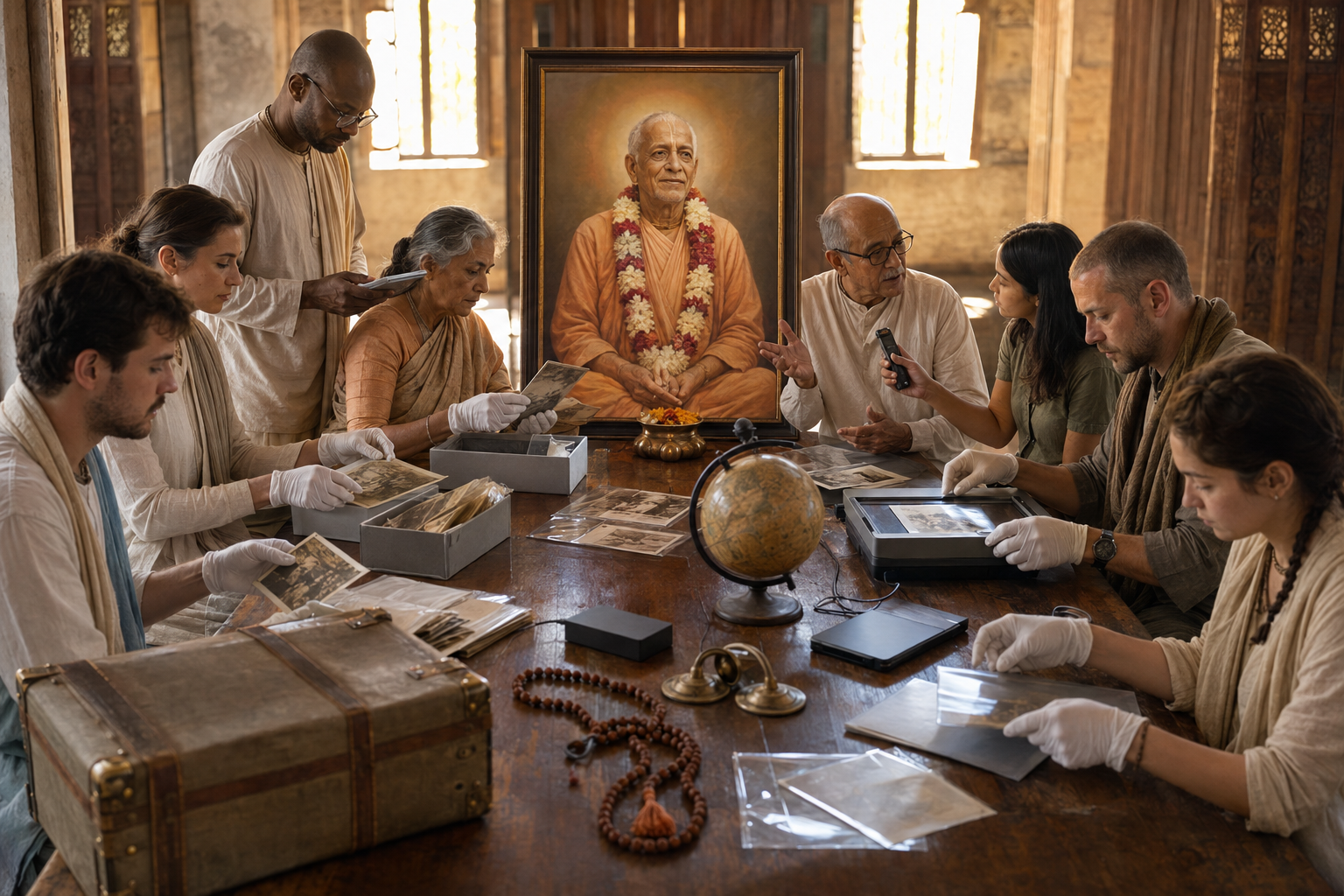
If your temple’s history lives in one devotee’s memory, one mobile phone or an ageing social-media page, it is already fragile. The photographs may survive while the names, dates, acts of seva and local relationships that give them meaning quietly disappear.
You don’t need to wait for a grand institution to begin preserving Srila Prabhupada’s legacy. You need a reliable record, testimony that distinguishes memory from hearsay, media with enough context to remain intelligible, and a named custodian who can pass everything on.
Preserve the seva, not only the surviving object
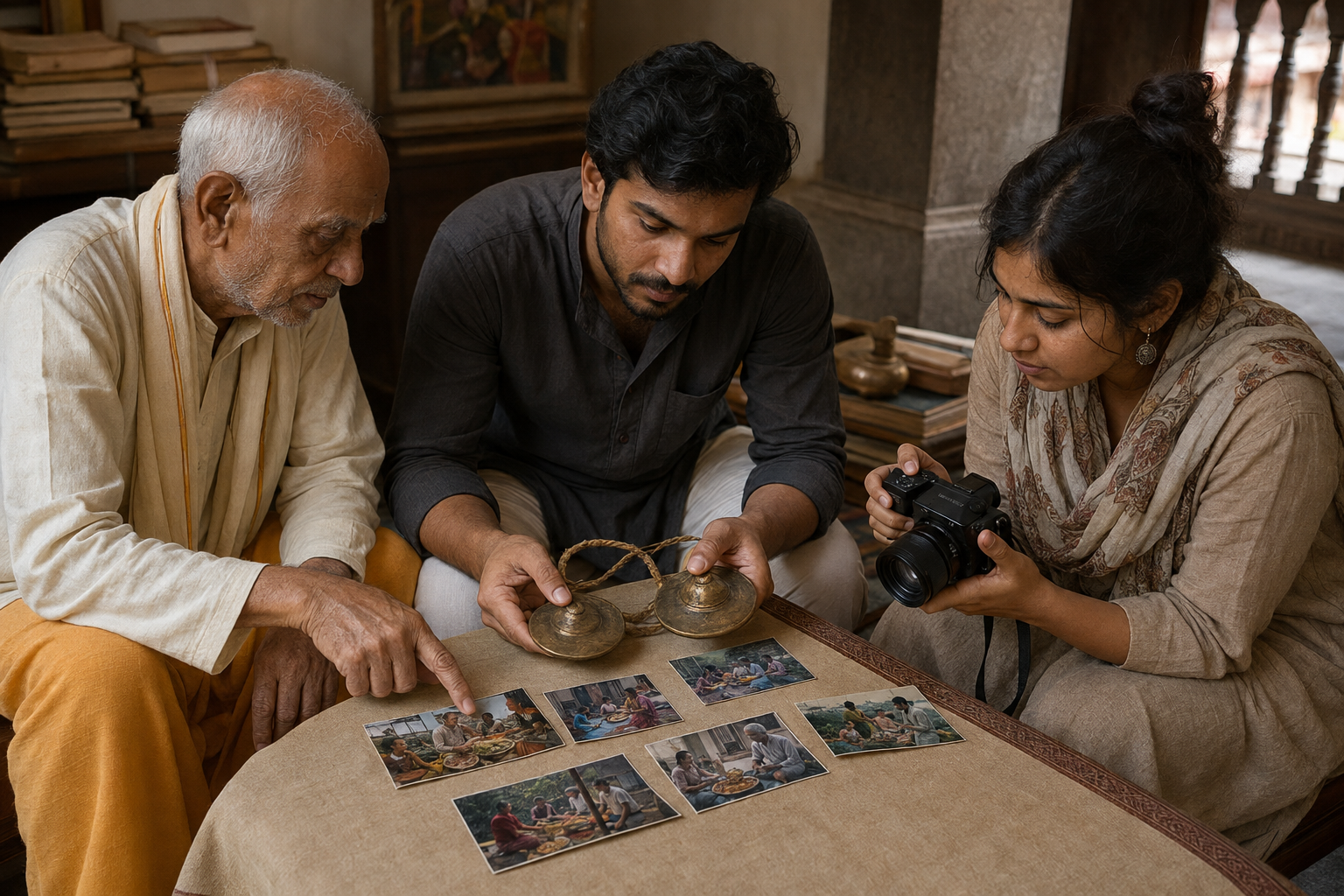
The first mistake is to confuse preservation with storage. A photograph can remain intact while nobody remembers who appears in it. A temple website can stay online while its historical dates go unverified. Even a sacred object can lose part of its historical context when the service, intention and devotees associated with it are no longer recorded.
When Locan Prabhu remembers his devotional service in creating Srila Prabhupada’s murti, the account preserves something a photograph of the completed murti could not preserve by itself: the human act of seva behind the sacred form. That is the model to follow. Record not only what exists, but also who served, what they were asked to do, how the work unfolded and why it mattered to the community.
I want that our Mayapur festival there should be booths showing our activities.
Srila Prabhupada
The operative word is activities. A living legacy is visible in teaching, worship, community, pilgrimage, artistic service and the work of establishing and maintaining centres. An archive should show those relationships rather than reducing the past to a gallery of disconnected images.
Use a simple four-part test whenever you preserve an item:
- Practice: What teaching, worship or form of devotional service does this record illuminate?
- Place: Which temple, preaching centre, nama-hatta, city or community does it belong to?
- People: Who participated, and who can explain the record from direct knowledge?
- Evidence: What photograph, recording, inscription, official page or other material supports the identification?
If you cannot yet answer one of these questions, write “unknown” and create a follow-up task. An acknowledged gap is safer than a confident guess that later becomes accepted as history.
Give every centre a minimum verified record
Srila Prabhupada’s worldwide legacy is vast but locally held. The ISKCON Global Timeline for 1966–2026 brings together more than 750 centres and more than 775 darshanas, with temple websites and map locations attached to many entries. Those totals convey the reach of the movement, but the usefulness of the record depends on the accuracy of each local entry.
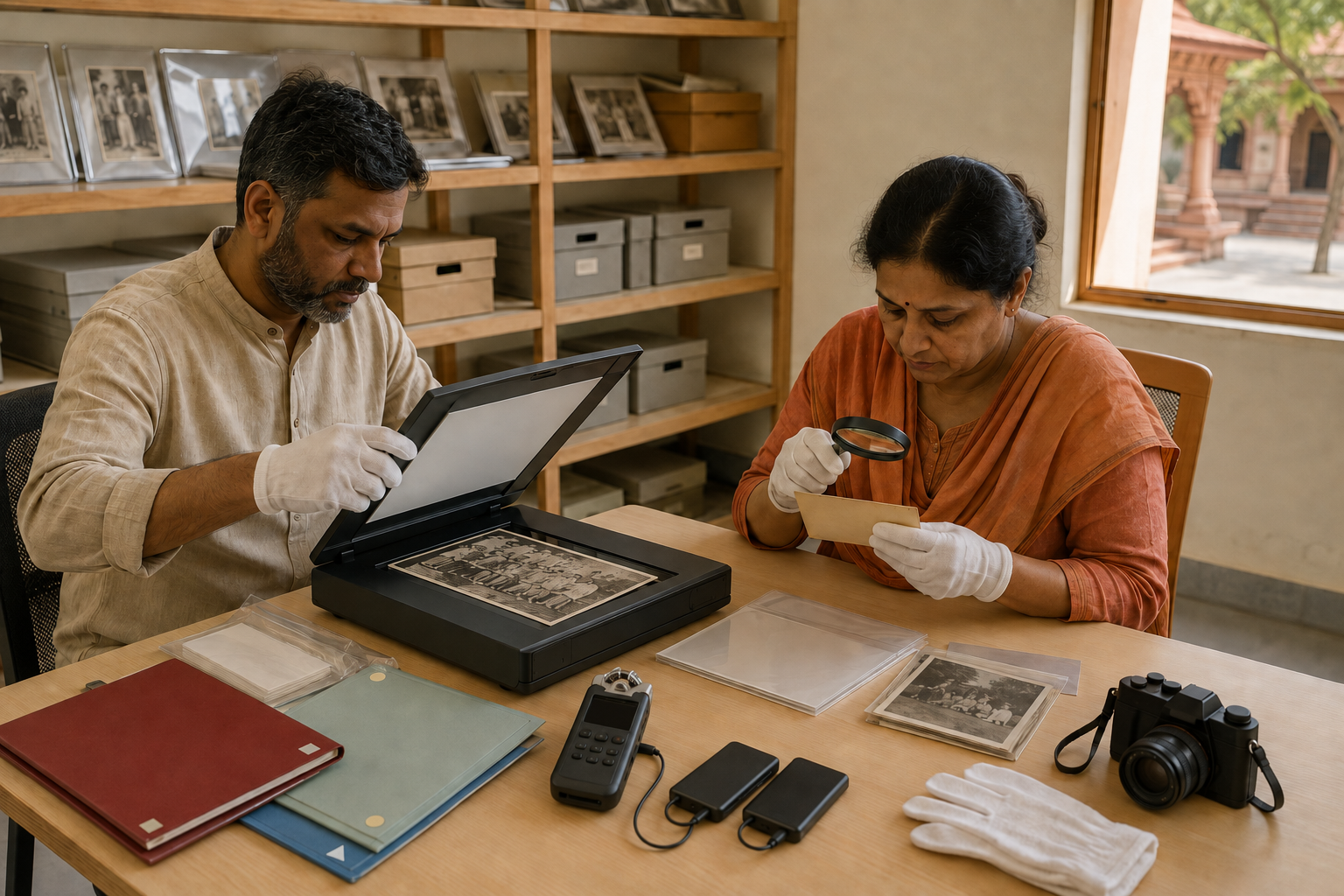
Begin with one canonical information sheet for your centre. Don’t ask several volunteers to collect “anything historical”; give everyone the same fields and merge the verified results into one controlled record:
- The official name of the centre and its city.
- The inauguration date, or the verified year when a complete date is not known.
- The names of the presiding Deities, written as the local temple uses them.
- Clear Deity photographs with captions identifying the temple and, where known, when the image was made.
- The precise Google Maps location.
- The official website or Facebook page.
- The name or role of the person who confirmed each field and when it was checked.
Preserve original spellings. When a name is used in both a local script and Roman characters, retain both instead of allowing one to replace the other. If devotees remember different dates, record the disagreement and the evidence behind each version. Do not settle it by informal majority.
Once the local sheet has been checked, compare it with the public Global Timeline entry. The initiative specifically invites centres to supply or verify their inauguration date or year, city, Deity names and photographs, map location, and official web presence. Corrections can be sent to masterplan [at] mayapur.ngo or by WhatsApp to +91 80168 86555.
A map pin is useful, but it is only a locator. Your local record must retain the history behind the pin. Likewise, a link is not an archive: websites change, accounts become inaccessible and pages can be reorganised. Keep authorised copies of important material in your own organised collection as well as recording where it appeared online.
Record oral histories around specific acts of service
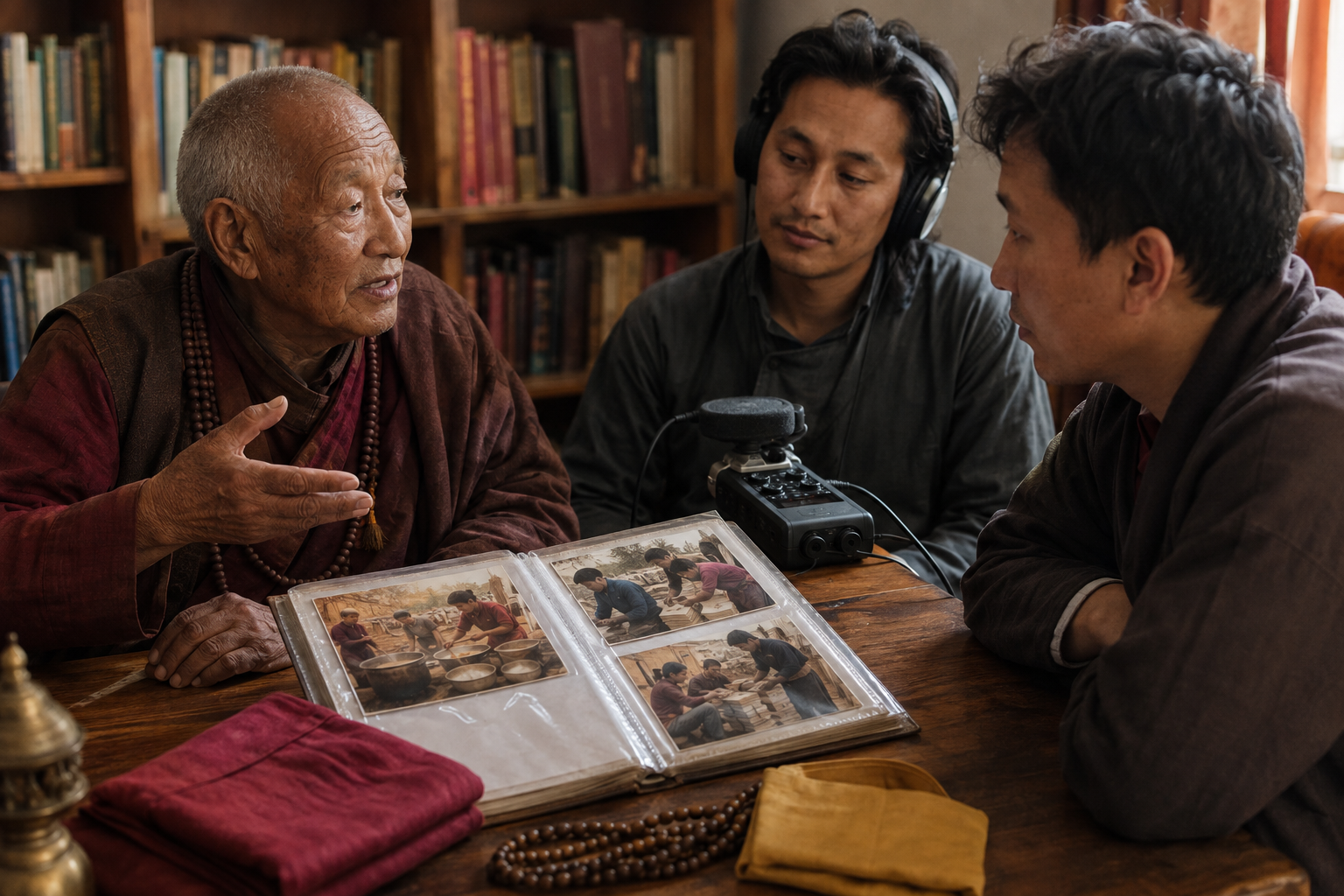
Dates establish where a community stood in time. Memories explain how it came to stand there. The best oral histories are therefore not invitations to “tell us everything.” They begin with a defined service, place, person or object and let the devotee rebuild its context carefully.
Before recording, obtain permission and agree whether the result may be public, restricted to the community or held privately for a later time. Then ask questions that separate direct experience from later retelling:
- What service were you performing, and who asked you to perform it?
- Where did this happen, and what date or period can you establish confidently?
- What did you personally see, hear or do?
- Which part did you learn from another devotee?
- Who else participated and may be able to confirm or expand the account?
- Which photograph, recording, murti or other item is connected to this memory?
- What would a devotee viewing that item now be likely to misunderstand?
Keep the unedited recording as the master. A shortened public version may be easier to watch, but editing can remove a qualifying phrase, an uncertain date or the name that resolves a later question. Store a transcript beside the recording and index the names, places, services and objects mentioned. Otherwise, a valuable interview can become nearly impossible to search.
Label testimony honestly. “I was present” is different from “I was later told.” Both may deserve preservation, but they are not the same kind of evidence. This small distinction protects devotees from turning a cherished recollection into an unsupported historical certainty.
Build correction, access and succession into the archive
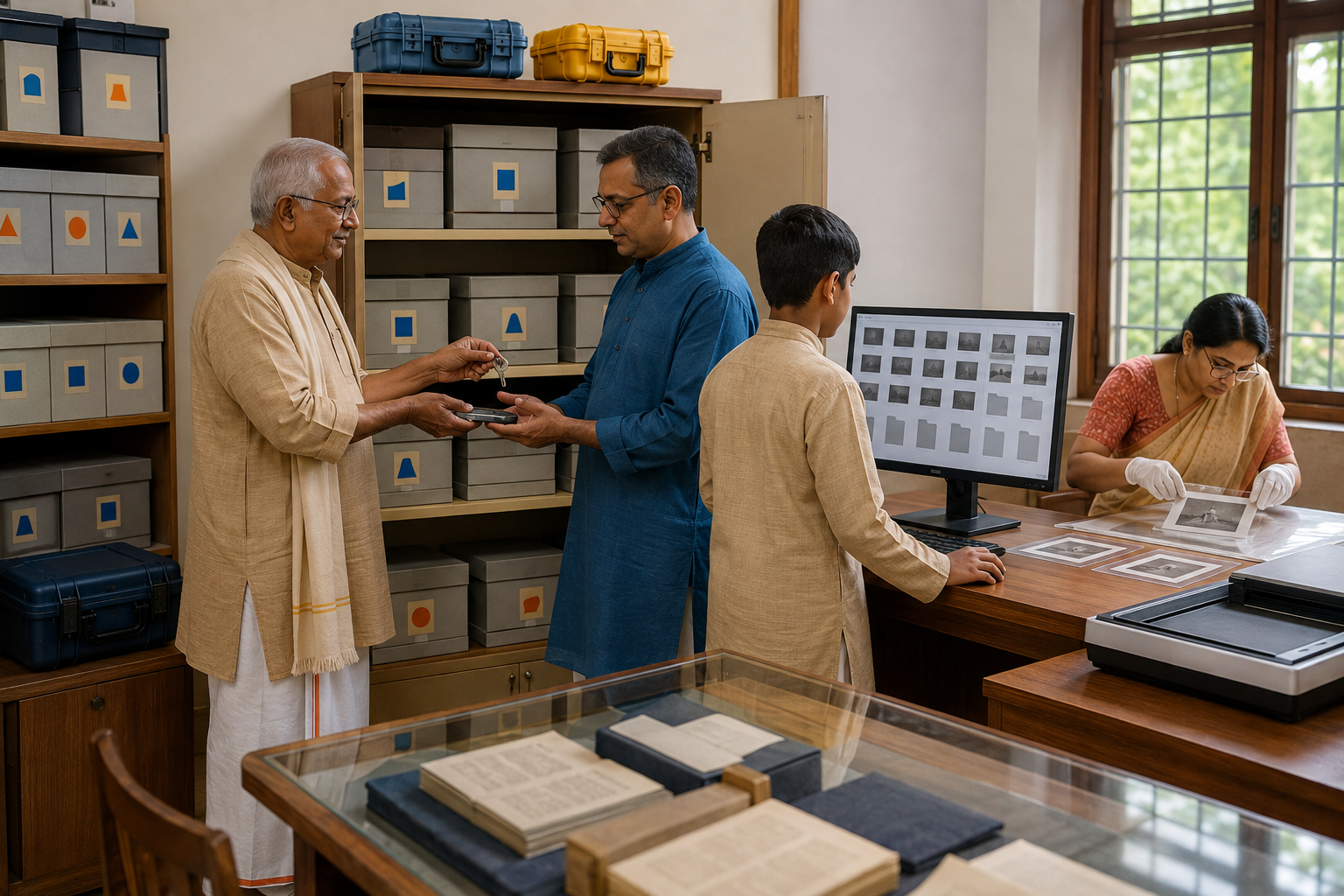
A global archive will never be finished in the ordinary sense. Centres open, pages move, spellings are corrected and better photographs emerge. The practical answer is not to postpone publication until every uncertainty disappears. It is to make uncertainty and revision visible.
For each centre, person or item, maintain one canonical record. Give every assertion a status such as confirmed, approximate or awaiting verification. Add a change log rather than silently replacing an earlier entry. Preserve the original image or recording beside any cropped, compressed or captioned copy so later custodians can inspect what was actually received.
Separate preservation from public access. Some files can be open to everyone; others may contain private contact details, sensitive recollections or material whose publication was never authorised. Use clear access labels, and publish a durable role address rather than a devotee’s personal details whenever possible.
Storage also needs succession. Keep a working collection and a separately controlled backup. Assign a primary custodian and a backup custodian. Record where files are kept, how they are named, who controls the relevant accounts and what must happen when responsibility changes. If the archive depends on one person’s memory or login, the preservation problem has merely moved from the historical material to the filing system.
A modest temple does not need elaborate archival software to begin. A consistently named folder structure, a controlled spreadsheet, original media files, transcripts and a written handover procedure can establish the discipline. Technology can change later without destroying the structure of the knowledge.
Key takeaways
- Preserve the service, people and meaning associated with an object or image, not only the surviving file.
- Create one verified centre sheet using the fields requested by the ISKCON Global Timeline.
- Mark unknown or disputed details explicitly instead of filling gaps with plausible guesses.
- Build oral histories around specific acts of seva and distinguish eyewitness memory from retelling.
- Keep original files, searchable context, access labels, a separate backup and a visible correction history.
- Give the collection a named custodian, a backup custodian and written handover instructions.
Start with one centre or one clearly defined act of service. Fill the known fields, mark the gaps, identify the devotee who can answer them and preserve that testimony while it is available. Then submit the verified record to the Global Timeline and move to the next unit. A worldwide legacy becomes durable through local acts of disciplined remembrance.
References
- Dandavats – ISKCON Global Timeline Project | 1966–2026
- ISKCON Global Timeline – Srila Prabhupada Temples Project
- Dandavats – Today’s Featured Video: Prabhupada Memories – DVD 112 – Locan v2
