
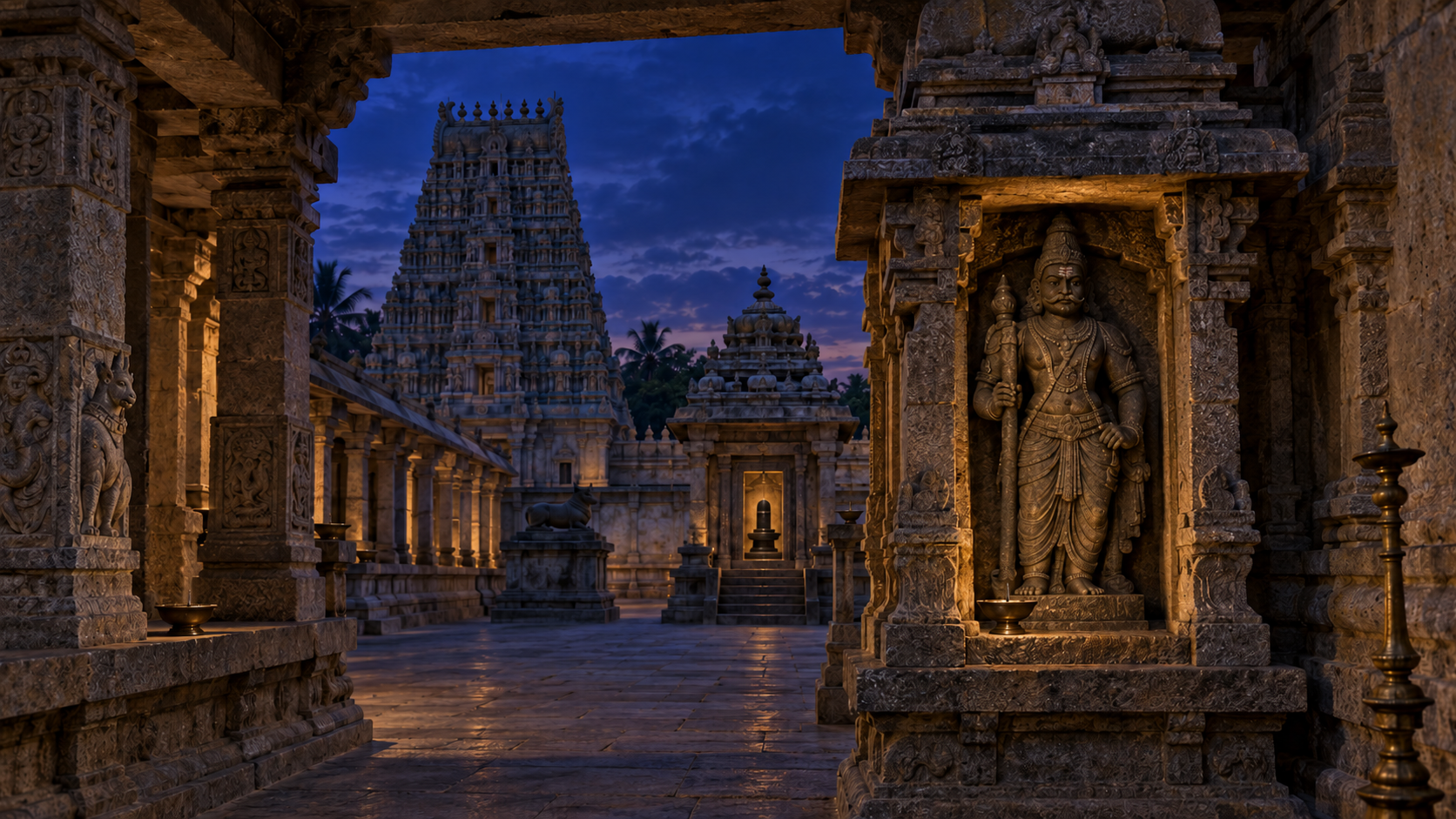
If you encountered the name Yamini Candi in a Tamil temple and wondered whether she is a form of the Goddess, a minor deity, or a guardian, begin with her relationship to the temple. She belongs to a system of divine attendance and protection; treating her as an isolated figure obscures the very role that identifies her.
This distinction matters when you visit a temple, explain the tradition to someone else, or document a shrine. It helps you recognise a living structure of worship instead of reducing the temple to its most prominent sanctum.
Begin with the Pancha Candar relationship
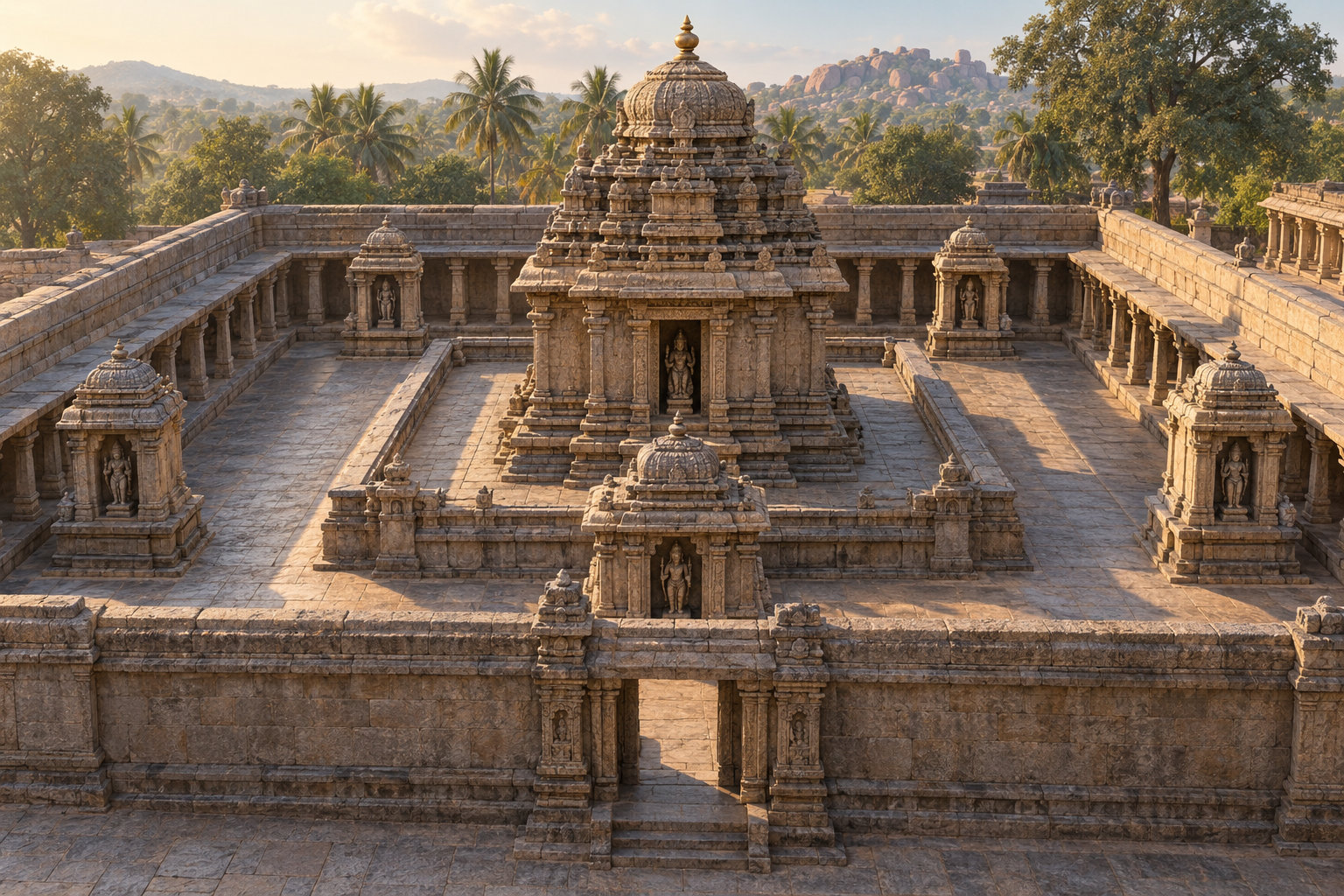
The most reliable short identification is this: Yamini Candi is a nocturnal protectress associated with the Goddess-temple tradition and the Pancha Candars, a group of five divine attendants found within the sacred world of Tamil Nadu’s Shiva temples. These attendants occupy subsidiary positions, yet their guardianship gives them an essential function.
Subsidiary does not mean spiritually disposable. It describes a deity’s relationship to the presiding divinity and the wider temple order. A temple communicates through relationships: who presides, who attends, who guards, and how a worshipper moves among them. Yamini Candi becomes intelligible inside that arrangement.
When you see her name, therefore, do not begin by assembling an independent biography from whatever the word Candi evokes elsewhere. First ask which temple she belongs to, whom she attends, and whether the local tradition identifies her with the Pancha Candars. Those questions protect you from combining distinct regional forms merely because their names sound related.
Why the comparison with Chandikeshwara matters
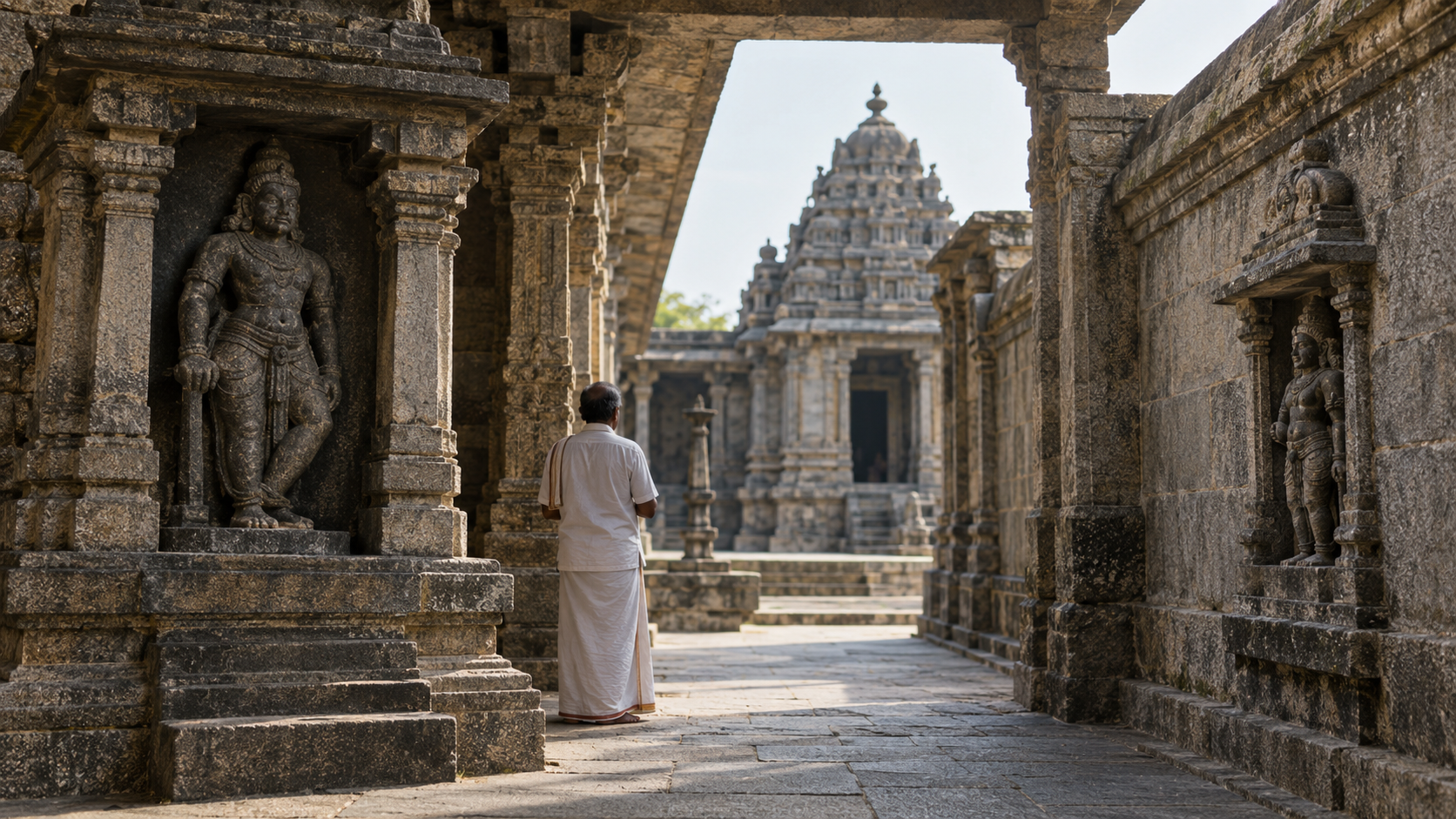
The Pancha Candars are installed and venerated in a manner comparable to Chandikeshwara, the celebrated guardian associated with Shiva’s sacred domain. That comparison is a practical interpretive key. It tells you that these figures should be understood through divine service, custody, and protection rather than treated as incidental decoration.
Comparison does not mean identity. Yamini Candi should not simply be renamed Chandikeshwara, nor should every custom associated with his shrine be transferred to hers. The resemblance concerns the pattern of guardianship and reverence. The identity of the deity, the temple setting, and local ritual instruction still matter.
- Identity and office are different: two deities may perform corresponding guardian functions without becoming the same deity.
- Centrality and importance are different: a subsidiary shrine can carry an indispensable responsibility within the sacred order.
- Comparison and uniformity are different: a shared pattern does not prove that every temple follows an identical placement, offering, mantra, or sequence.
This three-part distinction is useful beyond Yamini Candi. It lets you notice unity within a temple tradition without erasing the local forms through which that unity is expressed.
Read nocturnal guardianship without inventing a ritual
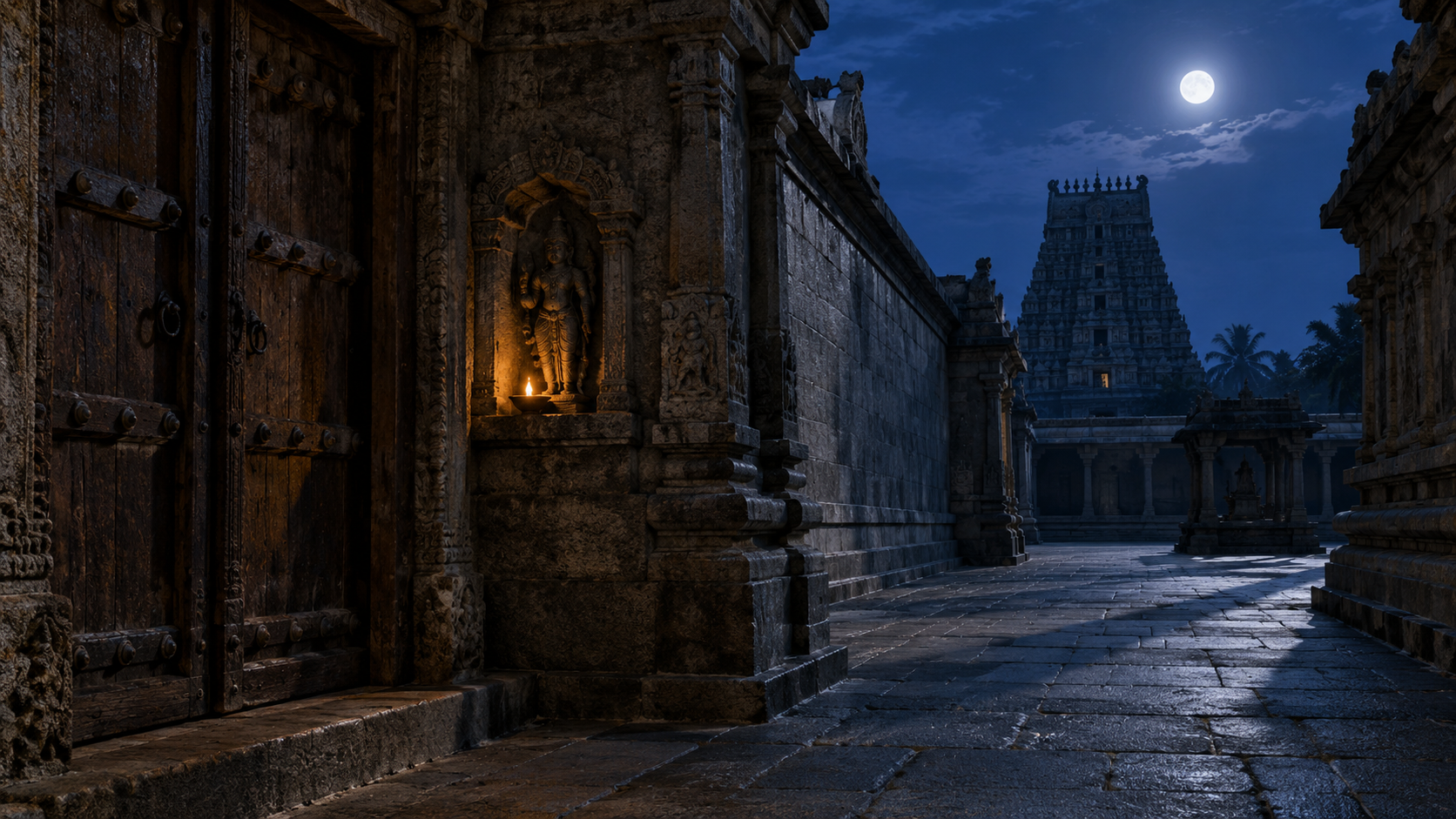
Calling Yamini Candi nocturnal establishes her association with night. It does not, by itself, prove that worship of her is permitted only after sunset, that every temple conducts a special nightly rite, or that one universal procedure applies wherever her name appears. Those are local ritual questions, and they require local answers.
Her nocturnal character can nevertheless help you understand the spiritual force of guardianship. Night is the condition in which ordinary visibility diminishes. A protector associated with it expresses vigilance when human sight and activity recede. This is an interpretation of the role, not a substitute for a temple’s own account of its deity.
Keep three levels of understanding separate. First is what you can identify directly: the deity’s name and acknowledged guardian role. Second is what the temple community explains: the shrine’s ritual place, customary worship, and local history. Third is your theological interpretation of what protection in the night may mean. Confusion begins when the third level is presented as though it were the first.
How to approach a Yamini Candi shrine responsibly
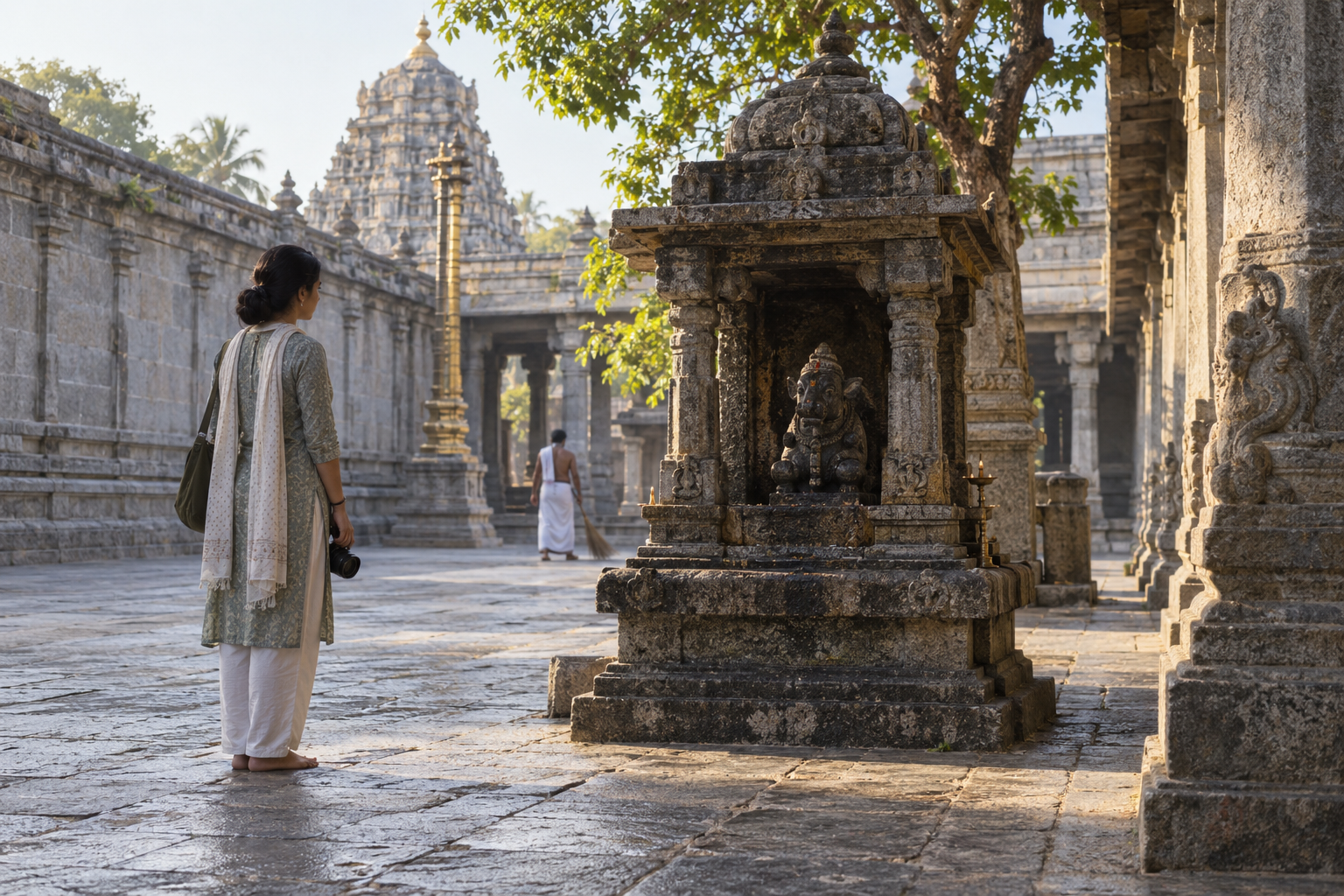
You do not need specialist training to approach a guardian shrine carefully. You do need enough patience to let the temple identify its own sacred relationships.
- Do not rush directly from the entrance to the principal sanctum. Notice the subsidiary shrines and ask how they relate to the presiding deity. Do not assume Yamini Candi occupies the same position in every temple.
- Confirm the local identification. A precise question is more useful than a leading one: “Is this Yamini Candi, and is she understood here as one of the Pancha Candars?” This allows the priest or knowledgeable devotee to correct your premise.
- Ask about the expected act of reverence. Find out whether worshippers stop there, when they do so, and what gesture or offering is customary. Follow temple guidance rather than improvising a mantra, touching the shrine, or copying a practice remembered from another temple.
- Observe relationships, not just images. Note how the shrine participates in the worshipper’s route and how local devotees acknowledge it. Placement and ritual sequence may teach you more about guardianship than an isolated photograph can.
- Separate observation from explanation. If you write, teach, or post about the shrine, label what you personally observed, what a local custodian explained, and what you inferred. One temple’s custom should not silently become a claim about all Tamil temples.
This method is especially important for lesser-known deities. Sparse public information can tempt a visitor to fill every gap. In a living Dharmic tradition, restraint is not ignorance; it is respect for the people and institutions that preserve the practice.
Key takeaways
- Yamini Candi is best understood as a nocturnal protectress within the Pancha Candar tradition, not as an isolated figure detached from her temple setting.
- The Pancha Candars are five divine attendants associated with Tamil Nadu’s Shiva-temple tradition.
- The comparison with Chandikeshwara clarifies a guardian function and a pattern of veneration; it does not make the deities identical.
- Nocturnal does not automatically mean that worship is restricted to a universal nighttime schedule.
- Local priests, custodians, and established temple practice should guide your conduct at a particular shrine.
On your next temple visit, choose one guardian shrine you would normally pass without learning its name. Ask whom the deity serves, what the deity protects, and how devotees acknowledge that service. In Yamini Candi’s case, those questions restore the Pancha Candar relationship that makes her guardianship meaningful.
References

Leave a Reply
You must be logged in to post a comment.