
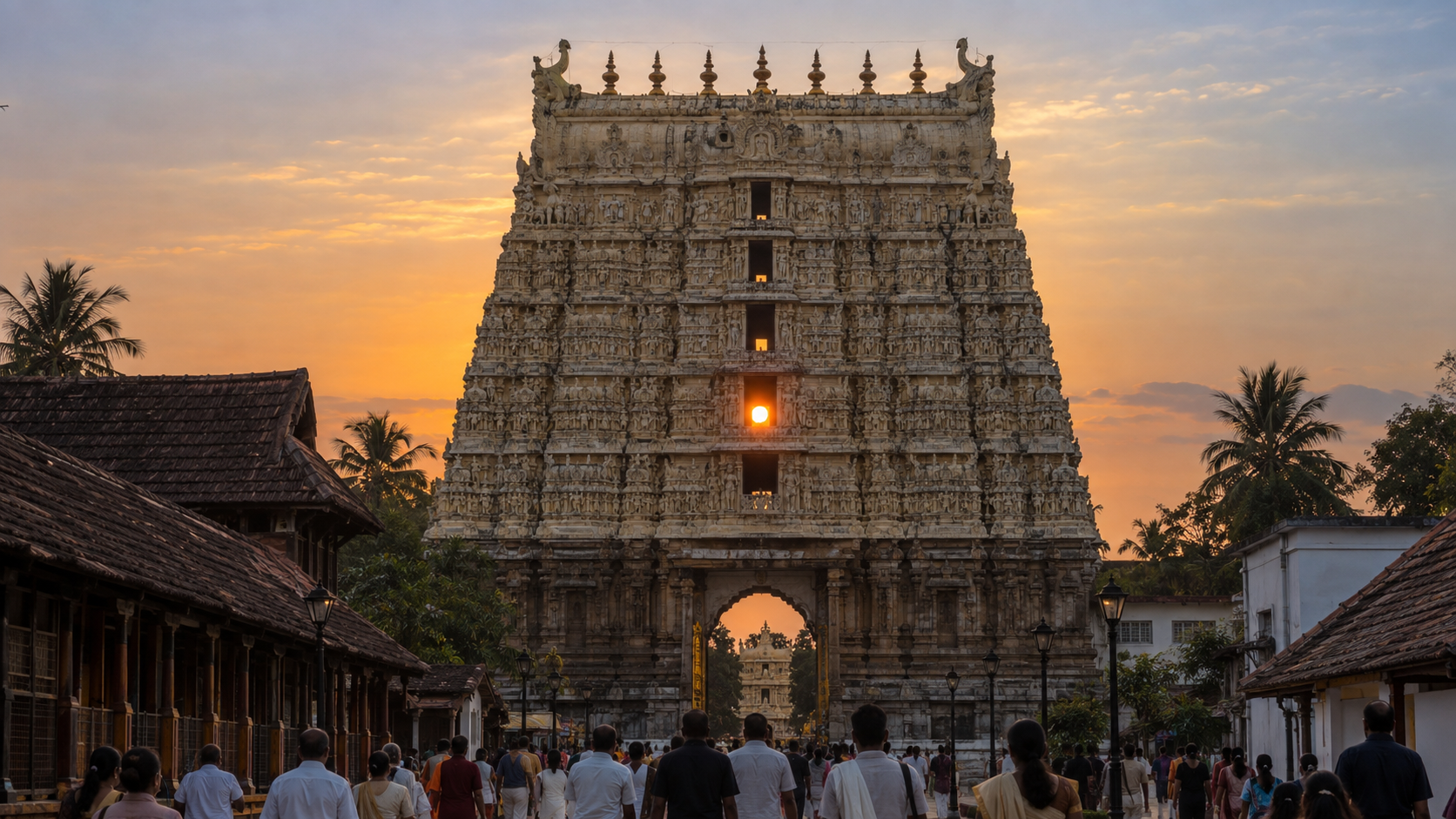
If you want to witness Vishuvam at Sree Padmanabhaswamy Temple, knowing the equinox date isn’t enough. You also need the local viewing time, the correct sightline to the gopuram, and a safe way to observe the Sun.
The phenomenon is brief, sensitive to your position, and popular with devotees. A little preparation will help you see what is actually happening instead of spending the crucial moments moving through a crowd or looking from the wrong place.
What happens during the Vishuvam alignment
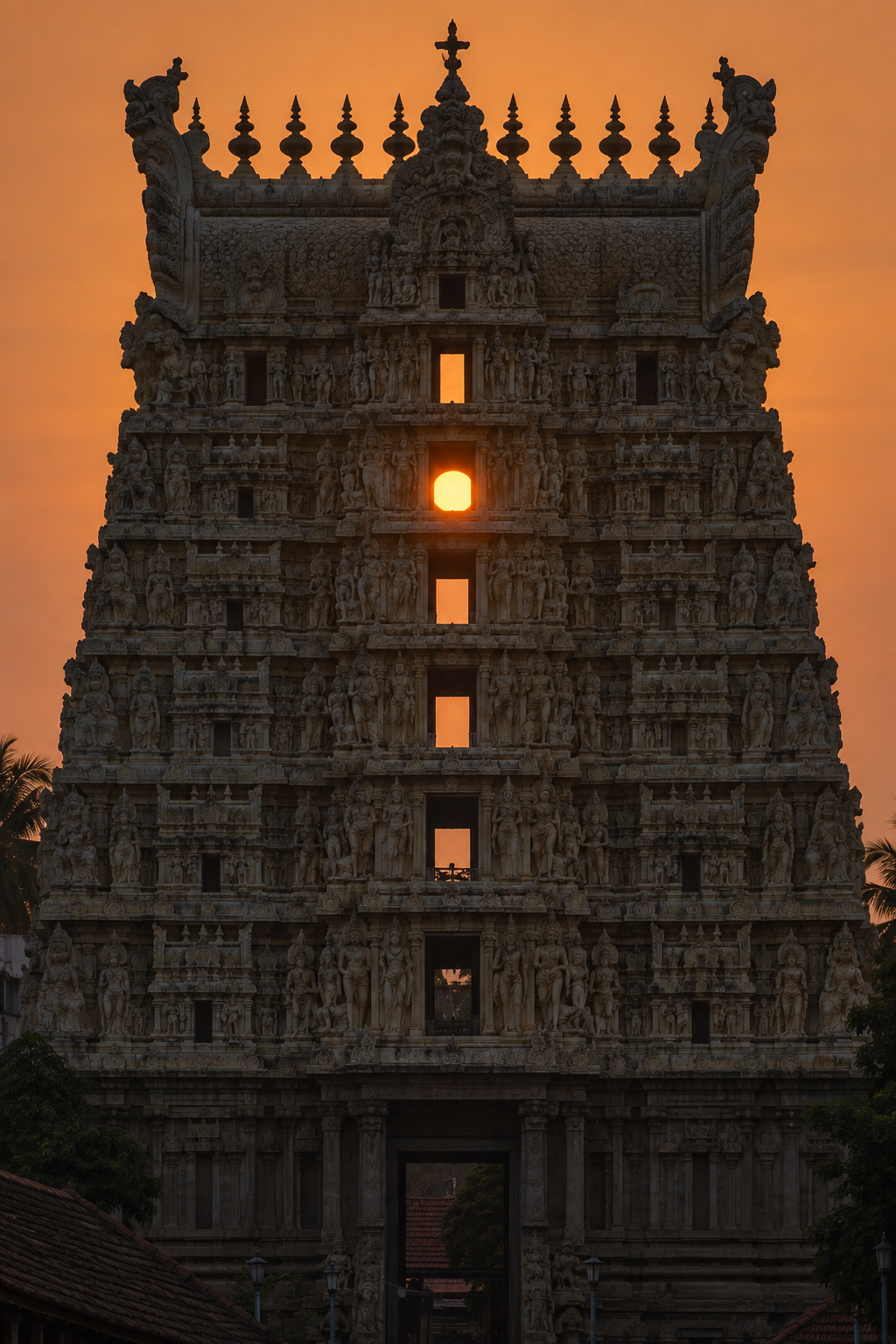
The temple’s Vishuvam occurs twice each year, around March 20 and September 23. These are the seasonal points when the Sun crosses the celestial equator and day and night are close to equal in length.
At Sree Padmanabhaswamy Temple in Thiruvananthapuram, the Sun comes into a striking visual alignment with the gopuram. The tower becomes a fixed architectural frame against which the Sun’s changing position can be seen. This relationship between the heavens and the built temple is the sight known locally as Vishuvam.
It helps to understand that an alignment has three parts: the Sun, the gopuram, and your viewing position. The first two may remain in the expected relationship while the view disappears for someone standing several steps away from the useful sightline. Once you find a clear position, stay there long enough to watch the relationship develop.
The equinox is an astronomical moment, but the temple alignment is a local visual event. An equinox time found on a general calendar therefore isn’t automatically the time you should arrive at the temple. Weather, visibility, access arrangements, and the required line of sight all affect what you can observe.
How to plan your visit without missing the event
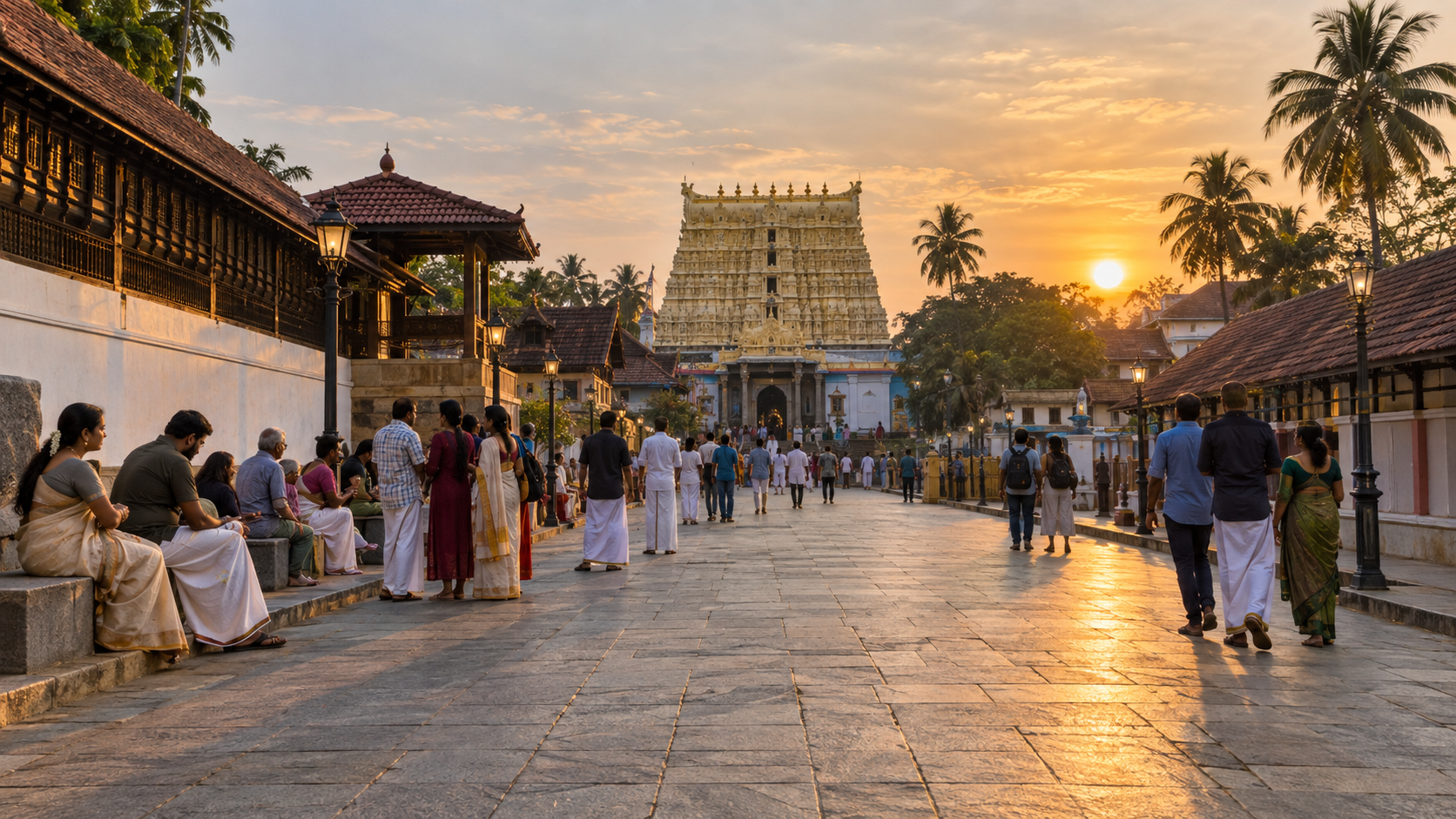
Use March 20 and September 23 as planning anchors, not as substitutes for local confirmation. The sensible approach is to verify the year’s observation date, access conditions, and viewing window shortly before travelling.
- Choose the March or September window. If one season is inconvenient, remember that the alignment returns around the other equinox.
- Ask specifically about “Vishuvam solar alignment viewing.” This avoids confusion with similarly named observances or ordinary temple timings.
- Confirm the local date and time. Check current information from the temple or reliable local notices rather than relying only on a generic astronomical calendar.
- Identify the viewing area before the crucial window. Ask where the gopuram alignment is normally visible and whether that area has any access restrictions.
- Arrive early. Vishuvam attracts large numbers of devotees, so arriving at the last moment can leave you searching for a sightline while the alignment is occurring.
- Choose one stable viewpoint. Constantly moving for a supposedly better photograph can prevent you from seeing the progression at all.
Temple worship, local instructions, and the movement of devotees take priority over photography. Don’t block an entrance, ritual route, or another person’s view. If a steward or temple representative directs the crowd to a particular area, use that location even if a photograph from elsewhere appears more dramatic.
If cloud cover hides the Sun, the geometry has not failed; visibility has. Treat a cloudy visit as a limitation of observation, not as evidence against the alignment. If seeing Vishuvam matters greatly to you, the twice-yearly occurrence gives you another opportunity.
Watch the alignment without risking your eyesight
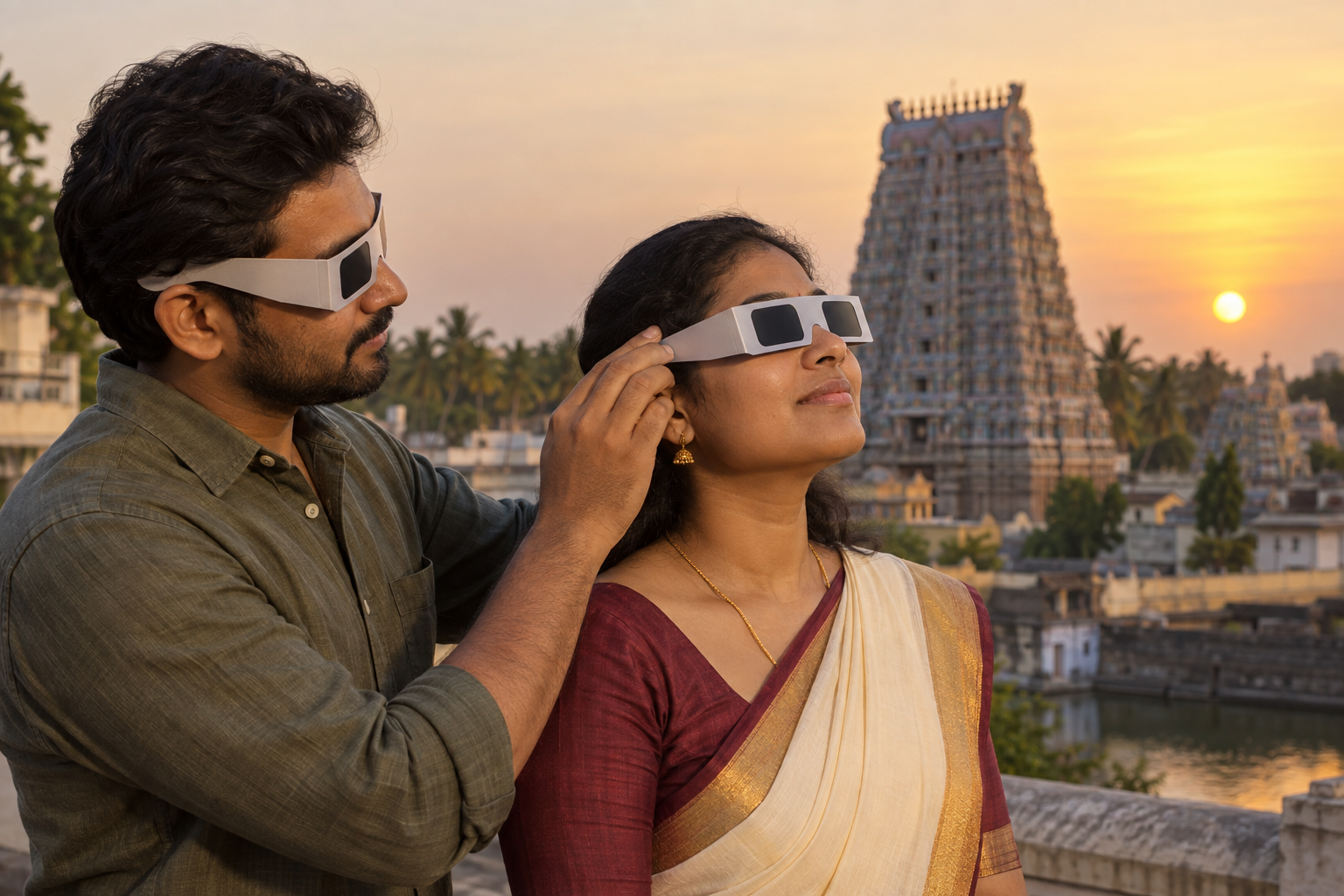
Do not stare directly at the Sun. Haze, cloud, or the outline of the gopuram may make it feel less intense, but apparent softness does not make prolonged viewing safe. Ordinary sunglasses are not solar-viewing protection.
- Use properly certified solar-viewing glasses if you intend to look toward the solar disc.
- Never look at the Sun through binoculars, a telescope, or a magnifying camera viewfinder unless the equipment has a correctly fitted solar filter designed for that purpose.
- For photography, compose through an electronic screen and follow the device or lens manufacturer’s solar-photography guidance. Magnified optics can endanger both your eyes and the equipment.
- Spend more time noticing the Sun’s changing relationship with the gopuram than trying to hold an uninterrupted direct gaze.
This is also a case where a wider composition may tell the story better than a tight image of the Sun. Include enough of the gopuram to preserve the architectural reference. Otherwise, the photograph may record a bright disc without showing the alignment you travelled to witness.
How to understand the event without overclaiming it
Vishuvam can be understood astronomically, architecturally, and devotionally at the same time. Astronomy explains the Sun’s seasonal position. Architecture supplies the frame through which that position becomes visible. Devotion determines why the moment matters to the gathered community.
An astronomical explanation does not empty the experience of sacred meaning. In a Dharmic setting, observing order in nature can itself deepen attention to time, rhythm, orientation, and the human place within a larger cosmos. The regularity is part of the wonder; it need not be replaced by a claim that nature’s laws have been suspended.
At the same time, the visible alignment alone cannot prove every historical claim made about it. It demonstrates a relationship among the Sun, the gopuram, and a particular line of sight. Claims about precisely who planned that relationship, how it was calculated, or what the builders explicitly intended require separate historical evidence such as dated records, inscriptions, plans, or a securely transmitted architectural account.
This distinction protects rather than diminishes the temple’s heritage. You can describe exactly what you see, honour its religious setting, and remain careful about conclusions that the observation by itself cannot establish.
Key takeaways
- Vishuvam at Sree Padmanabhaswamy Temple is observed twice a year, around March 20 and September 23.
- The equinox date is only a planning anchor; confirm the local viewing time and access arrangements for the particular year.
- Your position matters because the phenomenon is a sightline involving the Sun, the gopuram, and the observer.
- Arrive early, remain in a lawful viewing area, and avoid obstructing worship or crowd movement.
- Never stare at the Sun or use unfiltered magnifying optics.
- The alignment is observable; broader claims about its original design history require independent historical evidence.
Put both equinox windows in your calendar. In the week before the one you plan to attend, confirm the temple’s current arrangements and the expected viewing window. At the site, settle into a safe sightline, put the urge to chase photographs aside, and watch how sunlight, stone, position, and time briefly come into relation.
References

Leave a Reply
You must be logged in to post a comment.